

Wholesale Snap Hook Buying Guide for Durable Hardware
2026-11-17
Not all snap hooks are built to take a beating, and if you’ve ever had one deform under load or corrode after a season outdoors, you already know why the wholesale choice matters. At Kingming, durable hardware isn’t a buzzword—it’s the baseline for every lot we ship. This guide cuts through the vague “heavy-duty” claims and walks you through the material, finish, and load-rating details that separate snap hooks worth reordering from ones that end up in the scrap bin.
What a Reliable Snap Hook Looks Like When It Arrives
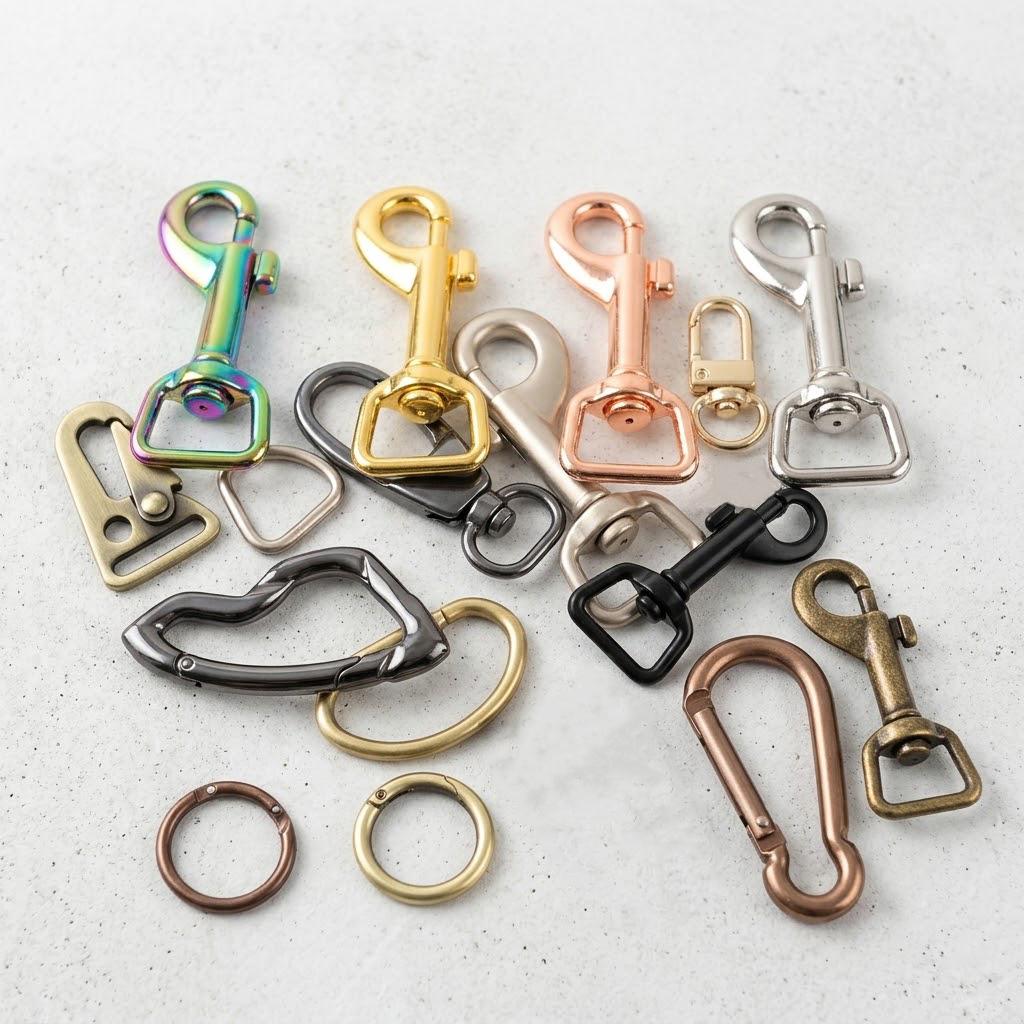
The first thing you notice is the weight. A dependable snap hook has a bit of heft to it, but not enough to feel clunky. Run a thumb over the body and it should feel smooth, almost cool to the touch, with no sharp seams or rough patches hiding along the spine. If the finish already looks thin at the edges, it won't get better with use.
Open and close the gate a few times before clipping it to anything. The spring should snap back with a clean, short click, not a dull rattle or a lazy drift. A hook that hesitates on the return is already telling you something about how carefully it was assembled. Check the nose too; it should line up cleanly with the gate opening rather than leaving a tiny catch point.
Finally, look at the small details that tend to get overlooked. Etched markings should be crisp and legible under light, not smudged or shallow. If there's a swivel or eye, give it a turn and feel for grit. None of this guarantees years of hard use, but a hook that arrives feeling tight, clean, and deliberate is usually the one that stays that way.
Matching the Metal to the Environment, Not Just the Price
A stainless steel railing that looks flawless on a showroom floor can develop pits within months if it is installed near a saltwater inlet. The real question is not how little the material costs up front, but whether it can handle the specific mix of moisture, chlorides, temperature swings, and airborne chemicals at the site. Coastal air, de-icing salts, sulfur-rich exhaust, or even the cleaning agents used in a food plant all interact with metal surfaces in different ways. Matching the alloy to those conditions matters more than picking the lowest bid.
Price becomes useful only after the environmental demands are clear. A galvanized steel bracket may be perfectly adequate for a dry inland warehouse, yet the same part can corrode rapidly in a wastewater treatment building where hydrogen sulfide and humidity are constant. In that setting, a higher-grade stainless or a coated aluminum system might avoid repeated replacements and safety risks. The initial cost difference often shrinks once downtime, labor, and early failure are included.
This approach also reduces the habit of over-specifying materials that are expensive for no practical gain. Not every project needs a high-nickel alloy or a duplex stainless. The goal is to understand the exposure, identify the likely corrosion mechanism, and choose a metal that can live with it. That kind of fit protects the structure, controls long-term costs, and keeps the focus on performance rather than a purchase price that may look good only on paper.
Load Ratings, Breaking Strength, and Why Both Matter
A load rating tells you how much weight a piece of hardware can support during normal, repeated use. It is not the point at which the item snaps in two; rather, it reflects a safe working limit derived from testing and engineering calculations. Breaking strength, by contrast, is the maximum force the component can withstand before failure. Many people assume the two numbers should be close, but in practice a healthy gap exists between them. Understanding that gap prevents both dangerous underloading and needless overbuilding.
Why keep them separate? Because real-world conditions rarely match a clean laboratory pull. Vibration, shock loads, slight misalignment, and wear over time all chip away at a product's original capacity. A part rated for 500 pounds may break at 2,000 pounds under ideal conditions, yet fail far earlier if repeatedly jerked or exposed to corrosion. That is why reputable manufacturers publish a conservative load rating even when the raw breaking strength sounds far more impressive. The lower number is the one you design around.
When selecting hardware, look for both figures but make the load rating your primary guide. If a spec sheet lists only breaking strength, treat it with caution. Divide that value by a sensible safety factor, typically four to six times, to estimate a realistic working load. Conversely, if the load rating seems suspiciously close to the breaking strength, question how the product was tested. A trustworthy rating leaves room for the unexpected, which is exactly the point.
Gate Design Choices That Affect Speed and Safety
Most people never think about the hinge side of a gate until they are stuck behind one. The way a gate swings, how far it opens, and whether it closes on its own changes how quickly a vehicle can clear the opening. A gate that swings into the path of traffic forces drivers to stop short, while one that folds or slides keeps the flow moving. The difference between a 90-degree swing and a 160-degree swing might not look like much on paper, but on a narrow driveway it can mean the gap between a clean pass and a scraped bumper.
Hardware choices play an underrated role here. Heavy-duty hinges with bearings let a gate move with less effort, so an automated opener does not struggle and fail halfway through a cycle. Latches that require a driver to get out and fiddle with a chain or drop bar kill any speed advantage. Magnetic locks or solenoid releases tied to a keypad or remote keep the process hands-free. Safety edges and photocells are not just add-ons; they are what stop a closing gate from catching a trailer or a child. When those sensors are placed too low or set with too wide a gap, the gate becomes a liability instead of a convenience.
The physical weight and balance of the gate matter more than most buyers expect. A solid steel panel on small casters will sag, drag, and eventually refuse to move without a push. Cantilever slide gates avoid ground contact entirely, which removes friction and the need for a clean track. For swing gates, keeping the frame square and the posts set deep in concrete prevents the slow lean that turns a fast operation into a daily wrestling match. Simple choices like adding a stop plate or adjusting the closing speed by a few seconds can make the difference between a gate that feels automatic and one that feels like an obstacle course.
How Coatings Determine Whether Hardware Lasts a Season or a Decade
Most hardware doesn't fail because the base metal gives out. It fails because the barrier between that metal and the world gets breached. A coating's real job is to trade damage slowly, sacrificing itself in a controlled way. Once that outer layer is scratched, chipped, or worn thin, moisture wicks into the gap and corrosion starts working under the film. From the outside, the part might still look intact until a crack or a streak of rust tells you the coating lost the race.
Environment decides how fast that race runs, but the coating system decides whether the part has any chance. A zinc-rich primer can protect edges and scratches cathodically, while a plain enamel just sits there waiting for one pinhole. In coastal air or anywhere road salt lands, the difference shows up in months. Hardware with a thin, single-coat finish may look fine on the shelf and then start blistering after one winter. The same bracket with a layered system—sacrificial primer, durable topcoat, sealed edges—can shrug off years of the same exposure.
Application quality matters as much as the chemistry. Sharp threads, weld splatter, and blind holes are exactly where coatings go on too thin or skip entirely. Those are the spots that rust first, loosening fasteners and seizing adjusters. If a coating survives the first few handling scratches without exposing bare metal, it has a shot at long service life. If it doesn't, the hardware isn't really protected; it's just wearing a costume until the weather finds the weak seam.
Supplier Checks That Save You from a Bad Batch
One of the fastest ways to end up with a bad batch is skipping the basics when a new supplier comes onboard. Ask for a recent certificate of analysis, not just the one they upload to their website. Better yet, request a sample from the same production run they intend to ship you. A lot of problems hide in the gap between what a supplier promises on paper and what actually leaves their warehouse.
Beyond paperwork, pay attention to how the supplier handles a simple question. If you ask about storage conditions, lot traceability, or what happens when something goes wrong and the reply is vague or slow, treat that as a warning sign. Reliable suppliers tend to answer quickly and with specifics because they have nothing to dodge. If they get defensive about a routine inquiry, imagine how they will react when a real problem shows up.
Finally, build in a small trial order before you commit to a large one. This does not have to be expensive or time-consuming, but it forces both sides to test the actual process: labeling, shipping, packaging, and the product itself. A supplier that performs well on a small order usually performs well on a bigger one. A supplier that stumbles at this stage is saving you from a much costlier lesson later.
FAQ
Look closely at the material and how it is made. Forged brass or 304/316 stainless steel will generally outperform zinc die-cast options. The gate spring should feel firm and snap back cleanly, and the hook should list a clear working load limit rather than just a vague heavy duty label.
Request samples from the exact production line rather than pre-made sales samples. Check for sharp edges, inconsistent gate tension, thin or uneven coating, and sloppy rivets. A reliable supplier should also share tolerance reports and batch inspection records.
It depends on the base metal. Stainless steel often needs no extra coating, while carbon steel benefits from zinc plating plus a powder coat or e-coat. For marine or high-humidity environments, 316 stainless or a quality zinc-nickel finish avoids rust streaks and staining.
That comes down to how the hook is used. If it can twist, slide, or get bumped during normal activity, a locking gate prevents accidental release and reduces safety risk. For low-motion attachment points like key rings or fixed straps, a non-locking gate is usually enough.
Ask for both the working load limit and breaking strength. A safe approach is to choose a working load limit that is at least four times the expected weight in use. Be wary of suppliers who only advertise breaking strength without explaining how it was tested.
The inner opening controls what the hook can actually connect to. Measure the widest strap, ring, or bar it must fit around, then add a little clearance. A hook with a large outside profile but a small gate opening can be surprisingly limited in real use.
Unusually low prices often come from thinner walls, weaker springs, or lower-grade alloys. Watch for missing load ratings, poor packaging that lets hooks scratch each other, and long lead times that suggest the supplier is sourcing from multiple factories without clear batch control.
Conclusion
A dependable snap hook rarely looks impressive out of the box—it looks consistent. Check that the gate sits flush, the spring snaps back without hesitation, and the body has no rough edges or uneven stamping. Those small details tell you more than a polished photo. Beyond the first inspection, match the metal to where the hardware will actually live. Zinc and nickel-plated steel are fine indoors or in mild conditions, but anywhere near saltwater, humidity, or chemicals calls for 316 stainless or a proven marine-grade alloy. Price alone is a poor filter because a cheaper hook that corrodes in six months costs more than a pricier one that still works after five years. Load ratings deserve the same scrutiny. Look for both the working load limit and the breaking strength; the gap between them is your real safety margin. If a supplier only lists one number, ask why.
Gate design changes how the hook behaves when hands are cold, gloves are wet, or a line is under tension. Wire gates are light and fast, but a solid latch with a secure closure often holds up better under repeated impact. The right choice depends on whether speed or accidental opening is the bigger risk on-site. Coatings are just as decisive. A thin layer of paint hides nothing; hot-dip galvanizing, powder coating, or passivation on stainless actually determines whether hardware lasts a season or a decade. Scratches in the coating should not reach bare metal if the finish is doing its job. Finally, treat your supplier like part of the product. Order a small sample batch first, cut a few hooks open, and check thread fit, spring tension, and coating thickness before committing. A supplier that welcomes that kind of check is more valuable than any spec sheet.
Contact Us
Contact Person: Jamie Zeng
Email: [email protected]
Tel/WhatsApp: +86 13728219269
Website: https://www.kmhardware.com