

Wholesale Preserved Moss: A Complete Guide to Buying and Styling Natural Greenery
2026-10-05
Most people associate moss with damp forests and neglect, but preserved moss flips that idea entirely. It's soft, vibrant, and needs zero water or sunlight—making it a favorite for designers who want natural greenery without the upkeep. If you're buying moss wholesale, you're not just stocking a product; you're investing in a versatile material that can transform walls, terrariums, and retail displays. PHLEEYA has spent years perfecting the art of preserved botanicals, and this guide will show you how to buy smart and style boldly.
What Actually Happens to Preserved Moss Over Time and Why It Stays Soft
Most preserved moss is treated with a glycerin-based solution that replaces the plant's water content. Over months and years, the moss doesn't dry out because glycerin is hygroscopic, meaning it pulls moisture from the air and holds it inside the cell walls. This is why the texture remains pliable rather than turning brittle. The chlorophyll often fades slightly, but the structure stays intact as long as it's kept away from direct sun and heavy humidity swings.
You might notice very subtle changes—like a slight shift in color saturation or a faint dusty feel if the room air is extremely dry. That's normal and doesn't mean the moss is dying. A light misting with distilled water once every few months can restore the softness, but overdoing it invites mold. The real trick is that preserved moss isn't living anymore; it's essentially a stable, flexible botanical material that holds its shape because the glycerin keeps the cell walls from collapsing.
How to Compare Preserved Moss Suppliers Without Guesswork
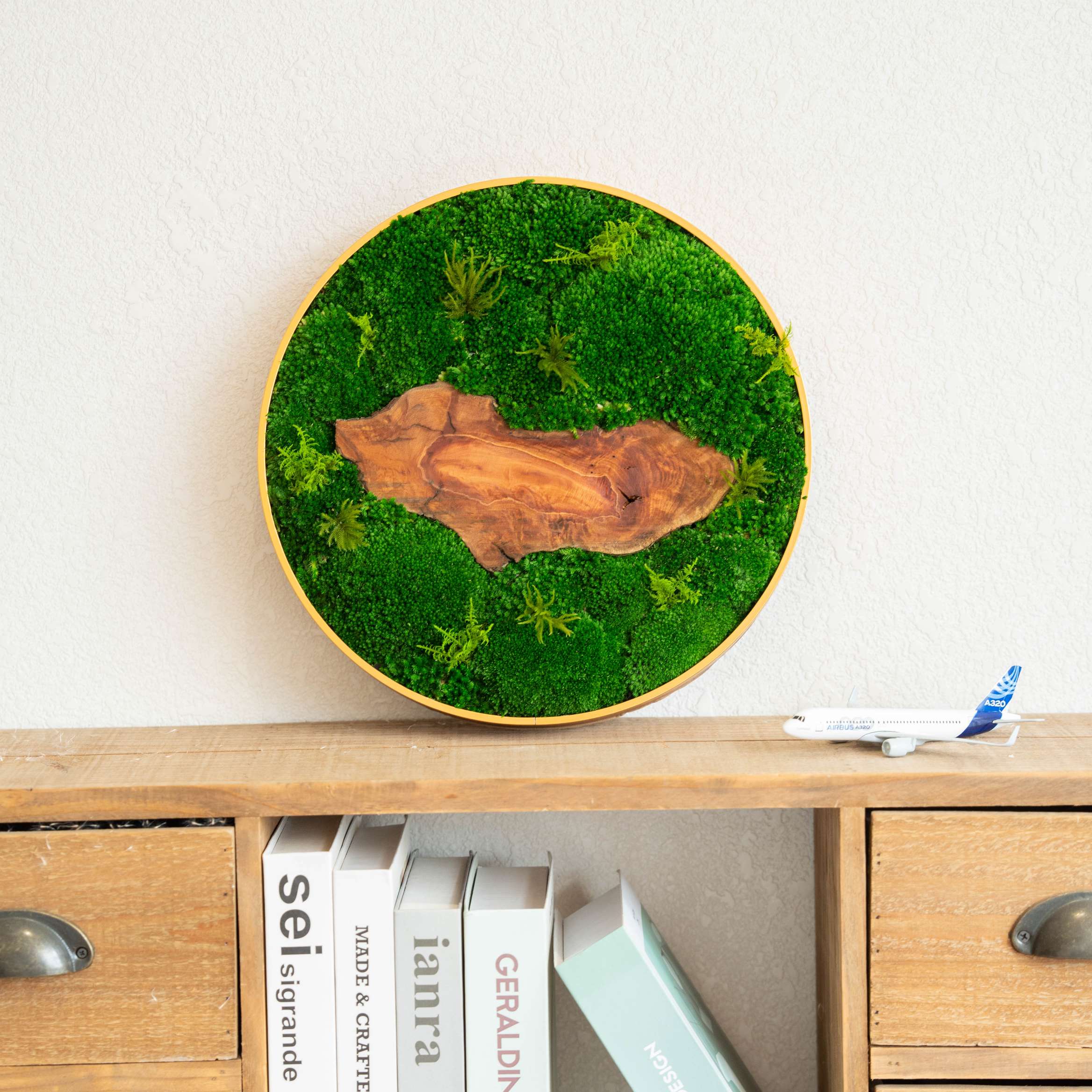
Order sample trays from at least three suppliers at the same time and compare them side by side under identical lighting. Feel the stems, check for brittleness, and rub a small patch to see if dye transfers. Note how much dust or debris falls out of the bag. These physical cues beat any brochure claim.
Ask each supplier to send a retention swatch from their current production batch, not a marketing sample. Mist half of each swatch and let it dry overnight. If colors bleed, curl, or fade unevenly, that is what your clients will see after installation. Request batch numbers and test a second time from a later shipment to confirm consistency.
Verify the less obvious details: moisture content should sit within 12-15% to prevent mold, packaging should cushion the stems without crushing, and lead times should be quoted from the factory floor, not from a sales rep's estimate. If a supplier cannot provide a current certificate for fire retardancy or botanical treatment, move on.
The Overlooked Role of Moss Species in Large-Scale Design Projects
On most large-scale project sites, moss is either scraped away during grading or treated as a sign of poor drainage. Yet the same colonies that get removed without a second thought are quietly doing the work that many engineered systems struggle to replicate. A dense moss mat can hold several times its weight in water, slowing runoff long before it reaches a storm drain. In northern climates, species like Polytrichum and Sphagnum keep soil temperatures stable and create microsites where tree seedlings eventually take hold. Design teams rarely budget for this because the benefits don't show up in a rendering.
The bias is partly visual. Large-scale projects tend to favor bold gestures—sweeping lawns, sculpted landforms, specimen trees—while moss registers as a background texture at best, or a maintenance problem at worst. But there are places where this assumption is being tested. A few wetland restoration projects have started transplanting native moss mats instead of relying solely on seeded grasses, and the early results show faster soil stabilization on slopes that previously washed out after every storm. The labor involved is still a barrier, since moss doesn't come in rolls from a nursery the way turf does, but the long-term reduction in irrigation and chemical inputs is hard to ignore.
Maybe the most overlooked role is cultural. Moss has a way of making a large site feel older and more settled than it actually is, which is something no amount of new paving can fake. In Japanese garden traditions this is understood, but Western large-scale design has mostly dismissed it as a byproduct of shade and moisture rather than a deliberate material. As projects face tighter water budgets and more scrutiny over biodiversity, the species that were once scraped off the site plan may end up being the ones that hold the whole thing together.
Styling Wholesale Greenery Without the Fresh-Plant Hassle from Moss Walls to Table Runners
Wholesale greenery flips the script on decorating with plants. No watering schedules, no drooping leaves, no worrying about sunlight exposure. Moss walls, eucalyptus garlands, and boxwood mats arrive looking exactly as they should, and they stay that way for years. You get the depth and texture of live foliage without any of the upkeep that usually comes with it.
From a sprawling moss wall behind a reception desk to a simple seeded eucalyptus runner down a dining table, these pieces adapt to almost any setting. Event planners use them to build photo backdrops that won’t wilt by hour three. Restaurants weave them into booth dividers for a touch of green that never needs a water break. Homeowners tuck preserved boxwood panels into awkward corners where real plants would struggle.
The practical side matters too. Buying wholesale means you can cover large areas without draining the budget, and the items store flat until the next use. A moss wall panel can be cut to fit an odd niche. A table runner can be rolled out for a dinner party then packed away without a single leaf dropping. It’s greenery that works on your schedule, not the other way around.
Where Wholesale Preserved Moss Actually Saves Money on Big Installations
On large vertical gardens or moss walls that span entire lobbies, buying preserved moss by the tray or box from a wholesale supplier changes the math quickly. The per-square-foot price drops enough that a 200-square-foot installation can cost less in materials than three smaller custom pieces. You also avoid the markup of hobby packs, which forces most designers to over-order just to have consistent color batches.
The savings show up again in labor and waste. Wholesale moss arrives pre-cleaned and sorted, so installers spend their time adhering panels instead of pulling out twigs or discarding dried patches. On a multi-day commercial job, that can cut prep hours by a third. Leftover moss from a large order is usually enough to complete trim work or small accent panels, so you rarely pay for a second rush shipment.
Maintenance is where the real budget relief appears. Because preserved moss needs no irrigation, lighting, or soil, a big installation doesn't require plumbing rough-ins or ongoing plant care contracts. Facility managers only need an occasional dusting, which means a 500-square-foot lobby wall doesn't carry the monthly service bill of a living plant display. Over five years, that operational gap can be tens of thousands of dollars.
Common Preserved Moss Mistakes That Make Installations Look Artificial
One of the fastest ways to make a preserved moss installation look fake is to treat every clump as identical. Large sheets of uniformly dyed reindeer moss, pressed flat and cut into neat rectangles, read more like carpet samples than living material. Real moss grows in scattered, uneven patches with tiny gaps, overlapping edges, and subtle shifts in tone. If the surface looks too consistent from a distance, the eye immediately clocks it as artificial. Break up the monotony by placing smaller clusters at slightly different angles and allowing a few strands to interrupt the main shape. Even a little irregularity makes the whole piece feel collected rather than manufactured.
Color choice is another dead giveaway. Moss that arrives in bright lime, electric green, or candy pink may seem lively in a product photo, but in a real room it rarely matches anything organic. Preserved moss has a natural muted palette—sage, olive, deep forest, dusty grey-green—and those shades are what most people associate with actual woodland. When every section is the same saturated hue, or when too many unnatural colors are mixed, the installation starts to resemble a craft project. Stick to two or three neighboring tones, and let one of them dominate. The result will look more like a shaded forest floor and less like a bag of Easter basket filler.
Placement and edges also contribute to the artificial look. If moss is glued right up to the frame or border with hard, straight lines, that boundary becomes a visual clue that the piece was assembled rather than grown. Natural moss tends to thin out at the edges, with scattered fragments and irregular margins. Another common mistake is pressing everything to the same depth, so the installation looks like a flat printed texture instead of a dimensional surface. Build up a few areas with extra height, leave small shadows between clusters, and let some pieces overlap the frame slightly. Those small inconsistencies trick the eye into reading the moss as a living material, not a flat decorative panel.
FAQ
Preserved moss keeps its soft, pliable texture because glycerin and safe dyes replace the plant's moisture, while dried moss becomes brittle and crumbles over time. For anything that needs to look good for more than a year, preserved moss is the better choice.
Look for even color with no powdery residue, and give the moss a gentle squeeze—it should feel springy, not crunchy. Ask the supplier about dye lot consistency and whether the moss has been treated for fire retardancy if your project requires it.
It's really an indoor material. Direct sun, rain, and temperature swings break down the glycerin treatment and cause fading and brittleness. A covered porch or patio can work for short-term use, but for full outdoor exposure you'd be better off with another option.
For clumpy, colorful texture, reindeer moss is a go-to. Sheet moss lays flat and works well as a base for wall panels, while mood moss creates soft, rounded mounds. Adding lichen or twig accents gives a more organic, layered feel.
Coverage varies by type and how dense you want it. Reindeer moss typically covers about 3–5 square feet per pound, while sheet moss may cover 2–3 square feet per pound at a moderate thickness. Always add 10% extra for trimming and gaps.
Using too much adhesive creates hard lumps that show through, so use low-temp hot glue in small dots. Placing the piece near direct sunlight or an air vent dries out the moss and makes it shed. Also avoid pressing it too flat—preserved moss looks best when it keeps some of its natural height.
Preserved moss is generally non-toxic, but it’s not meant to be eaten, so keep it out of reach of curious pets and toddlers. If you’re concerned about dyes, ask for moss colored with food-grade or non-toxic pigments, and avoid placing it in areas that get wet.
Keep it in its original bag or an airtight container in a cool, dry spot away from sunlight. Don’t refrigerate or mist it with water. If the moss feels stiff after storage, gently knead it with your hands to restore some flexibility before use.
Conclusion
Preserved moss rarely behaves the way first-time buyers expect. Instead of becoming brittle or fading quickly, it keeps a soft, pliable feel because the preservation fluid replaces the plant’s natural moisture with a humectant that holds flexibility for years. That durability, however, depends heavily on where the moss comes from and which species you choose. Sheet moss lays flat and reads as a calm backdrop, while reindeer moss offers rounded, cushion-like texture and mood moss introduces a deeper, uneven surface. Large-scale designers often overlook these differences until the installation is already in place, then struggle to correct patchy or unnaturally flat sections. Comparing suppliers means asking for the exact species breakdown, dye batch consistency, and whether the moss is cleaned of debris before packing, not just comparing price per kilo. A cheaper mix can include brittle filler that snaps during install and makes the whole wall look patchy.
Wholesale preserved moss also changes the economics of big greenery projects. Buying full sheets or bulk bags rather than small retail boxes cuts the per-square-foot cost enough to make a moss wall or long table runner realistic for hospitality, office, or event work. Because the material needs no water, soil, or light, there is no ongoing maintenance crew or replacement cycle. The styling options go far beyond flat panels: wrap columns, line recessed ceiling trays, build framed art, or run a low, dense strip down a banquet table. The most common mistake that makes installations look artificial is treating the moss like a uniform fabric. Real arrangements need tonal variation, a mix of species, and bare spots or natural edge breaks. Overstuffing every inch with identical tufts or pairing preserved moss with shiny plastic accessories flattens the organic feel. Leaving a little negative space and layering two or three textures usually produces a result that reads as living material rather than a decorative panel.
Contact Us
Contact Person: Mr. Luo
Email: [email protected]
Tel/WhatsApp: 86 18100895505
Website: https://www.feiliyaflowers.com/en/