

Wholesale Preserved Flower Bouquet: A Buyer's Guide to Long-Lasting Blooms
2026-09-30
If you've ever tossed a fresh bouquet after a week, you already know the problem with traditional blooms. Wholesale preserved flower bouquets flip that script—offering vivid color and shape for months, not days. This buyer's guide to long-lasting blooms walks you through what actually matters, and why PHLEEYA keeps showing up in serious buyers' carts.
The Part of the Flower Most Buyers Forget to Check
When picking out a bouquet, most eyes dart straight to the petals — their color, size, and how tightly they're still closed. But there's a quieter detail hiding right in the center that often gets skipped: the stamen and pistil. A quick glance at the flower's reproductive parts can tell you a lot about its freshness. If the anthers are already shedding pollen like fine dust, that bloom is further along than it looks, and it'll fade faster once you get it home.
Another often-ignored spot is the base of the bloom where the petals meet the stem — the receptacle and calyx. Give that area a gentle squeeze. If it feels firm and springy, the flower still has plenty of life in it. If it's soft, mushy, or starting to discolor, even the prettiest petals won't last more than a day or two. Sellers rarely point this out, but once you start checking it, you'll wonder how you ever bought flowers without looking there.
Finally, turn the stem over and check the cut end. It should look clean and slightly moist, not dried out or slimy. That tiny cross-section is the flower's drinking straw, and if it's clogged or rotting, no amount of fresh water will revive it. Buyers often forget that the part they can't see in the vase is the one that matters most for longevity.
How Six Months in a Warehouse Changes a Preserved Stem
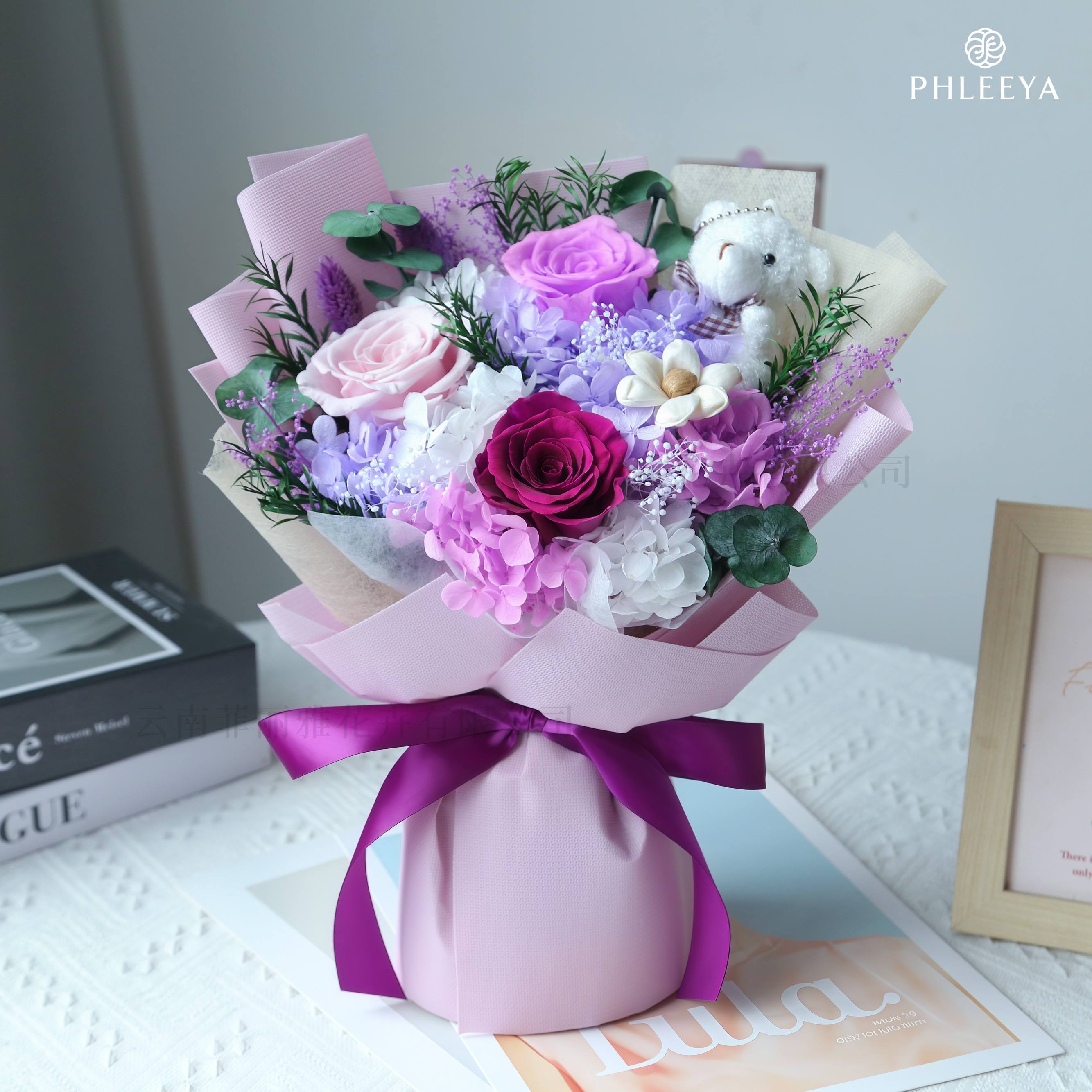
Six months is enough time for a preserved stem to lose the tidy look it had when it first left the processing line. The glycerin keeps the basic shape intact, but the edges of the leaves often start to curl or turn a duller shade of green. In a warehouse where temperature swings from cold mornings to hot afternoons, the plant tissue slowly releases residual moisture. That leads to a crisper feel along the stem, and small cracks can appear near the nodes without any handling at all.
Dust settles into the tiny crevices between leaf and stem, muting whatever natural sheen the preservation process left behind. Light filtering through high windows or skylights also plays a part: the side facing the light for months tends to fade faster, leaving an uneven tone. The scent, if there ever was one, fades to something closer to dry paper and cardboard. By the half-year mark, the stem is still usable, but it has shifted from a fresh-looking decorative piece to something quieter and more brittle.
Why Some Preserved Bouquets Smell Like Hay (and How to Avoid Them)
That grassy, hay-like scent in a preserved bouquet usually comes from the drying or preservation process itself. Many flowers are treated with glycerin or dried naturally, and if the plant material isn't fully sealed or if moisture gets trapped during storage, it can start to break down slightly. This releases a faint smell similar to cut grass or hay, especially in flowers with high cellulose content like lavender, baby's breath, or dried wheat.
To avoid buying a bouquet that smells like a barn, look for arrangements that use high-quality preservation methods such as freeze-drying or resin coating. These techniques lock in the flower's original structure and reduce the chance of organic breakdown. A quick sniff test helps too—if the bouquet already has a musty or overly grassy odor in the shop, it will only get stronger at home. Keep your preserved flowers away from humidity and direct sunlight, and give them a gentle dusting rather than water, which can trigger that hay-like scent over time.
Bulk Ordering Without Getting Stuck with One Color
There is a simple way to avoid ending up with cartons of a single shade that nobody wants: split your bulk order across a few core colors and a few test colors. Instead of ordering 500 pieces in one navy, break the same total into 60% neutral tones that always sell and 40% seasonal or accent shades you rotate each quarter. This keeps your shelves from looking repetitive and gives you room to react when a certain color starts moving faster than expected.
Another angle is to ask the supplier about mixed-color case packs or color assortment options before you commit. Many manufacturers will let you bundle several colors into one carton without charging a custom fee, as long as the total quantity meets the minimum. If they do not, consider placing a smaller order in the risky color and a larger order in proven colors, then use reorder data from the first two weeks to decide what to restock. That way, even a slow color does not become dead stock.
Pay attention to how colors perform by customer segment rather than looking at overall sales alone. A bright orange might stall in one region but sell out in another, and the same goes for sizes. Keep a simple log of which colors triggered reorders or requests. Over time, you will build your own color curve that tells you exactly how many units of each shade to include in the next bulk purchase without guessing.
What a Florist Actually Does with a Case of Preserved Blooms
When a box of preserved blooms lands on the worktable, the first thing I do is open every sleeve and check the stems one by one. Not all preserved flowers arrive in perfect shape—some have flattened petals, others feel brittle at the joints. I sort them by color family and stem length, then trim any bruised edges with fine scissors. It feels less like arranging and more like editing: keeping only what holds its shape and catches light without looking plastic.
Next comes the dry design work. Preserved stems don't need water, so I can build arrangements upside down or sideways without worrying about gravity ruining the look. I often use a low, wide bowl and start with a base of dried grasses or bleached ruscus to create shadow. Then I layer focal blooms—like garden roses or hydrangea—at three different heights, turning each stem slowly until the most interesting face shows. Because the colors are already muted or dyed, I avoid matching too much; one odd pop of deep burgundy against dusty pink makes the whole piece feel intentional rather than store-bought.
Finally, I seal everything with a light mist of hairspray and let it cure overnight. This keeps the petals from shedding and gives the arrangement a subtle sheen that photographs well. A lot of people assume preserved flowers are just “forever flowers” you plop in a vase, but a good florist treats them like sculpture—adjusting angles, removing repetitive textures, and leaving empty space so each bloom can be read clearly. The result should look like it was gathered from a garden that never existed, not pulled from a case.
Storage Mistakes That Turn Petals to Dust Before You Sell Them
A flower can survive a rough harvest, a long drive, or even a hesitant buyer—but it rarely survives a careless night in the cooler. The most common killer isn't temperature, though. It's ethylene buildup from ripening fruit or decaying leaves sitting just a few shelves away, silently turning vibrant petals into brittle, colorless flecks. Many sellers assume if the stems are upright and the buckets are full, everything's fine. But air circulation matters more than water depth, and stacking boxes too tightly traps humidity that encourages botrytis spores to spread within hours.
Then there's the lighting mistake. Some growers leave freshly cut stems under direct display lights overnight, thinking it mimics daylight and keeps them fresh. In reality, that constant exposure accelerates transpiration and photo-oxidative stress, which breaks down anthocyanins—the pigments responsible for those deep reds and purples. By morning, the petals have lost their gloss and begun to shatter at the edges. Even the way you wrap them for transport can undo weeks of work. Non-breathable plastic sleeves create a microclimate that cooks the blooms from the inside out, especially if they're still slightly damp from the field. A single misstep in storage doesn't just cost you one bucket—it can take an entire batch from premium to compost before the market opens.
FAQ
Start with the stem texture. If it cracks when you bend it gently, the preservation process was rushed or the flowers were too dry before treatment. Then rub a petal between your fingers—quality preserved blooms shouldn't leave color on your skin. Also check the backside of the flower head for glue globs or uneven dye pooling, which signal a lower-grade batch.
They dislike direct sunlight more than humidity swings, but extreme dampness can make petals feel tacky. Keep them away from air vents and south-facing glass. In humid areas, a dehumidifier set to 45-55% works wonders. Most fading happens from UV exposure, so rotating displays every few weeks keeps the colors from turning chalky.
Many mid-size suppliers let you build a custom palette if you order by the stem or by the case. Expect a slightly higher per-unit cost for mixed lots under 100 stems. Ask if they charge a curation fee—some do, some hide it in shipping. If you're just starting out, pre-curated palettes are cheaper and still give you enough variety for window displays.
Stored properly in a cool, dark place with low humidity, most preserved flowers hold their look for 12-18 months. After that, colors may start to mute and stems get more fragile. Avoid attics or metal sheds, which heat up fast and cause the glycerin to leach out. Write the arrival date on the box and sell oldest stock first.
Yes, customs can be a headache because some countries classify treated botanicals as agricultural products. Ask the supplier if they include phytosanitary certificates or if that's an extra line item. Boxes are also bulkier than fresh flower boxes due to padding, so dimensional weight often surprises first-time buyers. Get a full landed-cost quote, not just the unit price.
Keep it to three simple rules: no water, no direct sun, no touching the petals often. Put a tiny card in the box that says "I'm real, but I don't drink." Customers remember that line. Mention that occasional dusting with a cool hair dryer on low works better than wiping. If they ask, explain that preserved flowers are naturally fragile, not dying.
Count on some fluffing. The petals get compressed during shipping, so you'll want to gently separate them with your fingers or a soft brush. Stems may need a slight bend adjustment to sit right in a vase. Budget about 5-7 minutes per bouquet if you're prepping a dozen for shelf display. It's tedious but makes a big difference in perceived value.
Price them 20-40% above your equivalent fresh bouquet because customers are paying for longevity, not just looks. Emphasize the "no water, no wilting" angle in your signage. For events, offer a buyback or rental model—some shops take back preserved arrangements after a wedding and resell them at a discount. That recovers margin without cheapening the product.
Conclusion
When sourcing preserved flower bouquets in bulk, most buyers focus on petal color and head size, but the real quality signal is the stem and calyx—the often-overlooked base that holds everything together. After six months in a warehouse, a preserved stem can become brittle, discolored, or slightly compressed; if it was not properly treated and dried, it will snap during arranging or shed tiny fragments. That is why experienced florists flip a sample upside down and gently tap it before approving a case. You should also be wary of bouquets with a faint hay-like smell, which indicates incomplete preservation or trapped moisture—once that odor appears, it rarely fades and can ruin the perceived freshness of the entire arrangement. For bulk orders, avoid being locked into a single color. Choose a supplier that offers mixed cases or allows you to split a carton across two or three neutral tones, so you can assemble varied designs without overstocking one shade. A good wholesaler will let you combine blush, cream, and sage in the same shipment, which keeps your inventory flexible and your bouquets looking custom-made.
The way a florist actually works with a case of preserved blooms is different from how a retail customer views a finished bouquet. Professionals need stems that can be recut, wired, and re-bent without crumbling, because they often pull apart pre-made bouquets to create bespoke centerpieces. If the preserved flowers arrive too stiff or too dry, they become unusable after a single arrangement. Storage mistakes before the point of sale are just as damaging: leaving boxes in direct sunlight, near a heater, or in a damp basement can turn petals to dust or cause them to reabsorb moisture and grow brittle. Keep sealed cases in a cool, dark, dry place, and open only what you need for the week. True long-lasting beauty comes from careful selection at the source—not from a price tag. Check the stems, question the smell, and demand color flexibility, and your wholesale preserved bouquets will hold their charm for months instead of weeks.
Contact Us
Contact Person: Mr. Luo
Email: [email protected]
Tel/WhatsApp: 86 18100895505
Website: https://www.feiliyaflowers.com/en/