

What Materials Are Commonly Used in Rubber Steel Gasket Manufacturing?
2026-04-02
Why Do Material Choices Matter in Industrial Gasket Performance?
In industrial sealing systems, the selection of materials directly determines reliability, durability, and compliance with operating standards. In applications such as pipelines, heat exchangers, compressors, and pressure vessels, sealing failure can lead to downtime, leakage, and safety risks. This is why our engineering team at Ningbo Kaxite Sealing Materials Co., Ltd. focuses on material pairing between elastomers and metal cores to ensure consistent sealing under variable loads.
Our experience shows that the performance of Rubber Steel Gaskets depends not only on the rubber compound but also on the steel reinforcement layer, bonding technology, and surface treatment. Our factory applies strict material inspection and compound testing to ensure each product meets international industrial expectations, including ASTM and DIN standards. From oil resistance to thermal stability, every factor is evaluated before production.
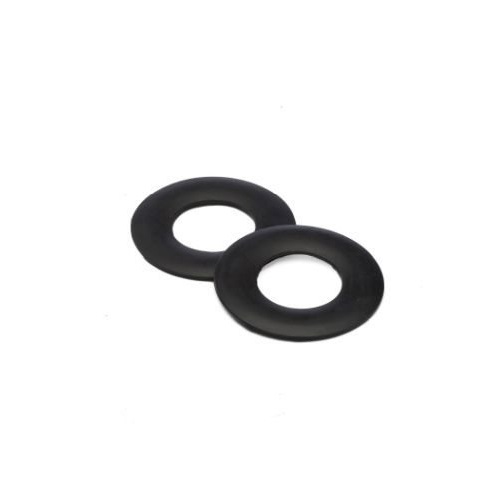
What Rubber Materials Are Commonly Used in Rubber Steel Gasket Manufacturing?
Rubber components play a critical role in sealing performance, especially in environments requiring flexibility, chemical resistance, and temperature adaptability. Our factory selects rubber materials based on application-specific conditions, ensuring optimal compatibility with fluids, pressure, and temperature ranges.
| Rubber Type | Temperature Range | Key Properties | Typical Applications |
| NBR (Nitrile Rubber) | -30°C to +120°C | Excellent oil resistance, cost-effective | Oil pipelines, hydraulic systems |
| EPDM Rubber | -40°C to +150°C | Weather, ozone, and steam resistance | Water systems, HVAC equipment |
| FKM (Viton) | -20°C to +250°C | High temperature and chemical resistance | Petrochemical and high-temperature environments |
| Neoprene (CR) | -35°C to +120°C | Balanced chemical and weather resistance | Marine and outdoor applications |
Our engineers carefully match rubber compounds with steel substrates to ensure long-term adhesion and prevent delamination. This approach allows our Rubber Steel Gaskets to maintain sealing integrity even under cyclic pressure and thermal expansion conditions.
Which Steel Materials Are Used to Reinforce Rubber Steel Gaskets?
The steel layer provides structural strength and dimensional stability. Without proper reinforcement, gaskets may deform under pressure, leading to leakage. Our factory uses high-quality steel materials to ensure consistent mechanical performance.
| Steel Type | Standard | Key Advantages | Application Environment |
| Carbon Steel | ASTM A36 | High strength, cost-effective | General industrial use |
| Stainless Steel 304 | ASTM A240 | Corrosion resistance, durability | Food processing, water systems |
| Stainless Steel 316 | ASTM A240 | Superior chemical resistance | Chemical and marine environments |
| Galvanized Steel | ISO 1461 | Enhanced corrosion protection | Outdoor and humid conditions |
At Kaxite, our production line integrates precision stamping and surface treatment processes to improve bonding strength between rubber and steel. Our factory ensures each batch undergoes thickness control, tensile testing, and corrosion resistance verification before delivery.
How Are Material Combinations Optimized for Different Applications?
Material pairing is not random. It requires engineering evaluation based on pressure rating, flange design, and media compatibility. Our factory develops customized solutions by analyzing working conditions such as fluid type, temperature fluctuation, and installation stress.
For example, NBR combined with carbon steel is widely used in oil-related systems due to its excellent resistance to petroleum-based fluids. In contrast, EPDM paired with stainless steel is preferred in water treatment systems where corrosion resistance and hygiene are critical. Our Rubber Steel Gaskets are designed to maintain sealing performance under both static and dynamic loads.
Through continuous testing and field feedback, Ningbo Kaxite Sealing Materials Co., Ltd. has optimized bonding techniques that reduce failure rates and extend service life. Our factory also supports custom thickness, hardness, and coating requirements to meet diverse industrial needs.
What Manufacturing Standards Ensure Material Reliability?
Consistency in gasket performance depends on strict adherence to manufacturing standards. Our factory follows internationally recognized standards such as ASTM, DIN, and ISO to guarantee material quality and dimensional accuracy.
Each production stage includes compound mixing, vulcanization, metal stamping, and bonding inspection. Our quality control system ensures that Rubber Steel Gaskets meet required compression recovery, tensile strength, and aging resistance benchmarks. This systematic approach allows our products to perform reliably in demanding industrial environments.
At Ningbo Kaxite Sealing Materials Co., Ltd., our commitment to material traceability and process control helps our clients reduce maintenance costs and improve operational efficiency.
FAQ
What materials are commonly used in Rubber Steel Gasket manufacturing for high-temperature applications?
For high-temperature environments, FKM rubber combined with stainless steel 316 is commonly used. This combination provides excellent thermal stability and chemical resistance, making it suitable for petrochemical and high-pressure systems. The steel layer maintains structural integrity while the rubber ensures tight sealing.
How do I choose the right material combination for my gasket application?
Material selection depends on operating temperature, pressure, and the type of media involved. For oil systems, NBR with carbon steel is often sufficient. For water or steam applications, EPDM with stainless steel is more appropriate. Consulting with our factory helps ensure the correct combination based on actual working conditions.
Why is bonding quality important in Rubber Steel Gaskets?
Bonding quality determines whether the rubber and steel layers remain intact during operation. Poor bonding can lead to separation, leakage, and failure under pressure. Advanced bonding techniques and strict quality control ensure long-term durability and consistent sealing performance.
Conclusion and Technical Support
Material selection is the foundation of reliable gasket performance. By combining the right rubber compounds with appropriate steel reinforcements, our factory ensures durability, chemical resistance, and long service life across various industrial applications. Our experience in designing and manufacturing Rubber Steel Gaskets allows us to provide solutions tailored to real-world operating conditions.
If you are evaluating sealing solutions or need technical guidance, our team is ready to support your project. Contact us today to discuss specifications, request samples, or receive a customized quotation based on your application requirements.
