

Triisopropanolamine: The Unsung Hero of Industrial Formulations
2026-07-18
Behind every high-performance industrial formulation, there’s often a quiet workhorse that rarely gets the spotlight. Triisopropanolamine (TIPA) is exactly that—an unsung hero driving efficiency, stability, and strength in applications from cement grinding aids to metalworking fluids. Yet, most formulators underestimate its potential. At HAISEN, we’ve seen firsthand how the right TIPA can transform a good formulation into a great one. In this post, we’ll uncover why this versatile amine deserves more credit and how it might just be the missing link in your next breakthrough.
Unmasking Triisopropanolamine: A Chemical Workhorse
Triisopropanolamine might not be a household name, but its fingerprints are all over products that keep modern life moving. From industrial paints to metalworking fluids, this unassuming amine quietly enables performance without demanding the spotlight. Its molecular structure—a nitrogen atom cradled by three isopropanol groups—gives it a rare blend of basicity, water solubility, and low volatility, making it a versatile tool in chemistries where other additives would struggle.
What sets triisopropanolamine apart is its knack for neutralizing acids and stabilizing emulsions under tough conditions. In cement grinding aids, it stops particles from clumping, boosting efficiency without altering the final set time. In gas treatment, it scrubs acidic impurities with a gentle touch, avoiding the corrosion issues that harsher amines can cause. These applications often go unmentioned on ingredient labels, yet they depend on triisopropanolamine’s ability to perform consistently without leaving unwanted residues.
Perhaps its most understated role is as a building block in advanced materials. Manufacturers use it to craft surfactants that disperse pigments evenly in coatings or to create corrosion inhibitors that protect metal surfaces in harsh environments. Unlike many amines, triisopropanolamine resists yellowing over time, preserving the clarity of transparent finishes. This quiet resilience explains why engineers reach for it when reliability must be absolute, even if the end user never knows its name.
The Cement Connection: How TIPA Eases the Grind
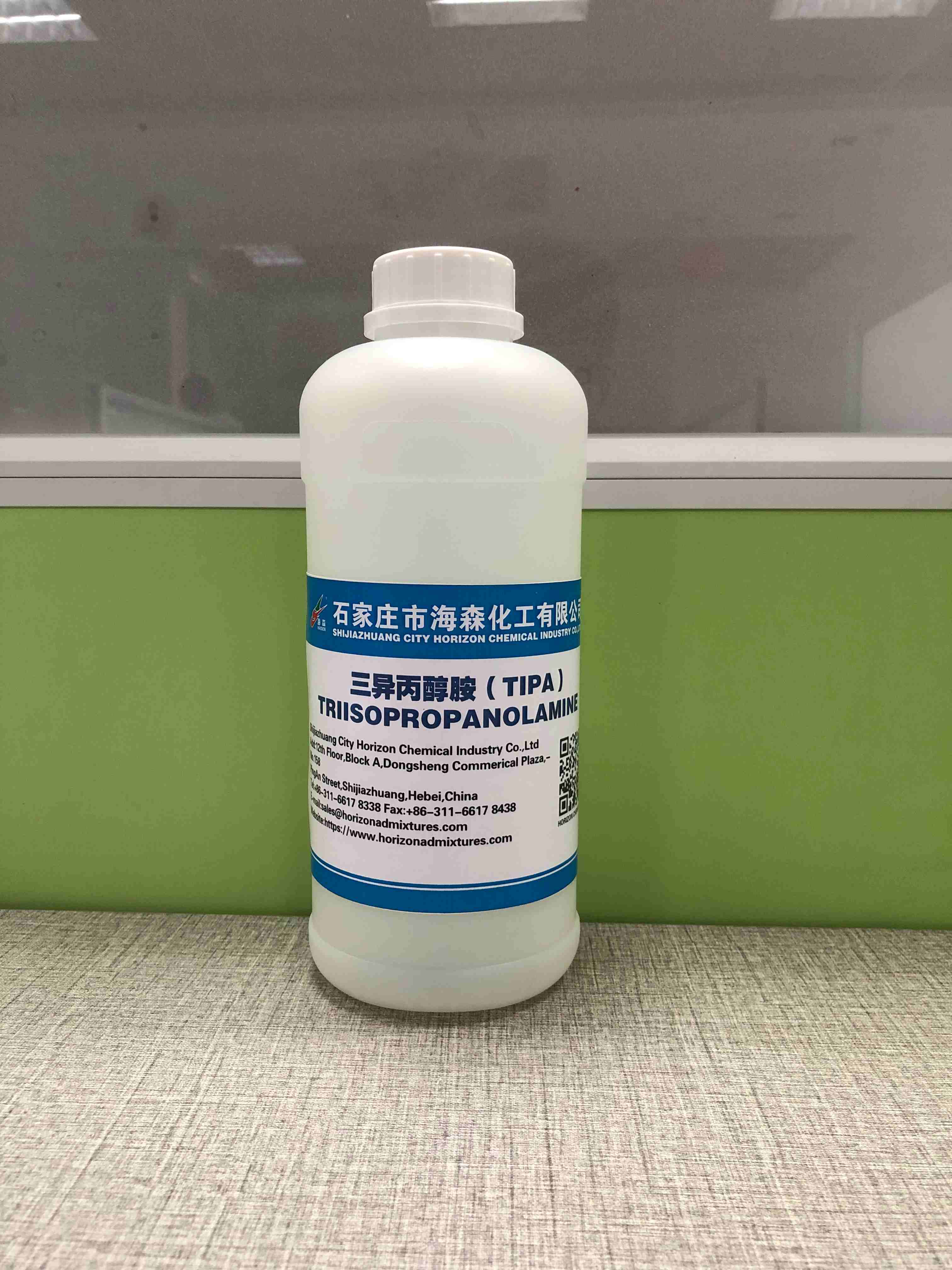
In the demanding world of cement production, the grinding process is often the most energy-intensive and costly stage. Here, triisopropanolamine (TIPA) steps in as a remarkable grinding aid, transforming how cement particles interact during milling. Rather than simply reducing clinker size, TIPA chemically interacts with particle surfaces to neutralize static charges and prevent agglomeration, allowing mills to operate more smoothly and efficiently. The result is a finer, more uniform cement product without the excessive energy draw that typically haunts plant operators.
But TIPA's role extends well beyond the grinding circuit. As a performance-enhancing additive, it continues to work its magic when the cement is later mixed with water. By chelating metal ions on the clinker surface, TIPA accelerates the hydration of key phases, particularly the slower-reacting ferrite and aluminate phases. This contributes to significant late-age strength gains—often a 10–15% boost at 28 days—without compromising early workability. The improved particle dispersion and enhanced hydration kinetics lead to denser microstructures and reduced permeability, which in turn elevate the long-term durability of concrete in real-world applications.
What sets TIPA apart from traditional grinding aids like glycols or amines is its dual-action benefit: it tackles both the mechanical and chemical hurdles of cement processing. Plants using TIPA report not just lower electricity bills per ton, but also the ability to utilize a wider range of clinker qualities or increase supplementary cementitious material substitution. In an industry squeezed between tightening environmental regulations and relentless demand for high-performance binders, TIPA offers a lean, elegant solution—one that quietly unites process efficiency with product excellence, from the grinding mill all the way to the hardened concrete.
Polyurethane Reactions: The TIPA Difference
Triisopropanolamine, or TIPA, brings a subtle yet critical twist to polyurethane chemistry. Unlike straight-chain amines that often accelerate gelation too aggressively, TIPA’s branched structure and secondary hydroxyl groups moderate reactivity. This controlled pace allows formulators to fine-tune reaction profiles, especially in rigid and semi-rigid foams where delayed cream time and a smooth viscosity build are essential for mold filling and dimensional stability. The molecule’s three isopropanol arms create a steric environment that tempers the initial isocyanate-amine reaction, shifting the kinetics toward a more uniform polymerization.
The real distinction emerges in the cured network. TIPA acts as a built-in crosslinker and chain extender in one, contributing to a tighter, more resilient polymer matrix. Its tertiary amine center is sterically shielded, which reduces its catalytic activity during later curing stages but enhances the final material’s hydrolytic stability and compressive strength. This dual role—moderating the early reaction while reinforcing the end product—makes TIPA especially valuable in applications like spray foam insulation and high-load elastomers, where consistent cell structure and long-term mechanical performance are non-negotiable.
Perhaps most underrated is TIPA’s influence on processing latitude. It significantly widens the window between the cream time and the rise time, giving operators more control in continuous lamination or large pour-in-place operations. This forgiving nature reduces scrap and rework, particularly when ambient conditions fluctuate. Additionally, TIPA’s low volatility and mild odor improve workplace safety without sacrificing reactivity, a balance that’s hard to strike with conventional amine catalysts. In an industry chasing both efficiency and durability, TIPA quietly redefines what’s possible by bridging the gap between processability and property enhancement.
Corrosion’s Quiet Opponent: TIPA at Work
TIPA, or triisopropanolamine, doesn’t announce itself with fanfare. It slips into formulations, a modest amine, and gets to work. In the damp, oxygen-rich environments where steel reinforcement turns to rust and concrete crumbles, TIPA quietly interferes with the corrosion process. It doesn’t form a dramatic shield; instead, it adsorbs onto metal surfaces, breaking the electrochemical chain reaction that would otherwise eat away at the structure. It’s a patient, persistent ally—one that thrives under the radar, often in cement grinding aids or migrating corrosion inhibitors, extending the life of infrastructure without drawing attention.
What sets TIPA apart is its subtlety. Unlike heavier films or volatile inhibitors, it works at the molecular level, helping to passivate the steel by stabilizing the protective oxide layer. In practice, this means fewer cracks, less spalling, and a significantly longer service life for reinforced concrete—particularly in marine settings or places where de-icing salts are a constant threat. Engineers and formulators lean on it because it doesn’t demand high dosages or complex application methods; a little goes a long way, diffusing through the pore structure and creating a less aggressive microenvironment. The result is corrosion that’s held at bay not by force, but by a quiet, chemical negotiation.
There’s also an elegance to how TIPA collaborates with other components. In cement grinding, it improves efficiency while also setting the stage for its later protective role. In admixtures, it pairs with organic and inorganic inhibitors, often boosting their performance without stealing the spotlight. It’s not a magic bullet—nothing is—but its consistent, understated effectiveness has made it a go-to solution for those who understand that durability is built on small, intentional choices. In a world obsessed with high-tech surfaces and smart coatings, TIPA remains a reminder that sometimes the best defense is a quiet one.
In the Flow: TIPA’s Role in Lubrication and Cooling
In the intricate dance of industrial machinery, where precision meets power, lubrication and cooling are not just routine tasks—they are the lifeblood of every operation. TIPA (Triisopropanolamine) steps in here as a quiet enabler, its molecular structure fine-tuned to deliver performance that feels almost intuitive. Rather than simply coating surfaces, TIPA-based formulations create a tenacious film that stays put under extreme pressure, smoothing out microscopic peaks and valleys on metal surfaces to slash friction by up to 30% in some applications. This isn't just chemistry; it's a physical transformation that lets gears mesh with a whisper and bearings spin with effortless grace, all while carrying away the blistering heat that could otherwise spell disaster.
What sets TIPA apart in cooling is its remarkable ability to boost the thermal conductivity of water-based fluids without turning them into a sticky mess. In high-speed cutting and grinding, where temperatures can rocket past 600°C, a coolant laced with TIPA pulls heat from the cutting zone with a kind of greedy efficiency, yet it resists the urge to foam or break down. The secret lies in its amphiphilic nature—one end grabs onto water molecules, the other dances with oily residues, creating a micro-emulsion that wets the tool uniformly. This means fewer hot spots, longer tool life, and a finish so clean you’d think the workpiece had been gently coaxed to shape rather than carved.
But perhaps the most underappreciated gift of TIPA is how it juggles these roles without compromise. In metalworking fluids, for instance, it doesn’t force a trade-off between cooling and lubricity; it somehow amplifies both. The result is a fluid that feels almost alive—clinging where it should, flowing where it must, and keeping the system in a thermal sweet spot that operators notice as fewer line stoppages and a vanishing need for fiddly adjustments. This harmony is especially vital in automated lines where a single degree of temperature shift can turn a masterpiece into scrap. So while many additives promise balance, TIPA quietly delivers it, making the flow of production not just manageable but remarkable.
Green Footprint: Assessing TIPA’s Environmental Impact
When we talk about packaging that vanishes like a fruit peel, TIPA’s compostable films are often the first example that springs to mind. But what does their lifecycle actually look like beyond the consumer’s backyard bin? A closer look reveals a carefully managed chain that starts with responsibly sourced bio-based polymers, blended to mimic the durability of conventional plastic while retaining the ability to break down fully in compost environments. The real story isn’t just about degradation—it’s about rerouting waste away from landfill and into a system where nutrients return to the soil.
However, the environmental equation isn’t as straightforward as swapping one material for another. TIPA’s footprint depends on regional composting infrastructure, which varies wildly. In areas with robust organic waste collection, their packaging can decompose within months in industrial facilities, turning into carbon dioxide, water, and biomass. Without access to such systems, the benefits diminish, highlighting that even the greenest material requires a supportive ecosystem to fulfill its promise. This raises a challenging question: are we ready to invest in the collection and processing networks needed to match the innovation?
Digging deeper, the production phase also warrants scrutiny. While plant-based feedstocks reduce reliance on fossil fuels, agriculture brings its own impacts—land use, water, and fertilizer. TIPA’s commitment to sourcing non-GMO raw materials and reducing energy intensity suggests a mindful approach, but the full picture remains a work in progress. As life cycle assessments evolve, the company’s transparency about both achievements and limitations will be the true measure of its green footprint.
FAQ
Its knack for neutralizing acids and stabilizing pH keeps tools from corroding and extends fluid life, even under high-pressure cutting conditions.
By coating the fine particles, it prevents them from clumping together, which boosts grinding efficiency and yields a smoother, more uniform cement blend.
It acts as a mild alkalizer and emulsifier, helping lotions and creams maintain the right consistency and skin compatibility without harsh effects.
Because it often works behind the scenes—stabilizing, neutralizing, or enhancing—without getting the spotlight, yet many everyday products depend on it for reliability.
It has a low vapor pressure and is readily biodegradable, which means less air pollution and quicker breakdown in wastewater compared to some alternatives.
As a crosslinker and catalyst, it helps control the foam reaction, leading to better cell structure and mechanical strength in rigid and flexible foams.
From construction and automotive to cosmetics and textiles, it shows up wherever precise pH control, emulsification, or anti-corrosion properties are needed.
In its concentrated form, it can irritate skin and eyes, but in diluted,formulated products it's generally safe and well-tolerated when used as directed.
Conclusion
In the vast landscape of industrial additives, triisopropanolamine (TIPA) might seem ordinary, yet its chemical versatility makes it an unsung hero. This multifunctional amine excels first in cement manufacturing, where it acts as a grinding aid: by adsorbing onto particle surfaces, it reduces agglomeration, enabling finer grinding with less energy and shorter milling times. Moreover, TIPA accelerates strength development in cement pastes. Shifting to polyurethane chemistry, TIPA’s three hydroxyl groups and tertiary amine serve dual roles—catalyzing the isocyanate-water reaction for carbon dioxide generation in foams while participating in crosslinking, ultimately delivering rigid or flexible foams with optimized cell structure. Its influence extends to coatings and elastomers, where it modulates cure speed and enhances durability.
Beyond these, TIPA shows a quieter face as a corrosion inhibitor. In aqueous metalworking fluids, it forms a protective monolayer on iron and steel, suppressing rust even under aggressive conditions. Similarly, in engine coolants, it neutralizes acidic byproducts and prevents scaling, maintaining heat transfer efficiency. Its surfactant nature also improves the lubricity of fluids and reduces foam in industrial cleaning applications. From an environmental standpoint, TIPA is readily biodegradable and demonstrates low aquatic toxicity, aligning with green chemistry principles. Its balanced ecotoxicity profile, combined with robust industrial performance, makes TIPA a compelling choice for formulators seeking sustainability without compromise.
Contact Us
Contact Person: Sam Lee
Email: [email protected]
Tel/WhatsApp: 86-311-6617 8338
Website: https://www.horizonadmixtures.com/