

Top Strong Magnet Picks for Heavy-Duty Tasks
2026-09-14
Some jobs are too demanding for ordinary magnets. When you're lifting, securing, or positioning heavy materials, you need holding power that won't quit. That's why we've rounded up the top strong magnet picks for heavy-duty tasks—and why DAWA keeps showing up on job sites. From rare earth pull to rugged coatings, these aren't your fridge magnets. Here's what to reach for when the work gets tough.
Pull Force Isn't Everything (But It's a Good Start)
When browsing magnet specs, pull force tends to dominate the conversation. That's hardly surprising—it's a simple number that feels tangible, and it gives you an immediate sense of what a magnet can hold. But fixating on that single value can lead you astray. A magnet with impressive pull force on paper might perform poorly in your actual setup if other conditions aren't right.
Consider the environment first. Neodymium magnets, for instance, lose strength as temperatures climb, and standard grades can start degrading permanently above 80°C. Surface coating matters too: a thin nickel layer won't survive outdoor moisture or salt spray, while epoxy or gold coatings add protection but change the effective pull. Then there's the gap between magnet and target—even a millimeter of air, paint, or plastic can slash holding force dramatically. Pull force ratings are usually measured in direct contact with a thick, flat steel plate, which rarely mirrors real-world use.
That doesn't mean you should ignore pull force. It remains a useful starting point for comparing magnets and narrowing down options. Just treat it as one piece of the puzzle. Check the temperature rating, coating, and geometry, and think about the exact surface you're attaching to. A little extra scrutiny up front saves you from a magnet that looks strong on a datasheet but fails in practice.
The Coating That Keeps Rust from Ruining Your Lift
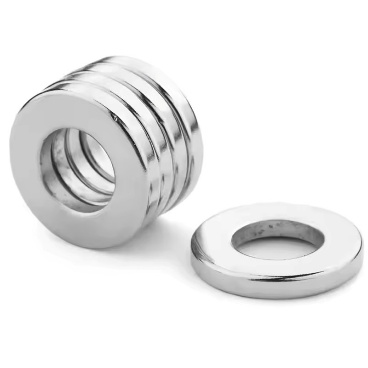
Rust is the silent killer of any lift system. It starts as a tiny patch of discoloration, but before long it eats through load-bearing components, weakens welds, and turns moving parts into seized scrap. A proper protective coating doesn't just sit on the surface—it forms a chemical barrier that blocks moisture and oxygen from reaching the metal underneath. That's the difference between a lift that lasts five years and one that still operates smoothly after two decades.
Not all coatings are created equal. Hot-dip galvanizing uses a zinc layer that sacrifices itself to protect the steel, which works great for outdoor lifts exposed to rain and road salt. For indoor facilities, a two-part epoxy or polyurethane coating offers superior resistance to oils, solvents, and constant abrasion from chains and rollers. Some manufacturers now use nano-ceramic sealants that penetrate microscopic pores in the metal, creating a hydrophobic surface where water beads up and rolls off instead of lingering to cause corrosion.
Application matters just as much as the chemistry. A coating that's sprayed too thin or misses the inside of bolt holes leaves vulnerable spots where rust can start invisibly and spread outward. That's why top lift builders apply coatings after welding and machining, then inspect coverage with a holiday detector—a device that finds pinholes by passing an electric current through the surface. Touching up any damage from installation, plus a quick annual inspection for scratches or chips, keeps that barrier intact for the life of the lift.
Why Threaded Holes Beat Through-Holes for Heavy Loads
When components face heavy loads, the choice between a threaded hole and a through-hole isn't just about convenience—it's about whether the joint can survive without loosening or tearing out. A threaded hole engages the fastener directly along its entire depth, distributing tension across multiple engaged threads rather than relying on a nut bearing against a single surface. This creates a stiffer joint that resists vibration-induced loosening and maintains preload under fluctuating stress. For heavy machinery, engine blocks, or structural brackets, that distributed grip means less localized deformation and a far lower chance of the fastener pulling free when the load spikes.
Through-holes require access to both sides for a nut and washer, and under high tension the clamped material can compress or the nut can embed into a softer surface, gradually relaxing the preload. Threaded holes eliminate that second interface entirely. The load path runs directly from the fastener threads into the parent material, allowing designers to place bolts in blind locations, reduce part count, and avoid the weak point of a protruding nut that can catch on moving parts or create stress concentrations. In heavy load applications, that cleaner load path translates into longer service intervals and fewer unexpected failures.
Another often-overlooked advantage is alignment. With a through-hole, any misalignment between the bolt, nut, and hole can create bending stresses that amplify under heavy loads, leading to fatigue cracks. A threaded hole acts as a self-centering guide, holding the fastener in precise alignment regardless of external forces. This is why critical joints in bridges, mining equipment, and hydraulic presses often tap threads directly into thick plates or castings rather than drilling through and bolting from behind—the joint becomes more predictable, and the margin against failure widens when every thread carries its share.
Heat and Cold - The Silent Killers of Magnetic Strength
A neodymium magnet left on a sunlit dashboard doesn't scream for help—it just quietly forgets how to hold a grocery list. Heat above a magnet's rated operating range breaks down the alignment of its internal domains, and once that order is lost, no amount of cooling can fully restore it. Even brief exposure to a hot car interior or an industrial oven can permanently shave off a chunk of pull force.
Cold is sneakier. Most magnets actually get a temporary boost in strength as temperatures drop, but rapid cycling between freezing and room temperature creates microscopic stress fractures in the magnet's structure. Over months, those tiny cracks propagate, and one day the magnet simply snaps or crumbles under a load it used to handle with ease. The damage isn't always obvious until it's too late.
What makes both extremes so dangerous is their silence. There's no warning label, no visible rust, no audible crack—just a gradual decline that most users blame on cheap manufacturing. Yet the real culprit is often the environment itself, slowly eroding magnetic strength one hot afternoon or cold night at a time.
Field Notes - Magnets That Actually Held Up in a Scrap Yard
You'd think any old magnet would work in a scrap yard, but the first thing you notice is how quickly cheap ones lose their grip when the rust and grease start building up. We swapped in a set of neodymium lifting magnets with a steel cup design, and the difference was immediate — these held onto mangled car frames and shredded sheet metal without slipping, even when the load was awkwardly balanced.
The real test came when we had to move a pile of mixed ferrous scrap that had been sitting out in the rain. Standard ceramic magnets would have needed constant cleaning, but these kept their pull strength through mud, oil, and surface corrosion. We did have to watch the air gap — any spacing between the magnet face and the metal kills the hold fast — so we made sure to knock off the thickest debris before each lift.
After three weeks of daily use, the housings showed some dings but the magnetic circuit stayed intact. The only maintenance was a quick wipe-down at the end of each shift. If you're tired of magnets that drop half the load halfway across the yard, these are worth the upgrade — just don't expect them to grab onto aluminum or stainless, because that's not how physics works.
From Hoisting to Fixturing - One Magnet, Many Jobs
A single lift magnet doesn't care whether it's dangling from a crane hook or bolted to a milling table. The same pull that hoists a steel plate off the warehouse floor will pin a weldment in place while an operator checks alignment. You flip the lever, the field routes through the face, and what was a loose chunk of metal becomes a temporary extension of the machine.
Contract shops often keep one unit moving between stations—morning it might hang from a jib crane to unload raw stock, afternoon it gets clamped into a fixture to hold odd-shaped castings for drilling. There's no need to swap out inserts or dial in air pressure. The magnet doesn't know the difference between lifting and fixturing; it just grabs.
That flexibility shows up in the design too. Deep reach, variable holding force, and a flat face let the same magnet work on round bar, plate, and fabricated assemblies. When a job calls for a third hand, it's often quicker to reach for the magnet than to machine a custom clamp.
FAQ
Focus on the pull force rating rather than just the physical size. A compact neodymium disc with a steel housing can outperform a much larger ceramic block. Look for a listed holding force in pounds or kilograms, check the maximum operating temperature, and make sure the magnet has a protective coating if you will use it outdoors or around moisture.
Not really. That rating assumes direct contact with a clean, flat, thick steel plate. Any paint, rust, dirt, or air gap reduces the actual grip dramatically. For critical lifts, test on the exact material first and add a safety margin — many riggers use a 3:1 or even 5:1 ratio between rated force and the load.
They are the strongest permanent magnets by volume, but they have limits. They can lose strength above about 80°C unless you buy a high-temperature grade, and they are brittle. For extremely hot environments or where you need a wider contact area, a well-built magnetic lifter with a ferrite or alnico core may be more reliable.
Lifting magnets are designed to pick up and release heavy steel plates or bars vertically, often with a lever release. Magnetic sweepers roll along the floor to collect stray nails, screws, and metal debris. Welding magnets hold steel pieces at fixed angles for fabrication. Choosing the wrong style for a job leads to frustration or unsafe handling.
Slide it sideways to the edge of the surface instead of pulling straight up. If it is a cup or pot magnet, use the built-in handle or lever. For flat magnets, place a wooden wedge or plastic scraper under one corner and twist gently. Never use your fingertips near the gap when two magnets or a magnet and steel are about to snap together.
A quality magnet used within its limits can hold its strength for decades. The main enemies are high heat, strong opposing magnetic fields, and physical shock from dropping or hammering. Store them away from motors, transformers, and other magnets, and avoid letting them slam into metal surfaces.
Keep the magnet away from pacemakers, credit cards, and electronic devices. Wear gloves and safety glasses if there is any chance of chips or sparks. Inspect the magnet housing and lifting eye before each use, and always assume the magnet is stronger than you expect — it will find any metal object within reach faster than you can react.
Conclusion
When you're sorting through heavy-duty magnet options, pull force gets most of the attention, but experienced buyers learn that a big number on the spec sheet won't save you if the coating flakes off after three months outdoors. The strongest picks for demanding jobs pair solid holding power with a nickel-copper-nickel or epoxy finish that shrugs off moisture, salt, and the occasional scrape against steel beams. Threaded holes matter more than most people expect—through-holes force you to rely on a bolt and nut from both sides, which can loosen under vibration. A tapped hole lets you thread a lifting eye or fixture directly into the magnet body, keeping the load path straight and reducing the chance of the fastener shearing off when the magnet is pulled sideways.
Heat and cold quietly kill magnetic strength long before the magnet physically fails. Neodymium grades with higher working-temperature ratings, like N42SH or N45UH, hold up better in foundries or outdoor winter yards than standard N35. In a scrap yard test, magnets with rubberized bumpers and reinforced steel shells kept grabbing uneven, rusted scrap where cheaper units chipped or lost grip after a few weeks. What separates the top choices is adaptability: the same magnet that lifts a 300-pound plate on a hoist can be threaded into a jig for welding or clamped onto a workbench for fixturing. That kind of flexible use, combined with a rust-resistant coat and a threaded mounting point, turns a strong magnet into a long-term tool rather than a one-trick replacement part.
Contact Us
Contact Person: Kelvin Lo
Email: [email protected]
Tel/WhatsApp: 0769-88561131
Website: https://dawamagnetic.com/