

Top Ground Mount Solar System Suppliers in China Worth Knowing
2026-08-23
China has quietly become the world's workshop for ground mount solar hardware, yet most buyers only know a handful of big names. If you're planning a utility-scale project or a commercial carport, the difference between an average supplier and a reliable one often shows up months after installation. That's why we've compiled this list of top ground mount solar system suppliers in China worth knowing—with Topfencesolar standing out for its consistent quality and project-specific engineering support. Read on to discover which manufacturers deserve a spot on your shortlist.
Ground Mount Suppliers That Handle Harsh Climates Without Overengineering
Some suppliers treat every job like it's headed for a hurricane, packing in extra steel, oversized footings, and redundant cross-bracing that most sites simply don't need. That approach survives the storm, but it also inflates material costs and drags out installation. The better ones start with a clear read of local weather data—what the site actually experiences year after year—not a hypothetical worst case from another region.
For heavy snow, that might mean a tad more tilt and wider row spacing so snow sheds naturally, instead of doubling up on beam thickness. In coastal zones, a knowledgeable supplier will offer corrosion-resistant coatings or upgraded stainless fasteners without forcing a fully sealed marine package. High-wind regions call for extra purlin bracing at array edges and a few more ground anchors—not a heavier frame everywhere.
What sets the right suppliers apart is restraint. They calculate structural loads from actual site conditions, show where safety margins truly exist, and skip the add-ons that only look good on paper. You end up with a ground mount that stands up to harsh weather without the price tag of overbuilt infrastructure.
The Unsung Factories Behind China’s Utility-Scale Solar Expansion
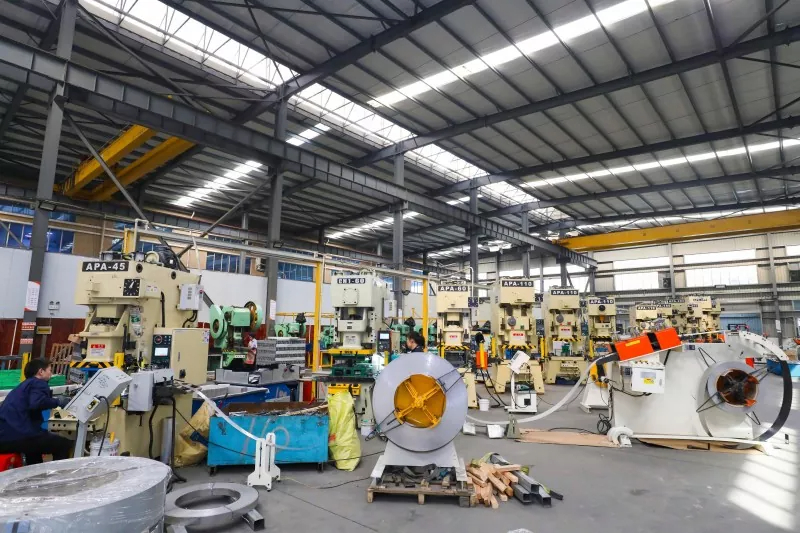
Driving through the industrial outskirts of Yiwu, Jinhua, or Hefei, you rarely see solar panels. What you see are low, sprawling concrete buildings with loading docks, endless lines of trucks, and exhaust fans humming day and night. These are the cell and module plants that feed China’s massive solar farms in the western deserts—places like Qinghai’s Golmud or Ningxia’s Tengger. Inside, rows of furnaces grow silicon ingots, diamond wire saws slice them into wafers thinner than a credit card, and screen printers lay down silver paste with the precision of a semiconductor fab. It’s not glamorous; the floors smell of solder flux and alkaline etch, and workers in blue smocks move with the quiet rhythm of a shift that never really stops.
What makes these factories “unsung” is that they don’t win awards or get featured in glossy sustainability reports. They just pump out gigawatts. A single plant in Jiangsu might produce enough cells in one week to cover a solar farm the size of 1,500 football fields. The scale is staggering, but it’s achieved through brute-force iteration: tweaking the boron diffusion temperature by half a degree, swapping a paste supplier to shave 0.1% off contact resistance, or rearranging a conveyor to save four seconds per tray. There’s no Eureka moment here. Just thousands of small improvements stacked on top of each other until the cost per watt drops below what anyone in Europe or the US thought possible ten years ago.
Then comes the logistics. Because utility-scale solar in China often sits in remote, arid regions with no local manufacturing base, the panels have to travel hundreds of kilometers by rail and road. Factories near the coast send containers inland, where they’re transferred to specialized flatbed trucks that creep up mountain passes at 30 km/h. At the other end, assembly crews unload them under a sky so bright it hurts, bolting racking systems into gravel that has never seen rain. The factories themselves may never see the finished site—many workers have never visited a solar farm. They know the product only as a stack of laminated glass and aluminum frames on a pallet. Yet without those unremarkable buildings and their relentless output, China’s renewable surge would stall within weeks.
What Project Developers Actually Ask Before Choosing a Supplier
When a project developer starts vetting suppliers, the conversation rarely stays at the level of brochures and capability statements. They pull up a spec sheet and ask whether your tolerance stack-up matches what the CAD model assumes, or whether your lead time includes the buffer for customs on their end. The real questions are about the gaps between your quoted numbers and what actually shows up on the loading dock.
After the technical pass, the questions shift to risk. Developers want to know what happens when the third batch comes back with a slightly different alloy composition, or who pays for the air freight if your QC misses a batch that should have been flagged. They are not looking for a promise that nothing will go wrong; they are testing whether your escalation path is shorter than their own.
In the final round, the tone becomes almost conversational, but the probes are sharper: can you hold the same price if the order doubles in six months? Do you have a backup line if your main facility goes down for a week? The supplier who can answer these without pausing to check with a manager usually ends up on the approved list.
How Local Steel and Logistics Shape Ground Mount Costs
Ground mount projects live and die by the price of steel and the distance it travels. When a local mill or supplier keeps beams, purlins, and torque tubes in stock, developers skip multi-week lead times and avoid paying freight premiums from distant ports. A single rail spur or a well-placed distribution yard can shave several cents per watt off the structural budget before a single pile is driven.
Logistics adds another layer that rarely shows up on a bill of materials. Oversized loads, escort vehicles for long columns, and rural road weight limits force crews to stage deliveries in waves or rent laydown yards near the site. Projects within a day's drive of a galvanizing plant or a steel service center often see fewer schedule gaps and less rework from transit damage, while remote sites quietly absorb higher per-ton delivery costs and longer crane standby times.
Savvy estimators treat local steel not as a line item but as a risk buffer. They map nearby fabrication shops, confirm truck routes before finalizing racking designs, and sometimes switch from custom rolled sections to standard shapes that multiple regional suppliers can provide. In tight markets, that local flexibility prevents a single bottleneck from stalling the entire array, making the difference between a project that finishes under budget and one that watches equipment idle while steel sits on a train two states away.
The Shift Toward Pre-Assembled and Faster-to-Install Racking
Warehouse projects used to treat racking installation as a drawn-out, labor-heavy phase. Teams would spend days sorting beams, braces, and bolts, then more time double-checking that every connection matched the manufacturer’s spec. The move toward pre-assembled racking changes that rhythm. Components now arrive with uprights already joined to bracing, beam connectors pre-set, and hardware kitted by bay. It takes less time to unload and fewer decisions on the floor.
Faster installation doesn’t mean looser tolerances. In many cases, pre-assembled modules are produced under tighter control than field-built frames. Welded or bolted subassemblies come off jigs, so hole alignment and plumbness are more repeatable. Installers spend their hours positioning and anchoring rather than fitting small parts. That shift reduces the chance of missing fasteners and cuts the usual back-and-forth between layout and erection.
For operations managers, the appeal goes beyond speed. Shorter install windows mean less disruption to active pick paths and receiving docks. It also makes phased retrofits more practical—sections can be swapped or extended over a weekend instead of a multi-week shutdown. As racking suppliers refine modular designs, the expectation of “ready-to-set” components is becoming the norm, not the exception.
Which Chinese Suppliers Are Gaining Repeat Utility Contracts
A handful of Chinese manufacturers have built a quiet but durable presence in the utility sector, winning repeat contracts not through aggressive pricing alone, but through consistent on-time delivery and field-proven equipment longevity. Companies specializing in smart meters, transformers, and switchgear—particularly those with dedicated after-sales support teams in Southeast Asia, Africa, and Latin America—are seeing the same utilities return year after year. Their edge often lies in adapting voltage standards and grid communication protocols to local conditions, something that generic exporters tend to overlook.
Utilities that previously relied on European or Japanese suppliers now issue renewal tenders to these Chinese firms because the total cost of ownership—including spare parts availability, remote diagnostics, and training for local technicians—has proved more predictable. Notably, suppliers with ISO 17025-accredited testing labs and in-country repair depots are favored, since utility procurement committees increasingly prioritize maintenance turnaround over upfront price. Word of mouth among utility engineers carries more weight than glossy brochures, and repeat contracts often stem from a failed transformer or meter replaced within 48 hours rather than any marketing push.
Regional patterns also matter: state-owned utilities in Pakistan and Bangladesh have repeatedly contracted the same Wenzhou and Ningbo switchgear makers for rural electrification projects, while water authorities in East Africa have standardized on a few Shenzhen-based pump and telemetry vendors. These relationships quietly expand into adjacent equipment categories, with one successful substation package often leading to invitations for distribution automation or solar hybrid system tenders. The suppliers gaining repeat utility contracts are rarely the most visible at trade fairs, but they are the ones whose technical staff remember every grid code violation from the previous deployment and fix it before the next shipment leaves the factory.
FAQ
Companies like Sungrow, Trina Solar, JinkoSolar, LONGi, and Arctech Solar frequently come up in large-scale project discussions. Sungrow and Huawei dominate the inverter side, while Arctech specializes in tracking systems that boost yield for utility-scale arrays.
Arctech has built a strong reputation around its tracking and racking solutions. Their products handle challenging terrain and high wind loads well, which is why they appear in many multi-hundred-megawatt projects across Asia, the Middle East, and Latin America.
Yes, a few players like Trina Solar and Chint provide integrated offerings that span modules, inverters, and even mounting structures. This can simplify procurement for developers who want fewer vendors and better compatibility across the system.
Sungrow is often favored for its centralized and string inverter lineup that scales well for utility projects, with strong local service networks. Huawei pushes smart PV management with advanced monitoring and AI-assisted diagnostics, which appeals to operators prioritizing O&M efficiency.
LONGi, JinkoSolar, and JA Solar lead in bifacial module supply for ground mount projects. Their high-efficiency panels are commonly specified in tenders because they combine strong performance in hot climates with competitive pricing.
Beyond price per watt, check their track record in similar climates, bankability, warranty terms, and local support. Companies like Trina and Jinko have extensive global project references, which helps reduce risk for lenders and EPC contractors.
GoodWe and Growatt are expanding from residential into utility-scale inverters, while mounting specialist Clenergy has been gaining traction in Southeast Asia and Australia. They may not have the same scale as Sungrow yet, but their pricing and flexibility attract mid-sized developers.
Conclusion
China's ground mount solar racking sector isn't just about the lowest bid. The suppliers worth knowing are the ones that can handle extreme wind, heavy snow, or corrosive coastal air without piling on unnecessary steel and cost. Many of these names never appear in glossy marketing; they're the quiet factories that have been shipping container after container to utility projects across Xinjiang, Gansu, or overseas. Developers tend to skip the spec sheet first and instead ask about on-time delivery records, how a supplier responds when a foundation bolt doesn't line up, and whether the warranty covers the actual torque values in the field. Local steel prices and the distance from a port or project site often matter more than the racking design itself, which is why the strongest suppliers are clustered near mills and logistics hubs.
A clear shift is underway toward pre-assembled components and racking that a small crew can install with basic tools, cutting labor hours and crane time. This trend favors suppliers that invest in clever packaging and precise fabrication rather than just raw tonnage. Repeat utility contracts are the real signal: when an EPC comes back to the same Chinese factory for a third or fourth 100 MW site, it usually means the mounting system survived a hailstorm, the delivery schedule held, and the after-sales team actually answered the phone. Those are the ground mount suppliers developers quietly put on their shortlist and rarely talk about publicly.
Contact Us
Contact Person: Nancy
Email: [email protected]
Tel/WhatsApp: +86-13365923720
Website: https://www.topfencesolar.com/
