

Top China Suction Dredger Supplier for Efficient Sediment Removal Solutions
2026-11-16
Sediment accumulation can choke waterways and stall critical operations, but the right dredging partner turns that challenge into a streamlined process. When deadlines are tight and precision is non-negotiable, YaKai Dredger stands out among China’s suction dredger suppliers, delivering equipment designed for rapid, thorough sediment removal. This blog explores how our solutions combine efficiency with rugged reliability—keeping your project moving when it matters most.
Decoding the Mechanics of High-Efficiency Suction Dredgers
At the heart of a high-efficiency suction dredger lies a carefully balanced interplay between suction power and fluid dynamics. Rather than simply pulling material from the seabed with brute force, these machines rely on a precisely engineered centrifugal pump system that creates a controlled vacuum. The pump impeller, often designed with hardened wear-resistant alloys, accelerates water to high velocities without causing cavitation — a common pitfall that can erode blades and destroy efficiency. By maintaining the ideal flow rate and minimizing turbulence in the suction pipe, the dredger ensures that sediment enters the intake in a dense slurry, not diluted by excess water. This balance is constantly adjusted by onboard sensors, giving the operator real-time feedback to avoid clogging and maintain peak hydraulic throughput.
Beyond the pump itself, the cutter head or draghead plays an equally vital role. In compact sediment, a rotating cutter equipped with sharp teeth loosens material mechanically before it ever reaches the suction mouth. High-efficiency designs replace traditional claw-like cutters with helical or smooth-profile teeth that slice through clay and compacted sand using less torque, drastically reducing energy use. Some modern dredgers even integrate water jets within the cutter head, fluidizing stubborn seabed layers so that the pump can draw them in with minimal resistance. This combination of mechanical agitation and hydraulic assistance keeps the sediment-to-water ratio high, which directly correlates with lower fuel consumption per cubic meter dredged.
Pipeline design is the final piece of the puzzle. A highly efficient suction dredger treats its discharge pipeline not as a passive conduit but as an active component of the system. By calculating the critical deposition velocity for each sediment type, engineers size pipes and booster pumps so that material remains fully suspended without unnecessary friction loss. Features like stepped pipe diameters, smooth interior coatings, and strategically placed booster stations all work to lower the overall resistance curve. The result is a system where the primary pump can operate near its best efficiency point across a wide range of conditions, turning the historically brute-force task of dredging into a finely tuned operation that can run for hours on end with dramatically lower energy costs.
Custom Solutions for Complex Sediment Removal Challenges
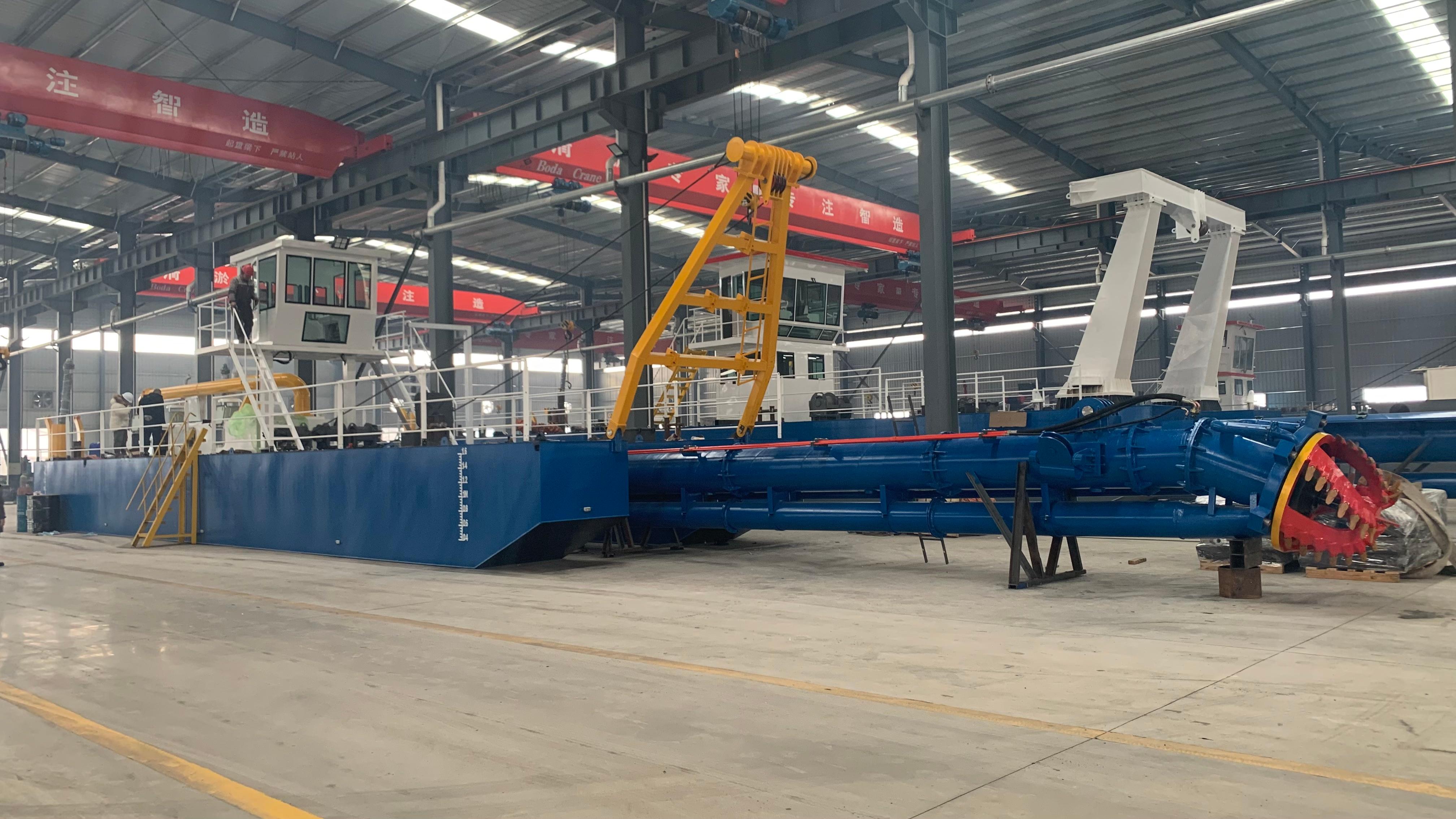
Every sediment removal project comes with its own fingerprint—depth, material composition, access limitations, and environmental sensitivity all play a role. Cookie-cutter approaches rarely hold up when you're dealing with abrasive slurry, compacted solids, or confined spaces. That's why we design each solution from the ground up, blending mechanical dredging, hydraulic transfer, and dewatering in configurations that match the real conditions on site.
The trick isn't just moving material; it's keeping water clear downstream, staying within permit limits, and avoiding damage to liners or natural beds. We've built tooling for ultra-thin lifts, adapted pumps for high-viscosity sludge, and designed low-turbidity heads that work in zero-visibility environments. When off-the-shelf equipment hits its limit, we modify or fabricate what's needed instead of forcing a square peg into a round hole.
This mindset has untangled blockages in hydroelectric intakes where sediment had cemented over decades, restored storage capacity in chemical plant lagoons without halting operations, and cleared stormwater channels threaded through sensitive wetlands. Each job taught us something that feeds back into the next. Complex removal isn't about having the biggest dredge on standby; it's about reading the sediment's character and tailoring the approach until the problem actually lets go.
Smart Automation's Role in Slashing Operating Expenses
Businesses chasing leaner operations are turning to intelligent automation not as a trend, but as a fundamental lever to strip out waste. Instead of just replacing manual clicks, smart systems now reengineer entire workflows—automating invoice matching across currencies, triggering inventory restocks based on sensor data, and auto-resolving low-level IT tickets before a human even reads them. The result isn’t a marginal drop in cost but a structural shift: teams that once spent days on month-end reconciliations can finish in hours, redirecting focus to analysis rather than data entry.
The real savings often hide where traditional cost-cutting misses: in error prevention and speed of response. A miscoded purchase order or delayed vendor payment can rack up penalties that dwarf the price of the automation itself. Smart automation catches those deviations instantly, applies business rules to classify expenses correctly, and keeps cash flow predictable. Over time, this consistency compounds. You aren’t just spending less on processing—you’re avoiding the hidden costs of rework, late fees, and compliance surprises that erode margins quietly.
What separates “smart” from basic automation is the ability to learn and adapt without constant human reprogramming. When market conditions shift, algorithms that manage procurement can adjust order volumes or renegotiate terms by analyzing real-time spend data and supplier performance. This dynamic adjustment means operating expenses don’t just fall in a single quarter; they’re kept low as the business scales, avoiding the trap where growth leads to ballooning back-office costs. For leaders, it transforms cost management from a periodic exercise into a continuously optimized function.
A Look Inside a Full-Service Dredger Manufacturing Facility
Stepping into the main assembly hall, the sheer scale of the operation hits you first. Partially built cutter suction dredgers tower overhead, their massive hulls resting on custom supports while teams of welders and fitters work simultaneously on multiple vessels. The air carries the rhythmic hum of overhead cranes shuttling steel plates from one station to the next, a choreography that’s been refined over decades. What sets this facility apart isn’t just the size—it’s the way every stage, from raw metal cutting to full system commissioning, happens under one roof without losing the careful attention you’d expect from a much smaller yard.
In the fabrication bays, plasma cutters trace precise lines across thick sheets of wear-resistant steel, leaving edges clean enough to join immediately. Nearby, pipefitters assemble complex hydraulic networks using a mix of standard components and bespoke castings produced in the on-site foundry. I watched a veteran machinist hand-scrape the bearing seats on a pump shaft housing—a slow, meticulous process that felt almost out of place amid the automated robotic welding cells just a few meters away. But that contrast, the blend of craftsmanship and modern efficiency, seems to be exactly the point.
The testing dock at the rear of the facility is where everything comes together. A freshly painted dredger rests in the water, its ladder fully articulated, pumps cycling slurry in a controlled loop to simulate real-world conditions. Engineers monitor performance data while another crew runs through emergency shutdown drills—a level of thoroughness you rarely see until a vessel is already on-site. It’s clear that leaving the factory isn’t just a handoff; it’s the end of a long, integrated journey that begins with raw stock and ends with a crew stepping aboard a machine already proven in their backyard canal.
Case Studies: Rapid Results in Tough Dredging Projects
When a major port expansion in Southeast Asia faced unexpected layers of cemented sand and clay, conventional cutter suction dredgers struggled to maintain even half their projected output. The project timeline was slipping by weeks, threatening contractual penalties. A shift to a customized backhoe dredger equipped with a high-pressure water jetting system changed the dynamics overnight. Within the first 72 hours, production rates tripled, turning a bottleneck into a benchmark. The rapid turnaround wasn’t just about horsepower—it came from rethinking tooling on the fly and calibrating the jetting pressure to fluidize the stubborn material right at the trench face.
Another telling example unfolded during the deepening of a heavily industrialized waterway in Northern Europe. Contaminated sediments laced with debris from decades of shipyard activity posed a double threat: slow excavation and strict environmental containment. Instead of the planned mechanical dredging, the team deployed an enclosed hydraulic suction head with real-time density monitoring. This allowed precise layer-by-layer removal, virtually eliminating turbidity spikes. The result was full compliance with environmental thresholds while cutting the projected dredging cycle by nearly 40%. The secret lay in continuously adjusting the swing speed and suction depth based on live feedback—no generic settings, just adaptive operation that kept material flowing steadily to the placement site.
In a land reclamation project along a cyclone-prone coastline, the challenge was not just hard material but unpredictable weather windows. A trailing suction hopper dredger was refitted with a rapid-discharge bottom door system and a shallower draft, enabling it to operate closer to shore and unload in under four minutes. Combined with a just-in-time sediment placement strategy that bypassed rehandling, the team reclaimed over 50 hectares in less than five months. What made the difference was the refusal to follow a standard schedule—operations ran whenever the wave and current models showed a 36-hour window, even if that meant round-the-clock shifts. This pragmatic flexibility compressed a typically yearlong effort into one season without compromising safety or precision.
The Key Advantages of Partnering with a Top Chinese Dredger Builder
Teaming up with a leading Chinese dredger manufacturer opens access to decades of hands-on engineering that blends large-scale production know-how with relentless refinement. Instead of a standard catalogue approach, you’re tapping into teams that routinely customize cutter suction dredgers, trailing suction hopper dredgers, and specialized workboats for harsh environments—from shallow inland waterways to deep-sea mining. This isn’t about simply selling hardware; it’s a partnership where on-the-ground feedback loops between field operators and in-house designers drive continuous improvements in wear resistance, fuel efficiency, and automation, often at a pace that surprises first-time collaborators.
Beyond the vessel itself, a significant edge lies in the supplier’s ability to compress delivery timelines without sacrificing build quality. With vertically integrated facilities—casting foundries, steel fabrication halls, and assembly docks all operating under one roof—there’s far less dependency on third-party backlogs. That means when a project suddenly accelerates due to seasonal deadlines or regulatory shifts, they can re-sequence work, pull from an existing pool of pre-qualified subcomponents, and still meet revised milestones. Many clients find this agility not just convenient but strategically vital, letting them capitalize on narrow weather windows or fast-track port expansions that rivals might miss.
Support after handing over the keys is where the real difference shows up. Top-tier builders embed service personnel on site during critical commissioning phases, then retain a direct line for spares and training that bypasses layers of agents. When a gearbox starts vibrating abnormally in the middle of the Amazon or a control system needs a remote recalibration off the coast of West Africa, getting a factory-trained technician on a video call within hours—and a physically delivered part within days—transforms downtime into a manageable hiccup. This sustained reliability builds a level of confidence that often evolves into multi-vessel agreements and joint development of next-generation dredging technology.
FAQ
Chinese manufacturers have invested heavily in research and real-world testing, resulting in dredgers that combine proven hydraulic designs with wear-resistant materials. Their reliability often comes from modular construction that simplifies maintenance, and many suppliers offer on-site training so crews can operate the equipment efficiently from day one.
Advanced cutter heads and specially shaped suction mouths create a constant slurry flow that minimizes blockages. Models equipped with jet rings or agitators keep sediment suspended, while oversized discharge pipes and booster pumps maintain pressure even when handling thick, sticky material.
You'll see them in river deepening and port maintenance, but they're equally effective in reservoir desilting, tailings pond cleanup, and land reclamation. Anywhere sediment builds up and threatens water capacity or navigation, these machines can restore depth quickly without draining the water body.
Yes, many modern units feature interchangeable cutter heads and adjustable suction settings. By swapping the cutting tool and tweaking the mixture ratio, operators can switch from silty lakebeds to sandy river channels without needing a completely different machine.
Beyond a standard warranty, look for partners who keep critical spares like impellers and shell liners in regional warehouses. Remote troubleshooting via video calls, annual service visits, and hands-on operator workshops show they're committed to your project's uptime, not just the initial sale.
The purchase price is often lower, but the real savings come from locally sourced wear parts and simpler hydraulic systems that don't require exotic fluids. Many users find that with proper maintenance, the lifecycle cost per cubic meter of sediment moved is highly competitive with any global brand.
Most suppliers design for containerized shipping, with pontoons that bolt together on site. Assembly usually takes a small crew a few days, and some companies provide a supervisor to guide the process, so even a jungle river or mountain reservoir project can get up and running quickly.
Many now include silt curtains to contain turbidity, precision depth sensors to avoid over-dredging, and variable speed drives that reduce fuel burn during low-load stages. Some even recycle hydraulic oil through filtration systems, making the whole operation cleaner and quieter than older models.
Conclusion
There’s a reason modern high-efficiency suction dredgers don’t rely solely on brute force. A top Chinese supplier designs pump hydraulics and suction heads around the specific slurry densities found on-site, using computational fluid dynamics to cut turbulence and component wear. When a job involves sticky clay or coarse sand, the engineering team tweaks cutterhead profiles and pipe diameters—virtually every dredger is a one-off. Onboard smart automation then reads real-time density and flow parameters to adjust engine load, which shaves diesel consumption significantly. Over the course of a multi-month dredging campaign, those savings can run to 15–20 percent, making a real dent in operating expenses.
Walking through a full-service manufacturing facility, it’s clear that sheet-metal work, welding, and final assembly happen under a single quality system. That integration is what allows rapid design changes and keeps delivery schedules tight. Real-world projects tell the same story: a heavily silted reservoir regained capacity weeks earlier than planned using a custom suction dredger, while an industrial channel cleanup met strict environmental discharge limits through automated monitoring. What sets a top Chinese dredger builder apart isn’t just the hardware—it’s the engineering support that continues after delivery, the ready availability of wear parts, and a mindset that treats each sediment removal challenge as a shared problem. That turns a one-time purchase into a reliable, long-term alliance.
Contact Us
Contact Person: Nancy
Email: [email protected]
Tel/WhatsApp: (+86) 13869631558
Website: https://www.yakaidredger.com/