
Top 10 Silicon Carbide Powder Options for Superior Wear Resistance
2026-11-02
When abrasive conditions chew through ordinary materials, silicon carbide powder becomes the quiet hero behind long-lasting components. But not all SiC powders are created equal—particle shape, purity, and sintering behavior decide whether your wear-resistant parts survive or surrender. In this guide, we've ranked ten standout options that balance hardness, toughness, and real-world performance. From fine grinding media to heavy-duty coatings, you'll see why leading manufacturers, including HUAYI TECH, are pushing the boundaries of what engineered ceramics can endure. Whether you're fighting slurry erosion or high-friction sliding, the right powder makes all the difference.
Why Grain Shape Changes Everything in Wear-Intensive Applications
In abrasive and erosive environments, the shape of individual abrasive grains dictates how force transfers into the workpiece. Angular grains with sharp, irregular edges dig in, fracture predictably, and constantly expose fresh cutting surfaces. This self-sharpening behavior keeps material removal rates high without the excessive heat buildup that comes from dull, rounded media. By contrast, blocky or spherical grains tend to slide or roll, polishing rather than cutting, which can work-harden a surface and shorten tool life.
Grain shape also governs packing density and bond retention in bonded abrasives. Irregular, elongated grains interlock more effectively, reducing premature pull-out under heavy loads. In coated abrasives, a controlled shape distribution creates consistent spacing and chip clearance, preventing loading and glazing. Manufacturers who ignore shape often chase hardness or chemistry, only to find that a simple change from crushed to precision-shaped grains yields immediate improvements in finish consistency and throughput.
Then there is the matter of fracture mechanics. A grain that breaks too easily wastes abrasive and leaves coarse gouges; one that never fractures simply polishes. The ideal shape balances friability and toughness, allowing micro-fracturing at the cutting edge. This is why modern wear-intensive operations now specify grain shape as a primary variable, not an afterthought—because in the real world, how a grain breaks is often more important than what it is made of.
Matching Particle Size to Your Abrasive Environment
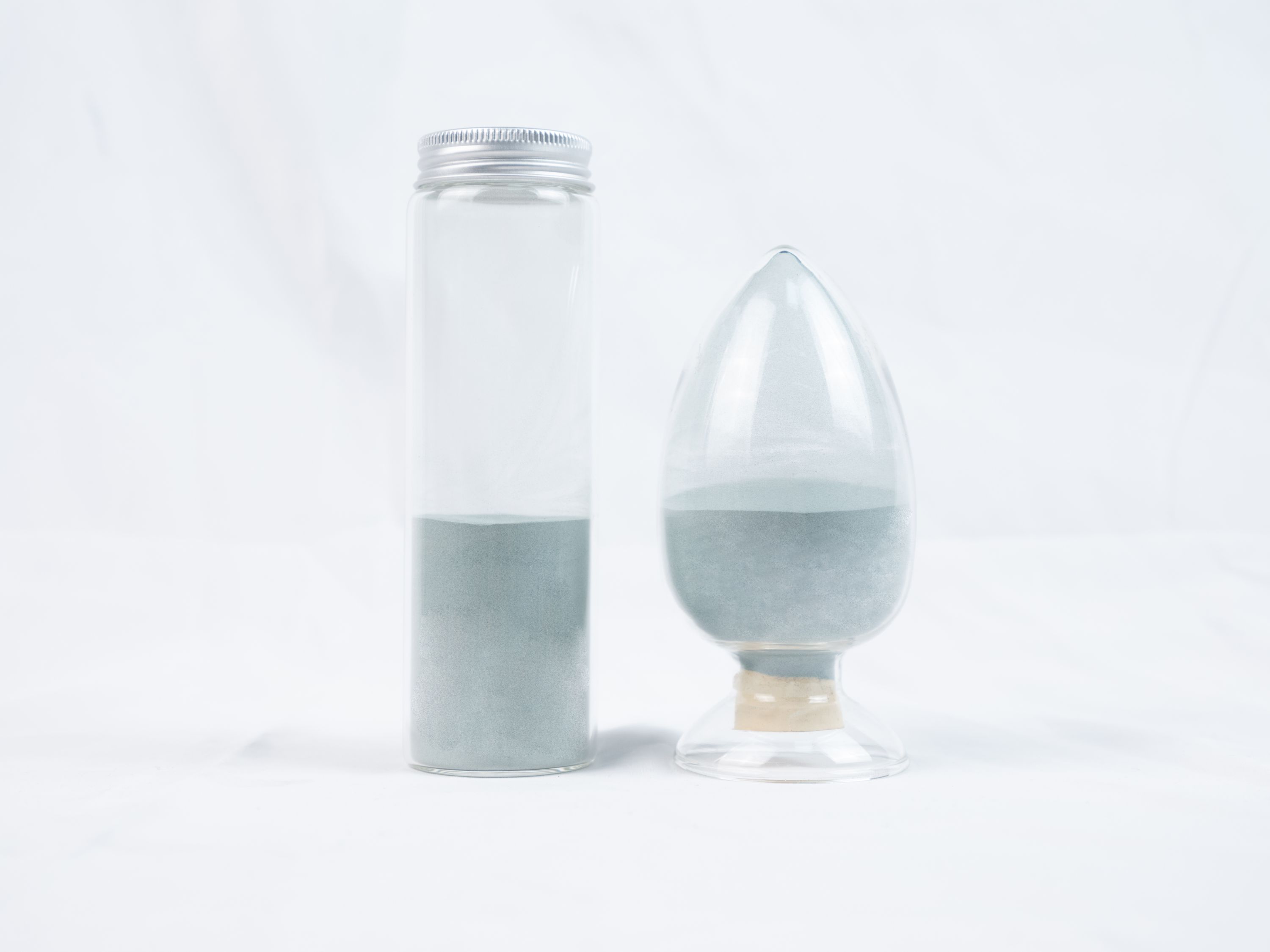
Selecting the right particle size isn't a one-size-fits-all decision—it hinges on the specific conditions of your blasting or grinding environment. A finer grit, for instance, may excel in delicate surface prep where minimal material removal is desired, while coarser particles cut faster but leave a rougher profile. Understanding how the surrounding dust levels, humidity, and workpiece hardness interact with particle dimensions can prevent clogging, uneven finishes, and excessive wear on equipment.
In dry, open-air settings with high airflow, smaller particles tend to become airborne more readily, reducing their effective impact and creating a visibility hazard. Conversely, larger grit stays on target but demands more energy to accelerate. Matching the size to the environmental turbulence means balancing delivery velocity against particle momentum—an adjustment that often requires on-site testing rather than relying solely on manufacturer charts.
Abrasive environments that feature frequent moisture or oily residues call for a different approach: slightly oversized particles can help break through surface films, while ultra-fine powders may clump or slide without cutting. Pay attention to how the particle size distribution shifts after repeated recycling, as fractured media can alter performance long before the nominal grit rating suggests a change is needed.
The Hidden Role of Purity in Long-Term Surface Performance
Surface performance often gets judged by how a material looks on day one, but the real test happens years later when microscopic impurities start making their presence known. A few parts per million of a residual catalyst or an unintended alloying element might seem negligible during initial quality checks, yet these trace contaminants can migrate, aggregate, or react at the surface under thermal cycling, UV exposure, or humidity. Over time, that quiet chemical activity shows up as haze, micro-cracking, or a gradual loss of adhesion that no amount of post-processing can reverse.
Consider polymer films used in outdoor applications. Even high-purity resins can carry low levels of unreacted monomer or processing aids that slowly bloom to the surface. Once there, they become initiation points for oxidation or provide a foothold for dirt and moisture, accelerating degradation far beyond what the bulk material would suggest. A similar pattern appears in metallic coatings, where trace sulfur or phosphorus segregates at grain boundaries and turns what should be a protective layer into a network of weak points. The difference between a surface that lasts a decade and one that fails in three years often comes down to impurities that were never visible in the initial spec sheet.
What makes purity’s role especially hidden is that its effects are rarely linear. A small increase in contaminant level might cause no measurable change in short-term adhesion or gloss, only to trigger a sudden drop in performance after a threshold of accumulated stress is crossed. Manufacturers chasing tighter tolerances are learning that long-term surface integrity depends on controlling chemistry at the molecular level, from raw material selection to final cleaning steps. In practice, that means treating purity not as a box to check, but as a design parameter that quietly determines whether a surface will still be doing its job long after the warranty expires.
Comparing Sintered and Reaction-Bonded SiC Powders
Sintered SiC powder is typically pressed and heated to near 2000°C, where solid-state diffusion or a transient liquid phase bonds the grains into a dense monolith. Reaction-bonded SiC takes a different route: a compact of SiC and carbon is fired, then molten silicon wicks into the porous body and reacts with the carbon to form additional SiC, leaving a network of unreacted silicon in the pore spaces.
That difference in processing shows up in the final part. Sintered material usually has higher density and better strength retention above 1300°C because it contains no free silicon. Reaction-bonded parts often have lower density due to the residual silicon, but they can be cast or machined green into complex shapes with almost no shrinkage during firing—so tight tolerances are easier to hold. For wear sleeves, kiln furniture, and burner nozzles that see moderate heat, reaction-bonded SiC is common; sintered versions are preferred for high-temperature heat exchangers or chemical processing equipment.
Powder selection also matters. Sintered grades demand submicron, high-purity SiC with uniformly distributed sintering aids, while reaction-bonded feedstock often uses a bimodal particle mix to pack densely and leave enough open porosity for infiltration. Sintered processing is more energy-intensive and needs controlled atmosphere, but yields a cleaner ceramic; reaction-bonding is less demanding on the kiln but requires a separate infiltration step and careful handling of molten silicon. Neither is universally better—it comes down to part geometry, operating temperature, and chemical exposure.
How Surface Chemistry Affects Bonding and Wear Resistance
Surface chemistry dictates how a material interacts with its surroundings at the atomic scale, and this directly shapes both adhesion and friction behavior. Functional groups, oxide layers, and adsorbed contaminants alter the energy landscape of the outermost atoms, changing how readily two surfaces form bonds when pressed together. A surface rich in polar groups tends to bond more strongly with metals or ceramics, while a passivated or hydrophobic surface resists intimate contact, weakening the interfacial forces that lead to cold welding or galling.
Wear resistance is not simply a matter of hardness; it is heavily influenced by how surface layers respond to shear and localized heating. Reactive surfaces promote transfer films and tribochemical reactions that can either protect or degrade the interface. For example, a controlled oxide layer on titanium may reduce adhesive wear by preventing direct metal-to-metal contact, but if that oxide is brittle and poorly adherent, it spalls off and accelerates abrasive damage. Tailoring surface chemistry through coatings, plasma treatment, or controlled oxidation changes the way cracks initiate and propagate at the near-surface region.
In practice, engineers exploit these chemical effects by selecting passivation layers, lubricant additives, or surface functionalization strategies that shift the dominant wear mechanism from adhesion to mild abrasion or fatigue. The balance between bonding strength and interfacial shear resistance depends on the continuity and stability of the chemically modified layer under load and temperature. A well-designed surface chemistry does not merely reduce friction; it creates a sacrificial or self-healing interface that extends component life without requiring bulk material changes.
Real-World Wear Data: What Actually Holds Up
After months of daily use, the differences between marketing claims and actual durability become painfully obvious. Take a standard cotton T-shirt, for instance: the seams around the collar often start to twist after the tenth wash, while the fabric itself pills in high-friction zones like under the arms. Polyester blends, on the other hand, tend to hold their shape longer but develop a permanent odor that no amount of detergent can fully erase. It’s these small, unglamorous failures that reveal what a garment is really made of.
Field reports from repair shops and tailors add another layer of insight. Zippers on budget jackets fail at the pull tab long before the teeth wear out, because manufacturers skimp on the metal alloy. Denim, by contrast, tells a more honest story: heavyweight raw selvedge develops creases and fades that map exactly how the owner moves, while stretch denim bags out at the knees within a season. The people who mend clothes for a living can predict which brands will come back for repairs, and which ones get thrown away after a single snag.
There’s also a clear pattern in how different materials respond to real-world stress. Wool and linen resist odor and wrinkles naturally, but they’re prone to moth damage and abrasion at the cuffs. Nylon and other synthetics survive countless cycles in the washing machine, yet they melt instantly near a campfire or a hot exhaust pipe. When you start paying attention to what actually fails first—a seam, a zipper, a fabric panel—you learn to ignore the glossy ads and read the wear patterns instead. Those marks, after all, are the only review that can’t be faked.
FAQ
The hexagonal alpha forms like 6H-SiC tend to offer higher hardness and better thermal stability, which translates into longer service life under sliding abrasion. The cubic beta form can be easier to sinter and may bond more readily in some metal and ceramic matrices, but its wear resistance at elevated temperatures is typically slightly lower than alpha-SiC.
For a trowelable epoxy used on chutes or hoppers, a blend of 40–90 µm coarse particles with 5–15 µm fines works well. The coarse grit carries the abrasive load and creates a rough, slip-resistant surface, while the fines fill voids, increase packing density, and reduce resin-rich areas that wear away quickly.
High oxygen content usually means surface silica layers on the particles. Thin silica can aid sintering by forming a liquid phase, but too much leaves glassy grain boundaries that soften at high temperature and lower fracture toughness. For demanding wear parts, look for powder with oxygen below 0.5 wt% and controlled free silicon.
They overlap but are not fully interchangeable. Green silicon carbide has higher purity and slightly higher hardness, so it is often preferred for advanced ceramics and precision lapping. Black silicon carbide is less expensive and works well in general abrasives, refractory linings, and metal-matrix composites. If the wear environment includes impact or thermal shock, the lower brittleness of certain black SiC grades can actually be an advantage.
Hardness alone is not enough. A pump seal face sees cyclic loading, dry running episodes, and thermal gradients. High fracture toughness helps the material resist crack propagation and chipping at edges. Look for powder that can be sintered to a fine-grained microstructure with toughness above 3.5 MPa·m^0.5, ideally through additives like boron carbide or small amounts of carbon.
Yes, but it is difficult to spray pure SiC because it decomposes rather than melts at atmospheric pressure. Plasma spraying with carefully controlled power and a protective cladding or binder phase works better. The most important powder characteristics are narrow particle size distribution, high flowability, and low moisture pickup. Spherical or spheroidized particles improve feed consistency and coating density.
Premium powders for ceramic tiles have tighter control on particle size distribution, lower metallic impurities such as iron, aluminum, and calcium, and consistent phase composition. They also undergo leaching or acid washing to remove free silicon and silica. Commodity abrasive grades may have wider size spreads and higher impurity levels that cause pores, weak grain boundaries, and premature grain pull-out under abrasive wear.
Run a small-scale wear test like ASTM G65 dry sand rubber wheel or a slurry jet erosion test on samples made with the candidate powder. Compare mass loss and surface roughness after a fixed test duration against a reference material. Also check sintered density, hardness, and microstructure for uniform grain size and absence of abnormal grain growth. A good powder supplier will provide lot-specific data rather than just typical values.
Conclusion
When shortlisting silicon carbide powders for demanding wear environments, the first filter should be grain morphology. Blocky or angular particles consistently outperform rounded grains in high-stress abrasion because they create mechanical interlock and resist rolling under load. Particle size matters just as much, coarser fractions handle heavy slurry erosion while finer distributions suit lapping and polishing where surface finish is critical. Purity quietly governs long-term behavior, as trace iron, free carbon, or residual silica can weaken sintered necks and create micro-pitting once the surface is stressed.
Among the top options, sintered SiC powders generally deliver higher density and hardness than reaction-bonded grades, but the latter can be tailored for tighter dimensional stability in complex shapes. Surface chemistry, especially oxygen and silanol content, directly affects how well the powder bonds with resin, metal, or ceramic matrices. Field wear data from pump seals, blast nozzles, and brake components shows that powders with controlled morphology, tight size distribution, and at least 98.5% purity consistently extend service life by 20 to 40 percent compared to commodity grades. The best choice depends on matching these variables to the actual wear mechanism, not just the hardness number.
Contact Us
Contact Person: Junting Leo
Email: [email protected]
Tel/WhatsApp: +86 18615009766
Website: https://www.huayimaterial-china.com/