

Top 10 Industrial Door Factories Leading the Market
2026-11-21
Industrial doors do more than open and close—they control security, temperature, and workflow in demanding environments. Yet with so many manufacturers claiming to lead the market, separating proven performers from noisy newcomers can be tough. This list of the top 10 industrial door factories cuts through the claims, weighing build quality, innovation, and real-world reliability. Among the names worth watching is FANSI, a company that has quietly built a reputation for precision engineering and consistent delivery. Whether you are upgrading a loading bay or planning a large-scale facility, the following profiles will help you spot the partners that actually deserve a place on your shortlist.
Inside the Factory Decisions That Separate Durable Door Builders from the Rest
Walk through a door plant known for producing doors that hold up through years of humidity swings, and the differences show up long before finishing. Builders with a reputation for durability reject stiles that carry even minor grain runout, and they check moisture content on every incoming bunk of lumber instead of sampling a few boards. That early sorting removes the material most likely to twist or cup after installation. Their joints also tend to have deeper profiles and tighter tolerances, so the assembled door moves as one unit rather than as separate pieces fighting each other with each change in weather.
Adhesive and core decisions separate the long-term performers just as clearly. High-durability shops keep panels in clamps past the minimum cycle even when orders are backing up, because a full cure prevents fine movement at the stile-and-rail connection. Inside the slab, they choose denser engineered cores or properly dried finger-jointed stock instead of the lightest hollow fill available. They also balance the faces carefully, matching veneer thickness, backer material, and coating buildup so both sides expand and contract at nearly the same rate. Ignoring that balance is how a flat door becomes a slight arc after one heating season.
The quieter decisions happen at edges, cutouts, and finish coverage. Door builders focused on longevity seal the top and bottom rails after hardware preparation, add reinforcement blocks behind hinge locations, and coat all six surfaces rather than only the visible faces. Their final inspections go beyond a quick visual once-over; batches are checked for diagonal squareness, slab weight, and edge moisture resistance, with records tied to specific press cycles and lumber lots. That traceability is usually absent in plants that ship doors with attractive faces but raw, untreated edges.
Why the Strongest Industrial Door Suppliers Rarely Compete on Price Alone
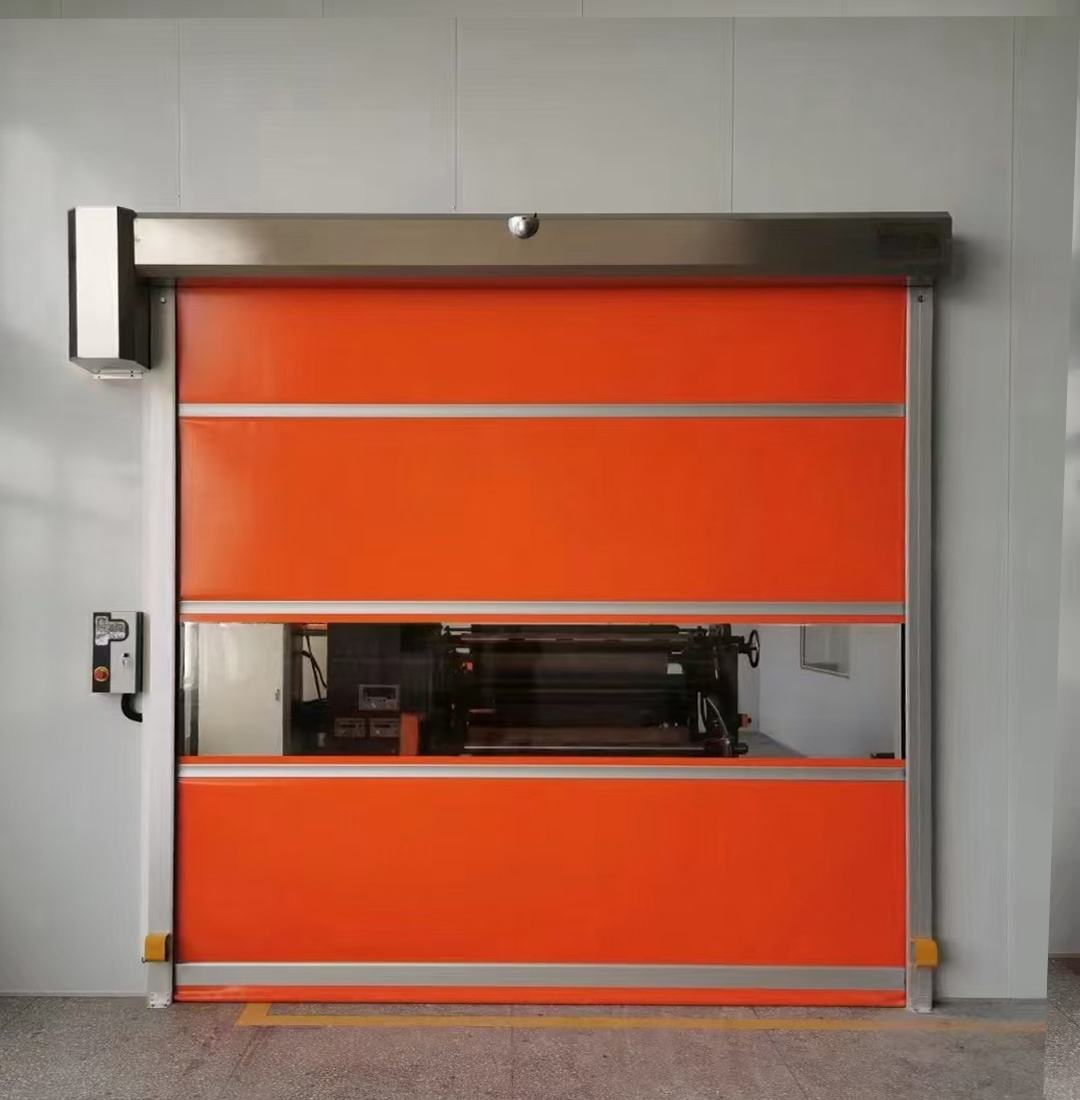
In industrial door procurement, the number on a quotation rarely tells the full story. A door that cycles hundreds of times a day, absorbs wind load, and holds a temperature barrier carries most of its real cost across a ten-year service life. Differences in track gauge, motor duty rating, panel thickness, and seal design may not be obvious at first glance, but they show up clearly in maintenance frequency and downtime. That is why capable suppliers tend to lead with site conditions, cycle counts, and safety interlocks instead of rushing to the lowest bid.
The risk of low-bid buying becomes especially visible in food processing, cold storage, and pharmaceutical facilities. A poorly sealed or unreliable door can cause thermal drift, contamination, or a halted production line, and those losses quickly erase any upfront savings. Experienced suppliers spend more time on wind load calculations, U-values, and sensor placement because these factors determine whether the door actually performs under daily stress. None of that work fits neatly into a price comparison table.
Long-term buyers usually treat industrial doors as part of their production infrastructure rather than as a one-off purchase. They need retrofit advice, predictable spare parts, and fast emergency support. When a supplier can back up a proposal with field measurements, load testing, and a clear maintenance schedule, the conversation moves away from unit price and toward operational reliability. That shift explains why many plants stay with the same door supplier for years, even when cheaper alternatives appear in the market.
Materials, Motors, and the Details That Define Market Leaders
The materials used in a product are rarely the first thing a buyer notices, yet they shape every interaction that follows. A brushed aluminum edge feels different from a stamped plastic rim, just as a woven textile surface changes how light falls across a device. Top-tier brands spend months selecting substrates not for flash, but for the way they resist fingerprints, soften impacts, and age without looking worn. That quiet obsession with tactile quality is often the clearest signal that a company views its product as a long-term companion rather than a short-term transaction.
Motors are equally telling, especially in products that move, adjust, or respond to touch. A weak, noisy actuator turns a premium hinge into a frustrating daily annoyance, while a precisely tuned motor can make closing a laptop lid feel like sealing a fine journal. The difference comes down to torque curves, damping rates, and how smoothly energy is delivered across a range of speeds. When engineers invest in custom motor profiles instead of relying on generic off-the-shelf parts, the result is a subtle but unmistakable sense of control that no spec sheet can fully capture.
Then there are the small details that never make it into marketing headlines: the radius of a corner, the gap tolerance between two panels, the way a button resets after being pressed. These are the choices that separate market leaders from followers because they require patience and a willingness to reject good enough. Companies that dominate their categories tend to treat every seam, every micro-texture, and every spring-back force as a design statement. Over time, those accumulated refinements create a product that feels inevitable—as if it could not have been made any other way.
What High-Volume Buyers Notice First in a Door Manufacturing Partner
The first thing that separates a forgettable door supplier from one worth a long-term contract is rarely the brochure. High-volume buyers tend to walk the floor, open a few crates, and check whether the hinge preps match the drawings across every single unit—not just the showroom sample. Consistency in mortising depth, edge banding, and stile alignment tells them more in ten minutes than a polished pitch ever could.
Beyond the product itself, they pay close attention to how a factory handles change. When a buyer asks for revised fire ratings or a different threshold profile mid-run, the response time and the questions asked reveal whether the partner actually controls their production schedule. A clear answer about lead times, raw material buffers, and packaging specs carries more weight than generic promises about reliability.
Documentation and load-level accuracy become quiet dealmakers. Purchase orders at volume leave little room for pallet miscounts or missing test reports. Buyers notice when each door is labeled correctly, packed to survive regional humidity, and accompanied by the right compliance paperwork without having to be chased.
The Production Bottlenecks That Reveal a Factory’s True Capability
Many capacity reviews start with the newest machines or the most automated cells, but that is where the story gets misread. A factory's actual capability doesn't live in its fastest equipment; it lives in the workstation that everyone has learned to work around. Once you watch material flow for a couple of hours, the constraint shows itself in small queues and idle operators, not in a dashboard.
That bottleneck can be physical, like a curing oven, or invisible, like a quality hold that only occurs on a particular shift. Because these limits are often treated as temporary annoyances, managers add buffers and overtime instead of redesigning the sequence. The unintended result is that the bottleneck doesn't disappear—it just moves deeper into the process, where it becomes harder to measure.
Assessing a plant by its best-case output flatters the equipment, but misses the point. The truer test is to ask how steadily work passes through the one step that cannot be rushed. That step reveals whether scheduling, maintenance, and problem solving are genuinely aligned, or merely patched together around the constraint.
From Roll-Up to High-Speed: Where the Leading Names Are Heading Next
The conversation around industrial doors has shifted noticeably. For years, a standard roll-up door was just a barrier—something to open at shift start and close at night. Now the emphasis sits on cycle speed, sealing integrity, and how the door behaves when someone or something gets in its path. Companies that once competed on gauge thickness are spending more time on drive systems, sensor arrays, and the wear points that tend to fail after a few hundred thousand cycles.
High-speed doors have moved from a specialty item to the default in food processing, cold storage, and busy logistics hubs. The next phase appears less about raw opening speed and more about predictability: doors that flag maintenance needs before a breakdown, adjustable speeds tied to traffic patterns, and tighter integration with the building systems around them. In that sense, the leading names are not just chasing a faster panel—they are reworking how the door earns its place in the facility.
FAQ
High-speed fabric doors, sectional steel doors, and insulated overhead doors tend to show up most. High-speed doors keep traffic moving in loading bays, while sectional and overhead designs handle larger openings and tougher security requirements.
Ask for cycle test data and component-level details. Leading plants usually test hinges, guides, springs, and drives far beyond the rated lifespan, and they specify maintenance intervals based on real motion counts rather than vague time periods.
Yes, but practicality depends on the factory's engineering depth. Many market leaders use modular frames and parametric production, so a non-standard width or a washdown-ready finish may only add a few weeks instead of requiring a full custom build.
In Europe, EN 12453 and EN 13241-1 are common references; in North America, UL 325 matters for powered doors. Beyond the label, look for physical edges, photoelectric sensors, and force-limited drives that stop and reverse without relying on a single safety layer.
Those environments combine frequent washdowns, strict contamination control, and sometimes thermal separation. Stainless steel resists aggressive cleaning chemicals, while insulated composite panels reduce condensation and help maintain stable room temperatures.
The difference usually appears in spare part availability, remote diagnostics, and local service response. A stronger factory keeps critical components in regional warehouses and can often guide a technician through fault codes before sending someone on site.
Variable frequency drives now allow softer starts and stops, which reduces mechanical wear. Sensors have moved from simple induction loops to radar and laser-based systems that detect approaching traffic without creating false triggers from pedestrians or pallets.
Look past the initial quote. Energy loss through poor seals, frequent spring replacements, and downtime at a busy dock usually outweigh the purchase price. A slightly higher upfront cost often pays back through lower air leakage and fewer interruptions.
Conclusion
Durable industrial door builders tend to stand out well before installation. Their factories make quiet but consequential choices—heavier gauge steel at stress points, motor sizing matched to actual cycle counts, and assembly steps that prevent warping under thermal shifts. Walking the floor, the bottleneck locations tell the real story: some plants hide them, others engineer them out with staged testing and buffer zones. These operational details rarely appear on a spec sheet, yet they decide whether a door holds its alignment after years of forklift traffic.
High-volume buyers notice less about the sales pitch and more about repeatability. They look for consistent lead times, predictable freight packaging, and spare parts that do not require a special order. The strongest suppliers seldom compete on price alone; their quotes reflect engineering margins that reduce downtime later. Increasingly, the leading names are moving beyond standard roll-up units toward high-speed fabric doors and smarter controls, but the same discipline carries over: tighter manufacturing tolerances, better motors, and fewer excuses when a line is down.
Contact Us
Contact Person: Liam
Email: [email protected]
Tel/WhatsApp: (+86)16658531012
Website: https://www.fansifiredoor.com