

Top 10 Construction Air Compressors for Heavy-Duty Jobs and Maximum Efficiency
2026-08-08
When tackling heavy-duty construction jobs, maximum efficiency isn't just a goal—it's a necessity. The right air compressor can be the difference between seamless progress and frustrating delays. That's why we've narrowed down the top 10 construction air compressors that truly deliver power, durability, and reliability under the toughest conditions. Among the standout options, Seize Air models consistently prove they belong on the most demanding job sites. Ready to discover which machines earned their spot? Let's get started.
What Sets a True Heavy-Duty Compressor Apart
A genuine heavy-duty compressor isn't just a scaled-up version of a standard model; it's engineered from the ground up for relentless performance in demanding environments. The cast-iron construction of critical components like cylinders, crankcases, and heads means it can shrug off the constant thermal cycling and vibrations that would quickly fatigue lighter aluminum assemblies. Paired with industrial-grade bearings and oversized crankshafts, these machines maintain precise tolerances even after thousands of hours of operation, ensuring consistent air delivery without the gradual efficiency loss that plagues lesser units.
Continuous run capability is another hallmark. While consumer-grade compressors rely on start-stop cycles that strain motors and pressure switches, true industrial workhorses often employ unloader valves and dual-control systems that allow the pump to keep turning while the motor idles—only drawing full power when the pressure drops. This eliminates the damaging inrush currents of frequent motor starts and dramatically extends component life. The cooling systems, too, are in a different league: integrated aftercoolers, intercoolers between stages, and large finned surfaces or forced-air ducting keep discharge temperatures low enough to touch, preventing moisture buildup and preserving air tool integrity.
Finally, serviceability defines the divide. Heavy-duty models are built with modular designs that grant quick access to valves, gaskets, and wear parts without major disassembly. You'll find spin-on oil filters, sight glasses for instant fluid checks, and externally mounted drain valves—details that transform maintenance from a full-day project into a routine stop. This practical design philosophy, combined with easily sourced components and clear wear indicators, means the compressor can be kept at peak efficiency for decades, not just years, with minimal downtime.
Rotary Screw or Piston? A Straight-Talk Comparison
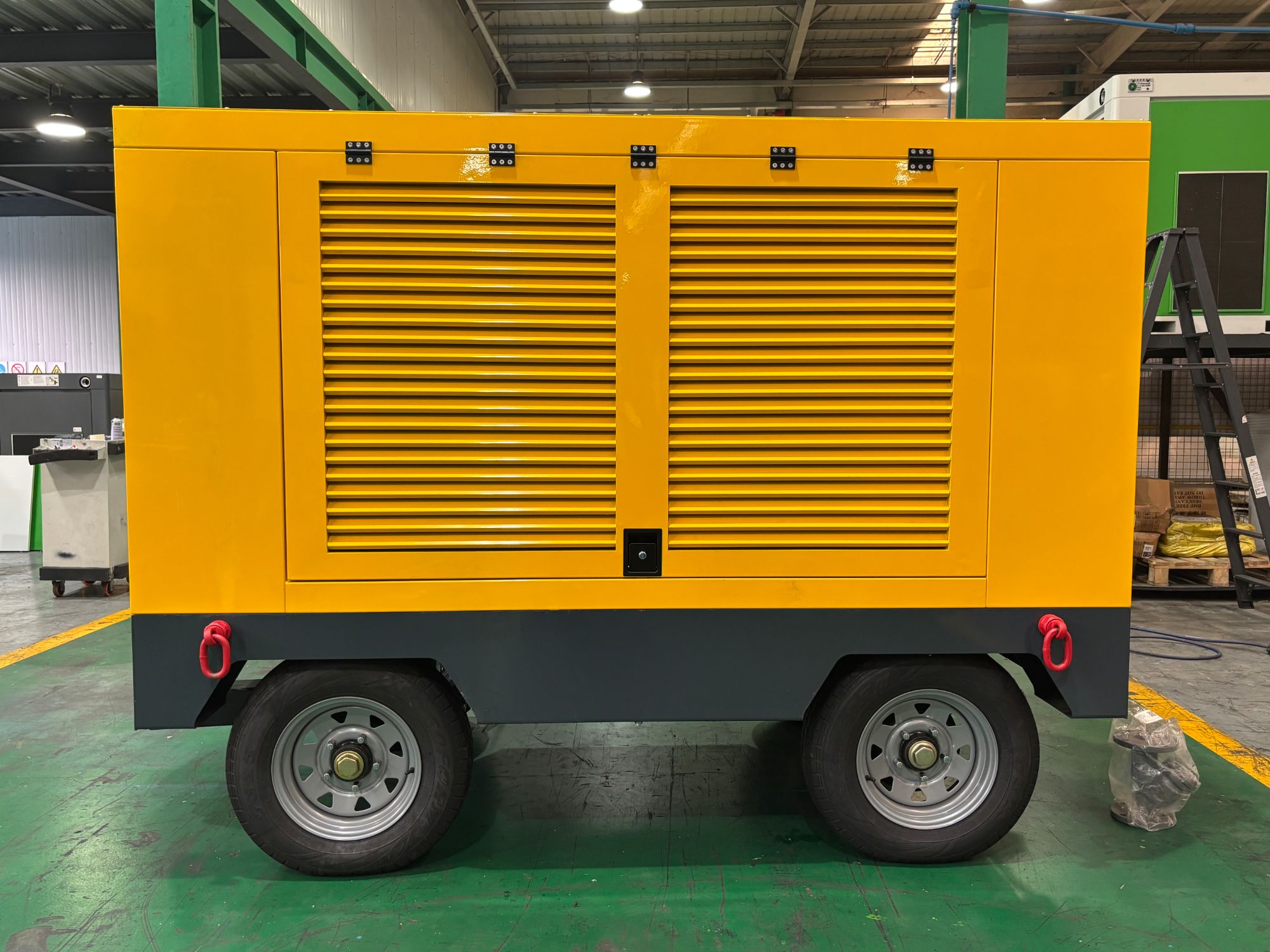
The choice between a rotary screw and a piston compressor often comes down to how you plan to use it. Piston compressors are the familiar workhorses—rugged, simple, and ideal for intermittent use. They work by drawing air into a cylinder and compressing it with a piston, much like a car engine. This makes them perfect for garages, small workshops, and DIY projects where you need bursts of air. They’re affordable upfront, but they can be noisy, generate heat, and require cooling-off periods to avoid wear. If your demand is occasional and you don’t mind the racket, a piston unit will likely serve you well.
Rotary screw compressors, on the other hand, are built for the long haul. They use two interlocking helical screws to compress air continuously, which means they can run 24/7 without a hiccup. This steady operation makes them the go-to for manufacturing plants, automotive shops, and any setting where air tools run nonstop. They’re quieter and run cooler, but you’ll pay more upfront. The real difference is in the duty cycle: a screw compressor thrives on constant use, while a piston one falters. So, if you’re weighing options, think about how many hours a day you’ll be drawing air—that’s the straight-talk answer you need.
Little-Known Maintenance Habits That Boost Lifespan
Most people focus on obvious upkeep like oil changes or tire rotations, yet some of the most impactful habits fly under the radar. For instance, regularly cleaning the mass airflow sensor can prevent a sluggish engine and poor fuel economy—a five-minute task that many never think of. Similarly, conditioning rubber seals on doors and windows with a silicone-based protectant slows deterioration and keeps moisture out, which can quietly extend the structural integrity of any vehicle.
Another overlooked routine is exercising the parking brake on automatics. Engaging it periodically, even on flat ground, prevents the mechanism from seizing up over time—a simple action that avoids a costly repair. Paying attention to the serpentine belt’s subtle wear indicators, like faint chirping or glazing, before it fails can mean the difference between a quick replacement and a stranding.
Finally, flushing the power steering fluid at the manufacturer’s suggested interval is habitually ignored until a pump whines or the steering stiffens. Clean fluid reduces hidden wear deep in the system, preserving responsiveness and avoiding a repair bill that stings. These small, consistent actions accumulate, turning a machine that merely runs into one that thrives long past its expected years.
The Toughest Compressors That Refuse to Quit
When the temperature dips below freezing and the air itself seems to fight back, most machines wave the white flag. Not these compressors. Built with a stubborn streak, they power through the kind of conditions that send lesser equipment into early retirement. From remote construction sites to the punishing floors of heavy industry, they keep turning air into force without complaint.
What makes them so relentless? It starts with a refusal to cut corners. Oversized bearings, reinforced valves, and cooling systems that laugh in the face of heat soak—every component is chosen not just to survive, but to thrive under constant load. There’s no delicate electronics waiting to fry, just raw, mechanical grit that welcomes dust, vibration, and neglect.
After years of service, when the paint is faded and the hour meter has rolled over, these compressors are still doing the job. They become old friends in the workshop, the kind you trust to start on the coldest morning and run all day without a hiccup. Quitting isn’t in their vocabulary.
Efficiency Tricks That Slash Fuel Costs on Site
Idling engines burn through cash faster than most operators realize. A simple rule of shutting down equipment during breaks longer than five minutes can trim fuel bills by up to 10% without sacrificing productivity. Pair this with real-time telematics that flag excessive idle time, and you turn a vague cost into a measurable saving. It's not about working harder—it’s about working smarter with what you already have on the lot.
Field layout often gets overlooked, but poor site planning forces machines to take longer routes or make unnecessary turns. When haul roads are maintained and optimized to reduce rolling resistance, excavators and dumpers use noticeably less fuel. Something as basic as keeping travel paths smooth and free of debris can cut fuel consumption by double digits over a project’s lifespan—without a single upgrade to the fleet.
Operator habits are the silent fuel drain nobody wants to talk about. Coaching crews to use economy modes, avoid aggressive throttle, and match attachment sizes to the task drops consumption fast. In one instance, a team reduced their weekly diesel spend by 12% just by replacing rigid start-of-day warm-up routines with on-demand preheating. Small changes in daily rituals compound into significant reductions that show up clearly on the invoices.
Matching Air Power to Your Toughest Tasks
When you're staring down a job that would make lesser equipment cough and stall, the right air power setup isn't just a convenience—it's the difference between a long day and a quick victory. The key is sizing your compressor and tools not for the easy stuff, but for the peak demands you'll hit when the work gets ugly. That means factoring in every angle grinder, impact wrench, or sandblaster that might be running at once, and then adding a buffer for the unexpected. Overkill is underrated when you're deep in a task that can't afford a pressure drop.
Look beyond just CFM and PSI numbers on a spec sheet. Think about runtime patterns: are you running continuous-duty tools like orbital sanders, or intermittent bursts from a framing nailer? Reciprocating compressors might handle sporadic use, but if your toughest tasks are marathon sessions, a rotary screw unit with a higher duty cycle will save your sanity. And don't overlook air quality—moisture and particulates can quietly erode performance in critical applications like painting or precision assembly. A simple dryer and filter setup often pays for itself in rework avoided.
The real art is matching the power source to your environment. Electric compressors offer convenience, but on a remote site with no reliable grid access, a gas or diesel model becomes essential. Portability matters when your toughest task is in a crawl space or across a muddy lot. Wheelbarrow-style units with large tires and a manageable weight can mean you actually use the tool instead of leaving it on the truck. It's about imagining the worst-case scenario and building your air power backwards from there.
FAQ
Focus on durability and consistent output. A high CFM rating is crucial to run multiple tools, and a rugged frame with heavy-duty wheels will survive rough terrain. Look for a proven engine, easy service access, and strong warranty support from brands known in the trades.
Absolutely, many modern portable units pack serious power. What matters is the combination of CFM and PSI ratings, not just the size. Towable diesel models can easily run jackhammers and multiple nailers without breaking a sweat, as long as you match the compressor to the air demand of your tools.
CFM is the true measure of how much work it can handle. Think of it as the compressor's breathing capacity—higher CFM means it keeps up with demanding tools like sandblasters or impact wrenches without pressure drops. Underestimating CFM leads to constant waiting and tool stalling.
Reciprocating ones are like a workhorse for intermittent use—cheaper upfront but noisier and run hot. Rotary screw compressors are built for continuous duty, offering steady airflow with less heat buildup and lower maintenance per hour. If you're running tools nonstop all day, rotary screw is your friend.
It's a bottom-line game changer. A fuel-thirsty compressor drains your budget fast, especially on long-term projects. Efficient models with auto-idle control dial down RPMs when not under load, saving gallons over a week. Diesel units often offer better torque and economy than gas equivalents for heavy use.
Yes, if the total air consumption of all tools combined doesn't exceed about 80% of the compressor's rated CFM. Use a manifold and correctly sized hoses to minimize pressure loss. Running two framing nailers is easy, but adding a grinder might push a smaller unit beyond its limits.
Drain the tank daily to keep moisture from rusting it inside. Check and clean intake filters often—clogged filters choke performance. Stay on top of oil changes and belt tension, and inspect hoses for cracks. Treating fuel if it sits and keeping cooling fins clean goes a long way toward reliability.
They can be, if paired with a powerful enough generator. For light-duty tasks and reduced noise, an electric rotary screw compressor is clean and quiet. But for remote heavy-duty jobs, a standalone diesel compressor is still king because it eliminates generator dependency and delivers raw air power anywhere.
Conclusion
When you're deep into a construction site, the roar of a compressor isn't background noise—it's the pulse of the job. The machines that truly earn their keep aren't the ones with flashy brochures; they're the ones that wake up every morning in rain, dust, or scorching heat and never miss a beat. What separates a workhorse from a toy often comes down to guts: thick steel frames, oversized coolers, and an engine that doesn't flinch when you ask for full pressure all day long. In the rotary screw versus piston debate, it's not about which is better on paper, but which fits the rhythm of your crew. Rotary screws hum along for continuous runs, while pistons pack a punch for intermittent spikes—knowing that difference can keep a job on schedule and out of the repair yard. And for the compressors that flat-out refuse to quit, it's usually because someone took the time to treat them right: keeping the separator elements clean, watching the fluid like a hawk, and never letting moisture build up where it shouldn't. Those little-known habits might not make the manual's cover page, but they're what turn a five-year machine into a twenty-year legend.
Out in the field, efficiency isn't just a number on a spec sheet—it's the difference between finishing a shift with fuel still in the tank or scrambling for a refill before the job is done. Smart contractors learn to match air power to the task with surgical precision: a jackhammer demands a different beast than sandblasting, and overkill only burns money. Tweaks like dialing down engine speed once the tank is topped off, or rigging up a simple manifold to cut down on hoses, slash fuel costs in ways that add up fast over a season. The best heavy-duty compressors on the market don't just muscle through concrete and steel; they do it with a kind of stubborn efficiency that makes the fuel gauge move slow. Whether you're driving a pile on a remote site or running multiple breakers in a trench, the key is finding that sweet spot where brawn meets brains—a compressor that takes what the day throws at it and asks for more, without guzzling every drop of diesel in sight. That's the real top-ten material: not just specs, but stories of machines that have dug, broken, and blasted their way through the worst jobs and came out running smoother than when they started.
Contact Us
Contact Person: Mia
Email: [email protected]
Tel/WhatsApp: +86 19821985894
Website: https://www.seize-air.com