

Strongest Laser Pain Relief: Which Device Delivers the Most Power?
2026-11-16
Not all laser therapy devices earn the word “strongest.” Some feel like a faint glow, while others cut through deep tissue pain with noticeable intensity. If you have been searching for the most powerful laser pain relief device, the real question is not just about wattage on a spec sheet. It is about how that power reaches the problem area, how consistently it performs, and whether the device can handle real sessions without fading. GUANG TAI has been pushing those limits, but which option actually delivers the most force where it matters? Let us break down what separates genuine high-output performance from clever marketing.
More Milliwatts Won’t Fix a Mismatched Wavelength
Cranking up transmit power often looks like a shortcut, but it cannot bend a signal into the receiver’s passband. If the wavelengths are off by even a few nanometers, the detector’s responsivity drops sharply, and no amount of extra optical energy restores the lost overlap. The result is a brighter beam that still carries the wrong color.
The same logic applies at the system level. A mismatched channel wastes budget on attenuation that has nothing to do with distance or splitting loss. Colleagues sometimes mistake the glowing fiber end for progress, but the bit error rate tells the truth: the receiver keeps asking for a different wavelength, not a louder version of the one it cannot use.
Once the center wavelength is corrected and the linewidth sits within tolerance, added power can actually help. Before that correction, every extra milliwatt only deepens the confusion, heating components and raising the noise floor while the fundamental mismatch stays exactly where it was.
The Strongest Setting Usually Feels Hot, Not Helpful
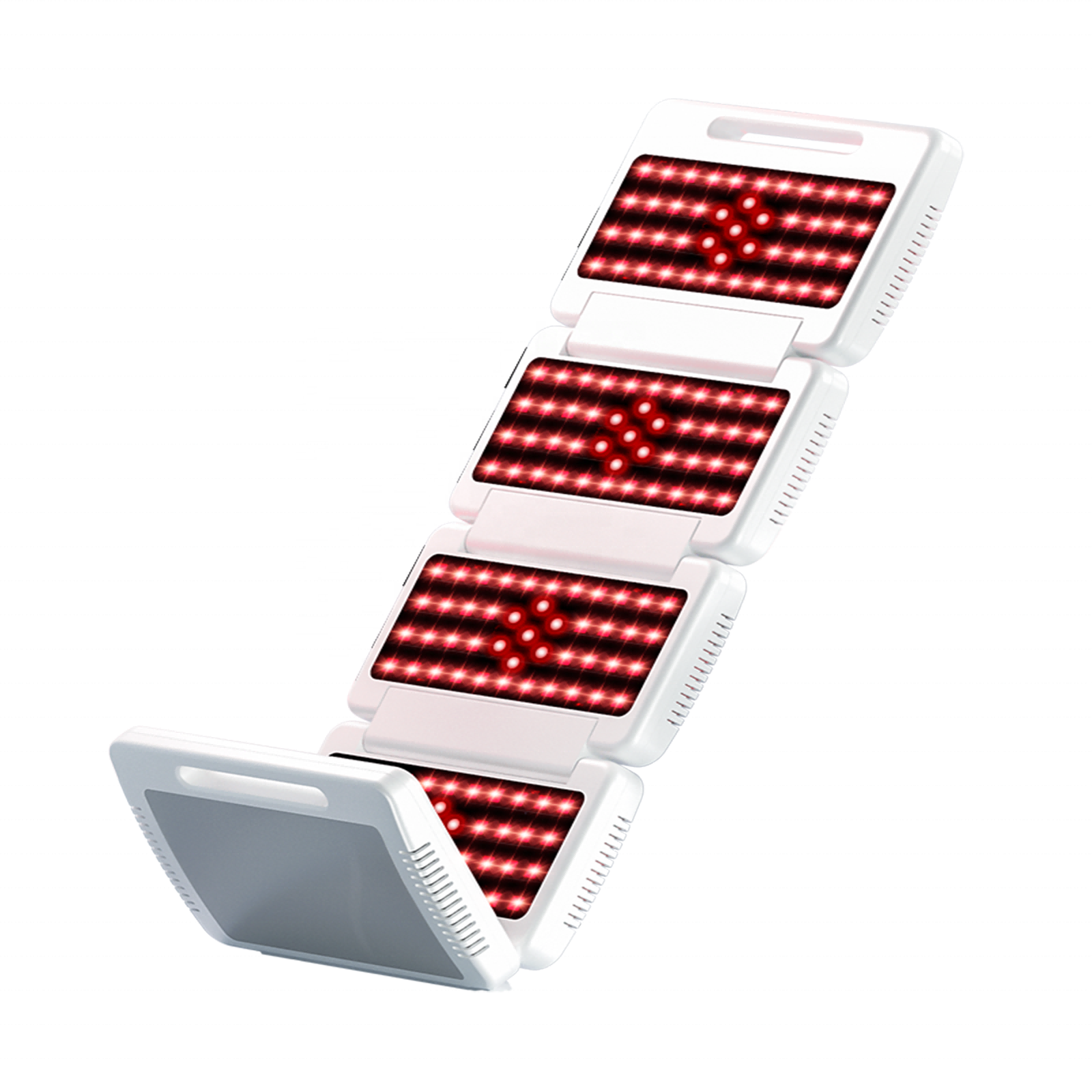
Turn most hairdryers to their highest heat and you get a blast that feels intense but often just roughs up the cuticle. The air is scorching, the motor whines, and your arm gets tired holding a tool that seems to fight you. That kind of heat can leave hair looking parched and flyaway, not smooth. It's the classic trade-off: more temperature for less time, but the finish tells a different story.
A smart dryer doesn't rely on raw heat to do the heavy lifting. It pairs a focused, controlled warmth with a fast, steady airflow so the moisture leaves the hair shaft without baking it. The difference shows up in how the hair falls afterward—less frizz, more shine, and a style that holds without feeling crispy. When the setting feels merely warm but the hair dries quickly and quietly, that's when the engineering is actually working for you.
The problem is that many people judge a dryer by how hot it gets on the palm of their hand. But that's a misleading test. What matters is how the heat is delivered: evenly, gently, and in balance with the air speed. Once you experience a dryer that doesn't scorch yet still dries fast, the old high-heat setting starts to feel like a shortcut that costs more than it saves.
Power Claims Worth Testing on Your Own Skin
The phrase "results may vary" often gets thrown around as a polite disclaimer, but with skincare it hides a more practical truth: your own skin is the only testing ground that actually matters. Lab trials and influencer testimonials can point you toward promising ingredients, yet they can't account for the way your specific mix of hormones, stress, sleep, and even hard water alters how a product performs. A serum that transforms someone else's texture might trigger congestion on your chin, and a moisturizer praised for its weightless feel could sit greasy on your forehead. The only way to know is to stop outsourcing the verdict.
That doesn't mean turning your face into a science experiment with a dozen new products at once. Instead, pick one claim that genuinely interests you, like hydration that lasts through a full workday or visible evening of tone within three weeks, and test it with controlled patience. Apply the product on one side of your face or on a small patch for a few days before committing your whole routine. Take photos in the same lighting, note how your skin feels at hour one versus hour eight, and resist the urge to add another active ingredient halfway through. This kind of deliberate, solo testing often reveals quirks that no ingredient list could predict.
There's also an unexpected bonus to treating your skin as a personal research subject: you start noticing patterns that transcend individual products. Maybe your cheeks always flush with certain fragrance compounds, or your T-zone tolerates niacinamide but rebels against vitamin C. These observations build a private knowledge base that no brand campaign can sell you. Over time, you'll scroll past bold claims with a sharper eye, knowing that the most accurate label is the one your own skin writes after a few weeks of honest, unhurried use.
The Real Difference Between 500mW and 5W for Joint Pain
A lot of people assume a 5W device is simply ten times stronger than a 500mW unit, but the number on the box rarely tells you how much light actually reaches a painful joint. Many 5W devices are pulsed, so the average output is far lower than the label suggests, while a true 500mW continuous-wave device often delivers a steadier, more predictable dose to the tissue. For joint pain, that consistency matters more than a brief spike of peak power.
The real difference shows up in heat and penetration. A genuine 5W beam can warm the skin quickly, which may feel soothing at first but often shortens treatment time before the deeper tissue has absorbed enough light. A 500mW unit works more slowly, but it tends to stay comfortable over the minutes needed to reach a therapeutic dose in areas like the knee or finger joints. That slower delivery can be an advantage when you are treating inflammation rather than just chasing warmth.
Neither number is automatically better for joint pain. The practical question is whether the device maintains a useful power density over the area being treated and whether you can tolerate it long enough to get a real dose. A 5W label with heavy pulsing and poor heat management may do less than a modest 500mW device that puts continuous light where you need it.
When a Device’s Peak Output Is Just a Marketing Number
Manufacturers love throwing around peak numbers because they look impressive on a shelf tag. The problem is those figures are usually measured under conditions you will never recreate at home—one channel driven, at a single frequency, for a fraction of a second before the power supply gives up.
A speaker or receiver rated at 1,000 watts peak might only manage 60 or 70 watts of continuous output once all channels are active and real program material is playing. The gap gets even wider with compact soundbars and Bluetooth speakers, where the labeled number can exceed what the included power brick can physically draw from the wall.
That doesn't mean peak ratings are completely useless, but they tell you very little about how loud or clean a device will sound in everyday use. If you want a meaningful comparison, pay attention to continuous or RMS power into a stated impedance, along with distortion and bandwidth. Anything that only boasts a peak figure is often hiding an unremarkable amplifier behind a big sticker.
Matching Power Output to Pain Depth Without Overdoing It
Deeper discomfort does not automatically call for the highest speed setting. A punchy, high-velocity setting often rattles the surface layers first, which can make the surrounding muscle brace instead of release. In many cases, a slower stroke with moderate amplitude reaches deeper tissue more effectively because it gives the fibers time to respond rather than forcing them into a protective spasm. Matching output to pain depth means reading how the tissue accepts the pressure, not just dialing up intensity out of habit.
Start one or two levels below what feels obviously strong, then hold the contact point over the sore area for a short while. If the muscle softens and the ache begins to blur, that is a useful working range. If the skin tingles sharply, the area tightens further, or you find yourself gripping against the device, the output has already passed the point of benefit. Back off until the sensation stays firm but no longer triggers a defensive response.
A session that leaves the tissue warm, slightly looser, and easier to move is usually enough. Chasing a deep, aggressive pounding often adds soreness that takes days to settle and slows actual recovery. The goal is repeated, tolerable pressure that calms the nerve endings and restores movement gradually, not a single session that punishes the muscle into submission.
FAQ
Most home-use handheld units sit in the 500 mW to 1 W range, and a few portable models claim 2–3 W. In clinics, Class 4 therapy lasers often run from 10 W to 30 W or more, so the real power leaders are professional systems rather than consumer gadgets.
Not automatically. Higher power can deliver more energy per session, but wavelength, pulse settings, treatment area, and how long the light stays on matter just as much. A lower-powered 905 nm unit can sometimes outperform a stronger visible red device for deep joint pain.
Class 3B is usually capped at 500 mW, while Class 4 starts above that and can reach multiple watts. The jump isn't just about power; Class 4 units typically need protective eyewear, better cooling, and more careful training because they can heat tissue quickly.
With near-infrared wavelengths around 800–1100 nm and higher output, energy can reach several centimeters into soft tissue in a clinical setting. But depth isn't infinite: bone, fat, and skin type scatter the beam, so the effective dose drops off quickly.
There are handhelds advertising 1–3 W, but true multi-watt Class 4 devices are generally not something you should use without training. For home use, lower-power devices with clear safety certifications and automatic shutoffs are the safer route, especially near eyes or over sensitive areas.
Check the wavelength range, peak output in continuous and pulse modes, beam aperture, battery life, cooling method, and whether the company lists actual energy density rather than just maximum power. A wide treatment head can matter more than a few hundred extra milliwatts.
Yes, once you move into Class 4 territory, proper laser safety glasses matched to the specific wavelength are required. Even some high-end Class 3B devices produce enough diffuse reflection to warrant eye protection, so the safety gear should be considered part of the device cost.
Conclusion
A higher milliwatt rating often looks impressive, but it rarely tells you what a laser device actually does beneath the skin. If the wavelength is wrong for the tissue you are targeting, no amount of extra power will make it reach the joint or muscle that hurts. The strongest setting also tends to feel warm or even hot on the surface, and that heat is usually a sign of wasted energy rather than deeper relief. A quick palm test can be useful: if the device feels hot within seconds, you are probably feeling surface absorption, not a therapeutic dose. Comparing a 500mW unit with a 5W unit only makes sense when beam size, wavelength and treatment time stay the same. Without those details, peak output printed on the box is often just a number chosen to sell the product.
Joint pain needs a better match between power and depth. A knee or shoulder may require more energy than a wrist or finger, but pushing the device to maximum does not automatically improve the outcome. It can overload the upper layers while the deeper tissue gets very little. A more useful approach is to check the average output, beam diameter and suggested treatment time, then notice how your skin responds over several sessions. If the area becomes uncomfortably hot or the relief disappears quickly, the dose is probably not right for your condition. The strongest device on paper is not necessarily the one that gives lasting pain relief.
Contact Us
Contact Person: Manager Mei
Email: [email protected]
Tel/WhatsApp: +8618627866609
Website: https://zzgt.en.alibaba.com/