

Silicon Carbide Powder Supplier Tips for Getting Consistent Quality
2026-11-02
Finding a silicon carbide powder supplier who delivers the same particle size, purity, and phase composition every single time can feel like a gamble. Yet consistency is exactly what separates a reliable production line from costly batch rejections. In this guide, we break down practical tips for evaluating suppliers, from sampling protocols to process audits, so you can stop chasing variations and start locking in repeatable quality. At HUAYI TECH, we've seen how small supplier choices make a big difference on the factory floor.
Go Beyond the Certificate: Demand Batch Records With Every Shipment
A certificate of analysis is a summary of what a supplier wants you to see. Batch records are a window into what actually happened on the production floor. The gap between the two is where hidden risks live: an unrecorded line stoppage, a raw material substitution, a cleaning cycle that ran short. If you only accept the certificate, you are agreeing to trust the conclusion without ever seeing the evidence behind it.
Most suppliers will not volunteer full batch documentation. You have to make it a normal part of the purchase order and hold the line when the first shipment arrives without it. Ask for the executed batch record, not a blank template or a redacted summary. Look for corrections, deviations, and approvals that happened in real time. Those details tell you whether the product you are about to receive was made the way your contract says it should be made.
The practical move is to link payment release to complete batch record submission. If the paperwork is missing, the invoice waits. Companies that enforce this rule consistently find that quality issues become easier to trace, rejections drop, and supplier conversations shift from blame to problem solving. It is a small operational change with outsized protection against the kind of failure that only shows up after the product is already in your warehouse.
Put Their Powder Under Your Own SEM Before You Buy
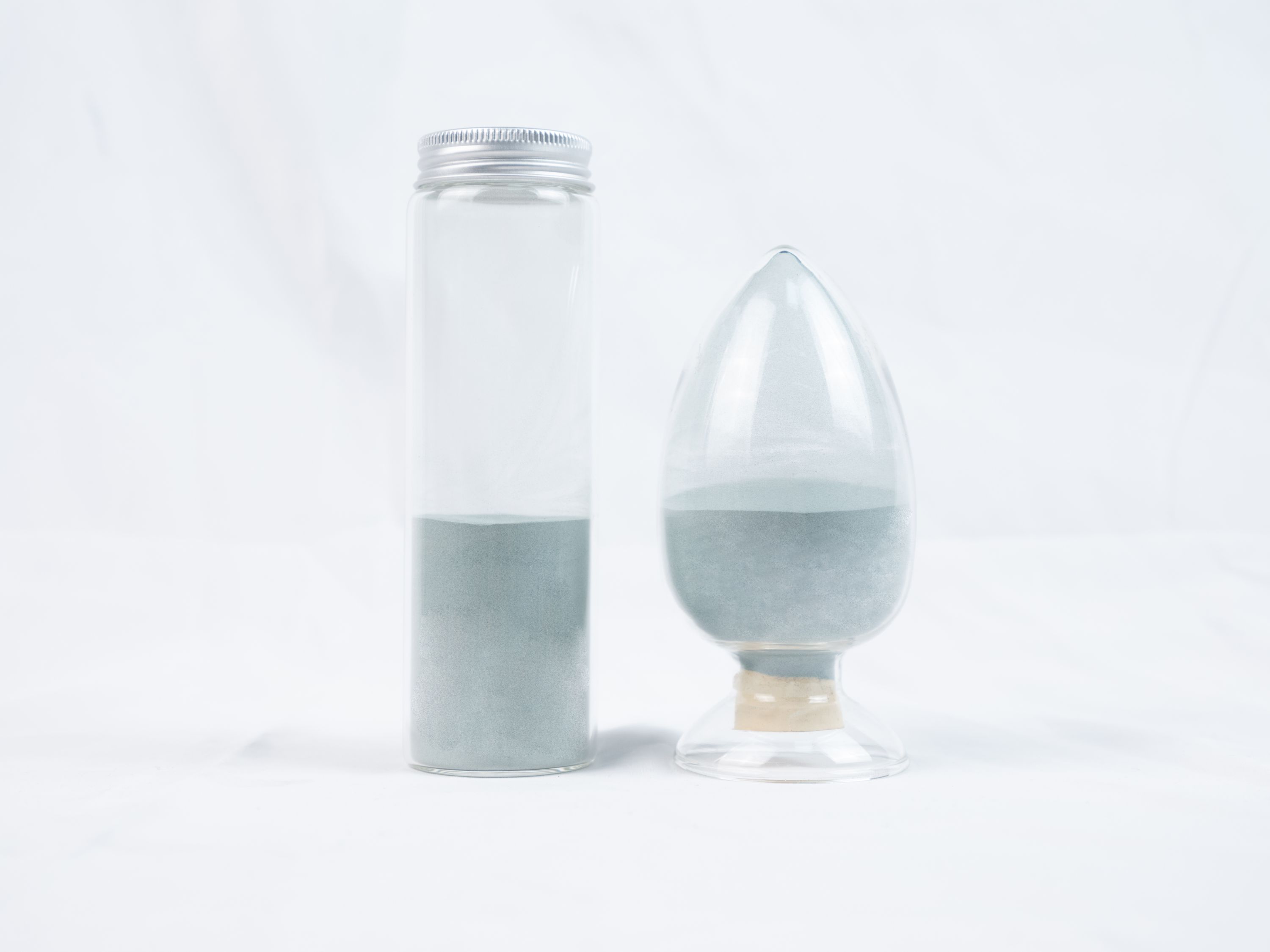
Supplier micrographs are often cherry-picked from the cleanest batch or even from a different production run. If you are formulating or sintering, that mismatch shows up as unexpected viscosity shifts, poor packing, or surface defects. Spending an hour on your own SEM before committing to a purchase order lets you see the real state of agglomerates, satellite particles, and broken shells that datasheets never mention.
Prepare the sample the same way you would in your process, dry or dispersed in your actual solvent. A quick scan at low kV can expose organic residue that hides at higher beam energies, and comparing three random fields instead of one pretty image will tell you more about lot-to-lot consistency. If the powder cannot survive your handling without forming hard aggregates, it will not behave better at production scale.
Ask How They Control Particle Size Distribution at the Tail Ends
When you ask about tail-end particle size control, you're really probing whether the supplier treats the distribution as a full curve or just a d50 number. A capable partner will describe how they manage fines and oversize separately—maybe through multiple air classification passes, adjusted rotor speeds, or feedback from laser diffraction that triggers real-time changes to the milling gap. If they only talk about average size, that's a red flag.
The specific question worth posing is how they keep the coarse tail from drifting upward when raw feed changes or when equipment heats up during long runs. Look for answers that mention classifier wheel tip speed, secondary air flow balancing, or even a post-mill screener that recirculates oversized particles. For the fine tail, ask whether they use a cyclone or baghouse cut point that can be shifted without slowing down production. These details separate operators who actively shape the ends from those who just accept whatever the mill produces.
You can also ask for a recent lot's full PSD with D10, D90, and D99 values, and then ask what would happen if your spec required tightening one of those tails by 20%. The response should include concrete adjustments—not vague promises. A good sign is when they mention using an in-line particle size analyzer to monitor both ends and automatically adjust classifier speed or feed rate to keep the distribution in a narrow band throughout the batch.
Insist on a Pilot Run With Your Exact Equipment Settings
Before committing to a full-scale production schedule, request a pilot run using the exact equipment and parameter settings you intend to use later. Minor deviations in temperature, pressure, or even tool wear can produce results that won't repeat on a larger batch. If your supplier suggests using a similar but not identical machine 'just to save time,' push back.
During the pilot, inspect not only the first few units but also the last ones off the line. Thermal drift, material build-up, and operator adjustments tend to show up only after the process has run long enough to stabilize. Record every setting, including ambient conditions like humidity and voltage fluctuations, because those often matter more than the nominal machine specs.
Have your own team sign off on the pilot samples before the main run starts. If something feels off—a slightly different surface finish, a burr that wasn't there before, or a dimension that sits near the edge of tolerance—stop and recalibrate. A short pilot run costs far less than discovering mid-production that the settings don't transfer.
Look for Cleanroom-Level Packaging Protocols, Not Just a Plastic Bag
Most suppliers will happily drop a sensitive component into a standard polyethylene bag, seal it, and call it protected. That might work for a bracket or a cable, but once you're dealing with microelectronics, optics, or anything destined for a controlled environment, a plastic bag is closer to a dust cover than a safeguard. Ordinary bags shed particles, trap moisture, and generate static — three things that quietly destroy yield rates and product lifetimes. If your vendor's idea of "clean packaging" starts and ends with a zip-lock, you should probably keep looking.
Cleanroom-level packaging protocols are a different species entirely. They start with the material itself: low-outgassing films, anti-static or static-dissipative polymers, and sometimes nitrogen-flushed barrier pouches that keep out oxygen and water vapor for years. But the material is only half the story. You need to ask how the parts are handled before they ever touch the bag. Are they packed inside an ISO Class 5 or Class 7 environment? Are operators wearing gloves and hairnets, or is the packing station just a table next to a loading dock? Are there particle counts, humidity logs, and lot-level traceability for the packaging itself? A real cleanroom packaging protocol will have documented answers to all of these — and it won't make you ask twice.
Another telltale sign: how the package is sealed and labeled. A proper cleanroom pack often uses heat sealing under controlled conditions, with desiccant and humidity indicator cards placed inside when moisture is a concern. The outside label should carry more than a part number — look for cleanroom class, date of packaging, operator ID, and sometimes an internal lot code tied to environmental monitoring data. All of this reduces the chance that your "clean" component arrives contaminated, corroded, or degraded from the moment you open the box. It costs more, yes. But compared to the cost of a failed lot or a field recall, a plastic bag was never really the cheaper option.
Agree on Acceptable Variance Ranges Before the First Order
Too many first orders collapse not because the product failed, but because the buyer and supplier never wrote down what 'close enough' means. You might assume ±0.5mm is fine; your partner might assume ±0.2mm. When the parts arrive, one side feels cheated and the other feels blindsided. That conversation should happen before any tooling is cut or any deposit is wired.
Put variance ranges into the purchase order itself, not a separate email thread. Include not only the upper and lower limits for each critical dimension, but also the measurement method (calipers vs. CMM), the sampling plan, and what happens to parts that fall outside the range. For example, will they be scrapped, reworked, or accepted at a discount? These details feel tedious on day one, but they turn ambiguous phone calls into simple pass/fail decisions later.
FAQ
Ask for a detailed certificate of analysis from their most recent production run, not just a brochure. Compare the listed impurities, particle size distribution, and phase composition against your process window. If they hesitate to share raw data, that tells you more than any sales pitch.
Request three samples from three different production lots made at least a week apart. Measure tap density, flow rate, and particle size distribution yourself using the same methods your production line uses. Don't rely only on the supplier's lab results.
Hidden fine particles and uneven particle shape create more problems than average particle size. A narrow size distribution and controlled morphology usually matter more than the nominal D50 value alone.
Yes, and not just a lot number on a bag. Ask if they keep retained samples from every batch and for how long. If a furnace run goes wrong, you want the ability to pull the exact powder lot and compare it against your incoming inspection data.
A supplier that switches feedstock suppliers without notice can change your results even if the final spec sheet looks the same. Ask whether they use a single approved source for their raw SiC or if they blend from multiple origins. Stability upstream usually shows up downstream.
Ask for their process control charts or SPC data over the last six months for key parameters like particle size and oxygen content. A supplier that tracks trends and reacts to drift is far more likely to deliver consistent lots than one that only does final inspection.
It can be, because even small differences in powder handling or classification can shift your process. If you do qualify a second source, run a full production trial and compare the finished part properties, not just the powder specs. Keep the original supplier as your primary until the backup proves itself over several batches.
Conclusion
Securing consistent silicon carbide powder means moving beyond the typical certificate of analysis. Ask for full batch records with every delivery—these documents often expose subtle shifts in feedstock or processing that a summary sheet hides. Before committing to a volume purchase, run the powder through your own scanning electron microscope. A supplier's images may look flawless, but your equipment and operator will catch agglomerates, irregular shapes, or contamination that affect downstream performance. Also press them on how they manage particle size distribution at the fine and coarse tails; a tight median means little if the extremes drift lot to lot.
Equally important is testing under real conditions. Insist on a pilot run using your exact equipment settings, not a generic lab trial, so you can see how the powder flows, packs, and reacts in your process. Packaging deserves attention too—look for cleanroom-level protocols with sealed, moisture-barrier containers rather than a simple plastic bag that risks humidity pickup and cross-contamination. Finally, lock in acceptable variance ranges before the first order. Define limits for particle size, surface area, and impurity levels in writing, and require notification if any batch approaches those boundaries. This combination of documentation, independent verification, and process-specific testing gives you a practical framework for keeping quality consistent from shipment to shipment.
Contact Us
Contact Person: Junting Leo
Email: [email protected]
Tel/WhatsApp: +86 18615009766
Website: https://www.huayimaterial-china.com/