

SF6 Load Break Switch Supplier Evaluation Strategies for Utility Projects
2026-09-04
Selecting the right SF6 load break switch supplier can make or break a utility project—yet all too often, evaluation stops at price and delivery. In this post, we dig into the practical strategies that separate reliable partners from costly risks, drawing on field-tested criteria for gas quality, sealing performance, and after-sales support. Along the way, we highlight how Deepwill approaches these challenges, offering insights that go beyond the typical checklist and into what actually matters when the grid is on the line.
Reading Between the Lines of SF6 Leakage Rate Claims
On the surface, an SF6 leak rate of 0.1% per year sounds reassuringly precise. But that number rarely tells you the whole story. Manufacturers often arrive at these figures using laboratory conditions—constant temperature, carefully torqued fittings, and brand-new seals. Real substations don't work that way. Thermal cycling from day to night, vibration from switching operations, and the simple passage of time all change how joints and gaskets behave. So the first step in reading between the lines is asking what environment the claim actually describes.
A second trap lies in what gets counted and what gets ignored. A published leak rate might cover only the main tank, while auxiliary piping, pressure gauges, and density monitors are silently excluded. Or the figure could be an average across a fleet, allowing a few bad actors to hide behind a low mean. Some vendors quote leakage per compartment rather than per bay, which makes a three-phase GIS assembly look three times better than it really is. If the test protocol isn't stated—whether it follows IEC 62271-1, CIGRE recommendations, or an in-house method—the number is close to meaningless.
What matters more than the headline percentage is how the equipment behaves after a decade of service. Ask for field data, not just type tests. Look for documentation on seal material compatibility, maintenance intervals for re-torquing, and whether the design uses double seals or continuous monitoring. A claim of 0.5% per year may be acceptable if it includes all components and reflects real operating conditions, while a 0.1% claim based on a 24-hour lab test could mask much higher actual losses. In the end, the fine print around the leak rate often reveals more than the rate itself.
Factory Witness Testing That Separates Consistent Builders from One-Off Performers
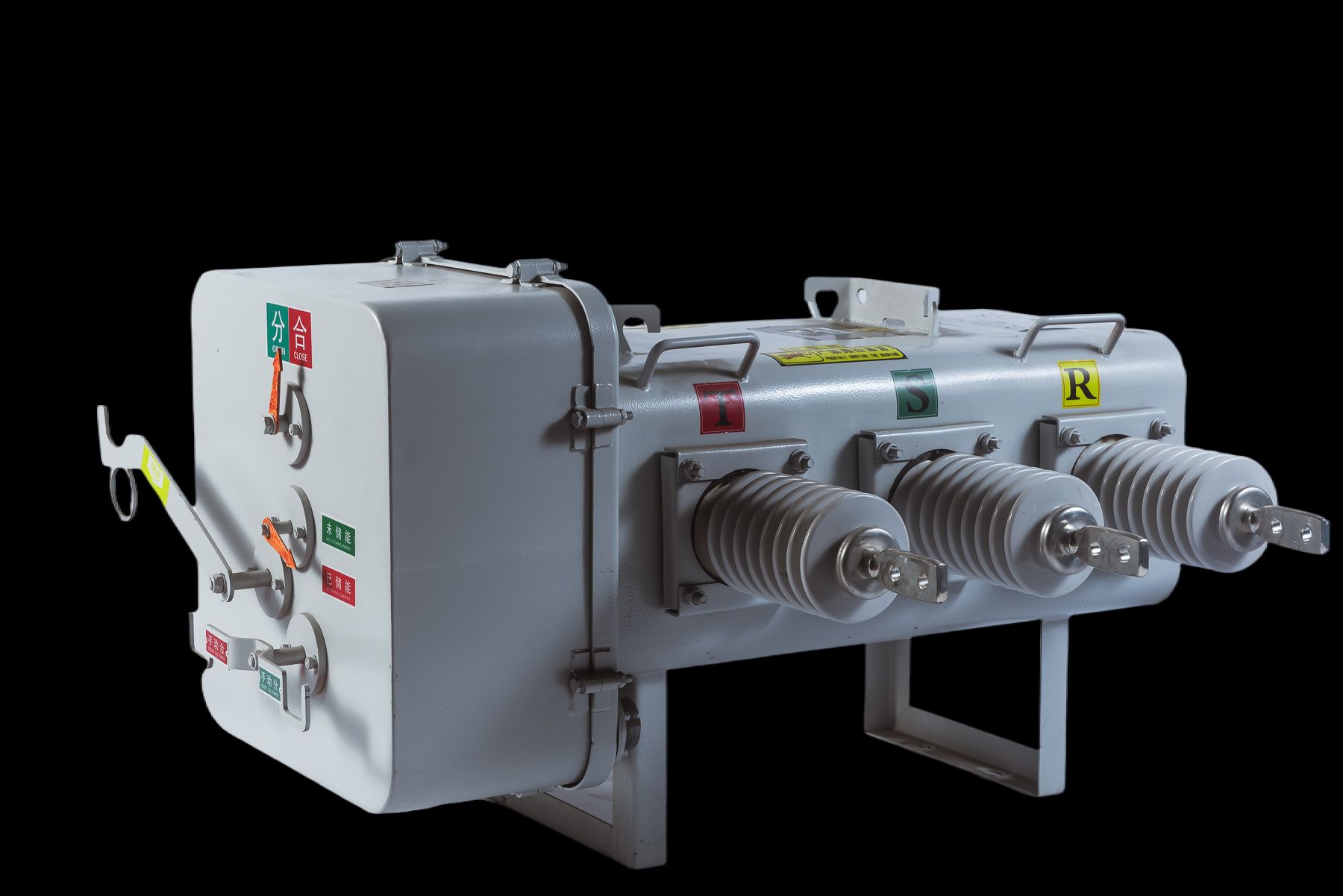
Walk onto a factory floor where a builder is testing equipment in front of the client, and the difference between a seasoned manufacturer and a lucky newcomer becomes obvious within minutes. Consistent builders treat witness testing as a rehearsed transparency session—every gauge, every fail-safe, every torque value is discussed as if the client were already operating the machine. They don't hide behind vague statements like "it passed inspection" but instead walk through the specific measurements, the allowable tolerances, and the one or two anomalies they caught and corrected before the client arrived. This level of detail isn't for show; it comes from having built so many identical units that the test procedure itself is second nature.
One-off performers, by contrast, often rely on luck and last-minute fixes. Their witness test may start late because a sensor wasn't calibrated, or they may ask the client to "ignore that alarm" without explaining why it triggered. The equipment might technically meet the spec, but the builder's body language and vague answers betray a lack of repetition. A consistent builder knows which tests historically cause the most field issues, so they over-test those areas and bring spare parts to the floor just in case. They also document the test in real time—not with a polished photo op, but with handwritten notes on a clipboard or a simple spreadsheet showing temperature curves and pressure drops. That paper trail becomes the client's confidence that the factory didn't just get lucky today.
The real separator is how each builder handles a minor failure during the witness test. A one-off performer will panic, blame a supplier, or suggest the test be rescheduled after hours. A consistent builder stops, explains the root cause in plain language, swaps the faulty component from their on-hand inventory, and repeats the test segment cleanly. They don't ask the client to sign off on an incomplete sequence. By the end of the day, the client leaves with a clear mental picture: one builder produced a product that happened to work today, while the other demonstrated a process that will produce the same result every time.
How Utility Maintenance Teams Actually Assess Switch Ergonomics
Field crews rarely break out a checklist when grabbing a switch handle. The first read comes through the glove, in the half-second before torque is even applied. Does the lever sit naturally under the palm, or does the wrist have to cock at an odd angle? Is the travel smooth and predictable, or does it bind right when you need a clean throw? Veterans describe it less as measurement and more as muscle memory—if a switch forces a second adjustment or a repositioned grip, that's already a fail on the truck tailgate.
Beyond the immediate feel, crews pay close attention to repeatability under real-world conditions. The same switch that feels fine on a mild spring morning turns stubborn after an ice storm or a dust-blown summer. Maintenance teams will cycle a handle dozens of times in a single outage window, noting whether fatigue sets in, whether the mechanism loosens or stiffens, and whether the lockout points remain easy to reach with cold hands or while wearing arc-rated sleeves. If a design asks for fine motor precision in a place where linemen are working by headlamp and feel, it gets flagged quickly.
There's also an unspoken ergonomic audit that happens when switches are compared across different poles and substations. A crew that's spent years rebuilding older air-break switches will notice the moment a new model demands a taller reach, a different pull angle, or a two-handed operation on a single-phase line. Those observations rarely make it into formal spec sheets, but they drive vendor preference and retrofit priorities. In the end, the assessment is practical: a switch is ergonomic if it fades into the background of the job, letting a tired lineman operate it correctly the hundredth time just as easily as the first.
Supply Chain Stress Tests for Long-Lead SF6 Components
Most utilities only discover how fragile their SF6 supply chain is when a routine maintenance window turns into a nine-month wait for a replacement interrupter. Stress tests for long-lead SF6 components start by mapping every tier of the supply network, from the OEM assembly line back to the foundry pouring aluminum for flanges and the specialty shop machining PTFE nozzles. The purpose is not to predict a single failure but to reveal compounding delays: a port strike in one region, a shortage of high-purity copper in another, and a batch of defective cast-resin bushings all hitting the same quarter.
One practical approach is to run a tabletop exercise with procurement, engineering, and field maintenance together. Give each team the same scenario—say, your only qualified supplier for 245 kV interrupter assemblies files for insolvency six weeks before a planned outage. Then trace what would actually happen inside your organization. Who owns expediting? Which spare parts are already in the warehouse but lack updated test certificates? How long would re-qualifying a second source take, and what does that do to your insurance coverage? These sessions often expose that the formal lead time in the ERP system has little connection to the real lead time after factory acceptance testing and customs clearance.
After two or three rounds, the findings usually push utilities toward uncomfortable decisions: pre-ordering long-lead gas density monitors years ahead of need, redesigning bushing interfaces to accept parts from more than one manufacturer, or stockpiling SF6 gas itself despite storage and handling costs. The goal is not to eliminate risk—no one can do that for components with six-to-twelve-month lead times—but to make the supply chain's weak points boringly visible before a forced outage makes them urgent.
The Hidden Cost of Thin Documentation in Utility Procurement
A bid package that omits soil borings, relay settings, or clear right-of-way boundaries may look lean, but it shifts the risk onto whoever has to build or maintain the asset. Every missing page means another assumption buried in a contractor's price. Utilities sometimes treat thin documentation as a shortcut; what it actually does is delay the moment when the real scope gets defined, usually at a much higher rate.
The first place this shows up is in field changes. Crews discover abandoned ducts that were never shown on the drawings, or they hit a clearance issue that a one-page spec never addressed. Each discovery triggers a request for information, a revised submittal, and often a change order. The original bid comparison becomes meaningless once the extras start arriving, and the procurement team ends up managing the contract instead of the project.
Then there's the operational side. When as-built drawings are incomplete or testing requirements are stated as 'per manufacturer,' the utility inherits an asset it cannot properly maintain. Future engineers spend hours reconstructing decisions that no one documented, and the next procurement repeats the same gaps because the lessons were never written down. Documentation is not paperwork for its own sake; it is how a utility keeps ownership of its own project.
Comparing Post-Commissioning Support Across Regional Service Hubs
Post-commissioning support varies noticeably from one regional hub to another, shaped by local staffing models, spare parts logistics, and the depth of technical expertise available on the ground. Some hubs rely on centralized remote diagnostics backed by a small field team, while others maintain full-time resident engineers who handle everything from firmware updates to emergency repairs. This split often reflects the installed base density and the commercial value of the region, but it also creates uneven response times and service-level expectations that customers quickly learn to navigate.
Comparing these hubs side by side reveals patterns that are rarely captured in formal SLAs. For instance, hubs with long-standing partnerships with local universities tend to build deeper troubleshooting capabilities, whereas newer hubs may depend heavily on fly-in support from headquarters. The difference shows up most clearly during complex retrofits or when unusual failure modes appear: regions with stronger local knowledge networks resolve issues faster and with fewer repeat visits, while others cycle through multiple remote sessions before a physical intervention is even scheduled.
What matters most in practice is not the number of support tickets closed or the average time to first response, but how well the hub understands the operational context of its customers. A hub that shares shift patterns, environmental conditions, and maintenance habits with its clients will tailor its post-commissioning efforts accordingly, offering proactive walkthroughs, on-site spare part buffers, or flexible escalation paths that a generic playbook would miss. That contextual alignment, more than any metric, separates a truly effective regional hub from one that merely meets contractual minimums.
FAQ
Beyond basic certifications, look for a track record of installations in similar grid environments, in-house testing capabilities for gas tightness, and transparent documentation of SF6 handling procedures. A supplier that offers detailed failure rate data and field service response times gives utilities a clearer picture of long-term performance.
It's not just about having a recycling policy. Strong candidates provide third-party verification of leak rates, use sealed-for-life designs where feasible, and offer training on proper gas recovery to minimize venting. Ask for actual measurements from existing installations rather than relying solely on datasheet claims.
Support can make or break a project. Look for suppliers with local stock of critical spare parts, a documented emergency response protocol, and certified technicians who can perform on-site gas analysis. A vendor that offers extended warranty terms tied to preventive maintenance schedules shows confidence in their product.
Pay attention to assembly line cleanliness, automated leak detection stations, and batch traceability of gas-filled compartments. A worthwhile audit checks whether the supplier performs routine partial discharge testing on every unit, not just type tests, and whether they maintain calibration records for gas handling equipment.
Move beyond initial price. Include expected maintenance intervals, gas refill costs, spare part availability over 20–30 years, and the cost of end-of-life SF6 reclamation. A supplier that offers a lifecycle cost model with assumptions you can verify is often more credible than one pushing a low upfront quote.
Focus on rated short-circuit making capacity, mechanical endurance class, and operational temperature range matching your service area. Also evaluate the design of the gas pressure monitoring system: a temperature-compensated density sensor is preferable to a simple pressure gauge because it avoids false alarms.
Some suppliers rely on single-source components for gas-tight bushings or operating mechanisms. Ask for a bill of materials with alternate suppliers identified, and check whether the manufacturer has regional buffer stock for finished units. Geopolitical or logistics disruptions can delay projects, so preferring dual-source strategies reduces exposure.
Watch for vague language around leak rates (e.g., 'low leakage' without a defined percentage), lack of reference projects at similar voltage levels, or an unwillingness to share failure investigation reports. Also be wary of suppliers who don't offer a clear SF6 gas lifecycle management plan, as this often signals future compliance headaches.
Conclusion
Selecting an SF6 load break switch supplier for utility work means ignoring polished brochures and digging into evidence. Leakage rate claims often fall apart when you press for test conditions: were seals aged, was the switch thermally cycled, and does the figure reflect a single unit or a production batch? Factory witness testing is the moment to separate consistent builders from one-off performers—watch how the line handles a failed test, not just a passing one. Supply chain stress tests reveal just as much. Ask each shortlisted supplier to walk through a scenario where a long-lead SF6 component, such as a bushing or gas density monitor, is delayed by twelve weeks. Those with mapped alternate sources, buffer stock, and honest lead-time updates will protect your project schedule more than any brochure promise.
Utility maintenance teams judge ergonomics quickly: can a lineman operate the switch with class-two gloves, read the open/closed indicator from the ground, and reach the manual charging handle without stepping into a hazardous zone? Request hands-on evaluations before committing to a bulk order. Thin documentation is another hidden cost; incomplete torque tables, missing factory test reports, and vague revision records force commissioning engineers to spend weeks chasing clarifications. Finally, compare post-commissioning support across regional service hubs. A supplier with local spare parts, a 24/7 escalation line, and trained field technicians in your operating area will reduce outage duration and build long-term trust. These overlapping lenses—technical, operational, and logistical—create a supplier evaluation that is far more predictive than relying on price or brand reputation alone.
Contact Us
Contact Person: Julion
Email: [email protected]
Tel/WhatsApp: 8617351370631
Website: https://www.deyunelectric.com