

SF6 Load Break Switch Exporter: Your Trusted Partner for Reliable Power Distribution
2026-09-09
In an era where grid stability can make or break industrial operations, the choice of SF6 load break switch exporter isn't just procurement—it's a strategic decision. At Deepwill, we've seen too many projects stall because suppliers treated critical switchgear as a commodity. That's why this guide cuts through the spec-sheet noise and focuses on what actually keeps power flowing when it matters most. From dielectric performance to real-world switching endurance, we'll unpack the factors that separate a dependable partner from a costly gamble. If you're planning an expansion or upgrading aging infrastructure, the next few minutes could save you from the hidden failure points no datasheet will mention.
Inside the SF6 Arc-Quenching Process That Makes Load Break Switches Safer
When a load break switch interrupts current, the contacts separate and an arc forms. In air, that arc can stretch long enough to cause flashover or contact erosion. SF6 changes the equation almost instantly. The gas has a strong affinity for free electrons—once the arc begins, SF6 molecules capture those electrons and form heavy negative ions. This pulls energy out of the arc column and drives the temperature down, forcing the arc to extinguish before it can do real damage.
What makes this process unusual is that SF6 doesn't just smother the arc; it actively recombines after the interruption. The gas molecules split under the arc's heat, then re-form within microseconds as the temperature drops. That rapid recovery allows the switch to regain its insulating strength far faster than air or oil-based designs. For line crews and operators, that means a switch that can be opened under load without a visible arc, without a loud bang, and without leaving carbon tracks that invite future failures.
The practical result is a smaller, quieter, and more predictable device. Because SF6 handles the arc so efficiently, contact gaps can be reduced, and the entire mechanism can be sealed inside a compact enclosure. That's why load break switches using SF6 are often installed in pad-mounted gear or underground vaults where space is tight and reliability is non-negotiable. The arc-quenching process isn't just a lab curiosity—it's the reason these switches can be operated safely thousands of times over their service life.
Engineering Switches for Grids Where Downtime Is Not an Option
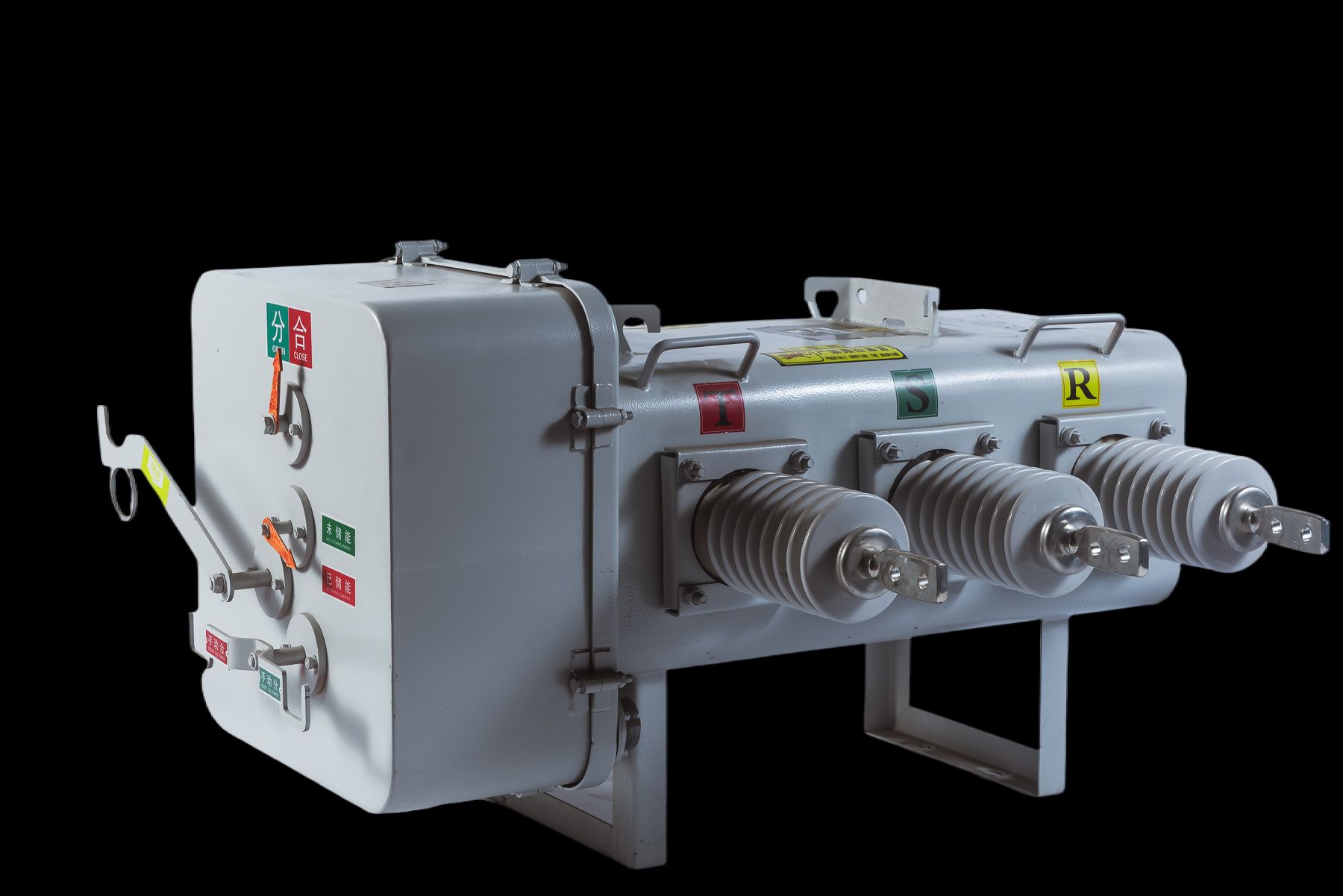
In a transmission substation or industrial plant, a failed switch doesn't just trip a circuit—it can cascade into blackouts, equipment damage, or safety incidents. That's why switchgear built for no-downtime grids uses redundant trip and close coils, welded contact assemblies, and arc-quenching chambers that handle fault currents far beyond nameplate ratings. Every moving part is designed for millions of operations, with self-lubricating bearings and corrosion-resistant plating.
Field replacement without a shutdown calls for drawout switch designs. Interlocked shutters cover live bus contacts the moment the carriage begins to withdraw, and grounding pins engage before the operator can touch any conductor. Secondary control circuits use multi-pin plugs that mate only in the correct position, eliminating wiring errors. Even the mechanical interlocks are arranged so a closed switch cannot be racked in or out.
Testing goes well beyond routine factory checks. Each unit gets impulse voltage tests, temperature rise runs at full load, and mechanical endurance cycling with periodic contact resistance measurements. Some designs embed partial discharge sensors and infrared viewing windows, letting crews spot insulation aging long before it becomes a failure. The goal is not just a reliable switch, but one that communicates its own health and never becomes the reason the grid stops.
Why Export Documentation Shouldn't Slow Down Your Project
The moment export paperwork starts piling up, it can feel like the project has hit a wall. Every missing certificate or incorrectly filled form threatens to delay the shipment by days, and suddenly the whole schedule is off track. But this doesn't have to be the reality. When documentation is treated as a natural part of the workflow rather than a last-minute scramble, it actually protects the timeline instead of breaking it. The key is having the right templates ready, along with clear ownership for each document, so nothing waits until the final week.
A common mistake is treating export documents as a separate task that can be handled after the main work is done. In reality, details like product descriptions, country of origin, and tariff codes are often needed early on for customs clearance and freight booking. Getting these right from the start means fewer corrections later. Many teams find that building a simple checklist per destination and assigning one person to verify it before the order is finalized saves hours of back-and-forth emails and prevents rework.
Technology also plays a role, but it should not replace human attention to detail. Using a shared document folder with version control and automated reminders for expiry dates on licenses or certificates can keep everything moving without adding friction. The goal is not to make documentation faster by cutting corners, but to make it predictable. When everyone knows exactly what is needed, when it is due, and who is responsible, export paperwork stops being a bottleneck and becomes a routine step that quietly supports on-time delivery.
The Real-World Load Profiles Behind Our Custom Switch Ratings
Most switch ratings still get picked from a generic chart, but ours start with load traces captured from actual equipment. A motor may draw six times its running current for the first few milliseconds, yet that spike rarely shows up in a standard spec sheet. We look at the full switching event: the inrush, the bounce, the arc stretch, and the heat that lingers after the contacts settle.
Real load curves are messy. An LED driver can pull a sharp capacitive inrush that looks almost like a short circuit on a scope, while a solenoid kicks back with a voltage spike far above the supply rail when the switch opens. Those aren't anomalies—they're the normal life of a switch in the field. If the rating doesn't account for them, the contacts erode faster, springs fatigue, and the housing eventually fails.
To build ratings that survive that mess, we collect long-term current and voltage recordings from the machines where our switches will live. Then we compress those recordings into worst-case but realistic test profiles—rapid cycling under inductive load, intermittent overloads during startup, hot restrike after a brief interruption. The custom rating isn't a marketing number; it's a summary of what the switch already proved it can handle in those tests.
Harsh Climate Testing Across Coastal Salt Spray and High-Altitude Cold
Few environments punish equipment faster than a coastline drenched in salt spray, where corrosion creeps into every seam and fastener. Our field trials along exposed shorelines push materials through repeated wet-dry cycles, combined with wind-driven abrasion and intense UV, to expose weaknesses that lab chambers often miss. The goal is not just survival, but reliable performance after months of constant assault from brine-laden air.
Move from sea level to the thin air of high-altitude passes, and the failure modes shift dramatically. Temperatures plunge well below freezing, while intense solar radiation and rapid thermal swings stress seals, lubricants, and electronics. Testing at elevations above 3,500 meters simulates the brutal reality of remote installations, where a brittle polymer or thickened grease can render equipment useless. Here, the focus is on cold-start capability, material flexibility, and long-term resistance to frost heave and ice adhesion.
What makes these tests truly meaningful is the combination, not isolation. We shuttle samples between salt-laden coastal stations and alpine cold chambers to replicate real-world supply chains and deployment scenarios. A connector that survives one environment may fail in the other due to micro-cracking allowing salt ingress before a deep freeze. By mapping these compounding failures, we refine designs to tolerate the jagged edge between two hostile climates.
Post-Shipment Support With Remote Diagnostics and On-Site Commissioning
Once your equipment leaves the warehouse, our involvement doesn't end at the loading dock. We monitor system performance remotely to catch early warning signs before they become downtime. Through secure diagnostic access, our engineers can check calibration drift, review fault logs, and adjust parameters without waiting for a scheduled visit.
When a site visit is truly necessary, we send technicians who already understand the machine's history. They arrive with the right parts and a clear plan, not a guess. On-site commissioning includes mechanical alignment, electrical verification, and a full functional test under real operating conditions. You get a written handover report that documents every step, so there's no mystery about what was done or why.
The real value shows up in the first month of production. We stay on call for operator questions, fine-tune sequences that behave differently under load, and confirm that integration with your existing line works as designed. This isn't a one-time fix-it service—it's a way to shorten the gap between installation and stable output.
FAQ
It uses sealed SF6 gas to extinguish arcs quickly during switching, which reduces contact wear and keeps the unit stable over thousands of operations. Because the gas chamber is fully enclosed, moisture and pollution stay out, so the switch can perform consistently even in damp or dusty environments.
Our standard range covers 12kV, 24kV, and 36kV systems, with current ratings from 400A to 630A and short-time withstand up to 20kA depending on the model. If your project falls outside those figures, we can work through custom configurations with the engineering team.
Each unit goes through a routine test sequence that includes gas leakage checks, power frequency withstand tests, mechanical operation tests, and contact resistance measurements. For larger orders, we can arrange third-party witness testing or supply a detailed test report with the shipment.
Yes, the switches are type-tested to IEC 62271-103 and IEC 62271-1. We also support regional variations such as GB, ANSI, or GOST where required, and we provide the necessary certificates and type test summaries with the order.
We offer options like stainless steel enclosures for coastal corrosion resistance, extended bushings for high altitude, and manual or motorized operating mechanisms. For very cold regions, we adjust the gas fill pressure and use low-temperature lubricants so the mechanism stays smooth.
Switches are packed in plywood cases with foam cushioning and desiccant, then strapped and labeled for sea or air freight. We coordinate with your forwarder, prepare the export documentation, and can include vacuum-sealed spare parts kits if requested.
We offer remote video guidance as a standard part of after-sales support, and we can send a field engineer for larger substation projects. Our technical team also provides step-by-step wiring diagrams and a commissioning checklist to make on-site work smoother.
Conclusion
A load break switch doesn't get to choose its weather. We test ours under coastal salt spray, high-altitude cold, and the kind of sudden temperature swings that crack seals and condense moisture inside a tank. Rather than pushing a one-size-fits-all rating, we start from the load profiles you actually measure—morning peaks, evening drop-offs, and the occasional fault-clearing duty that no spreadsheet predicts. The SF6 arc-quenching chamber is engineered around those real stresses, so when the contacts separate, the gas cools and contains the arc quickly enough that downstream equipment never sees the full brunt. On grids where downtime is not an option, that margin is the difference between a scheduled maintenance window and an emergency call at 3 a.m.
Exporting a switch should not feel like a second engineering project. Our documentation team works in parallel with production, clearing certificates of origin, test reports, and packing lists while the switch is still on the assembly floor, so a missing stamp or an incorrect classification doesn't idle a container at the port. And once the shipment arrives, support continues with remote diagnostics on the SF6 gas monitor and on-site commissioning engineers who stay long enough to train your crew through the first live operations. We fold every field failure and near-miss back into the next design review, because the real test isn't in our factory—it's the first summer storm or winter cold snap your network has to ride through.
Contact Us
Contact Person: Julion
Email: [email protected]
Tel/WhatsApp: 8617351370631
Website: https://www.deyunelectric.com