

Preserved Flower Recommendations for Timeless Home Decor
2026-11-16
Imagine stepping into a home where fresh blooms never fade, where petals keep their velvet softness and hues stay rich through every season. That’s the quiet luxury of preserved flowers—a decor choice that feels alive yet asks for nothing in return. In this post, we’ll share our favorite preserved flower recommendations to bring that timeless charm into your own space. And if you’re looking for pieces that blend craftsmanship with lasting beauty, PHLEEYA is a name worth discovering. Let’s explore how to turn every room into a lasting garden.
What Fresh Flowers Can't Give You (And Preserved Ones Can)
Fresh flowers wilt, drop petals, and demand water and trimming. They give you a brief burst of life, then leave a messy cleanup and a vase to wash. Preserved flowers hold their shape and color for months or even years without a single drop of water. That quiet resilience means you can place them on a bookshelf, in a dim hallway, or inside a gift box and simply forget about them—they won't punish you for it.
Another thing fresh stems can't offer is consistency. A bouquet looks different by day three, and by day five it's often past its prime. Preserved arrangements keep the exact look you fell for, from the curve of a petal to the depth of a hue. You're not racing against decay; you're simply enjoying a moment that stays put.
Perhaps the biggest gift is the absence of pressure. No need to remember watering, no guilt when you travel, no sadness when the blooms fade. Preserved flowers let you keep the beauty without the caretaking. They're for people who love flowers but not the upkeep—a quiet rebellion against the idea that beautiful things have to be temporary.
The Colorfast Stems That Won't Fade on Your Shelf
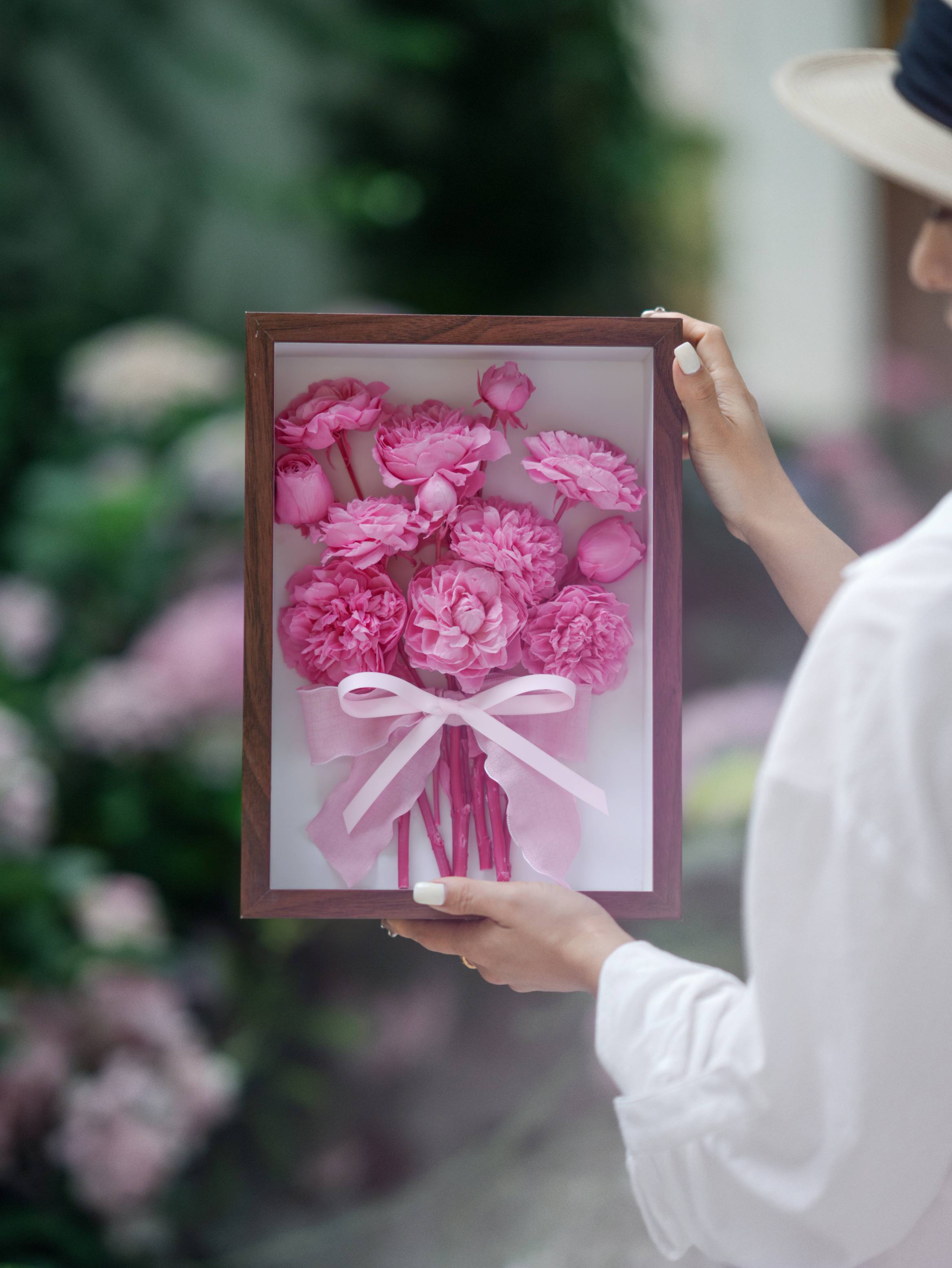
There's a particular disappointment in pulling a favorite faux stem out of a vase only to find the side that faced the window has paled to a ghost of itself. These ones don't do that. The color is locked through the entire stem, so even a bright afternoon sun won't bleach the petals into something unrecognizable.
What you notice after a few weeks is what doesn't happen. No chalky bloom rubbing off on your fingers, no dulling along the edges, no need to rotate the vase every other day just to keep the display even. The dye holds in the material itself, which means the reds stay red, the eucalyptus stays that cool grey-green, and the white stays clean rather than yellowing.
It's the kind of detail that matters when a shelf arrangement is meant to live with you for a while. Months later, the stems still look intentional rather than tired, so you can move them from the living room to a bedroom corner and they carry the same quiet color.
Rooms Where Preserved Blooms Look Like They Belong
A living room with a north-facing window is where preserved hydrangeas stop looking like a compromise. The muted light strips away any artificial gloss, and suddenly the dusty blue petals echo the faded spines of secondhand books on the shelf below. Tuck a few stems into a stoneware jug that already has a hairline crack, and the arrangement settles in as if it has always been there, no water line, no wilting, just a quiet agreement with the room's slower pace.
Bathrooms are the unexpected test. Fresh flowers fog up and droop within a day, but dried lavender or strawflowers against glazed white tile create a dry, herbal counterpoint to steam. A small bunch tied with twine and hung from a towel hook, or standing in a glass apothecary jar on the window ledge, makes sense because the room's constant humidity is exactly what those preserved stems were saved from. They hold their shape while the mirror fogs, and that contrast feels intentional rather than sad.
In a kitchen corner where a wooden cutting board leans against the backsplash, a cluster of preserved eucalyptus or bunny tails works because it matches the room's textures, not its colors. The silvery leaves pick up the grain of oak, the pale seed heads nod toward a linen dish towel, and nobody asks why the flowers aren't dead yet. They're not pretending to be fresh; they're just part of the still life that already includes a bowl of lemons and a salt cellar with a chipped lid.
Playing With Texture: From Wispy Ferns to Velvet Roses
Few garden moments rival the contrast between a stand of maidenhair ferns and a nearby shrub rose in full bloom. Fern fronds catch the slightest breeze, their leaflets thin enough to glow when backlit by late afternoon sun. Run a fingertip along a wispy frond and you feel almost nothing—a faint, papery resistance. Now cup a 'Souvenir de la Malmaison' or 'William Shakespeare 2000' bloom and the petals press back with a dense, cool softness that seems to absorb sound. That gap between near-weightless and plush is what makes texture worth planning.
You do not need a large border to explore this. A single trough can hold a froth of Asparagus setaceus beside a potted rose with petals the color of crushed raspberries. Let the fern spill over one edge while the rose sits upright, its bloom just beginning to unfurl. The trick is contrast without clutter: one airy element, one velvety anchor, and enough bare soil or stone between them to let each texture breathe. When rain moves through, the fern shivers and holds droplets like tiny lenses; the rose gathers water on its petals in dark, heavy beads that slide off reluctantly.
Beyond the hand, texture shapes how light behaves in a planting. Wispy foliage scatters shadow into fine lace across a path, while velvet petals pull light inward, turning a single bloom into a small, saturated pool of color. Placing them along a walkway invites touch, and touch is where the garden stops being a picture and starts being an experience.
Why You Can Forget the Watering Can Entirely
The whole point of a good growing setup is to let the soil handle moisture on its own terms. Once you switch to a system that delivers water directly to the roots at a steady pace, the old ritual of lugging a can around feels unnecessary. Your plants get exactly what they need without you hovering.
There's a certain relief in removing one more chore from the list. Instead of guessing whether the top layer is too dry or too damp, the reservoir does the thinking. Roots pull up moisture as they require it, so the risk of overwatering or letting things go crispy drops sharply.
After a few weeks, you'll notice the difference in both the plants and your own routine. Leaves stay even, growth keeps pushing, and your only job is to top up a tank every so often. The watering can sits in the shed, gathering dust, and that's exactly how it should be.
For Gifting: Arrangements That Outlast the Thank-You Note
A thank-you note gets read once, maybe twice, then tucked into a drawer. A well-chosen arrangement keeps working long after the envelope is opened. The trick is to steer away from anything too precious or one-note. Look for stems with real staying power—dried grasses, seed heads, sculptural branches, or blooms that age gracefully rather than wilt. They shift the gift from "I felt obligated" to "I remembered what you actually like."
Gifting flowers that outlast the note also means thinking about the vessel. A sturdy ceramic bowl or a hand-thrown pot can be reused for years, and it changes the arrangement from a fleeting centerpiece into a small piece of someone's daily landscape. Choose a palette that works in a real home, not just a florist's cooler. Muted earth tones, inky blues, or warm neutrals tend to disappear into a room in the best way—they become part of the background instead of demanding attention.
Finally, don't overstuff the stems. A few strong elements arranged with some negative space will look intentional for weeks, while a crowded bouquet goes limp and messy by day three. If you want to go a step further, tuck a small note about how to dry or trim the branches so the recipient can coax a second life out of them. That's the kind of gift that gets remembered not just after the thank-you is written, but long after the card has been recycled.
FAQ
Look for garden roses, hydrangeas, and eucalyptus. Garden roses keep a soft, velvety feel that mimics fresh blooms, while hydrangeas offer a papery lightness that suits airy interiors. Eucalyptus adds a muted green tone and a slightly rustic edge without looking artificial.
Stick to single-stem arrangements in neutral containers. A solitary preserved protea or a small bunch of lagurus in a matte ceramic vase reads as sculptural rather than fussy. Avoid mixed bouquets with too many colors, which can feel busy in a pared-down space.
Try placing a small glass dome over a single preserved rose or a few dried palm spears. The dome keeps dust off and adds a collected, vintage feel. Alternatively, lay a sparse stem of preserved amaranth horizontally across a stack of books for an effortless look.
They tolerate moderate humidity better than dried flowers, but avoid placing them directly near steam or water splashes. A preserved fern or moss arrangement in a closed terrarium works well in a bathroom because the glass shields it from moisture while still adding greenery.
Try dusty blue eryngium with cream-colored bunny tails, or deep burgundy preserved carnations with sage green eucalyptus. These pairings feel sophisticated without leaning on the typical blush-and-white palette that can read as generic.
With proper care, most preserved flowers last one to three years, sometimes longer. The main enemies are direct sunlight, which fades colors quickly, and high humidity, which can make petals limp. Keeping them out of airflow from vents also helps prevent brittleness.
A low, compact arrangement of preserved hydrangeas and moss in a shallow tray keeps the desk uncluttered while adding a hint of nature. Choose muted tones like gray-green or soft terracotta so it doesn't distract during video calls.
Many people buy stems that have been dyed in overly bright, unnatural shades like neon pink or electric blue. Those can look cheap over time. Instead, select flowers labeled as naturally preserved or in earthy, muted colors that age gracefully.
Conclusion
There's a quiet kind of magic in preserved flowers—they hold their color and shape long after fresh bouquets have crumpled into compost. If you've ever watched a vase of roses brown by midweek, you know the disappointment. Preserved stems skip that entirely. Their colorfast petals won't fade on a sunny shelf, and the texture range is honestly surprising: wispy ferns, velvety roses, sturdy eucalyptus that looks like it was just cut. They belong in corners that fresh flowers hate—bathrooms with steam, dim hallways, a bedroom nightstand where you'd forget to change the water. A small cluster on a stack of books or a single stem in a slim vase adds a lived-in, timeless note without any fuss.
For gifting, preserved arrangements outlast the thank-you note and keep on giving. No one has to remember to water them, and they won't trigger allergies the way pollen-heavy blooms can. I've found they work best in low, wide bowls on coffee tables or as a single statement piece on a mantel. Play with contrast: airy baby's breath next to dense, plush roses, or mix dried grasses with preserved peonies for a texture that feels collected rather than bought. Because they require zero maintenance, you can place them anywhere—inside a glass cloche, on a bathroom shelf, even in a guest room that rarely sees daylight. They quietly anchor a room, making it feel finished without trying too hard.
Contact Us
Contact Person: Mr. Luo
Email: [email protected]
Tel/WhatsApp: 86 18100895505
Website: https://www.feiliyaflowers.com/en/