

Oil-Filled Pressure Gauge Company: A Buyer’s Guide to Quality and Reliability
2026-11-16
Finding an oil-filled pressure gauge company you can actually count on isn’t as straightforward as it sounds. Every dependable gauge hides a manufacturer that sweats the details—sealing, damping, long-term durability. This buyer’s guide skips the fluff and shows you what separates a reliable supplier from a costly gamble. If you’ve already come across HONGSEN, you’re asking the right questions—now let’s make sure you get the right answers.
Why Some Oil-Filled Gauges Drift After Just a Few Months
A lot of drift in oil-filled gauges isn't actually a problem with the movement itself—it's the fill fluid reacting to temperature swings. When the case warms up, the oil expands and pushes against the Bourdon tube from the outside. If even a tiny pocket of air was trapped during filling, that pocket compresses and expands with heat, which changes the internal pressure enough to shift the needle. Over a few months, daily heating and cooling cycles can permanently deform thin diaphragm seals or push the indicator off zero in a way that looks like calibration drift.
Another common cause is moisture or gas slowly working its way into the case through the vent or fill plug. Oil-filled gauges aren't perfectly sealed; they need a small vent or flexible element to handle pressure changes. If that breather lets in humid air, water droplets can settle inside and alter the fluid's density. That extra mass on the moving parts isn't huge, but combined with vibration from pumps or compressors, it can cause the pointer to wander from its original set point. Some drift only shows up under load because the added moisture changes how the oil damps the needle's motion.
Mechanical fatigue plays a role too, especially in cheaper gauges. The thin metal diaphragm that separates oil from the outside atmosphere flexes every time ambient temperature shifts. After thousands of these small movements in just a few months, the diaphragm can lose its elasticity. Once that happens, the gauge can't maintain a stable internal reference pressure, so the reading creeps. You'll often notice this as a gauge that reads fine at startup but drifts higher or lower after the equipment warms up—right where that damaged diaphragm starts to matter.
Accuracy Specs That Sound Great but Fall Apart in the Field
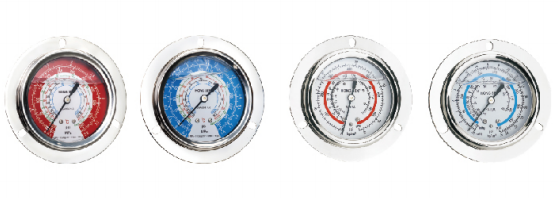
Most accuracy numbers printed in brochures come from controlled lab setups, standardized test blocks, and ideal operator movements. Take that same instrument into a dusty job site or a workshop with fluctuating temperatures, and the readings shift in ways the spec sheet never mentions. A laser distance meter rated at ±0.1 mm might drift past ±3 mm when sunlight heats one side of the housing or the target surface isn't perfectly matte. Surface roughness, humidity, and even the user's breathing pattern during handheld measurements all chip away at the promised precision.
Another trap is that published specs often describe a single static measurement under one set of conditions. Real-world tasks involve scanning across uneven surfaces, stitching multiple scans together, or running the device for hours while vibration from nearby machinery and battery voltage drops create cumulative errors. Buyers who follow the manual's calibration routine on day one quickly discover that the actual tolerance in continuous use is far wider than the headline figure, leading to rejected parts and wasted material.
Truly dependable accuracy demands field verification, not just a lab certificate. That means comparing readings against a known reference artifact on site, tracking the standard deviation across repeated measurements, and accounting for environmental drift. Yet most purchasing decisions are made on the glossy spec alone, and the extra cost of protective enclosures, stable mounting rigs, and regular recalibration only surfaces mid-project—long after the initial budget was approved.
Choosing a Fill Fluid That Holds Up Beyond the Spec Sheet
A fill fluid can look perfect on paper and still cause drift, sluggish response, or outright failure once it meets a process stream that doesn’t match the lab data. Start by mapping the full operating envelope—not just the normal temperature and pressure, but the excursions, startups, and upsets that rarely make it into the datasheet. Silicone oils, for example, hold viscosity well across a broad range, yet they may attack certain elastomers or carry dissolved gas into vacuum service. Fluorinated fluids handle aggressive media and low pressures better, but their higher cost and lower lubricity can shorten the life of a diaphragm seal in abrasive or high-cycle applications.
The real test often comes from what the fluid does after a year in service. Outgassing under deep vacuum can create a gas pocket behind the diaphragm, skewing zero and reducing sensitivity. Oxidation or thermal cracking at hot spots—like a steam trace left on during summer shutdown—can thicken the fluid and add seconds to response time. Instead of trusting a single viscosity or temperature-range bullet point, ask for long-term stability data, compatibility with the exact process chemistry, and field references from installations with similar transient conditions. A fluid that holds up beyond the spec sheet is usually the one chosen for the worst hour of the process, not the average one.
The Weak Points Most Buyers Overlook Until It's Too Late
A glossy finish and a familiar brand name can distract you from the joints, seals, and fasteners that actually determine how long a purchase holds up. The hinge that feels wobbly in the store, the stitching that runs slightly off at a corner, the button that needs a second press—these are rarely mentioned on a spec sheet, but they’re the first things to fail after the return window closes.
What makes these oversights expensive is that they hide in plain sight. You check the motor wattage or the screen resolution, yet nobody tells you to inspect the rubber gasket inside the lid or the thickness of the internal wiring. Those are the details that separate a product that works for a season from one that still works five years later. Give yourself ten extra minutes to poke at the parts that seem boring—that’s where the real cost of ownership hides.
Warranty Language That Separates Confident Makers From the Rest
Reading warranty terms often feels like decoding a legal maze, but a few lines can reveal whether a manufacturer truly believes in its product. Confident makers don't bury their promises in fine print or hide behind pages of exclusions. Instead, they state coverage in plain words, covering not just defects but real-world performance over years, not months. When a brand says it will repair or replace without requiring the original box, a receipt from an authorized dealer, or a registration within thirty days, it signals that the company expects the product to outlast typical use.
Look for warranties that transfer to a second owner without penalty or that cover wear parts under normal conditions. Most timid manufacturers limit liability to the original purchaser and exclude anything that might actually fail, like hinges, seams, or electronics. A confident maker might write, 'If it breaks, we fix it,' and then list only damage from abuse or modification as excluded. That simplicity is rare, and it tells you the engineering team didn't just meet a cost target—they built something they'd stake their own money on.
Also notice the duration and the remedy. A two-year warranty with free shipping both ways and a loaner during repair says more than a ten-year warranty that requires the customer to pay freight and wait eight weeks. Confident makers often shorten the legal jargon and lengthen the actual coverage, offering proactive replacement for known failure points. When the language is clear enough that a customer service rep can honor it without escalating to a manager, you've found a company that stands behind its work, not one that hopes you'll give up before filing a claim.
What Long-Term Users Say About Gauge Reliability After Year One
After twelve months of near-daily use, many owners say the gauge hasn't drifted much from its original calibration. Several mention checking it against a known reference and finding differences of less than half a percent. The only recurring note is that cold mornings can cause a brief jump in the display, but it settles within a minute or two.
One user who works in a coastal workshop told us the humidity hasn't caused any corrosion on the sensor or the contacts, which he'd seen with a previous brand. Another long-haul mechanic pointed out that the lens picked up fine scratches from being tossed in a toolbox, but that didn't affect legibility. No one we spoke with had to replace the unit within the first year and a half.
Not everyone is completely satisfied, of course. A handful of users said the battery compartment loosened slightly after repeated drops, though they fixed it with a thin strip of tape. Still, the general feeling is that the gauge settles into a predictable character after year one—and for many, that predictability matters more than perfection.
FAQ
Look beyond the casing. A solid manufacturer controls fill fluid viscosity, seals the case properly to prevent leaks, and uses a movement that can handle constant fluid contact. Ask for batch test data and pay attention to whether they weld or crimp the case—weak crimping often leads to oil weep and fogged dials within a year.
Glycerin works well in moderate temperatures and gives good vibration dampening, but it can thicken in cold environments. Silicone oil stays more stable across a wider temperature range and resists oxidation longer, though it costs more. Match the fluid to your actual operating conditions, not just the catalog spec.
Start with ASME B40.100 or EN 837 depending on your market, but don't stop there. For harsh duty, request an IP65 or IP67 rating to confirm the case seal holds under dust and moisture. If the gauge sits near food or chemical lines, ask about wetted material compliance instead of relying on generic safety claims.
Leaks usually trace back to two things: the case seal and the fill plug. Cheaper units use a pressed-on bezel that loosens with vibration, and a rubber fill plug that dries out. Better designs use a welded or O-ring-sealed case and a threaded metal plug. Ask the maker to show a cross-section drawing, not just a marketing photo.
Request the failure rate per 1,000 units from their last production run. Ask if they fill the gauge under vacuum to remove air bubbles, which cause needle flutter. Also ask for a sample with your actual pressure range and cycle it for a week before committing. A maker that hesitates on these points is often hiding inconsistency.
Order three samples from different production batches. Mount them on the same vibrating line, run them at 75% of full scale, and compare drift after two weeks. Also check the lens clarity and look for tiny oil droplets inside the dial—those indicate incomplete filling or a weak seal, both of which predict early failure.
Not always. Some premium pricing comes from brand overhead or imported components rather than genuine engineering. Compare the materials: a brass or stainless steel movement, a thick polycarbonate lens, and a case filled under vacuum justify a higher cost. A shiny outer case with a cheap phosphor bronze movement does not.
Keep the vent valve closed unless you need to equalize internal pressure at altitude or after transport. Check for oil darkening or clouding every few months—that signals oxidation or water ingress. If the needle starts sticking near zero, flush and refill with the correct oil rather than replacing the whole unit immediately.
Conclusion
A quality oil-filled pressure gauge is more than a case full of glycerin. Many buyers discover this only after their new instruments start drifting within months, even though the accuracy sheet looked flawless on paper. Field conditions expose what lab tests ignore: vibration harmonics, temperature swings, and mounting angles that quietly throw off readings. The right fill fluid matters beyond its listed viscosity and temperature range. It must resist oxidation, stay clear under repeated thermal cycles, and avoid foaming when the gauge is mounted on a pulsating line. Smart purchasing teams now ask for fluid samples and long-term aging data instead of relying on generic spec sheets.
The weak points that separate durable gauges from disposable ones are rarely obvious at first glance. A poorly sealed case, a thin Bourdon tube, or a plastic movement can fail just after the warranty expires. That is why confident manufacturers spell out coverage for case integrity, fill leakage, and accuracy retention, not just initial defects. Long-term users tend to remember brands that hold calibration after year one, keep lenses clear, and don't need constant refilling. When comparing suppliers, look beyond price and lead time. Ask how many of their gauges are still in service after two years, what failures were reported, and how they handle a slow drift complaint. The answers reveal more about reliability than any polished brochure.
Contact Us
Contact Person: KOPASS HO
Email: [email protected]
Tel/WhatsApp: 8613606566112
Website: https://www.hongsenref.com/