

OEM Cylinder Head Essentials: What You Need to Know for Optimal Engine Performance
2026-06-28
When it comes to squeezing every bit of power and efficiency from your engine, the cylinder head plays a starring role. Yet, not all cylinder heads are created equal—opting for OEM quality is the foundation of reliable performance. But how do you navigate the sea of options to find the perfect match? That’s where DDR steps in, offering precision-engineered solutions that keep your engine running at its peak. In this guide, we’ll uncover the essentials of OEM cylinder heads and how DDR can be your partner in achieving optimal engine performance.
The Backbone of Your Engine: What a Cylinder Head Does
The cylinder head sits atop the engine block, sealing the combustion chambers and forming the roof of each cylinder. It’s a precision-cast component—usually aluminum or iron—that has to withstand intense heat and pressure while keeping everything sealed tight. Inside, you’ll find passages for air and fuel to enter and exhaust to exit, all timed perfectly by the valves.
Beyond just capping the cylinders, the head houses the valves, valve springs, and often the camshaft(s). The shape of its combustion chamber directly affects how efficiently fuel burns. Spark plugs (or injectors in diesels) are threaded into the head, positioned to ignite the mixture at just the right moment. Any flaw here and power, economy, and emissions all suffer.
Coolant and oil also flow through intricate galleries within the head, drawing away heat and lubricating the top-end components. A well-designed cylinder head balances airflow, heat dissipation, and mechanical strength to help the engine breathe freely and produce consistent power. When it’s not up to the task, everything from overheating to total failure can follow.
Inside the Foundry: How OEM Heads Are Made
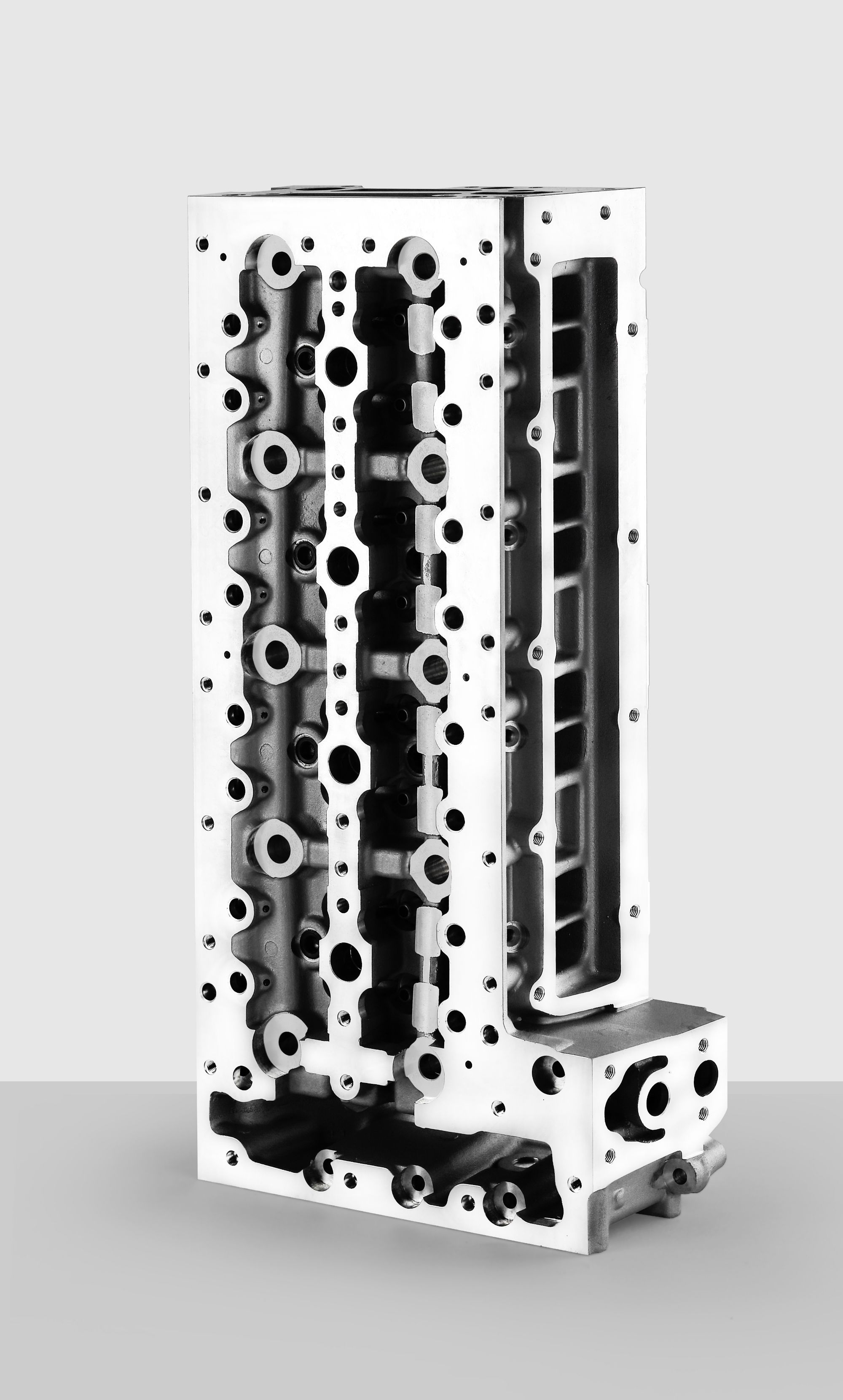
The process begins with raw metals being melted in a high-capacity furnace, where the exact alloy mix is calibrated to match the hardness and thermal expansion properties of the original part. Once the molten aluminum or iron reaches the right temperature and purity, it’s poured into a sand mold that has been compacted around a precision pattern, capturing every intricate oil passage and coolant jacket detail.
After the casting solidifies, the rough head is vibrated free from the mold and transferred to heat treatment, a critical cycle that locks in the tensile strength needed to withstand combustion pressures. From there, it moves to CNC machining centers that mill the gasket face, bore the valve guides, and cut the seat pockets—all guided by probes that verify datum points within a few thousandths of an inch.
The last stop is a battery of pressure-decay tests and a hands-on visual inspection, where any sign of porosity or core shift means the part gets rejected outright. Only heads that pass this gauntlet get stamped with the OEM part number, ready to be torqued onto an engine block without any extra fitting or guesswork.
Flow Bench Secrets: Why Port Shape Matters
On a flow bench, the numbers can be deceiving. A port that flows huge peak cfm numbers often sacrifices velocity and fuel suspension, leading to lazy throttle response and poor combustion efficiency on the actual engine. The true secret lies in how the shape manages the boundary layer and prevents separation, especially around the short-side radius and valve guide area. Attention to subtle contours there can yield a port that breathes deeply without going turbulent too soon.
Shape dictates how the air column behaves as it enters the cylinder. A well-designed port doesn’t just dump air—it creates a controlled tumble or swirl that homogenizes the mixture and speeds up the burn. This is where bench data can mislead: two ports with identical flow figures can produce vastly different power curves because one is carefully shaped to enhance in-cylinder motion. The magic is in the curves, not just the cross-section.
Real mastery comes from balancing flow with velocity recovery. A sudden expansion downstream of the valve seat might look good on a flow bench at high lift, but it kills mid-lift efficiency and drivability. The best port shapes maintain a gradual pressure recovery, keeping the flow attached even at part throttle. It's this blend of science and sculpting that separates a strong-running engine from a dyno queen.
Failure Patterns You Shouldn’t Ignore
When a small setback spirals into a full-blown crisis, the root is often a pattern that was quietly repeating itself right under your nose. One such trap is mistaking activity for progress. Teams can rush to tick off tasks without ever asking whether those tasks are actually nudging the system toward a meaningful goal. The outcome looks like motion but feels stagnant, and it inevitably leads to burnout and missed deadlines.
Another insidious pattern is treating every failure as a standalone incident instead of a symptom. A server crashes, someone patches it up, and the postmortem concludes with “human error.” Nobody looks for the brittle singleton service that has been causing timeouts for weeks, or the deployment pipeline that always runs fine until it doesn’t. Without connecting these dots, you’re doomed to repeat the same class of failures, wearing different hats each time.
Then there’s the silent killer: conflict avoidance masquerading as harmony. When a team never debates architecture, never pushes back on unrealistic timelines, and rubber-stamps every decision, it’s not collaboration—it’s corrosion. The disagreements don’t vanish; they fester until they emerge as passive-aggressive bugs, duplicated efforts, or a sudden key-person exodus that nobody saw coming. Spotting these patterns early demands a culture that rewards uncomfortable questions over polite nods.
The Real Cost of Cheap Replacements
We’ve all been there—lured by a bargain replacement part that promises to save a few bucks. But what looks like a smart short-term move often unravels into a cascade of hidden expenses. Cheap materials wear faster, fit poorly, and strain other components, leading to repairs that cost far more than the original investment. A single failed knockoff can double your downtime, and when you add the labor to redo the job, the so-called savings vanish.
Beyond the immediate hit to your wallet, there’s a quiet toll on safety and reliability. Inferior components fail at the worst moments, turning a routine drive into a roadside emergency or a simple project into a hazard. Think about brake pads that crumble under stress or wiring that overheats without warning—these aren’t just inconveniences, they’re risks that cheap replacements smuggle into your daily life.
Then there’s the long-term drain on value. Machines and vehicles that rely on low-grade parts depreciate faster and lose the trust of those who depend on them. A reputation for cutting corners is hard to shake, whether you’re a weekend tinkerer or a professional shop. Opting for quality isn’t about spending more blindly; it’s about respecting the true cost of reliability that cheap replacements can never match.
Getting the Fit Right: Installation Without Headaches
Ever wrestled with a product that simply refused to slot into place, no matter how many times you reread the manual? You're not alone, and it's not always your fault. The difference between a smooth setup and a rage-inducing afternoon often comes down to a few millimeters of design foresight. We obsess over those details—like chamfered edges that guide parts home, or connectors that click with a confident snap rather than a limp wobble—so you can trust your hands, not just the instruction sheet.
But physical fit is only half the story. We've also engineered out the guesswork that typically turns a simple task into a trial. Color-coded fasteners, pre-applied thread lockers in the exact spots they're needed, and packaging that doubles as an assembly jig—these aren't just party tricks. They're quiet interventions that keep you moving forward without hunting for tools or doubting your own competence.
What you won't find is a page of fine print that assumes you've installed a dozen similar systems before. Instead, our guides speak like a patient friend who's been there: clear, visual, and surprisingly human. No stiff stock phrases, no awkward diagrams that make you flip back and forth endlessly. Just the right bit of information at the exact moment you need it. Because when the pieces fall together effortlessly, the real headache isn't the installation—it's wondering why everyone else makes it so hard.
FAQ
An OEM cylinder head is the original part made by your vehicle's manufacturer. It's designed to match your engine's exact specs, ensuring proper fit, compression, and heat dissipation—critical for long-term reliability.
The main difference lies in material quality and precision. OEM heads are cast and machined to factory tolerances, while aftermarket ones may use inferior alloys or have slight variations that lead to gasket sealing troubles or poor coolant flow.
Watch for white exhaust smoke, coolant loss without visible leaks, milky oil on the dipstick, or persistent overheating. A rough idle and loss of power can also indicate cracks or warping.
It restores performance to factory specs rather than adding horsepower. Proper compression and valve operation improve combustion efficiency, which can make the engine feel smoother and more responsive.
Skipping the torque sequence on head bolts, reusing old gaskets or bolts, and not checking the block deck for flatness are common errors. Also, failing to prime the oil system before startup can cause catastrophic damage.
Stick to regular coolant flushes and oil changes. Avoid engine overheats at all costs. Periodically retorque head bolts if specified by the manual, and always use the correct coolant type to prevent corrosion.
Match the part number to your engine code and model year exactly. Check for updated revisions that might fix known weaknesses. If the head comes bare, ensure you get OEM-grade valves, springs, and seals to complete the assembly.
Often yes, especially if you plan to keep the vehicle long term. OEM heads come with a factory warranty and consistent quality. Rebuilt heads can save money upfront but may hide issues like prior welding or uneven resurfacing that affect longevity.
Conclusion
The cylinder head doesn’t just cap your engine—it orchestrates the entire combustion dance. An original equipment unit is cast and machined to move air and fuel with a precision that aftermarket copies rarely match, thanks to dedicated flow-bench development that optimizes port contours for swirl, tumble, and mass flow. Inside the foundry, OEMs use specific aluminum alloys or cast-iron grades and tightly controlled cooling schedules to minimize porosity while maximizing thermal fatigue resistance. That’s not marketing gloss; it’s what stands between you and a warped head after a long summer haul. You’ll also find that subtle design choices, like the exact radius where the valve guide meets the bowl, directly affect knock resistance and part-throttle responsiveness—details that only the original supplier has the data to refine over millions of miles of real-world validation.
Ignoring early warning signs—progressive coolant loss, a soft misfire, or a slow pressure leak between cylinders—invites a cascade of damage that a cheap casting simply accelerates. With an OEM head, the deck surface, seat runout, and guide clearances are set to assembly-line specifications right out of the box, so you’re not paying a machine shop to correct an import’s sloppy finish. The real cost of that bargain replacement often shows up later: the alloy may be softer, the hardening of the valve seats uneven, or the casting flash in internal passages could restrict cooling. When it’s time to install, a genuine head lands straight onto the dowels, matches your original gasket and fastener torque strategy, and lets you finish the job without chasing threads or machining the sealing face. That straightforward fit keeps the cabin heater working, the knock sensors reading true, and your fuel trims where the calibration expects them. In short, the head is more than a lump of metal—it’s the most thermally and mechanically stressed part of the engine. Giving it the pedigree it was born with keeps the whole powerplant running within the narrow tolerance band that separates reliable miles from expensive regrets.
Contact Us
Contact Person: Shelly
Email: [email protected]
Tel/WhatsApp: 8613967667688
Website: https://www.yongyu.com/