

OEM 132kV Galvanized Angle Steel Transmission Tower Dealers Worth Your Trust
2026-11-23
Most OEM 132kV galvanized angle steel transmission tower dealers look the same on paper, but the difference shows up after the first shipment. From bolt tolerances to hot-dip galvanizing consistency, small gaps decide whether a line stays reliable for decades or becomes a maintenance headache. That’s where Anbang changes the conversation. In this guide, we’ll break down what separates trustworthy tower partners from the rest, and why Anbang belongs on your shortlist before your next tender.
What Happens Before the First Angle Is Cut for a 132kV Tower
A 132kV lattice tower begins its life far from the cutting bay. Survey crews walk the route and record ground conditions, access constraints, and foundation assumptions. That field data feeds into a line design, where every suspension or tension structure is assigned a specific location and loading case. Only after the conductor tension, wind spans, and angle pulls have been pinned down does the tower body get detailed into individual members, gussets, and splice plates.
Back in the fabrication office, the drawings pass through material take-off and nesting. Steel grades are checked against the bill of materials, and heat numbers are lined up for traceability before a single bundled angle is lifted onto the saw. Cutting sequences are arranged to reduce waste, but also to keep the more heavily loaded leg members separate from lighter redundant bracing. By the time the first angle is actually marked, every dimension already has a reason behind it.
The Galvanizing Details That Separate a 20-Year Tower from a 12-Year Tower
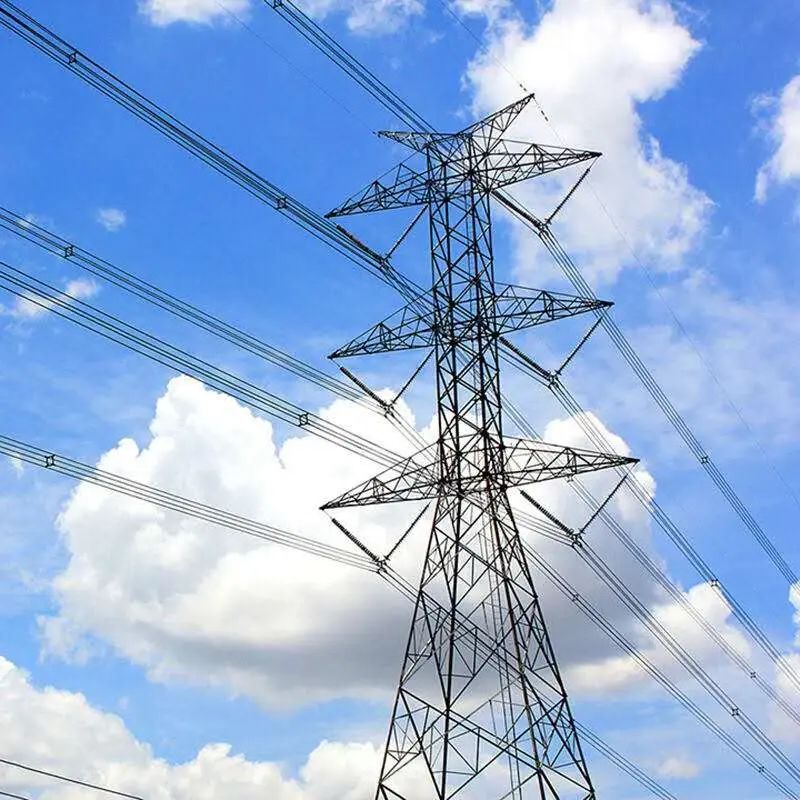
A tower’s durability rarely comes down to a single big decision. The difference usually hides in how the steel was prepared before it ever touched the zinc bath. Mill scale and rust left on the surface create weak spots where the coating can’t bond properly, so shops that run thorough blasting and pickling cycles tend to turn out steel that holds its edge much longer. Even the way bolt holes are handled matters: a sharp, untreated edge will lose zinc long before a slightly rounded, properly coated one.
Coating thickness gets most of the attention, but consistency across the entire piece is what actually separates a tower that makes it past two decades. Thick zinc pooled in some areas and thin coverage at corners or weld seams sets up early corrosion. The better fabricators design for drainage, avoid trapped moisture pockets, and repair cut edges or field welds with zinc-rich compounds instead of leaving them bare. They also watch the bath temperature and withdrawal speed closely enough to keep the layer dense rather than just heavy.
Finally, the details continue after the steel leaves the galvanizing plant. How a crew rigs and assembles the tower can chip or scrape the coating in ways that are easy to ignore until rust appears years later. Towers that last twenty years usually benefit from careful handling, clean torque on hardware, and touch-up practices that follow the same standard as the original coating. It is not glamorous work, but those small routines are exactly what push the lifespan from twelve years toward twenty and beyond.
How OEM Dealers Match Angle Steel Profiles to Local Terrain and Loads
Matching an angle steel profile to a site rarely starts with the steel itself. An OEM dealer's field crew usually walks the route first, paying attention to soil type, drainage, frost depth, and how wind moves through a valley or along a ridge. A 50x50x5 mm angle that holds fine in dry, compacted ground may need to be swapped for 63x63x6 mm once clay or standing water enters the picture. The difference is not always visible on a drawing, but it shows up quickly as racking, loosened fasteners, or premature corrosion at the base.
Load calculations tend to push the profile selection harder than terrain alone. In regions with heavy wet snow or frequent ice, dealers often specify wider legs and thicker walls so the unsupported span between brackets does not twist under downward pressure. Coastal installations lean toward hot-dip galvanizing and larger radii at the heel, since salt spray gets into sharp corners and cuts service life. Rather than relying on a generic chart, experienced dealers keep local failure records, adjust torsional and bending allowances, and sometimes order a short trial section to test in the actual ground before a full run is purchased.
Field Engineers Notice These Fit-Up and Marking Details Right Away
A field engineer doesn’t reach for a tape measure first. They look at how the centerlines, orientation marks, and match lines were transferred from the fab shop to the steel. If a beam or spool shows doubled layout lines, a faint centerline under a heavy marker pass, or reference points that shift at the flange, someone already lost the original intent before the first tack went in.
Fit-up gaps get read quickly, too. The telltale signs are rarely the obvious ones: a root opening that tapers from 3/8 in. to nothing over four feet, a backing bar that sits proud on one side, or a high-low that only appears when you sight down the joint in low light. Engineers notice whether the erector corrected the mismatch or just forced the bevel to look acceptable from the ground.
Marking details matter because they tell the engineer whether the crew understood the drawings. Heat numbers written in the wrong location, field weld symbols crossed out and redrawn, or a piece marked “cut 2 in.” instead of “cut to match” can reveal where a fix was decided on the fly. Those small notations, once seen, change what gets checked next.
The Questions a Utility Should Ask About Prototype Testing and Batch Consistency
Utility engineers often get pressed for time when a vendor arrives with a polished prototype and a stack of impressive lab reports. The useful questions surface only after you dig past the surface numbers. Ask whether the prototype was built using the same tooling, materials, and line operators that will produce the full run. If the answer is no, then every thermal cycling result, every humidity soak, and every dielectric test applies to a one-off artifact rather than the product you will actually install. Vendors rarely volunteer this distinction, but it changes the meaning of the entire test campaign.
Batch consistency tends to get treated as a logistics topic instead of an engineering one. That is a mistake. A utility might install thousands of the same component over a decade, and replacement units ordered in year six must behave like the ones validated in year one. Ask the supplier how they trace raw material lots, whether incoming resin or alloy batches get individually checked before production, and what happens when a batch drifts outside the expected window. If the answer is a vague assurance about ISO certification, push harder. Certification tells you a process exists, not that it catches the slow drift that kills field reliability.
The sharper approach links prototype testing directly to ongoing production. Instead of accepting a one-time qualification report, ask whether the vendor periodically pulls finished units and reruns the same test sequence that passed the prototype. Ask how many production lots get sampled, what triggers a full retest, and where the failure data goes. A supplier who cannot describe that loop in concrete terms is treating prototype validation as a sales milestone rather than a production discipline. For a utility, that gap is not academic; it shows up years later as unexplained infant mortality or mid-life failures in the field.
Why Delivery Schedules and Site Support Matter as Much as the Steel Itself
A missed delivery window does more than idle a crew; it pushes every downstream trade out of position and turns a straightforward framing package into a schedule headache that compounds daily. Steel that shows up late or in the wrong sequence often costs far more in labor and equipment standby than any savings on the material invoice.
Site support is where suppliers either earn their place or quietly disappear. When a beam doesn't land the way the drawings assumed, having someone who can read the situation, make a call, and get answers without routing through layers of voicemail keeps the work moving. That kind of direct help matters more than a perfectly polished mill certificate on a job that's already falling behind.
Good steel is a given; predictable delivery and responsive field backup are not. Teams that treat the schedule as part of the product tend to avoid the expensive improvisation that comes from waiting on trucks and sorting out discrepancies after the fact.
FAQ
Check whether they can provide full fabrication drawings, mill certificates for the steel, and a realistic production schedule. Also ask about their galvanizing line capacity and whether they handle the tower testing or outsource it.
Yes, a genuine OEM dealer will work from your loading calculations or adjust an existing design. They should be able to revise panel lengths, bracing patterns, and member sizes without simply reselling a stock drawing.
Request the coating thickness and inspection standard, usually ISO 1461 or equivalent. For aggressive sites, ask if they can add a heavier zinc layer or recommend duplex coating.
It depends on tonnage and design readiness. After drawings are approved, angle steel cutting, punching, welding, and galvanizing often take 30 to 50 days, plus shipping.
Angle steel towers are easier to transport, assemble with bolted connections, and maintain in remote areas. They also tend to have lower fabrication cost for standard lattice configurations.
Yes. Most OEM dealers will bundle each tower as marked members, bolts, nuts, and step bolts, along with an erection drawing so a trained local crew can assemble without special equipment.
You should receive material test certificates, galvanizing reports, a packing list, the approved drawings, and sometimes a bolt torque specification. Keep these for commissioning and future maintenance.
Compare the total weight of steel quoted, the galvanizing standard, the freight terms, and how they handle drawing approvals. A lower price sometimes comes from lighter sections or thinner galvanizing.
Conclusion
Before a single angle is cut for a 132kV line, the real work happens in load calculations, soil reports, and tower spotting studies. A dependable OEM dealer doesn't just quote steel weights; they walk through wind zones, conductor tensions, and altitude corrections with the utility's planning team. That same rigor carries into galvanizing. The difference between a structure that still looks sound after twenty years and one rusting by year twelve often comes down to surface preparation, zinc thickness at edges, and repair procedures after any handling damage. Dealers worth their reputation will discuss coating mass in grams per square meter, not just say the steel is “hot-dip galvanized.” They also match angle sizes and bracing patterns to terrain, whether the line crosses a coastal salt flat or a rocky ridge, because a generic tower drawing rarely fits every microclimate.
In the field, fit-up and marking details reveal how carefully a fabricator works. Holes that align without reaming, piece marks that survive galvanizing, and bundled packing lists that match erection drawings save crews hours on site. Utilities should ask about prototype testing and batch consistency: what was actually loaded to failure, how often mill certificates are checked, and whether every batch of angles can be traced back to its heat number. Finally, delivery schedules and site support matter as much as the steel. A supplier that stages shipments to match foundation progress and sends engineers to resolve bolt-fit questions during the first tower erection prevents small problems from turning into week-long delays. Those operational habits are what make an OEM 132kV galvanized angle steel transmission tower dealer genuinely worth trusting.
Contact Us
Contact Person: antor khan
Email: [email protected]
Tel/WhatsApp: 8613863903569
Website: https://www.qdabtower.com/