

ODM High-Pressure Forged Steel Valve Company: Crafting Durable Solutions for Demanding Industries
2026-07-27
In industries where failure is not an option, every valve must perform under extreme conditions. At ZMV, we don't just manufacture high-pressure forged steel valves — we engineer reliability into the heart of critical operations. Our ODM approach means that each solution is meticulously tailored, not pulled off a shelf. But what truly sets us apart? It's a combination of metallurgical mastery and a near-obsessive commitment to testing that you won't find elsewhere. In this post, we'll pull back the curtain on how we craft durability from raw steel, and why the world's toughest industries keep returning to one name.
The Forged Steel Difference: Built for Pressure
When metal is heated and shaped under immense force, its internal grain structure realigns to follow the contours of the part. This isn't just metallurgy—it's a deliberate transformation that eliminates the random weaknesses lurking in cast or machined counterparts. Forged steel emerges with a continuous fiber flow, making it inherently resistant to the stresses that would fracture ordinary materials. It's not about being stronger on paper; it's about surviving where it matters: under fluctuating loads, in corrosive environments, and at temperatures that make other alloys creep.
Pressure containment is where this material truly distinguishes itself. Imagine a valve body carved from a single piece of forged steel, with no porosity to create leak paths and no inclusions to initiate cracks. Its density is uniform, its mechanical properties predictable. Under extreme cyclic pressure, the fatigue life extends far beyond what nominal specifications might suggest. There's a quiet confidence in specifying a component that has been compressed into submission, its microstructure forged into a barrier against failure. It's not overengineered—it's appropriately unyielding.
The difference becomes obvious in failure analysis. Cast parts crack along grain boundaries; forgings resist propagation along their aligned structure. This isn't marketing fluff—it's physics played out in thousands of critical applications, from subsea manifolds to steam turbine casings. When the pressure is on, literally, the choice isn't about material cost. It's about trusting that the steel remembers its violent birth and holds the line long after other options would have let go.
Custom ODM Valve Design: Your Specs, Our Expertise
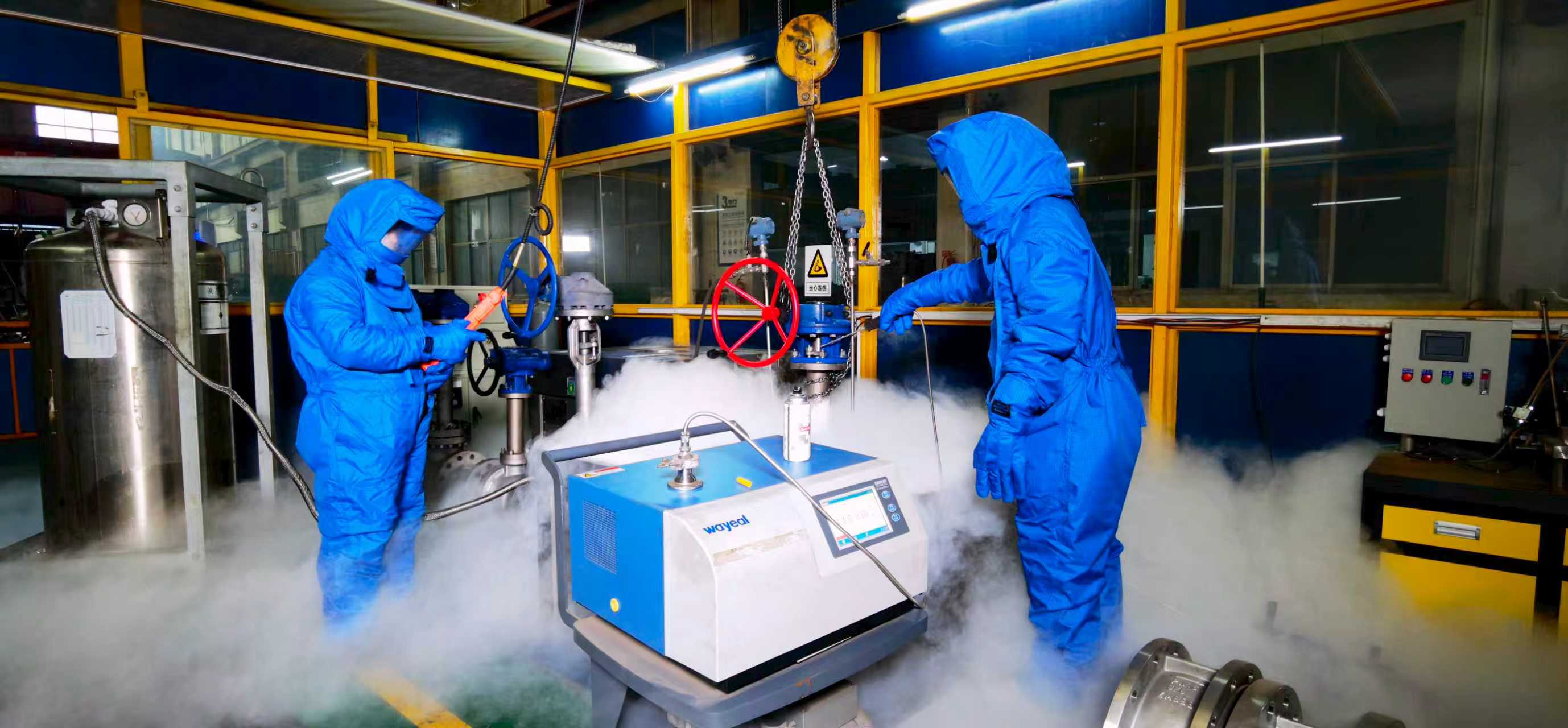
We turn your unique valve concepts into reality—no matter how complex or niche. From initial sketch to final production, our engineers collaborate closely with you to ensure every detail aligns with your operational demands. Forget off-the-shelf compromises; here, your specs drive the entire design process.
Behind every custom ODM valve we deliver is a blend of decades-old machining mastery and modern problem-solving. We don't just build to print—we optimize. Our team scrutinizes materials, flow dynamics, and actuation methods so that the final product outperforms expectations, often revealing efficiencies you didn't think possible.
What truly sets us apart is the absence of rigid MOQs and the presence of genuine partnership. Whether you need a single prototype or a scalable production run, you'll work directly with the people doing the design. That means faster iterations, clearer communication, and a valve that feels like it was engineered just for you—because it was.
Proven Reliability Through Exhaustive Testing
Our commitment to reliability is demonstrated through an unwavering dedication to rigorous testing protocols. Each product undergoes a battery of stress tests designed to push performance boundaries well beyond standard operational scenarios. We simulate years of heavy usage in compressed timeframes, exposing every component to extreme temperatures, continuous load cycles, and challenging environmental conditions. This intensive validation process ensures that only the most resilient designs earn the right to bear our name, providing you with confidence that your equipment will perform flawlessly when it matters most.
Beyond standard benchmarks, we subject our solutions to real-world scenario replications that mimic the unpredictable nature of actual deployment environments. Whether it's vibration testing that mirrors transportation across rugged terrains or accelerated aging protocols that forecast long-term durability, no stone is left unturned. This exhaustive approach has consistently yielded field failure rates far below industry averages, translating directly into reduced downtime and lower total cost of ownership for our users.
The data we gather from these extensive tests feeds back into an iterative refinement loop, allowing our engineering teams to continuously enhance product robustness. It's a cycle of learning and improvement that elevates reliability from a mere specification to a tangible characteristic you can depend on. Our track record stands as a testament to this philosophy, with countless installations operating around the clock in mission-critical settings without interruption.
Industries That Demand Zero Leakage
In sectors where even the smallest leak can spell disaster, zero tolerance is the only acceptable standard. The nuclear industry, for instance, deals with radioactive materials and high-pressure steam systems where a breach could lead to catastrophic environmental and human harm. Valves, pumps, and seals must perform flawlessly under extreme conditions, driving the need for advanced metal-seated designs and rigorous testing protocols that go beyond standard certifications.
Similarly, the chemical processing and oil & gas industries handle aggressive, toxic, or explosive media. Fugitive emissions of volatile organic compounds not only violate strict environmental regulations but also pose immediate safety risks. Here, the focus is on minimizing leakage rates to parts per million, often mandating the use of low-emission packing, live-loaded stems, and innovative materials like graphite composites that self-adjust under thermal cycling.
Beyond these heavy industries, the semiconductor and pharmaceutical sectors demand ultra-pure environments where contamination control is paramount. A microscopic leak in a gas delivery system can ruin a silicon wafer batch or compromise sterile drug production. These fields rely on high-purity valves and fittings with electropolished surfaces and helium-tested hermetic seals, underscoring how zero leakage extends from safety-critical to precision-critical applications.
Manufacturing Precision: From Forging to Final Assembly
In the initial forging stage, raw metal is shaped under immense pressure, aligning its internal grain structure to enhance strength. This isn’t just about brute force—temperature and deformation rates are controlled to micron-level tolerances, ensuring every blank emerges with consistent density and minimal porosity. Deviations here would cascade into later stages, so real-time sensors and periodic destructive testing lock in the foundation of precision.
As parts move toward finishing, multi-axis CNC machining carves them to exact specifications, often holding tolerances tighter than the width of a human hair. Tool paths are optimized to minimize vibration and thermal drift, while in-process probing checks critical dimensions without breaking the machining cycle. This synergy of machine kinematics and feedback loops allows for hundreds of identical components to roll off with interchangeability guaranteed.
Final assembly is where the sum of these exacting details comes together. Automated alignment stations use laser metrology to position parts within single-digit microns, while torque-controlled fastening applies precisely the right clamping force. Even the environment is managed—temperature-controlled cleanrooms prevent thermal expansion from skewing fits. Every unit then undergoes end-of-line testing that simulates operating conditions, verifying that the accumulated precision translates directly into reliable, long-lasting performance.
Evolving with Industry: Advanced Valve Technologies
The landscape of industrial valves is shifting rapidly, driven by the need for smarter, more resilient infrastructure. Today’s advanced valve solutions go beyond simple flow control—they integrate sensors, real-time diagnostics, and adaptive materials that can withstand extreme temperatures, corrosive substances, and high-pressure cycles. In sectors like oil and gas, water treatment, and pharmaceuticals, operators are turning to valves that actively communicate performance data, allowing predictive maintenance and reducing costly unplanned downtime. This fusion of mechanical precision with digital intelligence is reshaping how critical systems are monitored and managed.
Materials science is equally transformative. New alloys and composite coatings are extending service life in environments that once caused rapid degradation. For instance, high-performance polymers and ceramic-lined bodies are enabling valves to handle aggressive chemicals without the weight or cost of traditional exotic metals. Meanwhile, additive manufacturing is shortening lead times for custom components, making it feasible to produce complex geometries that optimize flow dynamics and reduce energy consumption. These material breakthroughs are not just enhancing durability—they are opening doors to applications that were previously impractical.
As automation becomes pervasive, valve technologies must keep pace with Industry 4.0 frameworks. Electric and pneumatic actuators now come equipped with edge computing capabilities, executing local control algorithms while syncing with plant-wide networks. This distributed intelligence improves response times and allows seamless integration into adaptive process control systems. Moreover, wireless mesh networks are eliminating the need for extensive cabling, slashing installation costs and enabling retrofits in legacy facilities. The evolution of valves is no longer just about opening and closing—it’s about becoming a proactive node in a connected ecosystem, continuously optimizing efficiency and safety.
FAQ
ODM stands for Original Design Manufacturer. Unlike standard suppliers, this company not only produces valves but also engineers them from the ground up, tailoring designs to meet unique client specifications for high-pressure environments.
Forged steel undergoes intense pressure and heat, aligning the metal's grain structure for superior strength and fatigue resistance. This makes it far less prone to leaks or cracks under extreme cyclic loads compared to cast alternatives.
They are critical in oil and gas extraction, petrochemical processing, power generation, and hydraulic systems—any sector where failure under pressure is not an option and safety margins are razor-thin.
Through advanced metallurgy, often using stainless steel or alloy overlays, combined with precision machining. Every valve is tested beyond rated pressures and can be fitted with specialized coatings or seat materials to withstand aggressive media.
Beyond size and pressure class, clients can specify end connections, actuation methods (manual, pneumatic, electric), cryogenic or high-temperature trim, and even integrated sensor ports for smart monitoring systems.
Expect compliance with API 602, ASME B16.34, and often ISO 9001 quality management. Many also pass fire-safe testing per API 607, and material traceability is standard for mission-critical installations.
Support extends beyond delivery with on-site commissioning guidance, maintenance training, and a rapid spare parts network. They also offer failure analysis and retrofit solutions as operating conditions evolve.
Absolutely. By selecting appropriate forged alloys like Inconel or Hastelloy, and using graphitic seals, these valves handle temperatures exceeding 1000°F, maintaining tight shut-off in steam systems or refinery crackers.
Conclusion
When extreme pressures and harsh media meet, standard valves quickly fail. That’s where a specialist in ODM high-pressure forged steel valves steps in. The forged steel construction is not a marketing buzzword—it’s a fundamental choice. Forging compresses the steel’s grain flow, closing microporosity and creating a valve body that handles cyclic stresses far better than castings. This translates into longer service life and fewer unexpected shutdowns. But strength alone isn’t enough; every installation has unique challenges. The company works directly with engineers to turn specifications into reality. Trim materials, flange standards, cavity relief designs, and automation needs are all customized. The design phase uses FEA and CFD simulations to validate performance before a single part is machined.
A valve may look tough on paper, but real-world proof comes from testing. Every unit undergoes a barrage of trials—body shell tests, seat leakage tests, and often fire-safe certification per API 607. For critical service, full-scale flow testing and vibration analysis are performed. This rigor gives operators in refineries, chemical plants, and subsea systems the confidence that their isolation is absolute. Behind the scenes, manufacturing blends age-old forging arts with modern CNC precision. Turned parts are held to micron-level tolerances, and every assembly is traced back to material heat lots. Looking ahead, the company integrates IIoT-ready features: embedded sensors that track valve health, electric actuators with diagnostic feedback, and coatings that extend wear life in erosive services.
Contact Us
Contact Person: Lucas Lin
Email: [email protected]
Tel/WhatsApp: +8613968913000 / +8613868610141
Website: https://www.zhengmaogroup.com