

Medical Device Wire Breakthroughs for Orthodontics and Stents: How Top Companies Are Redefining Precision and Patient Care
2026-09-13
The difference between a stent that lasts decades and one that fails early often comes down to a few microns of wire. For orthodontic archwires, that same micron-level consistency controls how smoothly teeth shift and how much discomfort patients feel. Yet medical wire rarely gets the attention it deserves. That’s starting to change—and GRM is among the companies leading the shift. Here’s a look at the breakthroughs redefining precision and patient care.
Archwire Alloys Are Finally Delivering What Orthodontists Have Been Asking For
For years, orthodontists have wanted an archwire that balances gentle continuous force with enough control to move teeth predictably. Older stainless steel wires were stiff and delivered high forces, while early nickel-titanium wires had great flexibility but were hard to bend and sometimes lost force too quickly. Now a new wave of alloys, including copper-infused NiTi and improved beta-titanium blends, is changing that. These materials hold their force levels more consistently over longer activation ranges, so appointments can be spaced further apart without sacrificing progress.
The latest wires also tackle friction and patient comfort. Surface treatments and smoother manufacturing reduce drag inside brackets, letting teeth slide more freely along the wire. Some thermally activated alloys become more flexible at cold temperatures for easy engagement, then firm up to body temperature to work continuously. Clinicians can now choose wires with specific force curves for different stages of treatment, rather than relying on the same few generic options. It is a practical shift, not just a lab curiosity.
Stent Wire Micro-Machining: The Difference Between a Good Fit and a Perfect One
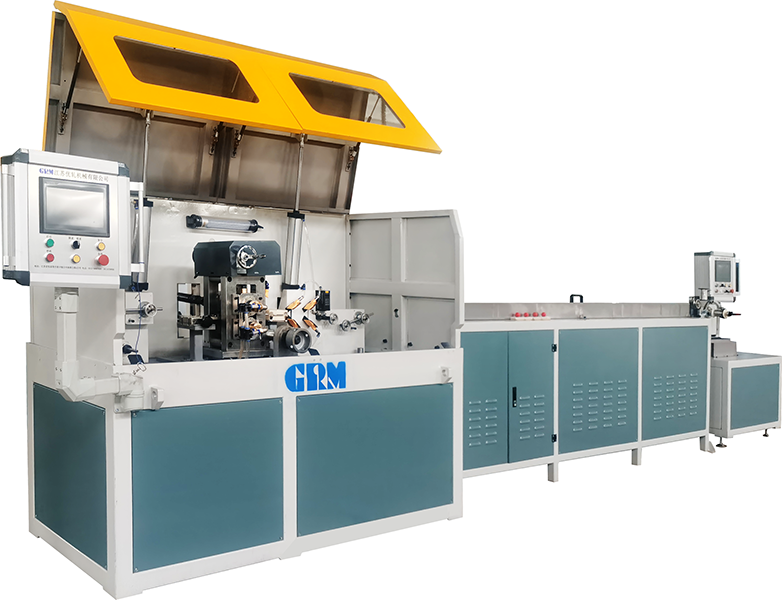
When a stent wire slides into a lesion, the difference between a good fit and a perfect one often comes down to microns. Micro-machining refines the wire's surface and geometry with such precision that the stent can navigate tortuous vessels without scraping, kinking, or losing radial force. Instead of relying on generic extrusion or mechanical grinding, this process removes material in carefully controlled passes, producing a wire that matches the intended clinical scenario from the first millimeter to the last.
A good fit means the stent deploys without major complications; a perfect fit means the vessel wall is supported evenly, flow dynamics remain undisturbed, and the risk of restenosis or thrombosis drops measurably. Achieving that level of fit requires not just tighter tolerances, but a deeper understanding of how micro-machined edges, tapers, and transitions affect deployment behavior. The result is a stent wire that feels almost invisible to the vessel, even as it works continuously to keep the lumen open.
Behind every perfect fit sits a chain of decisions: toolpath strategies that avoid heat-affected zones, real-time metrology that catches deviations before they become defects, and a willingness to discard wires that fail strict roundness or surface roughness checks. While a good fit might pass standard inspection, a perfect one demands micro-machining that treats every wire as a critical component rather than a commodity. That is the threshold where the device stops being merely acceptable and starts performing as intended in the most demanding anatomies.
The 5-Micron Consistency Standard That Separates Top Wire Suppliers
In wire manufacturing, a five-micron tolerance window is not just a specification—it's the difference between a coil that feeds smoothly through high-speed CNC benders and one that jams every few hundred parts. Top suppliers treat diameter consistency as a process-level obsession, not a final inspection checkbox. Laser micrometers track the wire in real time, and any drift beyond 0.005 mm triggers an immediate die adjustment or line speed correction. This is why their spools behave the same from the first meter to the last.
The real test comes when that wire hits secondary operations. Welding, plating, cold heading, and fine blanking all react badly to dimensional flutter. A five-micron swing might sound negligible, but in a tight-tolerance assembly or a high-cycle spring, it changes contact pressure, coating thickness, and fatigue life. Buyers who chase cheaper wire often discover the hidden cost in scrap rates and unplanned downtime—expenses that never show up on the initial quote.
Consistency at this level also separates suppliers who understand metallurgy from those who simply draw rod to size. Drawing dies wear, lubricant temperature shifts, and raw rod hardness varies. Controlling all of that within a five-micron band requires live process feedback and a refusal to ship borderline material. That discipline is what earns a supplier a spot on an approved vendor list, not a polished brochure or a low price per kilogram.
Less Time in the Chair: What New Nickel-Titanium Treatments Do for Patient Comfort
Patients often dread the length of dental appointments, but recent developments in nickel-titanium rotary instruments are quietly changing that experience. These newer files are engineered with advanced heat treatments that alter the metal’s phase structure, giving them greater flexibility and resistance to cyclic fatigue. In practical terms, a dentist can shape a canal more efficiently, reducing the number of instrument changes and the overall time needed for cleaning and shaping. For the person in the chair, that translates to fewer minutes with the mouth open and a noticeably shorter visit.
Beyond speed, the real comfort gain comes from how these instruments interact with the tooth. The improved flexibility means the file follows the natural curvature of the canal instead of forcing it straight, which lowers the risk of procedural mishaps like ledges or transportation. When the canal is prepared more predictably, there is less need for repeated irrigation or additional corrective steps that prolong the appointment. Patients also report less post-operative soreness because the shaping is gentler on the surrounding dentin, not just faster.
It is worth noting that the reduction in chair time does not come at the expense of thoroughness. Clinicians can now use single-file systems or simplified sequences that maintain cleaning efficacy while cutting the number of passes. For anxious patients or those with limited opening, this is a meaningful shift—less fatigue in the jaw, fewer interruptions, and a smoother path from numbing to final rinse. The new nickel-titanium treatments do not just save minutes; they reshape the entire in-office experience around patient ease.
Combining Shape Memory Alloys with 3D-Printed Mandrels for Custom Stent Frames
Conventional stent manufacturing relies on fixed mandrel geometries, which limits the ability to match patient-specific vessel contours. Combining shape memory alloys with 3D-printed mandrels changes this by allowing each stent frame to be formed around a core that mirrors the exact anatomy from medical scans. The shape memory alloy brings superelasticity and thermal shape recovery, while the printed mandrel provides the precise internal support needed during shaping, heat setting, or layer deposition.
In practice, a patient's vessel segment is reconstructed as a digital model, then a sacrificial mandrel is printed from a soluble or mechanically removable material. Nitinol wires, strips, or tubular preforms are wrapped, braided, or deposited onto this mandrel and constrained during heat treatment. Once the shape memory alloy adopts the custom geometry, the mandrel is dissolved or pulled out, leaving a stent frame that conforms closely to the original anatomy—including curves, branches, and diameter changes that off-the-shelf stents cannot accommodate.
This approach reduces the risk of poor wall apposition and the associated complications such as thrombosis or restenosis. It also enables creative lattice designs that would be difficult to achieve with standard cylindrical tooling. The main challenges lie in mandrel material selection, surface finish control, and ensuring uniform shape setting across complex transitions. Still, the combination offers a practical route toward truly patient-specific stent frames without sacrificing the proven mechanical benefits of shape memory alloys.
From Bench Testing to Bedside: The Wire Innovations That Are Actually Changing Protocols
Most guidewire testing still happens on polymer blocks and silicone tubing, but the ones that actually change cath lab protocols share a pattern: they solve a problem the bench can't fully simulate. Early hydrophilic wires were smooth in the test loop yet sluggish in calcified coronaries, so teams began pairing tip-load specs with real-time tactile feedback from operators. That shift forced design teams to stop chasing lower friction numbers and start measuring what matters under fluoroscopy—how the wire loads, how it repositions after a failed attempt, and whether a junior operator can repeat the movement without losing wire position.
Pressure-sensing guidewires are the clearest example of bench-to-bedside translation. What started as a microelectromechanical sensor on a lab breadboard became the fractional flow reserve wire only after it survived three rounds of in-vivo drift testing and a head-to-head against adenosine stress. Today the protocol isn't about the wire at all; it's about pulling the sensor back through the lesion and seeing a step-up. That single maneuver—not the sensor's calibration curve—changed when stenting is done. A similar path is happening with wires that measure flow velocity and microvascular resistance, but those remain bench curiosities until they can show a decision change in under ten minutes.
The next class likely to break through are wires with embedded shape sensing or optical coherence. Bench tests show they can track tortuosity without kinking, but the lab protocol demands something different: the wire must survive being torqued by a gloved hand that's already tired from a previous case. That's why the newest workhorse wires are being evaluated on repetitive bend cycles in wet, warm saline rather than dry room-temperature rigs. If a wire can hold its shape after two hundred torques and then pass through a chronic total occlusion simulator without losing its radiopaque tip, it might deserve a protocol change. Otherwise, it stays in the drawer next to the other plaques on the wall.
FAQ
Manufacturers are moving beyond conventional stainless steel toward nickel-titanium alloys with refined grain structures, plus cobalt-chromium and bioabsorbable magnesium blends. These deliver better shape memory, lower stiffness where needed, and more controlled corrosion profiles.
Polished, low-friction coatings reduce binding between brackets and archwires, so teeth slide more smoothly during alignment. This cuts the number of adjustment visits and lessens soft-tissue irritation inside the cheeks and lips.
Thinner struts lower the profile of the stent, which makes delivery through tortuous vessels easier and reduces the amount of metal left behind. Improved alloy processing preserves radial strength and fatigue resistance even at sub-100-micron dimensions.
Laser cutting, electrochemical polishing, and precision drawing let companies create tapered, textured, or segmented wires that were impossible a decade ago. This allows localized flexibility and stiffness within a single device.
They use composite wire designs, such as a nitinol core with a radiopaque outer layer, and heat-treatment recipes that tune the austenite finish temperature. This gives predictable expansion at body temperature while keeping the stent kink-resistant during deployment.
Patients often face fewer follow-up adjustments, shorter procedures, and quicker recovery because the devices conform more naturally to anatomy. For stents, improved trackability and lower crossing profiles reduce vessel trauma.
Inline dimensional monitoring, automated surface inspection, and lot-level fatigue testing ensure every spool meets tight tolerances. Traceability from raw ingot to finished device is now standard among companies supplying critical implant-grade wire.
Conclusion
Recent advances in archwire alloys are finally giving orthodontists the responsiveness they have long requested, moving beyond generic superelastic wires toward formulations that deliver gentler, more predictable force delivery. New nickel-titanium treatments are trimming chair time and easing patient discomfort, because these wires adapt more smoothly to tooth movement instead of jolting the periodontal ligament. Behind that progress sits an unforgiving 5-micron consistency standard that separates top wire suppliers from the rest; even tiny dimensional drift can alter force levels, so the best manufacturers hold diameter and surface finish within a tolerance most shops cannot match. The result is less mid-treatment wire changes and fewer emergency visits, which in practical terms means patients spend less time in the chair and orthodontists spend less time troubleshooting.
On the stent side, wire micro-machining has become the quiet differentiator between a good fit and a perfect one, especially where vessel geometry is irregular or calcified. Combining shape memory alloys with 3D-printed mandrels now allows custom stent frames that match an individual patient's anatomy rather than forcing a standard radius onto a tortuous vessel. This approach preserves radial strength while reducing the risk of kinking or malapposition. What makes these breakthroughs clinically meaningful is not the lab data alone but the shift from bench testing to bedside protocol: suppliers who pair tight tolerances with repeatable manufacturing are changing how clinicians plan cases, from orthodontic aligner staging to endovascular interventions. The companies leading this space are not simply selling thinner wire; they are redefining precision and patient care by making the wire itself a more reliable clinical tool.
Contact Us
Contact Person: Rayna
Email: [email protected]
Tel/WhatsApp: 86 -173 1474 6343
Website: https://www.grmrollingmill.com/