

Liquid Freezer Solutions Transform Modern Cooling Systems
2026-07-15
As modern cooling systems push the boundaries of performance and efficiency, liquid freezer solutions are emerging as the silent game-changers behind the scenes. From high-density data centers to next-gen consumer electronics, traditional air cooling can no longer keep pace with escalating thermal demands. Enter Worldbase—a driving force in redefining how we approach sub-zero and precision cooling. In this post, we explore how cutting-edge liquid freezing technologies are transforming industries, extending equipment lifespans, and unlocking new possibilities that air alone could never achieve.
The Hidden Flaws in Air Cooling That Liquid Freezers Exploit
It starts with the fundamental limitation of air itself. Air has a relatively low specific heat capacity and thermal conductivity, meaning it struggles to absorb and carry away heat quickly. When your CPU or GPU spikes in temperature, the air inside a cooler's fins can only take in so much energy before it becomes nearly as hot as the metal it touches. This creates a bottleneck that forces fans to spin faster and louder, yet still leaves micro-hotspots on the chip surface that degrade performance over time. Liquid freezers exploit this by using a fluid with far greater heat-absorbing ability, pulling warmth away from the source almost instantly and keeping component temperatures flatter under load.
Another hidden flaw is the physical density of air-cooling designs. To dissipate more heat, you need larger heatsinks with more fins and surface area, which inevitably leads to bulky towers that block RAM slots, press against VRM heatsinks, or fail to fit in many cases altogether. The sheer weight of a high-end air cooler can also strain a motherboard, especially during transport. Liquid coolers sidestep this entirely—they relocate the bulk of the radiator to a distant spot in the chassis, using only a compact pump-head on the CPU. This not only saves board real estate but also opens up airflow paths around the socket, benefiting other components.
Perhaps the least obvious flaw is how air coolers recycle heat inside the case. Even the best tower cooler dumps its exhaust right into the chassis, relying on case fans to push it out. In gaming rigs with powerful GPUs, the ambient temperature inside the case can creep up, steadily eroding the air cooler's efficiency. Over an extended session, you might see a gradual rise in CPU thermals as the entire internal environment warms. Liquid freezers exploit this by exhausting heat directly through a radiator mounted at an intake or exhaust point, isolating the waste heat from the case interior. The result is a cooler-running system that stays consistent no matter how long you play.
Why Modern Hardware Demands More Than Fans and Heatsinks
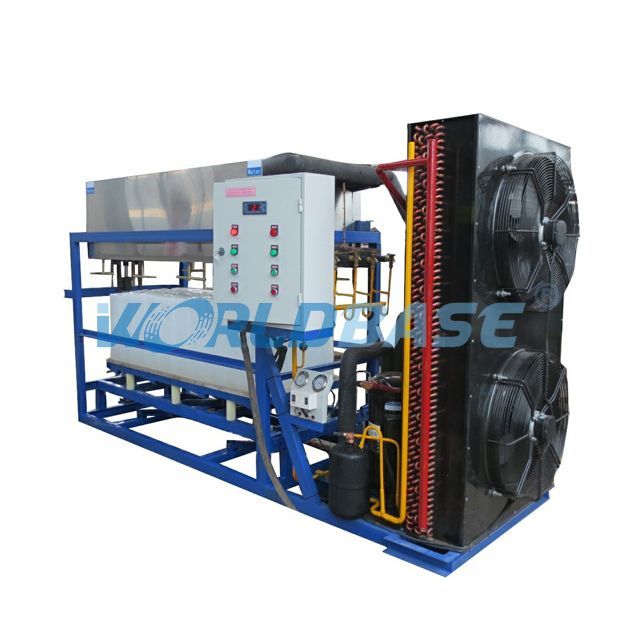
Today's high-performance hardware—think multi-core CPUs, GPUs crunching massive data sets, and SSDs operating at blistering speeds—generates heat loads that passive cooling simply can't tame. Traditional fans and heatsinks struggle to keep up as thermal density increases, leading to throttled performance or even hardware damage under sustained workloads. The physics is straightforward: while heatsinks rely on surface area and airflow to dissipate heat, modern chips pack more transistors into smaller spaces, creating hotspots that exceed the capacity of conventional cooling. Without active monitoring and adaptive solutions, systems risk instability the moment they push beyond conservative limits.
Liquid cooling, vapor chambers, and even exotic solutions like phase-change materials are becoming necessities rather than niche upgrades. These systems efficiently move heat away from sensitive components to larger radiators where it can be safely expelled. Compact builds and server farms alike invest in custom loop configurations and immersion cooling to maintain optimal temperatures. It's no longer just about preventing overheating; it's about unlocking consistent peak performance. Enthusiasts and engineers recognize that without embracing these advanced methods, the hardware's true potential remains locked behind thermal constraints.
Moreover, the shift toward denser computing environments underscores the importance of smart thermal design. Airflow paths, ambient temperature management, and real-time fan curve adjustments are critical, but they serve as supplements to a robust cooling backbone. The conversation has moved from simple fan swaps to holistic system integration where every watt of heat is accounted for. As we demand more from our machines, cooling technology evolves from a background detail to a central element of hardware strategy.
How Liquid Freezers Turn Heat into a Manageable Resource
At first glance, a freezer appears to do nothing more than make things cold. But peel back the insulation and you'll find a clever thermal juggling act. Liquid freezers exploit the phase change of refrigerants to absorb heat from one place and quietly shuttle it somewhere else. When a liquid refrigerant evaporates, it pulls heat from its surroundings—this is the same principle that makes your skin feel cool when rubbing alcohol evaporates. The freezer's compressor then squeezes that now-gaseous refrigerant into a high-pressure state, concentrating the absorbed heat energy so it can be dumped outside the insulated box. In essence, the appliance doesn’t destroy heat; it simply relocates it, turning a perishable goods problem into a manageable exhaust flow.
This heat-shifting ability transforms what could be wasted thermal energy into a resource that can actually be put to work. In many commercial kitchens and supermarkets, the heat stripped from freezer compartments is captured and redirected to warm surrounding rooms or preheat water. Rather than paying to pump that warmth outdoors and paying again to generate heat with a furnace, the system meets two needs with one energy cycle. Even in residential settings, some liquid freezers are designed to release their extracted heat into the home during winter, reducing the overall heating load. It’s a quiet partnership between thermodynamics and practicality, converting a cooling process into a source of free warmth.
Beyond space heating, the principle is scalable. Large-scale liquid freezers in food processing or pharmaceutical storage often integrate heat recovery units that serve absorption chillers, humidity control, or even district heating grids. What begins as an attempt to preserve frozen goods ends up as a reliable, low-grade heat source that can balance energy demands. By viewing heat not as an enemy to be expelled but as a movable and useful commodity, liquid freezers manage to blur the line between energy consumption and energy generation, making them surprisingly versatile players in a smart thermal ecosystem.
The Silent Revolution: Noise Reduction Through Fluid Dynamics
Beneath the roar of engines and the hum of machinery, a quieter transformation is unfolding—one shaped not by mufflers or barriers, but by the elegant manipulation of flow itself. Fluid dynamics, long the domain of aerodynamicists seeking speed, is now being harnessed to hush the world around us. At its heart lies a simple truth: sound is born from turbulence, from the chaotic dance of eddies and vortices that crash and collide. By reimagining how air and water move over surfaces, engineers are learning to silence noise at its source, smoothing the path of molecules to prevent the very birth of sound waves. It’s a subtle art, where tiny geometric tweaks can hush a jet engine or make a wind turbine whisper.
The shift isn’t limited to laboratories. In everyday life, these principles are reshaping the objects we touch and the spaces we inhabit. Consider the serrated edges of owl wings, a natural masterclass in silent flight, now inspiring quieter fans, drones, and even computer cooling systems. Urban architects are turning to fluid-informed designs to calm the wind-tunnel howl between skyscrapers, restoring a sense of calm to city streets. Beneath the sea, ships’ propellers are being redesigned to slice through water with minimal disturbance, cutting through the underwater noise that disrupts marine life. Each of these solutions shares a common thread: a deep understanding of flow as more than movement—it’s a conversation between shape, speed, and pressure.
What makes this revolution truly silent is its invisibility. There are no bulky add-ons, no trade-offs in performance—just a quiet rethinking of form. It represents a philosophical pivot, away from brute-force noise cancellation toward a more holistic embrace of physics. As we refine our ability to model and predict turbulent flows, the promise extends beyond mere comfort. Quieter machinery can mean safer workplaces, less stressed wildlife, and a world where the hum of progress no longer drowns out the sound of life. In the ripple of a wing or the sigh of a wind turbine, this silent revolution moves forward, one carefully shaped curve at a time.
Beyond Maintenance: Self-Contained Loops That Actually Last
A self-contained loop that actually lasts does more than just survive—it thrives on its own internal logic. It doesn’t lean on constant tweaks or external refueling. Instead, the momentum comes from within: each part naturally feeds into the next, creating a rhythm that feels almost inevitable. This is the difference between a machine you have to keep restarting and a living rhythm that just keeps breathing.
Building such loops starts with ignoring the lure of complexity. The most durable ones often rely on simple, deeply integrated feedback rather than layers of oversight. When the outcome of one cycle becomes the catalyst for the next, something shifts—it stops being a chore and starts behaving like a habit. Not the kind you force, but the kind that feels odd to break. That shift from “keeping it running” to “it would be harder to stop” is where real longevity hides.
What makes these loops stick isn’t rigidity; it’s their capacity to absorb minor disruptions without collapsing. Over time, they develop a sort of memory—not stored in a database, but etched into the way the cycle unfolds. People, processes, and even technology settle into a groove that no longer requires a manual. And when something finally does knock it off course, it’s almost self-correcting, because the loop already contains the path back to its own equilibrium.
Real-World Gains: From Overclocked CPUs to Data Center Efficiency
Pushing a desktop processor beyond its stock limits used to be the domain of hobbyists chasing higher frame rates. Today, that same tuning mentality is reshaping entire server farms. Rather than just cranking up clock speeds, engineers now look at the entire voltage-frequency curve, hunting for points where a tiny power increase yields a disproportionate performance bump. It’s no longer about bragging rights; it’s about tangible throughput gains without tripping the breakers.
Inside a modern data center, efficiency isn’t an afterthought—it’s the foundation of every workload decision. Per-core performance tweaks that began in enthusiast basements have matured into automated telemetry systems. These systems constantly adjust parameters across thousands of chips, balancing thermal headroom against latency targets. The result is a fleet that delivers more work per watt, shrinking both the carbon footprint and the monthly utility bill in ways a static clock strategy could never match.
The real-world impact shows up in unexpected places. Financial analysis models run faster without any code changes, simply because the underlying silicon is being smarter about when to sprint and when to coast. Video transcoding pipelines handle higher resolutions at the same node count. And while the term "overclocking" still conjures images of gaming rigs, the quiet revolution is happening in hyperscale environments—where a 2% efficiency gain translates to millions saved and hours of compute time recouped every day.
FAQ
They handle intense heat loads with remarkable efficiency, using a fluid's superior heat capacity to transfer warmth away from components far faster than air ever could.
Liquid coolers are not only quieter but they maintain ultra-stable temperatures even under extreme demand, all while taking up less cramped space around sensitive parts.
Not at all. While they shine in overclocked rigs and data centers, compact self-contained units now bring the benefits to everyday workstations and even home theater setups.
Today’s sealed all-in-one designs are practically carefree—just an occasional dust-off and checking coolant levels every few years if you're using a custom loop.
Many solutions now use biodegradable coolants and efficient pump designs, reducing overall energy draw and helping systems run cooler without ramping up fans constantly.
We're seeing smarter integrated sensors, modular quick-connect fittings, and even phase-change materials that push thermal management into entirely new territory.
Conclusion
Air cooling has fundamental limits that become glaringly apparent as hardware power continues to climb. Traditional heatsinks and fans struggle to wick away heat fast enough, leading to throttling and noise. Liquid freezers exploit these weaknesses by using a fluid medium that absorbs and transports heat far more efficiently. The result is not just lower temperatures but also a drastic drop in noise, since fans can run slower and the physics of fluid dynamics dampen vibrations. Modern self-contained loop designs have eliminated the old worries about leaks and maintenance, making liquid cooling as reliable as it is powerful. Unlike air-based counterparts, these systems keep internal case temperatures low, extending the life of other components.
The real-world impact stretches from overclocked gaming rigs to dense data centers. By turning waste heat into a manageable resource, liquid cooling allows components to run at peak performance for longer, extracting more value from every watt. In server environments, the efficiency gains translate directly into lower energy bills, reduced cooling overhead, and the ability to pack more compute power into the same footprint. From silent home workstations to industrial-scale computing, liquid freezer solutions are reshaping what's possible in thermal management, making high-performance cooling an everyday reality.
Contact Us
Contact Person: Mr Yang
Email: [email protected]
Tel/WhatsApp: +8613809083091
Website: https://en.worldbase.cn