

LED Marine Light Manufacturer: How to Choose the Right Partner for Your Vessel
2026-08-15
Your vessel's lighting is not just about visibility—it's about safety, reliability, and surviving salt spray, vibration, and years of darkness. Yet too many boat owners focus on lumens and ignore the real question: who actually builds the light? A poor manufacturer choice leads to premature corrosion, flickering outputs, and a support line that goes quiet when you need it most. That's why LUXFIGHTER stands out in the marine LED space. Before you sign off on your next lighting upgrade, here's what to demand from a manufacturing partner—and the questions that separate the serious players from the rest.
Start with the Sea, Not the Spec Sheet
Walk into most yacht brokerages and you'll be handed a glossy brochure before you've even stepped onto a dock. Numbers get thrown around—beam, draft, fuel burn, range—as if a vessel could be reduced to a spreadsheet. But the ocean doesn't care about your spec sheet. What matters is how a boat feels when the swell picks up, how the light moves across the teak at anchor, and whether the layout actually makes sense when you're cooking while heeled over. Start there—with the water under the hull, not the column of data.
Think about the mornings you actually want to spend aboard. Maybe it's a quiet coffee in a protected cove, or the jolt of acceleration when you push the throttles down. Spec sheets can tell you the top speed, but they can't tell you if you'll enjoy the sound of the engine at cruise. They won't tell you if the cockpit drains well after a rain squall or if the anchor locker is deep enough to swallow a muddy rode without jamming. Those are the details that turn a boat from a purchase into a home on the water.
So before you compare LOA and displacement figures, go stand on the foredeck. Feel the nonskid under your feet, sit at the helm and imagine eight hours of watch. Run your hand along the grab rails and ask whether they're placed for real hands on a rolling sea. The spec sheet is a starting point, but the sea is the editor. Let it tell you what actually belongs in the final draft.
Why Marine-Grade Isn't Just a Sticker
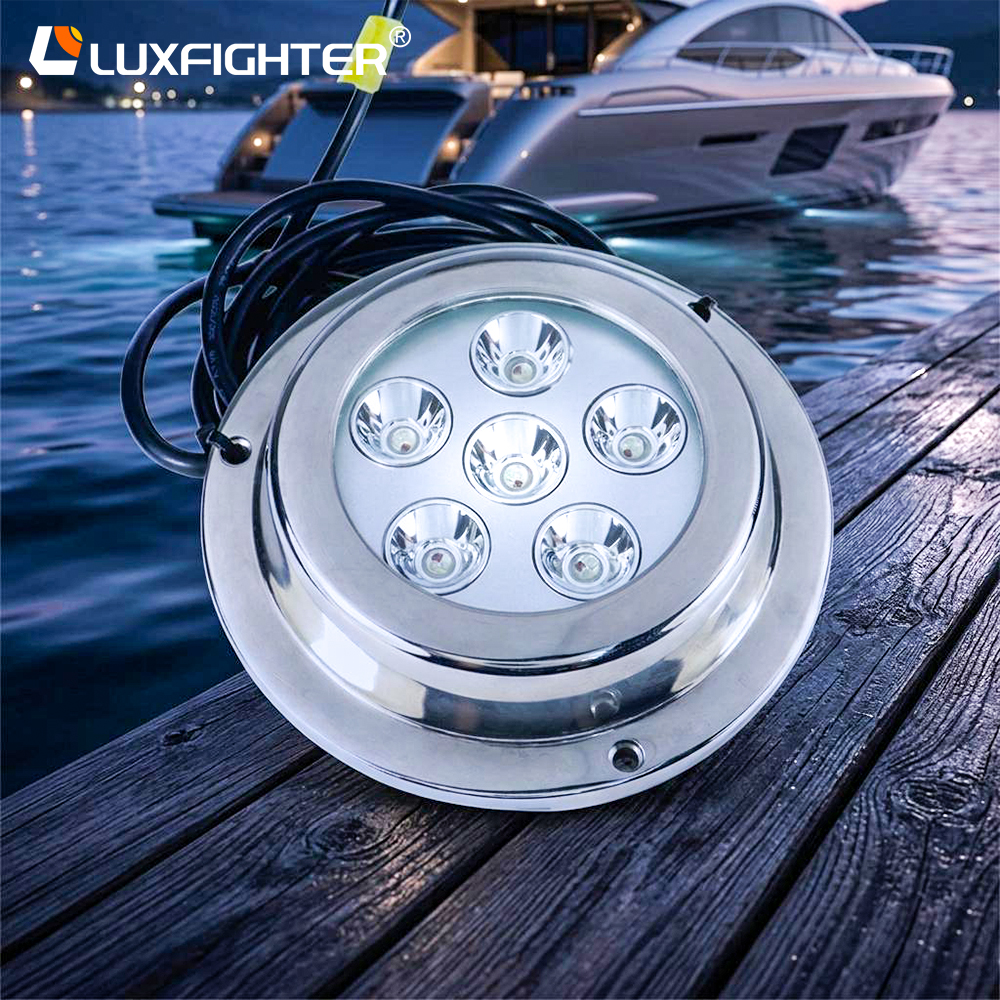
A label can be printed in seconds, but genuine marine-grade performance takes years to prove. Materials destined for saltwater and sun exposure are judged by how they handle pitting, crevice corrosion, and UV breakdown—not by a logo on the packaging.
Look closely at the alloy or polymer used. 316 stainless steel behaves differently from 304 in chloride-rich air, and certain plastics include UV stabilizers while others simply fade and crack. The difference often costs more upfront but saves you from replacing hardware every season.
Before trusting any marine-grade claim, check for third-party testing or specific industry standards. If a supplier can't name the exact grade or test method, the sticker is doing all the heavy lifting.
The Salt Spray Test and Other Uncomfortable Questions
Ask any engineer about accelerated corrosion testing and you'll often get a shrug before a caveat. The salt spray test, for all its ubiquity, has spent decades being both a go-to specification and a quiet source of embarrassment. It doesn't replicate real-world conditions so much as create a harsh, artificial fog that rewards certain material choices and punishes others, sometimes for reasons that have little to do with actual service life. This contradiction makes it the perfect starting point for a harder conversation: are we measuring what matters, or just what's easy to measure?
The uncomfortable questions tend to multiply once you start looking. Why do we still cite a chamber test that was never designed to predict field performance? What happens when a customer insists on a pass/fail number that ignores the difference between cosmetic corrosion and structural failure? And whose job is it to say, in a room full of confident specification writers, that the emperor's salt fog might be a little bare? These aren't technical objections so much as challenges to inertia, and they don't go away by adding more hours to the test cycle.
Other uncomfortable questions follow the same pattern. In design reviews, the person who asks whether a redundant system is actually redundant, or whether a safety factor is padding for ignorance rather than uncertainty, rarely gets thanked. But those are precisely the questions that keep a product honest. The salt spray test is just one example of a broader habit: examining the tools we trust enough to distrust them when it counts.
Custom Builds Without the Custom Headaches
Most people hesitate to commission a custom build because they've been burned before: scope creep, hidden fees, a codebase nobody on the team can update. Our approach starts with a written spec that locks in exactly what gets built, so there's no guesswork about deliverables. You see a working prototype before the first full sprint begins.
We keep the development cycle short and transparent. Instead of monthly reports filled with jargon, you get a demo every Friday and direct access to the person writing your code. If something isn't right, it gets adjusted that week, not after a three-month "discovery phase."
The result is software that fits your workflow rather than forcing you to change it. No bloated platform you'll never fully use, no license fees for features you don't need. Just a stable, documented build you own outright—with the handoff including clear setup instructions and a 30-day post-launch support window.
What Happens After the Invoice? Support and Spares
Once payment clears and the invoice is filed, the relationship doesn't end. Our support desk stays open for installation questions, operating advice, and troubleshooting without forcing you through endless phone menus. You'll have direct access to engineers who know your machine's build history.
Spare parts ship from regional warehouses, so most common components arrive within a couple of business days. If a part is on backorder, we send a loaner or a substitute to keep your line running. Each replacement is tested before dispatch, and we track every order against your equipment serial number.
Beyond shipping boxes, you'll receive proactive maintenance reminders tied to actual runtime hours, not a generic calendar. When something unusual shows up in performance logs, we reach out before it becomes a breakdown. That's the difference between a supplier and a partner.
Talk to Someone Who's Already Been Through a Storm
When the forecast looks grim and you're bracing for impact, the last thing you need is another generic list of survival tips. What you need is a voice that's already been on the other side of the howl. Someone who can tell you which windows actually mattered, what they wish they'd grabbed first, and how the silence afterwards felt heavier than the noise.
Reach out to neighbors, coworkers, or even that distant relative who once posted photos of a flooded living room. Don't just ask what happened—ask what they didn't expect. The answers that stick with you won't be about checklists. They'll be about the weird calm before the power cut, the sudden importance of a manual can opener, or the neighbor who showed up with a thermos of coffee when everything else was gone.
What you gain from this kind of conversation isn't just preparation. It's a shift in how you see the storm itself. You stop imagining it as an obstacle to overcome and start seeing it as something you'll one day describe to someone else, perhaps with the same tired but steady voice. And that, more than any supply kit, is what gets you through the night.
FAQ
Don't just settle for a generic CE mark. Look for marine-specific approvals like UL 1598 for wet locations, IP67 or IP68 for water ingress, and classification society certificates from ABS, DNV, RINA, or Bureau Veritas if your vessel is classed. Ask whether the manufacturer has third-party test reports rather than self-declared ratings.
The housing material tells you a lot. Marine-grade aluminum with a tough powder coat or 316 stainless steel holds up far better than cheap plastic. Check for sealed connectors, stainless hardware, and ask for salt spray test results. If the manufacturer hesitates to share those, that's a red flag.
It depends on your vessel. If you need a specific beam angle for a fishing deck or a different mounting bracket for a narrow mast, custom work can save installation headaches. But a decent manufacturer will tell you when an off-the-shelf model does the job instead of pushing you into a pricey custom build.
Look for at least a three-year warranty, but the real test is how the company handles failures. Ask what the replacement process looks like, whether they keep spare parts in stock, and if their support team understands marine electrical systems rather than just reading from a script. A quick replacement is worth more than a long paper warranty.
Ask for references from similar vessels—commercial fishing boats, yachts, workboats—and actually contact one or two. Request a sample unit and run it on your own boat for a few weeks. A video call to see their production floor can also separate a real manufacturer from a trading company that just slaps a logo on imported goods.
Rarely. Cheap fixtures often use lower-grade LED chips, weak drivers, and thin housings that fail in a season or two. By the time you pay for replacements and labor, the 'savings' disappear. Premium lights from a reputable manufacturer may cost more upfront, but they typically outlast several budget replacements.
Poor thermal management is usually the culprit. If the fixture doesn't dissipate heat effectively, the LED chip runs too hot and degrades quickly. Look for aluminum housings with real heat-sink design, not just a flat plastic shell. Ask the manufacturer about the expected lumen maintenance at 50,000 hours—a credible company will have data.
Marine electrical systems are noisy, with voltage swings and transients from pumps and winches. Your LED lights should handle a wide input range, usually 9-33V DC, and include reverse polarity protection and EMI filtering so they don't interfere with radios or GPS. If a light is only rated for a narrow 12V band, you'll likely see failures on a real boat.
Conclusion
Choosing an LED marine light manufacturer begins not with a spec sheet but with the sea itself. A partner who understands how waves, vibration, and salt constantly test every fixture will ask about your vessel's operating routes and exposure before quoting a lumen count. Marine-grade isn't a sticker—it's a design philosophy. The right manufacturer subjects every housing, seal, and driver to salt spray testing, thermal cycling, and shock loads that mirror real offshore conditions, and they won't flinch when you ask to see the data. Custom builds should not mean endless back-and-forth; a competent partner uses modular optics, dimming protocols, and mounting systems to adapt proven platforms to your pilothouse or deck, keeping lead times sane and costs predictable.
After the invoice is paid, true value shows up. Look for a manufacturer who stocks spare drivers, lenses, and glands for years, not months, and who can walk you through a midnight replacement over the phone. The best reference isn't a brochure—it's a captain who has already run those lights through a storm and can tell you which fixture failed, which one didn't, and how quickly the manufacturer made it right. Choose a partner who treats your vessel's lighting as a safety system, not a one-time sale, and you'll have more than lumens: you'll have a reason to sleep before a long crossing.
Contact Us
Contact Person: Gavin Chen
Email: [email protected]
Tel/WhatsApp: (+86)756-6831079
Website: https://www.luxfighter.com/