

Insulated Clean Panel Production Line Manufacturer Selection Guide
2026-10-06
Choosing the right manufacturer for an insulated clean panel production line can make or break your project's efficiency and long-term costs. Many buyers overlook critical technical details until it's too late. This guide cuts through the noise, highlighting what truly matters when evaluating suppliers—and why YI ZHOU TECHNOLOGY has become a name worth serious consideration in this field.
Why Panel Flatness and Core Bonding Tell You More Than Any Brochure
A brochure can list impressive numbers, coating types, and fire ratings, but none of that tells you how the panel will behave on a real wall. Panel flatness is the first thing your eyes and hands notice. Run a straightedge across the surface and you'll see waves, oil-canning, or a true plane. That variance isn't cosmetic; it changes how light hits the facade, how joints align, and whether the install crew will fight the material all day. Flatness is a physical fact, not a marketing claim.
Core bonding is harder to see but even more revealing. A well-bonded core transfers shear loads evenly, prevents skin delamination under wind suction, and stops the drum-like rumble that cheap panels make when tapped. Poor bonding hides behind perfect paint until thermal cycling or moisture works its way in, and then you get blisters, ripples, or complete skin separation. You can tap a panel with a coin and hear dead spots that no spec sheet will ever admit to.
Put two panels side by side with identical datasheets and you'll still feel the difference. Flatness and core bonding are the result of pressing temperature, adhesive coverage, and quality control that can't be faked after the fact. If a fabricator gets those two things right, the panel will likely survive years of weather and handling. If not, no amount of glossy photography or performance charts will save the project.
The Material Question: Insulation Cores That Hold Up Over Time
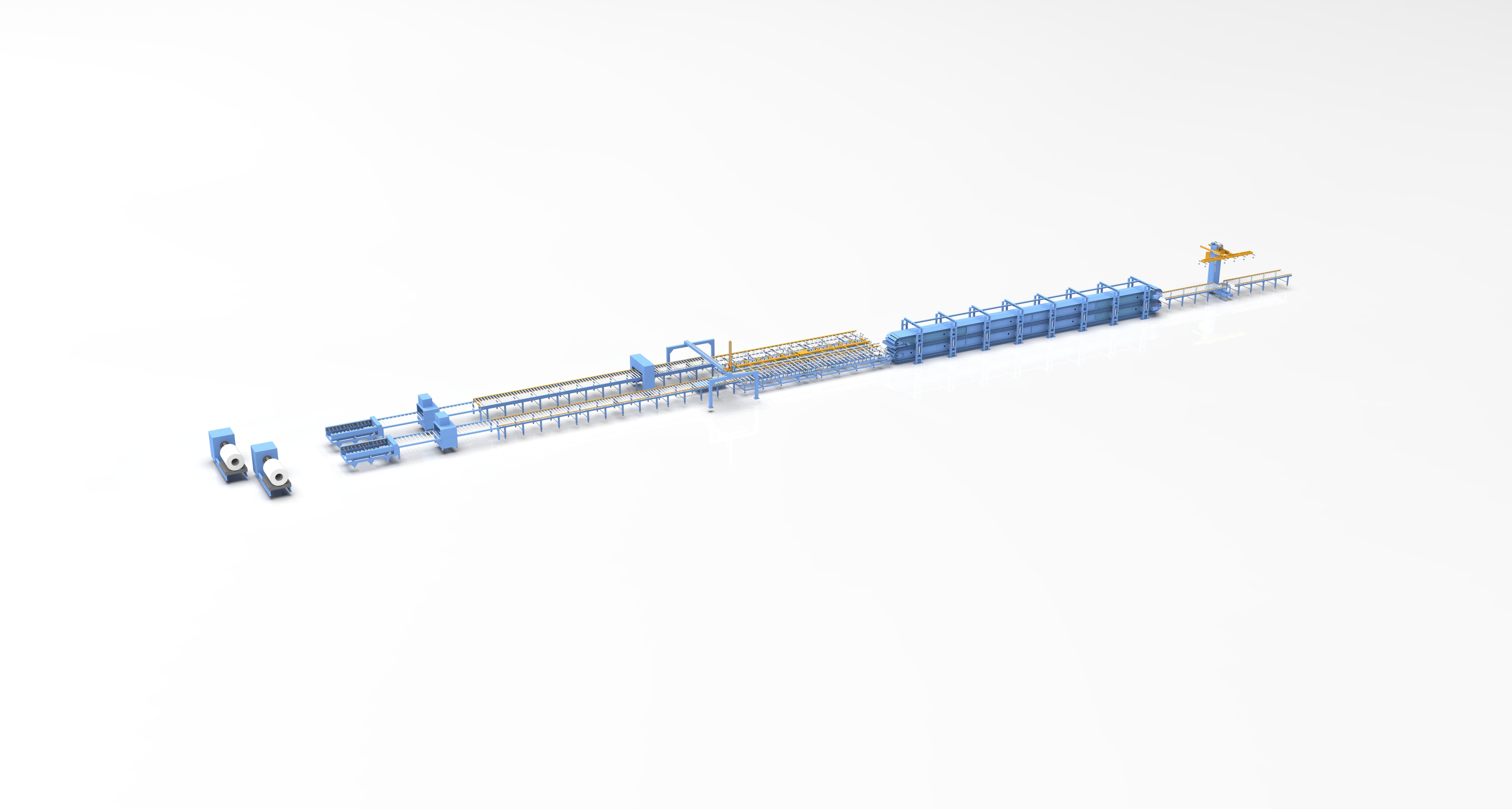
Early insulation cores leaned heavily on fiberglass batts and loose-fill cellulose. Both did the job on day one, but time revealed their weak spots: settling, moisture absorption, and gaps that quietly bled conditioned air. Owners often assumed the R-value on the label would remain constant, yet real-world performance drifted as the material shifted or compacted. That mismatch between lab ratings and long-term behavior pushed builders to look harder at what actually stays put inside a wall cavity.
Spray polyurethane foam changed the conversation because it expands to fill irregular spaces and adheres to surrounding structure. Closed-cell foam, in particular, brings a high R-value per inch and acts as an air and vapor barrier. Still, it is not immune to aging. Off-gassing, thermal cycling, and even minor structural movement can affect its bond over decades. The question is less about whether foam outperforms fiberglass in year one and more about whether it retains dimensional stability and low air permeance after thirty years of seasonal expansion and contraction.
Mineral wool and rigid foam boards offer alternative answers. Mineral wool repels water, resists fire, and does not slump, which makes it a strong candidate for exterior continuous insulation. Rigid polyiso and XPS deliver predictable thermal resistance, though their long-term performance depends heavily on facing materials and installation details. In practice, the best insulation core is often a layered strategy: a continuous outer layer to limit thermal bridging, a cavity fill that tolerates minor moisture, and an air barrier that remains intact. Durability is not a single property; it is the result of matching each material to the specific stresses a building will face.
Line Speed vs. Quality: Finding the Balance Before You Invest
Every production manager eventually hits the same wall: push the line faster and defects creep up, slow it down and you’re bleeding money on idle labor. The sweet spot isn’t a fixed number on a dial—it’s a moving target shaped by your specific product mix, operator skill, and downstream tolerance for rework. Before you sign off on that high-speed upgrade, map out where your current process actually fails at elevated throughput.
Some operations thrive at 95% of theoretical max speed because slight slowdowns let sensors catch anomalies early, avoiding full-batch scrap. Others discover that bumping speed by 12% only adds 3% net output after accounting for jams and visual inspections. Run controlled trials at three or four increments—not just max versus nominal—and track defect types, not just counts. A pinhole leak at 180 units per minute tells a different story than a misaligned label at 210.
Quality gates don’t have to be bottlenecks. Inline vision systems and smart conveyors can hold questionable pieces aside without stopping the whole line, letting the bulk flow at high velocity while only suspects get human review. That layered approach often beats an all-or-nothing gamble on raw speed, because you’re spending capital where it protects margin—not just where it looks impressive in a demo reel.
Automation That Fits Your Team, Not the Other Way Around
Most automation tools expect your team to bend around a fixed pipeline. Ours starts from the opposite direction. It watches how tasks actually move between people, where handoffs stall, and which approvals slow things down. Then it offers small, targeted automations that fit those existing rhythms. You decide what gets triggered, who stays in the loop, and where a human glance remains necessary.
The result is less of a forced march and more of a quiet assistant in the background. If a process changes next month, the automation changes with it, no rebuild required. And when something doesn't look right, a quick pause or a manual nudge takes over without breaking the flow.
Service and Spare Parts: The Hidden Costs You’ll Feel Later
When you're comparing prices, the sticker figure rarely tells the whole story. Service intervals, filter kits, and the availability of basic wear items can quietly shift the total cost of ownership. A machine that demands proprietary parts or frequent dealer-only maintenance will drain your budget long after the initial invoice is paid.
Spare parts pricing often follows a pattern that isn't obvious at first glance. Common consumables may be cheap, but the moment you need a specific seal, sensor, or drive component, the markup becomes impossible to ignore. Some brands design their equipment so that third-party alternatives don't fit, leaving you with no choice but to pay whatever the manufacturer asks.
You also have to consider lead times and stock levels. If a critical part isn't kept locally, a simple repair can turn into weeks of downtime. That lost productivity is a cost too, and it's rarely mentioned in the brochure.
Real Installations, Real Operators: Checking References Without the Sales Pitch
Most reference checks fail before they start because you're handed a list of happy customers curated by the sales team. Ask instead for a couple of sites where the equipment has been running for at least a year, then request to speak with the people who operate it daily. A production supervisor or maintenance tech will tell you things the polished case study won't—how finicky the changeover really is, what happens when a sensor fails at 2 a.m., and whether the promised throughput only holds on paper.
When you get an operator on the phone, skip the rating-scale questions. Ask what they'd change if they had a blank check, or what workaround they've built that the manufacturer didn't anticipate. Listen for pauses, laughter, or a quick 'it's fine' followed by a longer story. That's where the real installation speaks. And if a vendor won't put you in touch with someone who runs the machine without a sales rep on the line, treat that hesitation as data too.
FAQ
Look beyond glossy brochures. A dependable builder shares detailed references from running lines, explains their approach to thermal bridging at panel joints, and doesn't dodge questions about real-world cycle times or scrap rates.
Ask for a witnessed trial before shipment. Have them run your actual panel profile, insulation density, and metal thickness, then compare the measured square meters per hour against their proposal. If they hesitate, keep looking.
Foundation and utility requirements, compressed air quality, spare parts for the first two years, operator training travel, and software licenses for recipe management. These can add 15-25% to the initial quote and should be itemized early.
Rock wool, PU/PIR, and EPS each demand different feeding, cutting, and bonding control. A manufacturer with proven experience in your specific insulation system will have already solved the material handling and lamination issues that newcomers discover on your floor.
It depends on your product mix. If you run long batches of standard panels, higher automation pays back quickly. If you frequently switch between thicknesses, widths, and core materials, a more flexible semi-automatic layout may save more money than full automation.
Request a list of recent installations in your region and call two or three plants directly. Ask about response time for breakdowns, spare parts delivery, and whether remote diagnostics actually solved problems or just scheduled a visit.
Heating, pressing, and curing are energy-hungry. Compare kilowatt-hours per square meter at the same panel specification. A slightly cheaper line that consumes 20% more energy can erase the initial savings within three to five years.
Frequent stops for manual touch-ups, visible lamination wrinkles, uneven panel edges, or operators overriding automated settings should raise concerns. These often indicate unresolved process control issues that will become your problems after installation.
Conclusion
Evaluating an insulated clean panel production line means looking past glossy claims to measurable outcomes. Panel flatness and core bonding are the first honest indicators: if the line cannot hold tolerances under continuous operation or produces panels with voids and delamination after thermal cycling, no brochure feature will recover lost performance. The insulation core itself must be chosen not for initial R-value alone but for long-term dimensional stability, moisture resistance, and fire behavior under the specific cleanroom conditions you actually operate in. In practice, a slightly slower line speed that maintains adhesive coverage and consistent pressure across the panel width will outperform a faster machine that generates scrap and rework hours every shift.
Automation should be configured around the skill level you can realistically hire and retain, not around a vendor’s demo scenario. Before signing, map out the real hidden costs: how quickly spare parts reach your site, whether service engineers know the electrical and PLC systems deeply, and what emergency support actually looks like at 2 a.m. during a production stop. Finally, reference checks are only useful when you speak directly with operators and maintenance staff, not just factory owners. Ask about repetitive faults, tuning time after installation, and whether the line still meets flatness and bonding specs after two years of daily use. That operator-level evidence, combined with a clear-eyed view of core material behavior and line speed limits, gives you a selection decision that will age well long after the purchase order is signed.
Contact Us
Contact Person: Sophia Jiang
Email: [email protected]
Tel/WhatsApp: +86 17367381818
Website: https://yzwelding.com/
