

How a Leading Cross Table Flat Die Plywood Laser Cutting Machine Manufacturer Streamlines Industrial Wood Processing
2026-11-16
In an industry where precision and speed define competitiveness, flat die plywood laser cutting has reshaped what’s possible on the factory floor. Yet many operations still wrestle with bottlenecks caused by outdated equipment or inconsistent cross table performance. That’s where ADEWO steps in—not just as a supplier, but as a manufacturer that has reimagined every component of the cutting process to deliver cleaner edges, faster cycles, and remarkably low downtime. If you’ve ever wondered how a single machine upgrade can unlock throughput gains without sacrificing accuracy, the story behind ADEWO’s engineering choices offers a compelling answer.
Redefining Precision in Plywood Cutting with Flat Die Laser Technology
For decades, plywood cutting has been a tug-of-war between speed and nuance—rotary blades bind on complex grain patterns, CNC routers shed splinters along delicate veneers, and even the steadiest hands leave behind micro-cracks that later telegraph through a finish. Flat die laser technology upends this compromise by introducing a non-contact thermal path that vaporizes material in a tightly controlled kerf, preserving the integrity of adjacent fibers. The result is an edge so clean that cross-grain burn marks and delamination become relics of an earlier industrial mindset.
What truly sets this approach apart is its ability to translate digital precision directly onto an organic substrate without mechanical stress. The flat die configuration maintains a constant focal plane, ensuring consistent energy density across the entire sheet—no beam wander, no sloped cuts. Intricate joinery that once demanded hours of hand-fitting now emerges from the machine ready for assembly, with tolerances that hold even as humidity shifts. It's a quiet revolution that turns plywood from a rugged panel product into a canvas for fine craftsmanship.
In practice, workshops discover that the laser’s narrow heat-affected zone actually seals the cut surface, reducing the thirsty edge absorption that plagues traditional machined plywood. This means less swelling at joints, more predictable glue uptake, and finishes that lay down uniformly without endless sanding. The technology doesn’t just cut plywood—it rethinks the material’s behavior from the moment it’s processed, letting designers explore shapes and assemblies that were previously too fragile or time-consuming to consider.
How Cross-Table Design Transforms Workflow and Throughput
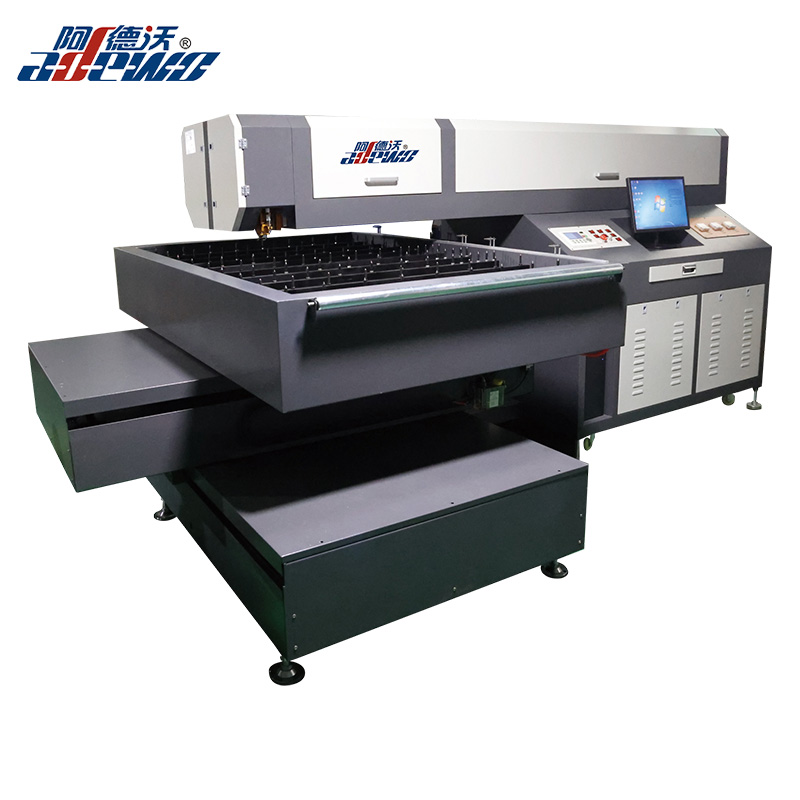
Cross-table design reshapes how data flows through a workspace by letting operators move from one station to the next without mental gear-shifting. When related metrics sit side by side, the natural path of eye movement cuts down on repetitive scrolling and clicking. This physical adjacency tightens the loop between reading a number and acting on it, which can collapse minutes of navigation into seconds of focused decision-making.
Beyond individual speed, the layout patterns throughput at a team level. Work that used to queue up behind a single screen now gets distributed across a visual field where dependencies become obvious. Mistakes drop because contradictions between tables are spotted almost instantly, and the collective rhythm of the floor shifts from reactive problem-solving to a smoother, pull-based flow. It’s not just a prettier dashboard; it’s a different cadence of work where the arrangement itself carries part of the cognitive load.
What often goes unnoticed is how cross-table setups compress context-switching costs. When data from inventory, quality control, and order fulfillment share the same glance, the need to mentally reconstruct a situation shrinks. This translates directly into higher throughput, not by pushing people harder, but by removing the tiny gaps where attention fragments. The result is a workspace that feels less like juggling and more like conducting.
Shifting from Manual Operations to Fully Automated Laser Systems
Transitioning from hand-guided laser tools to fully automated platforms redefines the relationship between operator and machine. In manual setups, precision depends heavily on steady hands and constant focus—fatigue or a fleeting distraction can lead to costly material waste. Automated laser systems absorb that burden, executing complex paths with micron-level repeatability. The result is a process that feels less like operating a tool and more like orchestrating a predictable, high-speed production flow.
Beyond just replacing human motion, intelligent automation introduces real-time feedback loops that simply aren't possible in manual workflows. Sensors and vision systems continuously monitor beam quality, material displacement, and thermal buildup, adjusting parameters mid-process without human intervention. This adaptive behavior turns the laser into a self-correcting system, maintaining cut quality and consistency across thousands of cycles—something a manual operator can rarely sustain over an entire shift.
The shift also reshapes the economics of small-batch and high-mix manufacturing. Where manual processes required hours of setup and constant oversight, automated laser stations can recall job settings instantly, switch between materials fluidly, and run lights-out with minimal supervision. This transforms the entire production rhythm, redirecting skilled labor toward design optimization and process innovation rather than repetitive physical tasks.
Intelligent Nesting Strategies That Maximize Material Yield
Efficient material usage starts long before the first cut. By analyzing part geometries and production priorities in real time, modern nesting engines can rotate, cluster, and even interlock shapes in ways that manual layout operators might overlook. This reduces the skeletal waste—the leftover framework around parts—without affecting cut quality or downstream handling requirements.
Advanced algorithms don’t just pack parts tightly; they simulate the entire production flow. A smart nesting strategy considers grain direction, remnant sheet utilization, and the heat-affected zone from previous cuts to position high-value components where material stress is lowest. This means fewer rejected parts and more consistent yields across batches, especially when mixing orders with different material grades or thicknesses.
The real advantage emerges when these systems learn from past jobs. Instead of applying a generic rule set, they adapt nesting patterns based on what actually reduced waste in your specific operation—whether that’s favoring common-line cutting for rectangular parts or dynamically bridging small gaps to keep delicate details stable during the piercing sequence. Over time, this feedback loop turns material savings from a one-time gain into a continuously improving process.
Seamless Integration into Existing Wood Processing Environments
Most wood processing setups are already a patchwork of saws, conveyors, and dust collection systems that have evolved over years of operation. Rather than demanding a full overhaul, the system is designed to plug directly into existing control architectures—communicating over standard industrial protocols and accepting sensor inputs from equipment that might be decades old. In practice, this means a planer mill can add automated grading without rewiring its entire line, or a sawmill can layer real-time monitoring on top of its current PLC logic with nothing more than a few configured network nodes.
Physical installation follows the same principle. Mounting brackets, enclosure dimensions, and power requirements are kept deliberately generic, fitting into the leftover spaces around primary machinery. The interface module sits alongside existing operator panels rather than replacing them, so floor crews keep the tactile controls they already trust while gaining a diagnostic view they can glance at between cuts. This coexistence avoids the “rip and replace” disruption that production managers dread, letting new capabilities phase in during scheduled downtime windows that might be as short as a single shift.
The real test of integration is how it handles the quirks of a specific plant—the uneven feed rates, the ambient sawdust that coats sensors, the custom jigs that nobody documented. Here, the adaptation comes from a learning period where the system maps its own observations to the plant’s normal rhythm before making any active adjustments. Once it understands what “steady state” looks like for that particular line, it can flag deviations without being tripped up by harmless anomalies that a textbook installation would misread as faults. That kind of nuanced fit is what turns a retrofit from a project into just another part of the daily operation.
Scalable Laser Solutions That Adapt to Evolving Production Demands
Production floors rarely stand still for long. A new product variant, a sudden spike in demand, or a shift in material specs can turn a finely tuned laser process into yesterday's solution. That's why the latest generation of industrial lasers isn't built around a single job—it's engineered with headroom. Modular beam delivery, software-defined pulse shaping, and field-swappable optics mean the system you install today can handle tomorrow's thinner foils, denser alloys, or tighter weld seams without a full rebuild. It's less about buying a bigger machine and more about having a laser platform that flexes with your actual throughput curve.
What often gets overlooked is the cost of rigidity. Fixed-configuration lasers force engineers into workarounds—cobbled-together jigs, slower cycle times, or suboptimal parameters that eat into yield. A truly scalable system sidesteps that by letting you dial power up or down in fine increments, redistribute beam energy across the work envelope, and even switch between CW and quasi-CW modes on the fly. The result isn't just faster changeovers; it's a process that stays near its sweet spot across a hundred different SKUs, without forcing a trade-off between speed and precision.
Integration matters, too. Scalable doesn't mean stuffing every possible feature into one box; it means making sure expansions happen without a fork in the road. Modern fiber laser platforms often share a common backbone—control architecture, cooling loop, safety interlocks—so adding automated beam alignment or inline monitoring later is a bolt-on, not a retrofit headache. That kind of forward compatibility keeps your line out of obsolescence cycles, letting production engineering teams treat laser capacity more like a utility they can scale in step with actual orders, not just a CapEx gamble on a single forecast.
FAQ
It uses a moving cross table and a flat die to hold plywood sheets steady while a high-powered laser cuts, engraves, or perforates them with exceptional precision. The flat die ensures even support, preventing warping or vibration, and the cross table moves the workpiece in two axes for complex shapes without repositioning.
The flat die design supports full-size sheets uniformly, while the cross table movement can cover oversized dimensions typically used in furniture and construction. Automated feeding systems pull sheets directly from stacks, and the laser head traverses the entire surface without mechanical limits, so even 4x8 foot or larger panels are processed in a single pass.
Laser cutting eliminates physical tool wear and tear, produces clean, splinter-free edges, and handles intricate patterns that would break small router bits. There's no need for frequent bit changes or vacuum hold-down adjustments, which slashes downtime and lets the line run unattended for long batches.
They integrate smart nesting software that optimizes part layout on each sheet to reduce waste by up to 15%, offer real-time remote monitoring, and build machines with self-diagnostic sensors. Their systems often plug into existing factory conveyors and ERP software, cutting manual data entry and letting operators manage the entire cutting flow from a single console.
Yes, the laser follows complex vector paths with micron-level tracking, so arcs, notches, and organically shaped cutouts come out just as specified. The flat die holds the sheet firmly, while the cross table coordinates with the galvanometer head to maintain focus on uneven surfaces, which is crucial for bent lamination blanks or custom furniture parts.
By loading a digital file directly to the machine, you skip creating physical jigs or templates. Changeover between designs is instantaneous. The process itself is fast — thin plywood can be cut at several meters per minute — and the kerf is so narrow that parts nest tightly, meaning more finished pieces per sheet and shorter overall production cycles.
Primarily lens cleaning and occasional alignment checks. There are no cutting bits to sharpen or replace, no lubricants to refill on the motion system, and the sealed laser source often runs for tens of thousands of hours. Most leading models come with automatic cleaning cycles and sensors that alert you when optics need attention, so hands-on maintenance is minimal.
Absolutely. Power can be modulated in real time to cut through 18mm structural plywood with a clean edge or kiss-cut just the top veneer layer for folding applications. Multi-ply sheets with odd glue layers are no problem because the laser thermally severs through them consistently, leaving no delamination at the cut line.
Conclusion
The shift toward flat die laser cutting in plywood processing marks a decisive departure from the tolerances of mechanical blades and manual adjustments. By directing a concentrated beam through an ultra-stable flat die bed, a leading manufacturer now achieves edge finishes that require no secondary sanding and cut paths that follow complex contours without grain tear-out. This level of accuracy restructures how workshops handle custom furniture parts, architectural panels, and intricate inlays, because the beam width remains constant regardless of material density. The cross-table design amplifies this advantage: while one sheet is being cut, the adjacent table can be loaded or unloaded, eliminating idle time that traditionally throttles throughput. It is a synchronization of motion and emission that turns batch processing into a continuous, pulse-like workflow, where the laser’s dwell time is the only true bottleneck.
Beyond the hardware, the real streamlining happens in the transition from operator-dependent routines to software-driven automation. The same manufacturer embeds intelligent nesting algorithms that read grain direction, defect zones, and order priorities to arrange parts in seconds—achieving yield rates that manual planners rarely touch. These systems slot into existing factory layouts not as standalone islands but as linked nodes that communicate with upstream sanding and downstream edge-banding stations. As production volumes flex with seasonal demand, the laser power and table sizes scale without forcing a factory redesign, allowing small joiners and large millwork suppliers alike to start with a single module and add capacity incrementally. The result is a wood processing line that feels less like a collection of machines and more like a coordinated operation where material, data, and motion align from raw sheet to finished stack.
Contact Us
Contact Person: KAELYN LEE
Email: [email protected]
Tel/WhatsApp: +86 15012673758
Website: https://www.china-adewo.com