

Hot Knife Laminating Machine Factory Upgrades That Improve Bonding Precision and Production Speed
2026-11-18
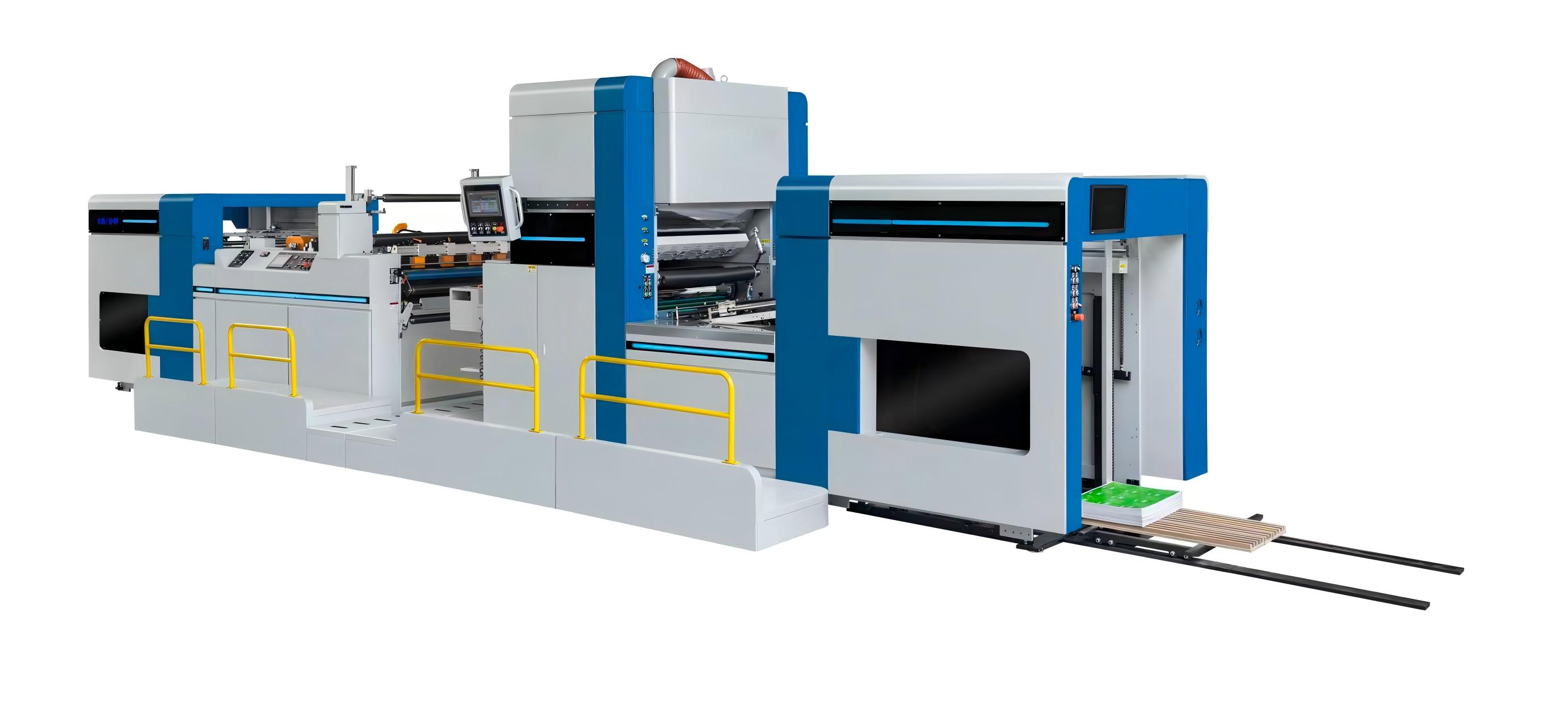
Most hot knife laminating machines lose their edge long before anyone notices: bond lines widen slightly, cycle times creep up, and operators compensate with manual tweaks. XIAOPAI has taken a different route—factory-level upgrades that address the mechanical and thermal sources of that drift. The outcome is sharper bonding precision and a faster, more repeatable production pace. Here's what changed and how it translates to the floor.
Recalibrating the hot knife to remove edge wander
Edge wander rarely comes from one obvious fault. Before touching the calibration dials, check that the blade mount is not working loose under heat cycles. A small amount of play at the holder turns into a wandering cut once the knife meets denser material. Snug the carrier bolts to the torque listed for your frame, then run the carriage through its full travel with the power off. If you feel resistance or hear a rhythmic tick, the guide rail itself has shifted slightly and will pull every pass off line.
Set the knife temperature back to the midpoint for the material you are cutting and make two short test cuts. When the cut edge shows a glossy smear, the heat is pushing material sideways instead of severing it. When the edge is torn or rolled, the blade is dragging cold. A stable straight cut usually appears just below the point where the edge starts to glaze. Record that temperature against the material thickness rather than relying on the dial number, because thermistor drift changes the real temperature over time.
Finally, slow the feed rate during the first pass after any adjustment. Most wander is introduced when the gantry accelerates while the blade is still bedding into the material. Ease into the cut, let the blade establish a kerf, then bring the speed up gradually. If the line still pulls to one side, offset the home position by half the measured drift instead of forcing the rail again; this corrects the residual error without masking a mechanical issue.
Closed-loop temperature control for steady adhesive flow
Adhesive viscosity moves with temperature, and even small swings at the dispensing head can translate into visible changes in bead width or dot weight. A closed-loop controller ties the heater output to a sensor reading taken close to the nozzle, not just in the reservoir. That way the system reacts to local cooling from a fast cycle rate or a cold substrate instead of waiting for the bulk material to drift.
The main challenge is thermal lag. Heaters respond slowly, and a sensor mounted too far from the fluid path will see the change after the adhesive has already been dispensed. A tuned PID loop with feedforward based on flow speed helps correct for this, because it adds heat when the dispense rate increases rather than waiting for the temperature error to grow. Overshoot should be kept tight; some filled epoxies degrade or change rheology if held above their target range for too long.
In practice, steady adhesive flow shows up as fewer rejects from tails, stringing, or starved bonds. It also reduces the urge to keep adjusting the heater manually during a shift. Once the loop is tuned for the specific material and nozzle configuration, the biggest remaining variable is usually the incoming adhesive temperature, which the controller should be allowed to correct before production starts.
Anti-slip feed upgrades that keep material layers locked
The most obvious change after swapping in the revised drive gear is how little filament dust collects around the extruder. The old setup would shred just enough material during fast travel moves to leave fine specks on the build plate, and those missing fragments translated into weak spots between layers. With the new bite pattern and wider contact patch, the gear rolls through flexibles and abrasives without the usual slip-and-grind cycle. You can hear it too: the rhythmic tick-tick of a struggling feed disappears on long, straight extrusion runs.
That steadier feed has a direct effect on layer bonding. When the filament speed stutters, the nozzle pressure drops for a split second and leaves a seam that looks fine from outside but snaps under load. The upgraded tension arm keeps the idler from bouncing on dense infill or rapid retractions, so the melt chamber stays full at the same pressure. We ran thin-wall test prints back to back with the stock parts, and the upgraded feed produced ribs that flexed instead of splitting at the layer lines.
The practical benefit shows up most on tall, narrow parts where a single skipped step can ruin hours of printing. Because the new drive surface clears debris instead of packing it into the teeth, material keeps moving even when a spool has a tight wind or the filament path has a slight bend. That consistency matters less for rough prototypes and much more for functional parts that get drilled, tapped, or load-tested. It is one of those upgrades that does not make the printer look different, but the first time a print survives a drop test that used to crack at layer three or four, the difference is obvious.
Inline bond inspection before the laminate sets
The inspection station sits just after the layup line, before the panel reaches the heated press. At that point the resin is still soft enough to rework, so a quick scan makes sense. A compact ultrasonic array moves across the width while the panel passes underneath, picking up dry spots, air pockets, and areas where the adhesive film never fully wetted the core. The display does not show raw waveforms; it overlays the defect location on a simple panel outline.
When a weak bond is found this early, the operator can lift the top layer, add a small amount of resin, and run the panel back through the same station. That is far cheaper than cutting a cured panel apart later. The data also goes straight to the dispenser controls, so repeated voids from a cold day or a batch change get corrected without a stop in production.
Quick-change tooling that cuts downtime between runs
Most changeover time gets eaten by small, repetitive tasks: loosening bolts, swapping fixtures, nudging alignment back into place, then proving the first piece before production can resume. Quick-change tooling shifts that work off the machine. Fixtures are mounted on shared base plates with locating pins or tapered receivers, so an operator can roll one setup out and drop the next one in with most alignment already resolved. The result is a changeover measured in minutes instead of half a shift.
A modular setup also removes the need for constant measuring and adjustment. Once a tool is dialed in for a given product or part number, it stays dialed in. Repeating a job later means pulling the same preconfigured assembly, clamping it in place, and starting with settings that are already known to be good. That consistency matters as much as raw speed, because fewer manual adjustments at the start of a run mean fewer scrap parts and fewer surprises after warm-up.
For shops that move between short runs or frequent product variants, this approach changes the math. Instead of avoiding small batches because setup takes too long, the line can handle them without turning the machine into a parking lot. Capacity comes back without adding machines or headcount, and operators spend less time wrestling with fixtures and more time keeping good parts moving.
Operator controls refined for tighter repeatable tolerances
The handwheel no longer feels like an afterthought. Detents are spaced close enough that a half-step adjustment translates into a change you can actually measure, yet the movement remains firm enough to avoid overshooting the mark. Thumb pressure alone carries the slide through its range without introducing flex, which makes returning to a previous setting far less of a guessing game.
A revised zeroing collar eliminates the usual slop between the graduated dial and the leadscrew. Once the collar is locked, it stays put through interrupted cuts, coolant showers, and tool changes. Operators can trust the reading instead of tapping the dial to see where it settles.
The spindle lock and quill feed share a cleaner engagement, so repeating a bore depth or shoulder height no longer depends on feel alone. Small, tactile clicks mark each increment, giving a consistent reference from one part to the next. The result is less time chasing offsets and fewer scrapped setups when tolerances tighten.
FAQ
The biggest gains come from replacing worn guide rails and adding closed-loop tension control. When the material path stays stable through the heating zone, the adhesive melts evenly and the bond line stops drifting.
They use longer heating zones and more responsive edge sensors. Operators can run thinner adhesive films at higher line speeds because the melt reaches full flow temperature earlier and stays within a tighter band.
It removes the delay between a temperature drop and a manual correction. With continuous feedback, the knife edge no longer cycles between too cool and too hot, so bond strength remains steady from the first meter to the last.
Not when the knife carriage and pressure rollers are upgraded together. The improved carriage reduces vibration, while the new rollers apply even nip pressure, so higher speed does not translate into wavy edges or weak spots.
Uneven tension is one of the main hidden causes of bonding drift. Upgraded dancer arms and load cells keep the substrate under constant pull across the full width, which prevents micro-folds from forming just before the heated knife.
Operators should recalibrate the zero point of the knife depth and recheck the roller gap after installation. From there, small speed versus temperature adjustments are usually enough, instead of large manual corrections.
Changeover becomes less dependent on trial runs. Saved recipes for temperature, speed, and pressure let the line return to a known good state faster, especially when switching between films with very different melt points.
Clean the knife edge and check the sensor lenses at the start of each shift. Build-up on either surface distorts readings and heat transfer, so a five-minute visual check prevents most gradual loss of accuracy.
Conclusion
The most noticeable gains on the laminating line have come from rethinking the hot knife path and the way heat is managed during each pass. Rather than relying on occasional manual checks, the knife is now recalibrated against reference marks at the start of every shift, which removes the slight lateral drift that used to pull the bond line off center. Alongside that, closed-loop temperature control monitors the blade and adhesive zone in real time, holding the heat within a narrow band so the adhesive flows evenly instead of thinning out or building up in patches. The feed system was also changed: textured rollers and higher-grip belts keep the material layers from sliding against each other under tension, which means the layers arrive at the knife edge in the same alignment they had when they entered the machine.
Further improvements target what happens after the adhesive is applied and between production runs. Inline bond inspection now checks the laminate before it fully sets, catching weak spots, voids, or edge misalignment early enough to correct the process without scrapping an entire batch. Quick-change tooling has reduced the time needed to switch between product widths and thicknesses, so the line spends less time idle and more time running at a steady pace. Operator controls were also simplified and given finer adjustment steps, allowing repeatable settings to be locked in for each job. Together these changes tighten the bond line, reduce rework, and raise throughput without asking operators to work faster or sacrifice consistency.
Contact Us
Contact Person: Kellen Chen
Email: [email protected]
Tel/WhatsApp: 8613806536768
Website: https://www.cnxiaopai.com