

Hospital Bed Makers Innovate for Better Patient Comfort and Safety
2026-08-31
Hospital beds have quietly become one of the most innovation-heavy corners of medical device design. From pressure-relief surfaces to automatic repositioning, manufacturers are racing to solve the twin challenges of patient comfort and safety. Suncare is part of this shift, blending practical engineering with a sharper focus on how patients actually experience care.
Pressure Relief Surfaces That Adapt to Patient Movement
Static support surfaces often fail when a patient shifts position, leaving pressure concentrated in new areas. Adaptive relief surfaces take a different approach: they continuously readjust their load distribution as the patient moves, whether that is a slight turn of the hip or a full lateral reposition. Instead of waiting for a caregiver to intervene, the surface responds in real time, keeping peak pressures below damaging thresholds across the entire contact area.
Many of these systems rely on interconnected air cells or viscoelastic layers that deform unevenly under weight, then return to a balanced state once movement stops. Sensor-driven versions go further by detecting the direction and speed of a patient's repositioning, then shifting internal pressure zones ahead of the body's next contact point. This reduces shear forces at the skin interface, a common cause of deep tissue injury that static overlays cannot address.
In practice, adaptive surfaces are most useful for patients with limited mobility who still make small, frequent adjustments. The surface works with those micro-movements rather than resisting them, which can lower the overall effort needed for repositioning and reduce the risk of pressure ulcers on bony prominences. Over time, this kind of dynamic response can mean fewer manual turns and more consistent protection during long periods of bed rest.
Whisper-Quiet Adjustments for Uninterrupted Sleep
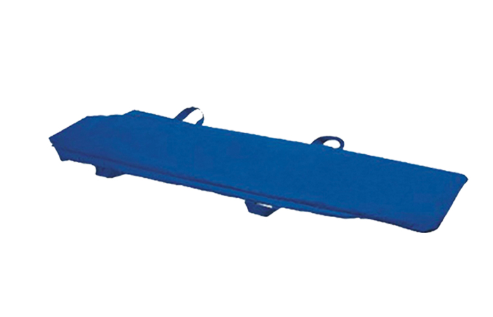
The motor glides into position with a hush that fades into the background, letting you shift from flat to elevated without a single jarring note. Even at the highest setting, the sound stays below the threshold of a whispered conversation, so you can fine-tune your head or foot angle at 3 a.m. and drift right back.
Instead of abrupt starts and stops, the drive system ramps up and down gradually, eliminating the sudden jolts that often pull light sleepers awake. Each adjustment feels less like machinery and more like a slow, deliberate exhale, moving your body into a new position without announcing itself.
The real difference shows up in shared bedrooms: one partner can raise the foot section to ease lower back pressure while the other remains blissfully unaware. No clunks, no rattles, just a near-silent shift that respects the fragile boundary between deep rest and wakefulness.
Antimicrobial Fabrics Built for Real Hospital Cleaning
Most antimicrobial textiles lose their efficacy after a few rounds of hospital-grade disinfection. The active agents either degrade or wash away, leaving the fabric no different from standard upholstery. This line was developed with a different approach: the antimicrobial component is locked into the polymer matrix during extrusion, not applied as a surface finish. As a result, repeated exposure to quaternary ammonium compounds, accelerated hydrogen peroxide, and even diluted bleach doesn't strip the protection. That's the baseline requirement for any material expected to survive in an actual clinical environment.
The real test isn't just chemical resistance; it's mechanical wear from constant wiping, scrubbing, and laundering. These fabrics are constructed with a tight weave and high abrasion resistance so the surface doesn't fray or pill after thousands of cleaning cycles. Loose fibers create hiding spots for microbes, so keeping the surface intact matters as much as the chemistry. The construction also accounts for how disinfectants interact with dyes and finishes—colors stay stable, and the fabric doesn't develop that sticky or chalky residue some treated textiles get after wipe-downs.
Infection control teams shouldn't have to choose between a fabric that's easy to clean and one that actively inhibits microbial growth. These materials do both, but they're not a substitute for proper cleaning protocols. They provide an additional layer of protection between scheduled disinfection, especially on high-touch surfaces like waiting room chairs, privacy curtains, and patient recliners. Third-party testing under simulated real-world conditions—including repeated exposure to disinfectants and abrasion—confirms that the antimicrobial performance remains consistent over the product's expected service life.
Bed Exit Alerts That Distinguish False Alarms
Real bed exit systems don't just trip when pressure shifts. They learn the difference between a patient rolling over, a nurse leaning on the rail, and someone actually swinging their legs to the floor. This comes down to reading multiple inputs at once — a pressure mat under the mattress can detect a steady weight shift toward the edge, while a low-light camera or infrared strip watches for the body's center of mass crossing a defined boundary. False alarms drop sharply when the system waits for two or three corroborating signals instead of reacting to the first twitch.
The clever part is filtering out common noise without missing a genuine exit. For instance, a sensor mat tuned only to gross weight will cry wolf when a family member sits on the bed to chat. Smarter setups use pattern recognition: an attempted exit typically starts with a pause at the bedside, then a slow, deliberate swing of both legs, not the quick bounce of someone just shifting position. Some systems even factor in time of night and the person's typical restlessness, so a 2 a.m. bathroom trip triggers an alert while a 3 p.m. visitor doesn't.
What really cuts false alarms is letting the caregiver customize thresholds. A lightweight resident who scoots to the edge before standing might need a hair-trigger response, while a heavier patient who flails in sleep needs a longer verification window. Good systems expose simple sliders for sensitivity and confirmation delay, rather than burying settings in jargon. When an alert does fire, the best ones include a short video clip or a live pressure map so staff can glance and decide in seconds — no more running down the hall for a ghost.
Integrated Patient Transfer Aids That Reduce Staff Strain
Manual patient handling remains one of the most physically demanding parts of bedside care, but integrated transfer equipment shifts that burden away from caregivers' backs and shoulders. When ceiling lifts, built-in slide systems, and adjustable bed platforms are designed as part of the same workflow, staff can reposition or move a patient with a fraction of the pushing, pulling, and lifting that typically leads to musculoskeletal injuries.
What makes these aids effective is not just the hardware but how quietly they fit into daily routines. A bed that inflates an air-assisted mattress to reduce friction during lateral transfers, paired with a ceiling track that glides from bed to commode, removes the need for improvised sliding boards or extra helping hands. The result is less physical strain per task, fewer delayed transfers while waiting for assistance, and a more sustainable pace throughout a long shift.
Soft Lighting and Noise Dampening for Nighttime Recovery
When the goal is genuine nighttime recovery, the usual advice to “keep the room dark and quiet” misses a lot of nuance. Soft lighting doesn't mean no light at all; it means choosing sources that sit in the warm end of the spectrum, below eye level, and dimmable. A tiny amber-toned bulb near the baseboards—something around 5 to 10 lux—can prevent the disorientation of waking in pitch black without triggering the alertness spike that comes from a bright overhead fixture. The shift matters because our eyes are most sensitive to blue-rich light during the hours when melatonin should be rising, so even a brief flash from a phone screen can delay the body's wind-down by twenty minutes or more.
Noise dampening, similarly, is less about achieving absolute silence and more about smoothing out the acoustic texture of the space. Sudden, irregular sounds—a passing truck, a neighbor's door, a creak in the hallway—are what jolt the nervous system out of deeper sleep stages. Adding heavy curtains, a thick rug, or weather stripping around the door can absorb mid- and high-frequency reflections, but many people find that a steady low-level background sound works better than a perfectly still room. A fan set to a low speed, or a pink noise generator tuned to mimic steady rain, masks those unpredictable spikes without becoming a distraction itself. The key is to keep the volume just above the floor of the room's natural ambient noise, not to blast it.
Layering these two approaches often creates a more forgiving sleep environment than either one alone. For example, a room with cork flooring and a solid-core door will already feel calmer before any electronic sound machine is switched on. Pair that with a small, warm reading light that automatically fades out over thirty minutes, and you have a setup that supports the body's transition from wakefulness to deep rest. Small adjustments—like choosing a lampshade that directs light downward instead of at the ceiling, or placing a folded towel at the base of a door—can be more effective than expensive renovations, because the goal is not a laboratory-grade isolation chamber but a space that stops fighting the body's need to recover.
FAQ
Manufacturers have shifted from purely functional frames to systems that actively monitor patient movement, adjust pressure in real time, and reduce the need for manual repositioning by nurses.
Many newer beds include low-air-loss mattresses to manage moisture and temperature, along with adjustable lumbar support and quieter motors that don't disturb sleep.
Some designs use continuous lateral rotation therapy, gently shifting the patient's position throughout the night to keep blood flowing and prevent sores from forming.
Built-in bed exit alarms, lower deck heights, and side rails that can be lowered in sections give patients more freedom while alerting staff when someone at risk tries to get up.
Yes, sensors now track weight distribution, heart rate, and respiration, sending that data to nursing stations so staff can spot early signs of deterioration without disturbing the patient.
Automated turning and integrated scales mean fewer manual lifts and less time spent on routine checks, freeing nurses to focus on direct care and complex cases.
Memory foam blends and breathable, antimicrobial fabrics are replacing standard vinyl, cutting down on skin irritation and making long stays feel less institutional.
Conclusion
Pressure relief surfaces now sense subtle shifts in a patient's weight and automatically adjust support zones, helping to prevent pressure injuries without requiring manual repositioning by nurses. Alongside this, motorized adjustments operate at a noise level barely above a whisper, so patients are not jolted awake during routine repositioning or when raising the head of the bed. The fabrics covering these beds are no longer just soft to the touch; they are engineered to withstand repeated cleaning with strong disinfectants, with antimicrobial properties woven directly into the fibers rather than applied as temporary coatings.
Bed exit alerts have grown smarter, using sensor fusion to tell the difference between a patient merely sitting up to reach for a glass of water and actually attempting to leave the bed, cutting down on alarm fatigue among staff. Integrated transfer aids, such as built-in sliding sheets and lateral tilt functions, reduce the physical strain on caregivers during patient moves and lower the risk of falls. At night, subtle LED guide lighting under the bed frame and sound-dampening panels around the headboard create a calmer environment, supporting natural sleep cycles and faster recovery.
Contact Us
Contact Person: Frank Chan
Email: [email protected]
Tel/WhatsApp: 0086-13924529088
Website: https://www.suncare-medical.com
