

High Titanium White Masterbatch Original Manufacturer What Smart Buyers Check Before Ordering
2026-08-27
Ordering high titanium white masterbatch shouldn't feel like a gamble. Yet too many buyers discover inconsistent dispersion, off-color batches, or hidden heavy metal content only after the material hits their production line. Before you sign the next PO, there are specific checks that separate genuine original manufacturers like Xinwancai from middlemen repackaging whatever is available. Here’s what smart buyers actually verify—and why skipping these steps costs far more than the invoice suggests.
Verify the Actual TiO2 Loading, Not Just the Label
A label stating a certain TiO2 percentage rarely tells the whole story. During synthesis, plenty can go sideways—precursor hydrolysis might be incomplete, washing steps can leach out loosely bound particles, or the support material simply doesn't grab as much titanium as expected. If you take that number at face value, you risk building an entire experimental series on sand.
The only way to know what you actually have is to measure it. Digestion followed by ICP-OES gives you total titanium with high precision, while XRF offers a faster, non-destructive check if you have a solid sample. Don't just test one spot either—grab material from different parts of the batch, because loading can vary noticeably across a powder bed or a coated surface.
Getting the real loading matters more than most people admit. A photocatalyst that's supposedly 5% TiO2 but actually sits at 2.8% will underperform, and you'll waste time blaming reaction conditions instead of the material itself. Verify first, then interpret your results—otherwise you're troubleshooting a ghost.
Test Dispersion Quality with a Simple Extrusion Trial
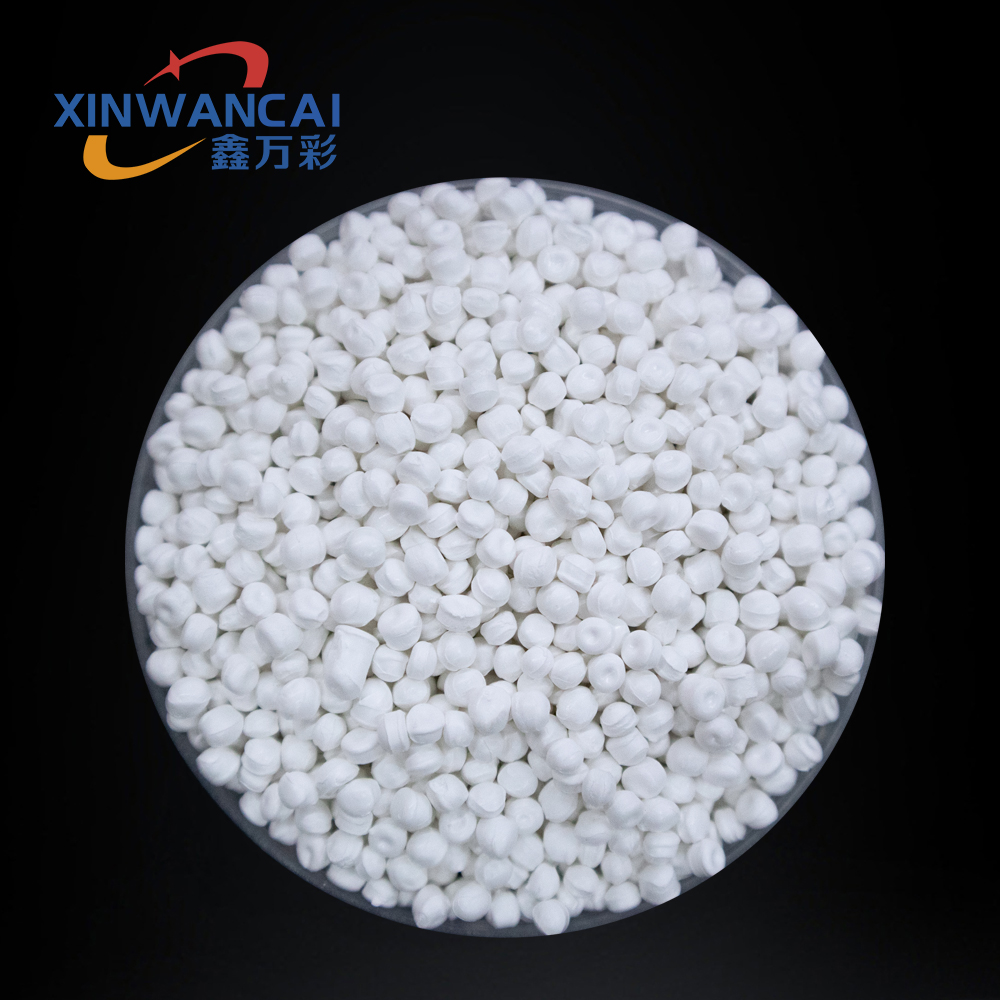
A quick extrusion trial can reveal more about dispersion than a dozen lab tests. Run a small batch of the masterbatch with your base resin at the temperature and screw speed you normally use, then extrude a thin strand. Look at the surface under a magnifier: if you see specks, streaks, or color variation, the pigment or filler is not fully broken down. The strand should be uniform in opacity and tint, with no rough or pitted texture.
For a more quantitative check, place a screen pack with progressively finer mesh before the die and watch for pressure buildup. A well-dispersed compound will pass through a 200-mesh or 325-mesh screen with only a gradual rise in pressure, while poorly dispersed material clogs the screen quickly and forces an early shutdown. You can also cut thin sections from the extrudate and view them under transmitted light to spot undispersed agglomerates that are invisible on the surface.
Keep the trial short and consistent: use fresh resin, purge the barrel thoroughly between batches, and record the exact settings. If you repeat the test with a small change—a different carrier resin, a higher mixing shear, or a slightly longer residence time—you will build a practical picture of what your process can tolerate. This hands-on method often catches dispersion problems that particle-size analysis alone will miss.
Compare Hiding Power and Undertone Against Your Current Grade
A side-by-side drawdown is the quickest way to see where a new pigment stands. Use the same binder system, same film thickness, and the same substrate you would normally rely on. If the new grade hides the black and white chart at a noticeably lower loading, that gap tells you more than any datasheet number.
Undertone matters just as much, especially in whites and near-whites. Look at the dried film under daylight and then under a cool fluorescent source. A shift toward blue or yellow compared with your current grade can change final color matching, even when tint strength looks unchanged on paper.
Keep the comparison practical: record the exact letdown ratio, drawdown bar gap, and drying time. If the undertone difference only appears after full dry, that is a sign the new grade may interact differently with your resin or additives.
Request Batch-to-Batch Consistency Data from the Past Six Months
If you're trying to get a clear picture of how a product has been performing across different production runs, pulling the batch-to-batch consistency data from the last six months is a sensible place to start. Rather than relying on summary reports or verbal assurances, asking for the raw analytical results lets you see the actual variation in critical quality attributes—things like assay, impurities, moisture content, or dissolution profiles. It helps to be specific about which lots you need and the test methods used, so the data can be compared on a like-for-like basis.
When you make the request, it's often useful to ask not just for the numbers but also for any trend charts or control charts that the manufacturer maintains. These can quickly reveal whether a process is drifting or if there were isolated out-of-specification results that were investigated and resolved. Six months of data usually provides enough points to spot meaningful patterns, but it's also recent enough to reflect current equipment and raw material sources. If possible, include both release testing and any ongoing stability data from the same period.
Finally, make sure the request is framed around a practical need—such as supporting a supplier qualification, preparing for an audit, or evaluating a change in raw materials. This tends to get a more complete and timely response than a vague demand for "consistency data." Ask for the data in an electronic format if you plan to do your own statistical analysis, and confirm whether the results are reported against the same specification version throughout the six-month window.
Demand a Physical Sample and Full Technical Datasheet Before Committing
A supplier's glossy brochure can make any material look flawless, but real-world performance rarely matches marketing polish. Request a physical sample cut from the same production batch you'll eventually receive—not a hand-picked showroom swatch. Run your own abrasion, stain, and UV exposure tests under the exact conditions your project will face. If a vendor hesitates to send a sample without a purchase order, that hesitation is the first honest data point you'll get.
The datasheet should list more than just tensile strength and thickness. Ask for elongation at break, tear resistance, colorfastness ratings under both natural and artificial light, and any third-party test reports for fire or chemical compliance. Compare those numbers against alternatives that claim the same performance class; small variances in a single property often explain why one material fails on site while another holds up for a decade.
Once the sample and datasheet arrive, don't file them away. Cut the sample, bend it, leave it in a south-facing window for a month. Mark every deviation from the published specs in writing and send that note back to the supplier before signing anything. A vendor who corrects discrepancies proactively is worth far more than one who only responds to legal threats after your first warranty claim.
Ask About Processing Support and On-Site Troubleshooting
When a production line stalls or a batch comes out with inconsistencies, the first instinct is often to dig into manuals or search forums. That rarely solves the real problem. What actually helps is picking up the phone and asking about processing support—talking through the exact material, the machine settings, and the ambient conditions. Our team treats every question like a diagnostic session, not a scripted reply. You bring the symptoms; we bring a methodical approach that zeroes in on the root cause without making you wait days for a callback.
On-site troubleshooting is where theory meets the messiness of real operations. We’ve seen heaters that drift out of calibration, sensors caked with residue, and operators who inherited bad habits from previous shifts. A quick visit often reveals issues that no remote chat could ever catch. We don't just fix the immediate fault—we show your crew what to watch for next time, adjust the process window, and leave behind clear notes. That way, the same problem doesn't come back wearing a different hat.
So if you're staring at a screen full of error codes or a product that's just slightly off spec, don't guess. Ask. The sooner you reach out, the less downtime you eat. We'd rather spend twenty minutes on a call that prevents a four-hour shutdown than send an invoice for an emergency callout later. Processing support and on-site troubleshooting aren't add-ons—they're the safety net that keeps your line moving and your quality consistent.
FAQ
Ask the manufacturer for a burn-off test report from an independent lab, and compare the residue weight against the stated loading. Reputable original manufacturers will also share the exact pigment grade and let you audit their production batch records.
Request a small trial batch and run a filter pressure test or extrude a thin film to check for specks and agglomerates. A good original manufacturer will have in-house lab data showing pressure rise per gram of masterbatch.
Ask for a factory tour or a live video walkthrough of the production floor, including the twin-screw extruder line and raw material silos. True original manufacturers also issue COAs with batch traceability, not just a generic certificate.
The carrier resin must be compatible with your base polymer to avoid delamination or poor dispersion. Smart buyers specify the melt flow index of the carrier and ask for a compatibility test with their exact resin grade.
Look for colorimeter readings (L*, a*, b* values), melt flow index, moisture content, and titanium dioxide percentage for at least the last five production batches. A manufacturer that tracks these numbers closely is less risky for long-term supply.
Ask for accelerated weathering data such as QUV or xenon arc test results that match your target application, and compare the delta E after 1000 hours. Original manufacturers often have this data for common polymer systems.
Check whether the masterbatch is packed in moisture-barrier bags with desiccant, and whether the manufacturer stores raw materials in climate-controlled silos. Moisture above 0.1% can cause processing defects like silver streaks or bubbles.
A complete package includes the safety data sheet, food contact statement if relevant, processing guidelines, and a detailed certificate of analysis tied to the specific lot number. If these arrive late or look copied, treat it as a warning sign.
Conclusion
Smart buyers know that sourcing high titanium white masterbatch from an original manufacturer requires looking far beyond a quoted spec sheet. The first move is to verify the actual TiO₂ loading by requesting a certified assay or witnessing a batch test—labels can be misleading, and the real pigment concentration drives both cost and performance. Once loading is confirmed, a simple extrusion trial on your own line is non-negotiable: it exposes dispersion defects like agglomerates or streaking that lab data won't show. Comparing hiding power and undertone side-by-side with your current grade under identical processing conditions gives you a true benchmark, not a marketing promise. Beyond single samples, ask for batch-to-batch consistency data from the past six months—any reputable original manufacturer should be able to show tight control charts for melt flow, whiteness, and filter pressure values. Finally, demand a physical sample and the full technical datasheet before committing to a purchase order; if the supplier hesitates, that is a red flag.
A genuine original manufacturer also offers more than product: they provide processing support and on-site troubleshooting when something goes wrong on your line. Ask pointed questions about their technical service response time, availability of application engineers, and whether they will visit your facility if a dispersion or color shift issue arises. The best suppliers treat your first order as the beginning of a partnership, not the end of a sales cycle. They will proactively share formulation adjustment tips, help you optimize let-down ratios, and even suggest alternative grades if your process conditions change. Smart buyers combine this technical backing with the hard data from the six checks above, creating a shortlist of manufacturers who can prove consistency, transparency, and real-world performance—not just a pretty brochure. In a market full of traders posing as producers, these practical verifications separate the original manufacturer you can rely on from the one you will regret ordering from.
Contact Us
Contact Person: JACK
Email: [email protected]
Tel/WhatsApp: 86 18650130917
Website: https://www.xinwancai.com/
