

High Titanium White Masterbatch Brand: Achieving Superior Whiteness and Dispersion in Plastics
2026-08-26
Plastic manufacturers chasing pure white often learn the hard way that more titanium dioxide doesn't automatically mean better whiteness—poor dispersion leads to streaks, specks, and wasted resin. Xinwancai flips that equation with a high titanium white masterbatch engineered for exceptional dispersion and superior whiteness, even at demanding loadings. Instead of fighting your extruder, you get smooth, consistent color that holds up across production runs. Curious how? Let's dig into the formulation and results.
Titanium Dioxide Loading Is Only Half the Whiteness Equation
Titanium dioxide loading is often treated as the primary dial for whiteness, but that assumption falls apart quickly in real formulations. Beyond a certain pigment volume concentration, additional TiO2 crowds particles together and actually lowers scattering efficiency. The optical gains flatten out while costs, viscosity, and risk of flocculation climb. Formulators who push loading alone are usually chasing a number that dispersion quality and film structure already control.
What happens between the titanium dioxide particles matters as much as how much is present. A well-dispersed grade at lower loading can outperform a poorly dispersed higher loading because individual particles scatter more light than agglomerates. Extenders such as calcined clay, fine calcium carbonate, or opaque polymer create spacing and new scattering interfaces without adding more titania. Even air voids in a dry film contribute to brightness. These variables shift the whiteness reading more than an extra half percent of TiO2 usually does.
Undertone and base formulation color also pull the result away from pure loading logic. A slightly blue or neutral undertone reads whiter to the eye than a yellow undertone even at identical TiO2 content. Process conditions, wetting agents, and letdown stability determine whether the pigment stays separated or settles into clusters. When the whiteness target is missed, the first question should not be how much more TiO2 to add. It should be what the current TiO2 is actually doing in the film.
What Really Happens When Agglomerates Survive Compounding
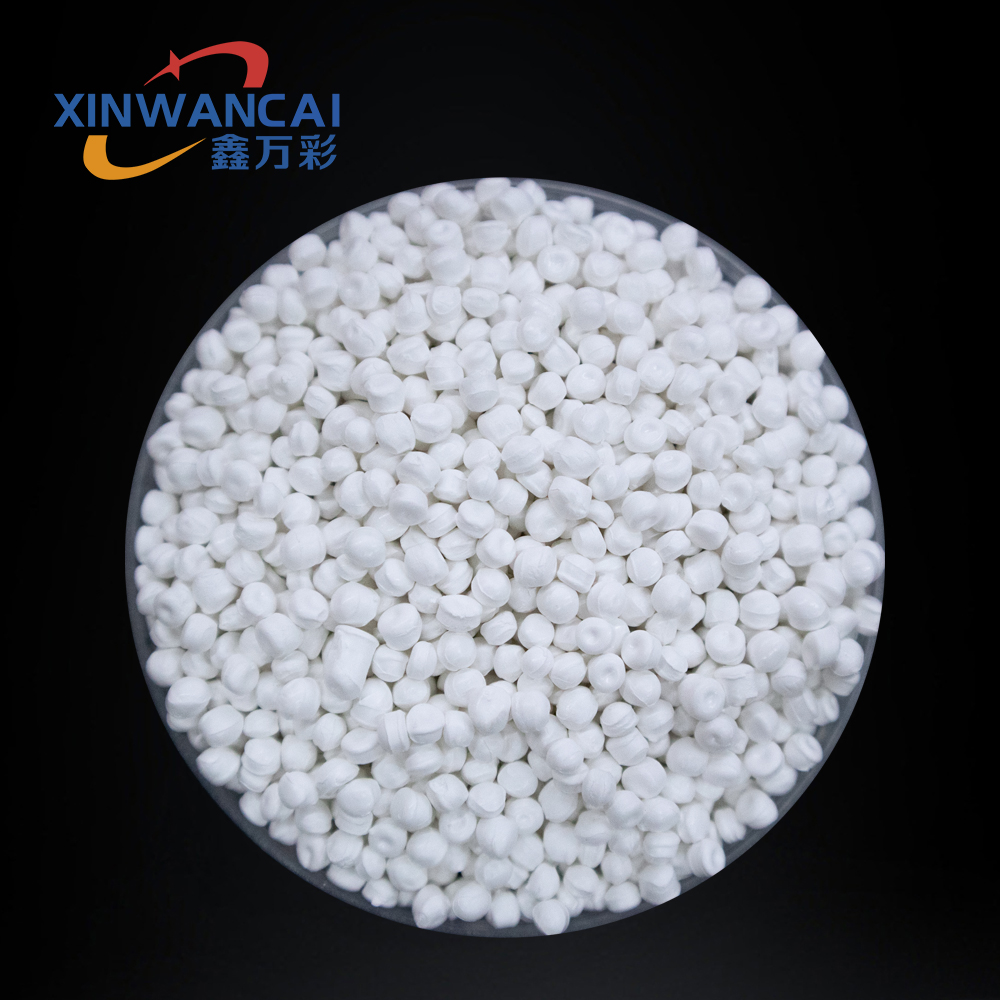
Agglomerates that make it through compounding without being fully dispersed don't simply disappear into the polymer matrix. Instead, they persist as discrete, often irregular clusters of primary particles held together by physical forces or residual binder. Their survival alters local stress distribution, creates weak points, and can initiate premature failure under mechanical or thermal loading. Even when the bulk material appears homogeneous to the naked eye, these surviving agglomerates act as stress concentrators, reducing tensile strength and impact resistance in ways that standard quality checks may miss.
What is less obvious is how these agglomerates evolve during subsequent processing. Shear fields during injection molding or extrusion can further break them apart, but frequently only partially. A surviving agglomerate may fragment into smaller satellite clusters, each capable of nucleating voids or microcracks. This fragmentation is not uniform; it depends on the agglomerate's internal packing density, the wetting state of the primary particles, and the local melt viscosity. As a result, two compounds with the same nominal filler loading can exhibit very different mechanical behavior simply because one retained more intact agglomerates through compounding.
The practical consequence is that dispersion quality must be characterized not just by average particle size, but by the tail of the agglomerate size distribution. A few large survivors can dominate failure statistics, overshadowing the benefits of well-dispersed smaller particles. Improving dispersion requires targeting the specific mechanisms that let agglomerates survive: insufficient residence time under high shear, poor wetting due to incompatible surface chemistry, or re-agglomeration during cooling. Only by addressing these root causes can formulators ensure that compounding actually delivers the reinforcement expected from the filler.
Matching Melt Flow to Your Process: Film, Molding, and Sheet
Film extrusion punishes resins that flow too easily. Low melt flow grades give the melt the strength it needs to hold a stable bubble or cast web without sagging, especially in thicker gauges or high stalk configurations. But push too low and you trade bubble stability for melt fracture, excessive backpressure, and a narrower processing window that operators will curse during every startup.
Injection molding wants the opposite: a high melt flow resin that can race through thin walls, fill intricate ribs, and pack out the cavity before the gate freezes. This speed shortens cycle time and opens the door to lighter, more complex parts. The catch is that high flow often costs you impact strength and can introduce flash if the tooling isn’t tight or the clamp force is marginal.
Sheet and thermoforming sit in the awkward middle. The resin has to flow enough to lay down a uniform sheet, yet retain enough melt strength to survive the heating and sag phase before forming. Medium melt flow grades usually hit that balance, but the real answer comes from matching the specific material’s flow curve to your machine’s pressure limits, die gap, and downstream cooling capacity—not from chasing a universal number.
Surface Defects, Plate-Out, and the True Cost of Uneven Dispersion
Uneven dispersion rarely announces itself at the mixer. It shows up later as faint streaks on a finished part, a dull patch on film, or specks that customers catch before you do. These surface defects often trace back to pigment agglomerates or additive-rich zones that never fully broke down. When the same material runs long enough, those concentrated pockets migrate to the die lip or calendar roll, creating plate-out that forces stoppages for cleaning and leaves visible transfer marks on the product.
The real expense is not just the rejected parts. Every minute spent scraping a die or polishing a roll is lost output, and the scrap rate climbs quietly because the problem is intermittent. A batch may pass an incoming QC check but still carry enough undispersed material to plate out after two hours of heat and shear. By then the line has produced a shift’s worth of questionable inventory that has to be sorted, reground, or written off.
Fixing the dispersion step upstream costs far less than chasing surface defects downstream. Better wetting, adequate shear, and letting the concentrate actually distribute before it reaches the die can eliminate most plate-out. When dispersion is treated as a process variable rather than a supplier’s promise, the visible quality improves and the hidden costs stop accumulating.
Reading Beyond L*: How Opacity and Undertone Shift in Thin Walls
When we talk about color in thin walls, most people stop at L*—the lightness coordinate that tells us how bright or dark a paint film appears. But that single number misses the quieter drama happening beneath the surface. Two coatings can measure identical L* values yet look completely different once they're on a real substrate, because opacity and undertone are doing their own negotiation with the light. A thin wall isn't just a flat target; it's a translucent boundary where the background keeps whispering through.
Opacity, for instance, rarely behaves the way its hiding-power rating suggests. A formulation with high contrast ratio at full thickness can turn surprisingly transparent when applied at two mils over a dark primer. That's not a failure of the pigment—it's the physics of scattering getting diluted. Meanwhile, the undertone shifts as the film gets thinner: the same gray that reads neutral at ten mils might lean blue or mauve at three, because the underlying color starts mixing optically with the topcoat. These aren't flaws to be corrected in software; they're material behaviors that reward observation.
The practical takeaway is to stop trusting single-point measurements. Instead, draw down the same paint at multiple film thicknesses over both black and white cards, then step back. Watch how the edge between thick and thin changes hue. That gradient is where the real color story lives—and it's what separates a coating that merely covers from one that truly works in the field.
Processing Windows That Lock In Brightness from Hopper to Finished Part
Brightness rarely dies in the mixer; it gets roughed up downstream. The hopper feed throat temperature is the first place to watch. Keep the rear zone cool enough that the pellets slip rather than smear, but not so cold that moisture condenses on the flake and drags optical brighteners into the feed pocket. A ten-degree window around 40°C at the throat, combined with a screw recovery time under two-thirds of the cooling timer, prevents the residence-time spikes that yellow the melt before it ever reaches the mold.
Screw speed and back pressure act like a shear dial for brightness. High back pressure can overwork titanium dioxide or optical brightener concentrates, creating micro-dispersion flaws that scatter light unevenly and leave a chalky or gray cast on the finished surface. Dialing back pressure to 50–80 bar and keeping screw rpm in the mid-range for the material holds the brightener domains intact, so the part carries the same reflectance as the virgin pellet instead of a heat-degraded dullness.
From nozzle to gate, the processing window narrows again. A nozzle temperature too close to the melt ceiling can singe the material at the check ring, leaving faint tan streaks that flatten gloss. Let the nozzle run 5–10°C below the front zone, and use a straight-through nozzle body rather than a reverse-taper when the part is thin-walled. That keeps the melt front fast and cool enough to freeze the brightener distribution exactly as it left the hopper, locking in a clean, consistent brightness cavity after cavity.
FAQ
Instead of relying on a generic carrier, it uses a tailored polymer base that matches the target resin, which cuts down on compatibility issues and lets the pigment load reach higher levels without sacrificing flow. The milling step also breaks down agglomerates far more aggressively than typical compounding.
Yes. The dispersion is tight enough that even in films below 20 microns, you won't see the usual fisheyes or white specks caused by undispersed TiO2. The masterbatch is filtered through fine screens during production, and the carrier viscosity is tuned to avoid stress whitening.
It was originally designed for polyolefins like PP and PE, but the carrier chemistry also performs well in ABS, polystyrene, and some engineering resins. For PET or nylon, a modified grade is recommended because those polymers need a different heat profile during processing.
In most trials, you get a 3 to 5 point increase in L* value at the same pigment loading because the TiO2 particles are fully separated and evenly distributed. Raw powder tends to clump, which reduces light scattering efficiency. The masterbatch also prevents dusting and keeps the pigment from reagglomerating during storage.
The formulation includes a hindered amine light stabilizer and a phenolic antioxidant system that protects the polymer matrix and prevents the TiO2 from photocatalytic degradation. Outdoor aging tests show minimal colour shift after 1,000 hours of QUV exposure compared to conventional white masterbatches.
For injection moulding, 2 to 4% is usually enough to achieve full opacity in parts up to 3 mm thick. For blown film or sheet extrusion, start at 5 to 8% depending on the thickness and the desired hiding power. Higher loadings can be used, but beyond 10% you may see a slight reduction in impact strength.
At typical addition rates, the effect on tensile strength and elongation is negligible. The particle size distribution is kept very narrow, so there are no large agglomerates that would act as stress concentrators. In fact, the improved dispersion can sometimes help maintain impact resistance better than lower-quality masterbatches.
It's supplied with a moisture content below 0.1%, so drying is not mandatory for most applications. If the material has been stored in a humid environment, a short drying cycle at 80°C for 2 hours is sufficient. Avoid high-temperature drying above 100°C, as it can cause the carrier to soften and stick together.
Conclusion
A high-performance white masterbatch does more than pack in titanium dioxide. The real difference shows up when agglomerates are broken down completely during compounding—any that survive create micro-sized voids that scatter light unevenly, dulling the surface and weakening thin sections. This brand pairs the right TiO2 grade with a carrier system tuned to the processor's melt flow, whether it's blown film, injection molding, or sheet extrusion, so shear is neither too low to disperse nor too high to degrade the polymer. The result is a brighter, cleaner white at the same loading level, simply because every pigment particle is doing its job.
Beyond initial color readings, uneven dispersion often shows up later as plate-out on dies, streaks on film, or pinholes in thin-wall parts—all of which add scrap and downtime. This masterbatch is engineered to hold a stable processing window from hopper to finished part, preventing the viscosity swings that push agglomerates through and shift opacity or undertone. In thin sections, where L* values can mislead, the consistent particle distribution keeps hiding power and neutral undertone intact. It's not just about hitting a whiteness number on a plaque; it's about delivering that same brightness and surface quality across thousands of parts without adjustments.
Contact Us
Contact Person: JACK
Email: [email protected]
Tel/WhatsApp: 86 18650130917
Website: https://www.xinwancai.com/
