

High Strength Steel Soil Foundation Formwork by the Original Manufacturer Built for Long-Term Stability
2026-11-25
When a foundation formwork fails, the cost isn't measured in materials alone—it's measured in delays, rework, and lost confidence. That's why high strength steel soil foundation formwork from the original manufacturer matters more than most project managers realize. LugongMachinery builds these systems for long-term stability, not just short-term convenience. In this post, we'll look at what separates a formwork that holds its shape under pressure from one that quietly compromises your entire structure. If you've ever wondered why some sites stay on schedule while others fight their own equipment, the answer often starts below ground.
Steel Thickness and Bracing That Hold the Formwork True
Steel thickness only earns its keep when the spacing of studs and walers matches the pour rate. A heavy plate can still flex visibly if the supports are too far apart, while a lighter skin braced at tighter centers often stays flatter under the same head pressure. The decision usually comes down to limiting deflection between ribs, not chasing an absolute plate number.
The bracing does the quieter job of keeping the entire form from walking, leaning, or twisting as concrete fills the cavity. Diagonal push-pull props, horizontal walers, and through ties work together as a triangulated frame, transferring lateral load down to the slab or footing instead of letting it gather at the joints. When those braces are aligned across panel seams and locked off at the correct angle, the face behaves like one continuous plane rather than a row of separate plates.
On site, the real test happens before the pour. A string line pulled across the top edge and a plumb check at each corner reveal small drifts that no increase in steel grade will fix. Crews that adjust bracing early can hold reveals and corners within a few millimeters, because steel thickness controls local bending while the brace layout controls overall position.
Direct from the Manufacturer: Fewer Layers, Clearer Accountability
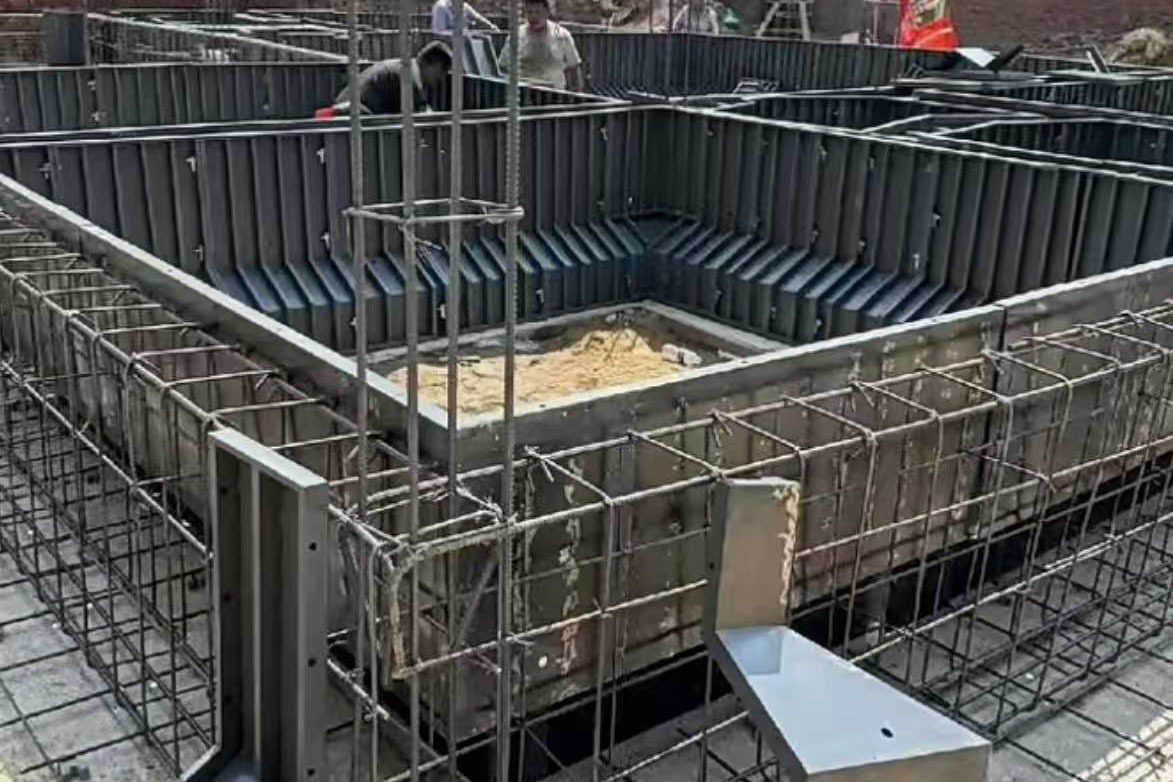
When you buy straight from the manufacturer, the chain between the factory floor and your door shortens dramatically. There's no regional distributor, no middleman mark-up, and no relay of messages that slowly drifts from the original spec. What gets built is what you asked for, and the person who answers your questions is often the same person who can walk over and check the production line.
That kind of direct line changes how problems are handled too. Instead of waiting on a third party to relay a replacement part or a revised drawing, the source can act on it in the same afternoon. Accountability stops being an abstract promise in a terms sheet and becomes a specific desk, a specific phone number, and a manufacturer who has nowhere to hide.
How the Base Connection Handles Uneven Soil Without Loosening
A base connection that stays tight on uneven ground usually comes down to letting the anchor and the post move just enough without transferring that movement to the fasteners. On a tilting or partially settled base, the threaded components see most of their wear as small back-and-forth shear loads, not as a single heavy pull. This connection avoids that by separating vertical load transfer from the clamping force: the post sits in a tapered seat that bites harder as weight shifts, while the base plate is free to follow low spots in the soil. Even when one edge drops, the clamp ring keeps its preload instead of backing off.
That separation also matters after installation. If the soil settles near one corner, the base plate can tilt a few degrees and the load path simply moves to the remaining contact points. The bolt or pin holding the post is not asked to fight the settlement, so it does not rotate loose over time. In field conditions, this shows up as a connection that still rings tight after a season of rain and foot traffic, while a conventional bracket would need retorquing.
The same behavior helps with frost heave and dried-out clay. As the ground lifts slightly in one spot, the swiveling base keeps its grip on the post instead of prying against the anchor. Because the locking taper engages in both directions, the joint returns to the same seated position once the soil settles back. The result is less maintenance and fewer checks, especially on sloped or compacted ground where perfectly level placement is unrealistic.
Long-Term Stability in Wet, Expanding, and Compacted Ground
Ground that stays wet, swells with moisture, or has been heavily compacted rarely behaves the same way from one season to the next. Water migrates through the profile at uneven rates, clay minerals expand and contract, and compacted layers shed or hold water in ways that create localized weak zones. Over time these variations can produce differential movement, loss of bearing capacity, or gradual slope deformation that only becomes visible years after construction.
A reliable long-term response usually depends less on a single fix and more on controlling moisture entry, reinforcing the upper layers, and respecting drainage paths. In practice this means combining surface water management with stabilization methods that suit the specific soil chemistry, rather than assuming a uniform treatment will work across the entire site. Monitoring also plays a strong role; tilt, settlement, and pore pressure readings often reveal developing problems before cracking or heave becomes severe.
Where expansive clays dominate, the most durable solutions tend to limit the depth of seasonal wetting and drying. This might involve vertical barriers, lime or polymer treatment, or redesigned footings that bridge the active zone. In compacted fills, the goal often shifts toward allowing controlled drainage and avoiding trapped water, since undrained pockets can reduce strength slowly and without obvious surface signs. The common thread is that long-term stability is not a finished condition but a balance that has to be maintained as water, load, and ground conditions change.
Why Field Crews See Less Flexing During Continuous Pours
On continuous pours, formwork takes load in a smooth, predictable way. When a placement stops and starts, the concrete near the edge can begin to stiffen, and the next batch presses against it unevenly. That stop-start effect pushes sideways in spots and makes braces work harder. Carpenters notice the difference because they aren't constantly snugging up ties or watching corner joints creep.
Timing is part of it too. A continuous pour keeps the mix moving across the forms while the pressure is still fairly uniform. Once a lift is allowed to sit, it can turn into a partial wall against the next lift, creating local side loads that show up as small bulges. Keeping the pour moving avoids that uneven load path, so the form system doesn't flex and recover over and over.
Experienced crews also read the formwork by sound and feel. During a steady pour there is less popping and creaking from walers and strongbacks, and fewer sudden releases from snap ties taking uneven strain. The whole setup stays more settled, which is usually why fewer hands end up on the brace positions halfway through the morning.
Maintenance Details That Extend the Formwork Beyond a Single Project
A lot of crews treat formwork as a single-use cost center, but the panels that survive one pour in good shape are the ones that got attention before, during, and after the concrete went in. Small habits matter more than expensive upgrades. Wiping down tie holes, checking edge profiles for denting, and storing panels flat with the facing protected keeps the geometry intact for the next layout. When a form face gets chipped or a corner starts to mushroom, addressing it the same week prevents a minor repair from turning into a full rebuild.
Release agents are another quiet factor. The right type and a thin, even coat reduce sticking without creating a film that builds up in corners and dulls the surface over time. Equally important is keeping the backside and hardware free of hardened splatter: a knock with a wooden block beats using a steel hammer on the rails. For adjustable steel forms, greasing threads and inspecting wedge slots before storage means the next setup does not begin with stuck pins and improvised force.
Finally, maintenance records extend the life of formwork because they make repeat problems visible. A simple log of which panels were stripped where, what was repaired, and how many cycles a set has seen helps a team decide when to rotate components, re-face plywood, or replace worn clamps. That kind of attention is what lets the same formwork move from one foundation to the next without losing accuracy or eating up labor on site.
FAQ
The panels use high-grade steel with reinforced ribs and tighter joint locks, so they keep their shape under wet soil loads without bowing or leaking.
Yes, it comes directly from the factory that designed the profile. That means spare parts, panel matching, and technical support are handled by the people who know the tooling best, not a third-party reseller.
With basic cleaning and rust prevention after each pour, the steel faces and frames routinely last for many project cycles. The coating and edge protection are intended for repeated site use rather than single-project disposal.
Yes. The connecting hardware and alignment clamps allow small step adjustments on site, and filler panels can be used where the excavation width changes.
Remove concrete residue before it hardens, apply a light release agent before pouring, and store panels off the ground. Touch up any deep scratches on the edges to prevent moisture from sitting on bare steel.
The panels are heavier than aluminum alternatives, but the design includes lifting points and stacking guides. Most crews find that the extra rigidity reduces the time spent realigning and bracing, which offsets the handling effort.
It can handle those conditions if you rinse the parts after use and inspect the protective edges. The steel itself resists the pressures well; the main thing is preventing standing water and chemical residue from staying on the surface.
Conclusion
The frame holds its line because the plate is thick enough to resist corner pull and the bracing is set where pour pressure actually peaks, not just where the panel looks flat in the yard. Buying direct from the original manufacturer cuts out the distributor layer, so tolerance issues and weld questions go back to the shop that cut and drilled the steel. On uneven soil, the base connection relies on a wide bearing plate and paired leveling nuts that stay seated instead of backing off as the ground shifts under load, which prevents the slow racking that later shows up as bowed panels and stripped ties.
On long pours, the panel joints stay tight because they are reinforced rather than simply bolted edge to edge, so crews see less visible flexing and hold line and grade from first truck to last. The same stiffness helps in wet, expansive, and compacted ground where moisture swings would otherwise twist a lighter form and open the bottom joints. Service life extends when crews rinse contact faces after stripping, check bracing threads for spalling, and touch up zinc-rich coating at cut edges before storage. Those habits keep the formwork stable beyond a single foundation cycle and cost far less than replacing rolled panels after a season.
Contact Us
Contact Person: Zhang Zhenlai
Email: [email protected]
Tel/WhatsApp: 8618563210000
Website: https://en.lugongmachinery.com/
