

Healthcare RFID Tag Brands That Deliver Reliable Patient Tracking
2026-11-16
Ask any nurse what eats up a shift, and tracking down missing supplies or reconciling manual patient logs will likely top the list. RFID tags were supposed to fix that. Yet not every healthcare RFID tag brand survives disinfectants, fluid exposure, and the constant motion of a busy ward. The ones that deliver reliable patient tracking share a quiet obsession with field-level durability, read accuracy, and tag placement—details that rarely show up in a glossy brochure. OSRFID is one of the brands proving that dependable tracking is less about the chip and more about how the tag is built for real hospital conditions. Here is a closer look at the names making patient tracking genuinely reliable.
How RFID Tags Are Reshaping Patient Safety in Busy Hospitals
At three in the morning in a crowded emergency department, the difference between safe care and a close call often comes down to knowing exactly where a patient is and whether the right pump is nearby. RFID tags embedded in wristbands and equipment make that knowledge immediate. Instead of walking corridors to locate a missing infusion pump or calling across units to confirm a transfer, nurses see the current location on a floor map and get an alert if a confused patient moves toward an exit. That quiet, constant visibility removes a layer of guessing from high-pressure shifts.
Beyond locating things, the tags tie actions to records without extra typing. When a medication is scanned at the bedside, the tag on the patient's band and the tag on the drug drawer have to agree; if they don't, the system pushes a warning rather than letting the mismatch pass. The same pairing works in maternity units, where newborn and mother tags must match before leaving a secured area. These checks run in the background, so they don't depend on someone remembering an extra step at the end of an exhausting shift.
What Makes a Healthcare RFID Tag Durable Enough for Sterile Environments
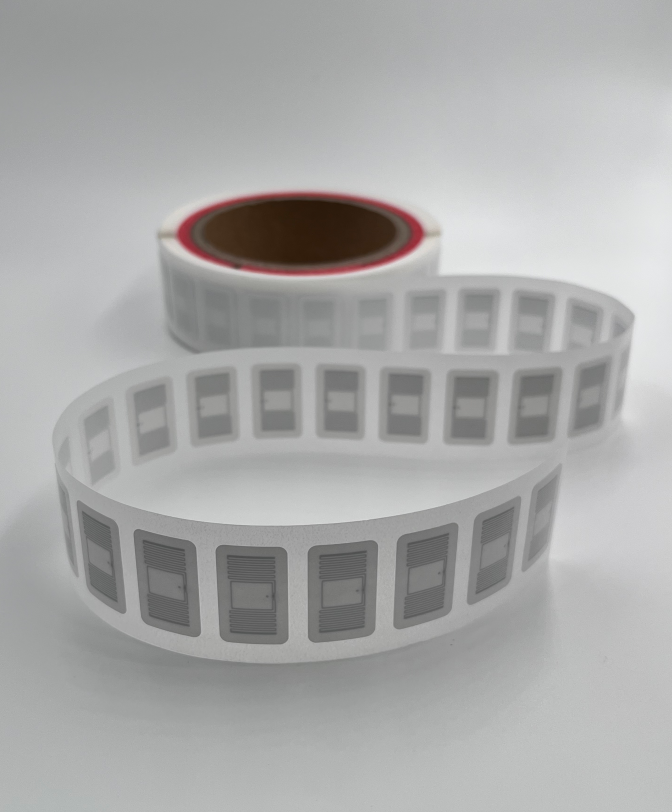
Sterile processing departments run on cycles that would wreck most electronics. A tag gets sealed inside an autoclave pouch, hit with saturated steam at 134°C, then yanked out and left to cool on a metal rack. The housing has to survive that thermal swing without cracking, warping, or letting moisture find a way in. That’s why durable tags rely on homogeneous polymer overmolding rather than glued seams or snap-fit cases. Every seam is a potential failure point. The antenna and IC are fully encapsulated, and the outer material is chosen to expand and contract at a rate close enough to the internal parts that hundreds of cycles don’t tear the connection loose.
Chemical exposure is just as unforgiving. Hydrogen peroxide gas plasma and vaporized peracetic acid are small, aggressive molecules. They creep into microscopic gaps around adhesives and break down label stock over time. Durable tags either skip printed labels entirely or use laser-marked surfaces that don’t depend on ink or adhesive. The readable surface stays legible after repeated chemical baths, and the RF performance doesn’t drift because the chip never comes into contact with the sterilant. Some designs include a gas-permeable vent to equalize internal pressure, but it has to be backed by a hydrophobic membrane. Otherwise the tag becomes a tiny sponge.
Durability isn’t just about surviving one autoclave run. It’s about staying consistent across the entire lifespan of an instrument set. A tag that reads fine on day one but loses 40 percent of its read range by cycle 200 creates more work than it saves. The better tags are tested against temperature, pressure, impact, abrasion from metal trays, and repeated scanning in less-than-ideal conditions. When the housing, chip, antenna, and marking method are designed as a single sealed system, the tag stops being a disposable add-on and becomes a dependable part of the sterilization workflow.
Comparing Top Brands That Prioritize Real-Time Location Accuracy
Garmin and Apple approach real-time location accuracy from different angles, even though both now support multi-band GNSS. On a Fenix 7 Pro or Epix Pro, Garmin leans on SatIQ to decide when to use the most demanding dual-frequency mode, which helps keep tracks clean without draining the battery on an open road. Apple Watch Ultra pushes both L1 and L5 constantly in outdoor workouts, and the result is generally excellent in open terrain, but its smoother display can hide small deviations that a Garmin might show as minor route wobble.
Suunto and Coros tend to prioritize reliability in difficult environments rather than outright polish. The Suunto Vertical and Coros Vertix 2 both rely on dual-frequency tracking and larger antennas, so they hold a line well under tree cover or in narrow valleys. Their tracks sometimes look less filtered next to Apple or Garmin, but that rawness can be useful when you need to know exactly where you drifted rather than seeing a corrected line after the fact.
In practice, hardware specs alone do not decide which brand is best. A watch that performs brilliantly in a city with tall buildings may struggle on a steep trail with heavy canopy, and vice versa. The more meaningful comparison is how each brand balances antenna design, satellite selection, motion sensors, and smoothing algorithms, because those choices shape whether you get a crisp track, a believable pace, or a position that updates without lag when you change direction quickly.
The Role of Battery-Assisted Tags in Continuous Patient Monitoring
Battery-assisted tags close a practical gap in patient monitoring where passive RFID alone often falls short. Because these tags carry a small onboard power source, they wake up more reliably when a reader interrogates them, which matters when a patient shifts position, bedding attenuates signals, or a nurse moves quickly through a ward. That extra sensitivity translates into fewer missed reads and less guesswork about whether a person actually moved through a doorway or stayed in a room.
In continuous monitoring, the value is less about keeping track of an ID and more about sustaining a usable data stream. Battery-assisted designs allow tags to respond at longer distances and through materials that would otherwise absorb enough energy to make a chip stay silent. This makes it feasible to monitor patients in less controlled settings, including hallways, procedure rooms, or window bays, without lining every surface with additional readers or antennas.
The power source also changes how often a tag can transmit and how much data it can carry. When a small sensor is paired with the tag, battery assistance helps it report readings such as temperature or movement at intervals that are actually useful for care teams. Instead of waiting until a reader is nearly touching the patient, staff can receive updates from a distance, which supports a quieter, more continuous form of observation rather than intrusive spot checks.
Why Interoperability with EMR Systems Is Becoming a Must-Have
For years, clinics could get by with standalone platforms that stored patient data in their own silos. That window is closing quickly. Practices now juggle lab results, imaging reports, referral networks, telehealth visits, and billing tools that all expect to speak the same language. When an EMR refuses to exchange data cleanly, staff end up retyping allergies, medication lists, and problem histories into three different screens—and every manual re-entry is another chance for a dangerous mismatch.
The shift is also being driven by patients themselves. People move between primary care, urgent care, specialists, and pharmacy apps without thinking about back-end formats. They assume a recent MRI or a new prescription will simply be visible to the next clinician they see. Interoperability has stopped being an IT wish-list item and become part of basic clinical safety. A handoff that depends on faxes, scanned PDFs, or a patient’s memory leaves too much room for delayed diagnosis or duplicate orders.
Then there is the operational side. An EMR that connects smoothly to a hospital network or a regional health information exchange changes the pace of daily work. Referrals go out with the necessary records attached, prior authorizations start from current chart data, and care coordinators stop chasing missing documents. For many practices, the most visible sign of interoperability is not a technical diagram—it is fewer phone calls chasing results and fewer evenings spent reconciling records from outside providers.
Unexpected Use Cases Where RFID Tags Reduce Clinical Workload
Most people picture RFID wristbands as a way to confirm patient identity at the bedside, but the tags have quietly become a backstage workforce. In busy emergency departments, nurses often spend more time hunting for portable ultrasound machines or crash carts than actually using them. Sewing small RFID labels into the handles of this equipment means a quick scan from the corridor shows exactly which storage nook or treatment room it ended up in after the last shift. That single change has removed the familiar 4 a.m. scramble and replaced it with a ten-second check on a handheld reader.
A less obvious workload reduction happens inside the pharmacy and sterile supply rooms. Vials, trays, and implant boxes tagged with RFID can be inventoried without opening cabinets or counting individual units by hand. When a batch of antibiotics expires, the system flags the shelf location automatically, and a technician can pull the right drawer without reading every label. The time saved on manual stock rotation adds up quickly, letting pharmacy staff focus on clinical review rather than acting as warehouse clerks.
Even the laundry and bedding inventory has its own quiet benefit. Patient turnover depends on having clean linens ready, and large hospital facilities often end up with carts of sheets parked in the wrong corridor. By stitching RFID into cart covers, housekeeping supervisors can see which floors are running low and redirect deliveries before staff start making phone calls. It is not glamorous work, but it prevents the kind of small logistical friction that otherwise eats into nursing hours.
FAQ
Zebra, Impinj, HID Global, and Xerafy show up repeatedly in clinical settings. They survive frequent sanitizing, body heat, and constant motion better than generic tags, which is why nursing teams tend to trust them for wristband and badge tracking.
A hospital tag has to tolerate fluids, bending, and skin contact without losing read accuracy. Standard retail tags often fail once they are worn against the body or exposed to cleaning agents, while medical-grade tags use softer substrates and more durable antennas.
Impinj chips pair well with fixed readers placed in doorways and hallways, so patient movement updates automatically instead of relying on staff to scan each wristband. The read consistency in high-traffic areas is what makes them practical for real-time location tracking.
Xerafy is known for rugged tags that can handle autoclave cycles and harsh sterilization. Hospitals often use them for instruments and equipment, but the same durability carries over to patient tracking in environments where tags get knocked around or exposed to chemicals.
Yes, several brands offer wristband-friendly designs with flexible inlays and hypoallergenic materials. Zebra and HID Global both produce tags that fit into standard wristband printers, which makes adoption much easier for admissions staff.
They usually test tags in the actual clinical workflow rather than relying on spec sheets. Read range, comfort, durability against hand sanitizer, and compatibility with existing readers all influence the decision, and the winning tag is often the one that causes the least friction for nurses.
It can start small with handheld readers and a limited number of tags, then expand to fixed readers later. Some brands offer tags that perform well with both handheld and fixed readers, which gives hospitals room to grow without replacing tags.
They focus too much on maximum read distance and overlook how the tag behaves when attached to a moving person. A tag that only works at long range in open air may perform poorly against the body, so real-world testing matters more than marketing numbers.
Conclusion
Reliable patient tracking in a busy hospital rarely comes down to a single breakthrough; it depends on how well an RFID tag holds up when exposed to cleaning agents, body fluids, and constant movement. The tags that earn staff trust are often the ones nobody notices: they stay attached to wristbands, survive repeated sterilization cycles, and keep transmitting location data without demanding battery changes every few weeks. Battery-assisted models have quietly changed the equation by supporting more frequent reads and longer-range visibility, which helps nurses spot wandering patients or locate equipment before a procedure. Real-time location accuracy also depends on antenna design, how signals bounce off equipment, and how a tag performs near metal or liquids. Top suppliers tend to treat these details as core engineering rather than afterthoughts.
What increasingly separates dependable RFID tag brands is their willingness to fit into existing clinical workflows. Direct interoperability with EMR systems means a tag's location data can trigger relevant updates in a patient chart instead of requiring separate software. That reduces the burden on nurses who already juggle several dashboards. Some less obvious uses also make a difference: automatic logging when a patient leaves a ward for imaging, tracking temperature-sensitive samples alongside a patient, or confirming that a high-risk patient has returned to bed. These scenarios rarely appear in procurement requirements, but they tend to reveal whether a vendor understands hospital reality. When durability, signal consistency, and system integration come together, patient tracking moves from being a passive record of where someone was to a practical tool that prevents delays and keeps staff focused on care.
Contact Us
Contact Person: Esme Mo
Email: [email protected]
Tel/WhatsApp: 0086 191 2931 7837
Website: https://www.osrfidglobal.com/