

Ground Mount Solar Racking in China: The Top 10 Suppliers to Consider
2026-08-10
China has cemented its reputation as the global powerhouse for solar manufacturing, but finding the right ground mount racking partner can still be a challenge amid a sea of options. Ground mount systems demand structural integrity, site adaptability, and long-term corrosion resistance—qualities that separate serious suppliers from the rest. In this article, we spotlight ten standout Chinese companies that deliver reliable, cost-effective solutions for utility-scale, commercial, and even niche solar projects. Among them, Topfencesolar has carved a distinct identity with its engineering-driven approach and swift customization capabilities, making it a name worth exploring before you commit. Whether you’re developing a rocky hillside or a flat agricultural plain, our curated list will help you cut through the noise and zero in on suppliers that align with your project’s technical and logistical requirements.
What Makes Chinese Ground Mount Racking Suppliers Stand Out
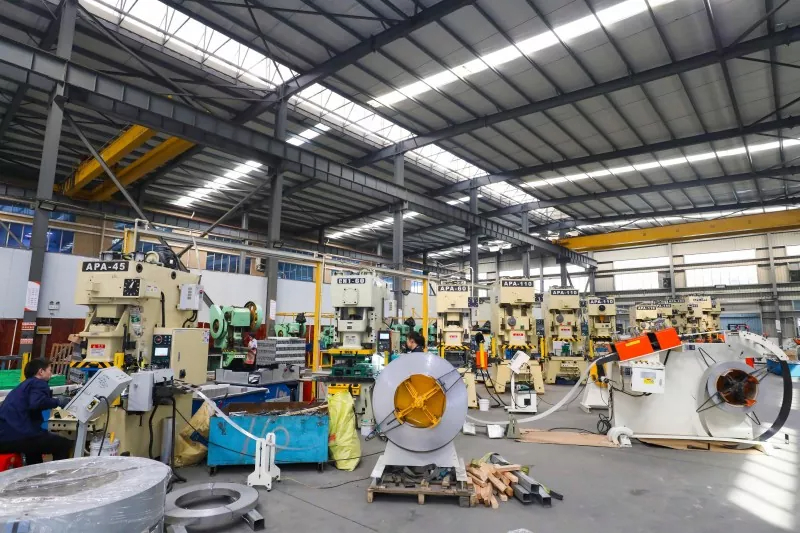
The dominance of Chinese ground mount racking suppliers isn't merely a product of competitive pricing—it's the result of a tightly integrated manufacturing ecosystem that few regions can replicate. From raw material processing to precision engineering, these companies benefit from vertically streamlined supply chains where aluminum extrusion, steel fabrication, and advanced coating facilities are often clustered within the same industrial parks. This proximity slashes lead times and logistical costs while enabling fast prototyping and mass production at a scale that consistently meets global demand. Coupled with heavy investment in automated production lines, the output maintains consistent quality across thousands of units, giving developers confidence in bulk orders.
What truly sets leading Chinese suppliers apart is their ability to deliver tailored solutions without the typical premium associated with customization. Unlike many Western manufacturers that rely on a limited catalog of pre-configured designs, Chinese engineering teams routinely adapt racking structures to challenging terrain, high wind loads, or specific module dimensions. In-house design teams work directly with EPC contractors, iterating rapidly thanks to deep experience with diverse geographies—Southeast Asian monsoons, Middle Eastern desert heat, or European snow loads. This blend of flexibility and field-proven expertise turns each project into a collaborative refinement rather than a simple transaction, a nuance often lost in broad-brush comparisons focused solely on cost.
Beyond the factory floor, Chinese ground mount racking suppliers have built a reputation for end-to-end accountability that defies outdated stereotypes. Many now offer on-site installation guidance, third-party testing certificates from international labs, and localized after-sales support through overseas warehouses and technical teams. By coupling aggressive R&D—such as corrosion-resistant zinc-aluminum-magnesium coatings and zero-penetration ballast systems—with a willingness to stand behind their products through extended warranties, they’ve shifted the conversation from "cheap and fast" to "engineered and reliable." For developers balancing budget and long-term performance, that combination is increasingly difficult to ignore.
The Engineering Secrets Behind Durable Solar Racking Systems
Durable solar racking starts with metallurgy that most installers never see. The real secret lies in post-galvanizing treatments that etch the zinc layer at a microscopic level, creating an anchor profile for sealants and paints far beyond standard G90 coatings. These treatments aren’t about adding more zinc—they manipulate the crystalline structure to resist flaking under thermal cycling, a common failure point in desert installations.
Beyond the steel, the clamping interfaces are designed with intentional micro-roughness, not smooth finishes. This isn’t a manufacturing flaw; it’s a deliberate choice to increase static friction coefficients between module frames and rails. By engineering surface topography rather than relying solely on bolt torque, the systems maintain grip even as aluminum components undergo cyclic expansion, reducing micro-slip that can degrade anodized layers over decades.
Wind mitigation often hinges on something unexpected: the shape of the purlin lips and their interaction with module edges. Instead of solid barriers, some designs use curved return flanges that create vortices to break up coherent wind-induced oscillations. This aerodynamic tweak, validated through scaled wind-tunnel tests under gusting crosswinds, reduces peak uplift forces enough to allow lighter foundations without sacrificing stability in hurricane-prone zones.
Cutting-Edge Innovations in Tracking and Modular Designs
The boundaries of tracking technology are being pushed forward by a wave of sensor fusion that blends LiDAR, visual odometry, and inertial measurement units into a single coherent pipeline. Rather than relying on any single modality, these systems cross-reference data across multiple spectra in real-time, drastically reducing drift while maintaining sub-millimeter precision even in cluttered or poorly lit environments. This leap isn't just about accuracy—it's about resilience, enabling rugged deployments where legacy systems would falter.
On the modular design front, a quiet revolution is taking place as hardware ecosystems shift toward hot-swappable, protocol-agnostic architectures. Imagine a tracking rig where you can snap in a new camera module or swap out a depth sensor without re-wiring or re-flashing firmware—the system auto-negotiates roles and calibration on the fly. This kind of fluid configurability not only accelerates prototyping but also future-proofs investments, letting teams adapt to new sensing requirements without starting from scratch.
Achieving Cost Efficiency Without Skimping on Quality
Trimming expenses doesn’t mean you have to settle for subpar results. It’s entirely possible to tighten the budget while keeping standards high—it just demands a sharper focus on what truly matters. Start by pinpointing areas where spending doesn’t directly affect the end user’s experience. Often, overhead costs or legacy processes bleed money without adding value. Scrutinize those, and you’ll likely uncover fat to trim without ever touching the core elements that define quality.
Smart procurement can also keep costs down while maintaining excellence. Instead of automatically chasing the lowest bid, build relationships with a few reliable suppliers who understand your quality thresholds. Bulk purchasing, negotiated long-term contracts, or even collaborative planning can unlock discounts that don’t force you to accept inferior materials. Similarly, investing in staff training pays off twofold: well-trained teams work more efficiently and make fewer expensive mistakes, preserving both your budget and your reputation.
Technology, when applied thoughtfully, becomes a powerful ally. Automation of repetitive tasks frees up human talent for the complex, value-adding work that directly influences quality. Regular maintenance of equipment prevents sudden breakdowns and the hidden cost of rushed, last-minute fixes. The trick is to view cost efficiency not as a series of cutbacks, but as a continuous pursuit of smarter operations—where every pound or dollar saved is redirected toward sustaining the excellence your customers expect.
Custom Racking Solutions for Every Landscape and Climate
Racking systems aren’t one-size-fits-all, especially when you’re dealing with uneven ground or harsh weather. We engineer each setup to handle whatever your site throws at it—be that coastal salt spray, desert heat, or heavy snow loads. The materials, coatings, and structural design all shift depending on the actual conditions, not just generic specs.
In rocky terrain or steep slopes, standard mounts often underperform or fail early. Our approach is to adapt the racking geometry and anchoring method to the specific geology—sometimes using micro-piling or low-impact ballast systems that preserve the landscape. It’s about making the installation work with the land, not against it.
Climatic extremes demand more than just thicker steel. We factor in thermal expansion, wind uplift patterns, and corrosion zones to select alloys and coatings that last. From arid high-UV zones to humid floodplains, the racking is tuned to maintain performance without constant maintenance. That’s the difference between a solution that survives and one that thrives.
Real-World Success Stories from Global Ground Mount Installations
In the sun‑baked plains of Rajasthan, India, a sprawling 200 MW ground mount solar farm transformed a barren stretch of desert into a reliable power hub. The project tackled extreme heat and dust by deploying robotic cleaning systems and bifacial modules that capture reflected light from the sand, boosting yield by nearly 12% compared to initial forecasts. Local engineers collaborated with international partners to design custom mounting structures that withstand seasonal high winds, creating a model for future utility-scale installations in arid climates.
Over in the rural heartlands of Germany, a community-driven 50 MW installation on repurposed agricultural land demonstrates how ground mount solar can fuse energy production with ecological stewardship. Unlike conventional layouts, the array uses elevated panels spaced widely enough to allow sheep grazing and regrowth of native wildflowers beneath the modules, fostering biodiversity while maintaining peak efficiency. The project’s success has sparked a wave of similar agrivoltaic initiatives across Europe, with farmers now viewing solar leases as a stable second income.
On a reclaimed mining site in South Africa, a 75 MW plant stands as proof that degraded land can be resurrected for clean energy. Engineers overcame unstable soil conditions by anchoring racks with deeper pile foundations, while the rocky terrain actually simplified drainage and reduced long-term erosion risks. The plant exceeds its annual targets by 5% on average, feeding power into a grid that once relied heavily on coal, and now serves as a training ground for local technicians entering the renewables sector.
FAQ
China's dominance comes from its massive manufacturing base, cost-effective production, and deep experience in large-scale solar projects. The country has built a complete supply chain for steel and aluminum components, which translates into competitive pricing and reliable availability for racking structures.
Several names stand out, including Arctech Solar, Xiamen Grace Solar, and Huge Energy. These companies have proven track records with installations across challenging terrains, from sandy deserts to snowy plains, delivering systems that hold up under extreme weather.
Look beyond the price tag and evaluate their project portfolio in similar environments. Check client references, ask about wind and snow load certifications, and visit their factory if possible. A supplier with a strong engineering team will help adapt the design to your specific site conditions.
You’ll find options ranging from fixed-tilt structures for flat lands to single-axis trackers that follow the sun. Many manufacturers also offer east-west oriented systems for higher density and pre-assembled solutions that speed up on-site installation.
Yes, certifications like ISO 9001 for quality management and ISO 14001 for environmental management are baseline expectations. More importantly, verify that their products comply with local building codes and international standards such as AS/NZS 1170 or Eurocode for structural integrity.
Standard components often ship in 4 to 6 weeks, while customized or large-volume orders might need 8 to 12 weeks. Factors like steel market fluctuations and shipping logistics can affect these timelines, so it's wise to build in some buffer.
Absolutely, most top-tier suppliers have in-house design teams that can tailor racking solutions to specific topography, soil conditions, and module layouts. This flexibility is one of the reasons they are chosen for projects ranging from small commercial sites to utility-scale power plants.
Conclusion
Chinese ground mount racking suppliers differentiate themselves through a blend of material innovation and meticulous engineering. High-grade galvanized steel, combined with adaptive structural design, enables systems to withstand decades of environmental stress—whether from high winds, heavy snow, or coastal corrosion. Beyond durability, manufacturers have invested heavily in tracking and modular technologies, creating installations that not only capture more sunlight but also reduce labor and assembly time on site. This engineering-first mindset, supported by large-scale R&D and field testing, turns technical specifications into tangible performance advantages.
Equally important is the balance between affordability and customization. By controlling the entire manufacturing chain—from raw material processing to pre-assembled component shipping—Chinese firms deliver cost-effective solutions without cutting corners on thicknesses or anti-corrosion treatments. Their ability to design for specific topographies and microclimates, whether a frozen tundra or a desert basin, ensures each project receives a tailored foundation and tilt strategy. The proof lies in a growing number of international success stories, from utility-scale farms in arid regions to community solar projects on uneven terrain, where these racking systems have consistently met or exceeded performance expectations. Together, these traits make the top Chinese suppliers a practical choice for ambitious ground mount installations.
Contact Us
Contact Person: Nancy
Email: [email protected]
Tel/WhatsApp: +86-13365923720
Website: https://www.topfencesolar.com/
