

Gas Station Machine Factory: Engineering Reliable Fueling Equipment for Modern Stations
2026-10-13
Every smooth fill-up starts long before the nozzle clicks. Behind that quiet reliability is a factory floor where precision matters more than marketing gloss. At BEILIN, we build gas station machines that don't just meet modern fueling demands—they anticipate them. From high-flow dispensers to integrated payment systems, our engineering focuses on one thing: keeping fuel moving without drama. If you've ever wondered what separates a forgettable station from one that drivers actually trust, the answer usually sits on the island. This blog takes you inside the machinery, the materials, and the mindset behind fueling equipment built for the long haul.
How Our Factory Floor Turns Raw Steel into Modern Fueling Equipment
Raw steel arrives in long, rough bars and sheets, often still carrying mill scale and uneven edges from the rolling process. Before anything else happens, these materials pass through a cutting station where saws and shears slice them down to the specific lengths and widths required for pump frames, nozzle boots, and mounting plates. The goal at this stage isn't speed—it's precision. A single misaligned cut can throw off weld joints later and force a part to be scrapped.
From there, the cut pieces move to forming and machining. Press brakes bend flat stock into channels and brackets, while CNC mills drill bolt patterns and bore openings for fuel paths. Our team checks tolerances against the original drawings at every step, not just at final inspection. Any steel that doesn't hold its shape or shows signs of stress cracking gets pulled before it ever reaches the welding booth.
Welding is where the equipment starts to take real shape. Certified welders fuse joints using a mix of MIG and TIG processes, depending on the part's thickness and exposure to pressure. After welding, each assembly goes through a shot blasting cabinet to remove heat discoloration and surface impurities. A quick coat of primer seals the metal before it heads to powder coating, leaving a clean base that resists corrosion in the field.
Why Flow Accuracy Matters More Than You Think
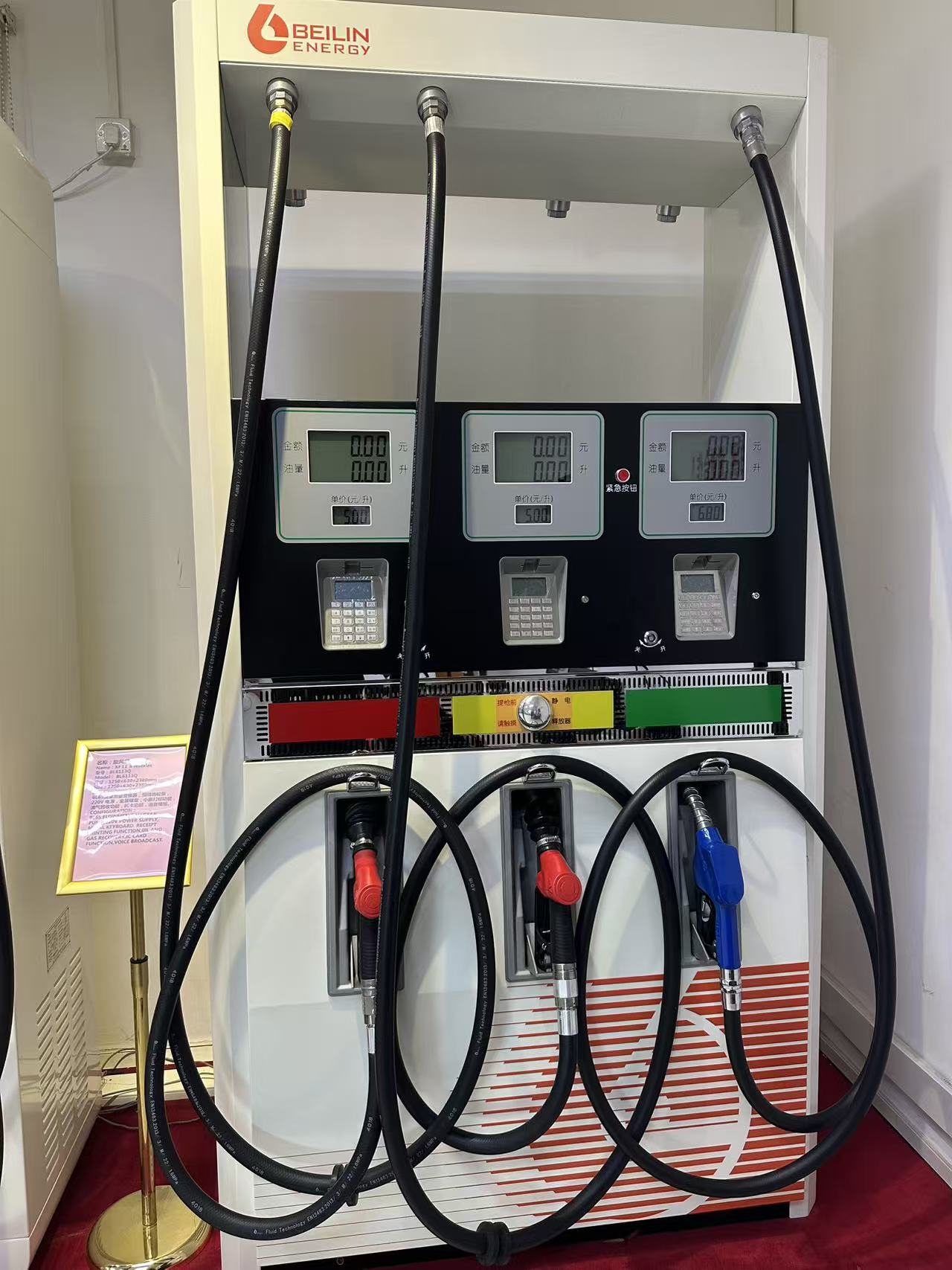
A flowmeter that reads two percent high won’t just nudge a monthly total. It rewrites inventory records, distorts batch recipes, and quietly shifts cost allocations across departments. Operators often adjust for a known offset, but those manual corrections introduce their own drift—especially when temperature, viscosity, or line pressure change through the day. Small inaccuracies stop being a technical nuisance and start acting like an unlogged process variable.
The real cost shows up in places that don’t appear on a calibration report. A slight under-registration in a dosing line may leave every downstream reaction short of catalyst, forcing quality teams to widen specs or rework entire batches. In energy accounting, a one percent error across a steam header can move thousands of dollars between cost centers before anyone questions the numbers. Over a quarter, those figures compound into budget variances that are hard to trace back to a single meter.
Accuracy also shapes how confidently a plant can automate. Control loops rely on the assumption that the measured value is close enough to act on. Once that trust erodes, engineers add filters, dampening, or manual overrides—each layer masking the original problem. A meter that drifts slowly may pass a routine check while still pushing a process away from its best operating point. That’s why chasing tighter flow accuracy isn’t about instrumentation vanity; it’s about keeping decisions based on a signal that hasn’t already gone stale.
Built to Survive Salt, Sun, and Constant Use
Around salt water, most gear starts to show rust in the first season. We’ve seen it happen to competitors’ products over and over. That’s why every fastener, bracket, and axle on this unit is either 316 stainless or treated with a ceramic barrier before it ever leaves the factory. The same goes for the internal frame—no hidden mild steel anywhere.
Then there’s the sun. Fading and cracking are usually accepted as inevitable, but the polymer blend here uses a two-stage UV package that stops both surface oxidation and the deeper molecular breakdown that turns plastics brittle. Leave it on a dock all year, and the color may mellow by a shade at most.
Constant use is where design details matter most. The pivot points are deliberately oversized, the latches have a self-lubricating wear strip instead of a grease fitting, and the handle attachment was tested to 20,000 full load cycles without measurable play. So go ahead—let the kids hang on it, toss gear in and out, slam the lid. It’s not going to loosen up.
Custom Dispenser Configurations Without Long Lead Times
Gone are the days when a custom dispenser meant waiting months for a one-off build. Modern manufacturing leans on modular platforms, pre-stocked subassemblies, and adjustable software profiles to deliver tailored configurations in a fraction of the usual time. You can pick the number of pumps, the nozzle style, the heating or cooling module, and the housing finish—and still see the unit ship within days, not quarters.
The trick lies in how the components are engineered. Instead of starting from a blank sheet for every order, manufacturers keep interchangeable blocks ready on the shelf: a drive base here, a control board there, a set of quick-connect fittings that snap into place. A short online configurator lets you mix and match those blocks, while the system automatically checks real-time stock and flags any conflicts. Assembly becomes a matter of bolting on the right modules and loading the matching firmware, so a highly specific setup doesn't require a whole new design cycle.
Fast does not mean flimsy. Each dispenser still goes through the same pressure tests, calibration checks, and leak inspections as a standard unit—the only difference is that the workflow runs in parallel instead of sequentially. That parallel approach lets you hit tight project deadlines with a machine that fits your exact chemical, viscosity, or dose-volume requirements. The result is a dispenser that feels purpose-built for your line, without the punishing wait that used to come with the territory.
Smart Monitoring That Flags Issues Before They Stall a Station
A connector that runs a few degrees hotter than usual during the evening rush, a cooling fan spinning 8% slower than its baseline, a slight voltage dip that lasts only two seconds—none of these would trigger a traditional alarm, but together they form a pattern the monitoring system recognizes as an early sign of wear. The platform continuously compares live data against learned performance profiles for each charging point, so maintenance teams get a prioritized alert with the likely cause and suggested fix before the unit ever goes dark.
Instead of relying on scheduled checks or waiting for a driver to report a failure, the system uses remote diagnostics to isolate whether the issue is in the power module, the cable, or the payment terminal. Historical data helps distinguish normal seasonal variation from a genuine anomaly, which cuts down on false alerts and lets technicians focus on stations that are truly at risk. In many cases, a software patch or a targeted part replacement can be completed during off-peak hours without interrupting service.
For drivers, that translates into fewer surprises—no pulling up to a station that is flagged out of service or stuck on a boot loop. For operators, it means protecting uptime and revenue while extending the life of expensive hardware. The end result is a network that quietly self-corrects, with problems handled in the background long before they have a chance to stall a station.
Meeting Global Safety Codes with Local Support
Navigating global safety codes can feel like decoding a foreign language, especially when local regulations add their own twists. We bridge that gap by pairing international standards with on-the-ground expertise, ensuring every project meets both without guesswork or costly last-minute fixes.
Our team works directly with local inspectors and certification bodies, translating stringent global requirements into practical, site-specific solutions. This means you get compliant, future-ready systems that don't just pass audits today but stay aligned as codes evolve across regions.
From fire protection to electrical safety, we handle the documentation, testing, and coordination so you can focus on what matters. No endless back-and-forth, no surprises at the permitting desk—just clear, reliable compliance backed by people who know the local landscape.
FAQ
We build complete fueling packages: dispensers for gasoline, diesel, ethanol blends, and even CNG or LNG where needed. Beyond the pump itself, we supply submersible turbines, hanging hardware, breakaway couplings, and the control electronics that tie into station management software. Everything is designed to sit together without compatibility headaches.
Every unit goes through a 72-hour run-in test before it leaves the floor, cycling nozzles and simulating pressure spikes. We use powder-coated stainless steel for the outer shell, brass internals for the meter, and industrial-grade seals rated for at least one million cycles. If a component fails during trials, the whole batch gets reworked and retested.
Yes. We regularly handle narrow islands, drive-through bays, and split-payment setups. The fascia, LED lighting, and screen UI can be customized to match a chain's identity. We also adjust nozzle positions, hose lengths, and flow rates based on the site survey so you are not forcing a standard frame into an odd footprint.
Realistically, our field data shows about 98.5 percent uptime over a five-year period, with most stoppages traced to clogged filters rather than core failures. The modular design lets a technician swap the meter or computer head in under 20 minutes, so a single broken component does not take the whole dispenser offline for days.
We offer both. The factory team can commission the equipment on site, calibrate meters to local weights and measures rules, and train station staff on daily checks. After that, we support either through our own regional service partners or by certifying the owner's maintenance crew. Spare parts ship from stock within 48 hours.
The dispensers are certified to ATEX and IECEx for hazardous locations, and we also build to UL and OIML R117 for measurement accuracy where those apply. Leak detection, emergency shutoff, and anti-drainback valving are standard. We update the control firmware whenever a new safety bulletin comes out from the relevant authority, and older models can be retrofitted.
Our vacuum-assisted vapor recovery system captures displaced fumes during refueling and routes them back to the storage tank instead of the atmosphere. For leak concerns, we pair the dispenser with line and tank monitors that trigger an alarm and shut down the submersible pump if pressure drops outside normal bounds. It is a closed-loop design meant to keep both fuel and vapor where they belong.
We do not just assemble parts from catalogs. The control board, meter, and nozzle firmware are developed in-house, which lets us push updates and fixes without waiting on a third party. We also keep a rolling test station that mimics extreme heat, cold, and salt exposure, so the units are proven for coastal and desert sites rather than a single climate.
Conclusion
Walking through our factory, you see raw steel move from laser cutting tables to welding bays and CNC machining centers, then on to assembly lines where dispensers, submersible pumps, and vapor recovery units take shape. Each stage includes checkpoints that measure tolerances down to a fraction of a millimeter, because a fueling machine has no room for sloppy fits. That obsession carries over to flow accuracy. A dispenser that drifts by even half a percent can quietly drain station profits or trigger customer disputes, so we calibrate every meter against certified reference standards and run wet tests before shipping. The same rigor applies to outdoor durability: frames get a zinc-rich primer and UV-stable powder coat, electronic boards are potted against moisture, and nozzles are cycled hundreds of thousands of times in salt spray chambers to mimic years of coastal exposure.
Rather than forcing stations to accept off-the-shelf layouts, we build dispenser configurations around nozzle counts, hose lengths, payment module choices, and branding panels, while a modular parts inventory keeps lead times short even for unusual requests. Inside each unit, sensors track flow rate, temperature, filter differential pressure, and power anomalies, feeding data to a dashboard that flags a failing component before it causes a shutdown. On the compliance side, our designs meet ATEX, UL, and local metrology requirements, and regional support engineers handle certification paperwork, installation guidance, and spare parts stocking. That blend of factory precision, real-world testing, and responsive local service is what keeps modern fueling stations pumping without surprises.
Contact Us
Contact Person: Jason
Email: [email protected]
Tel/WhatsApp: 8615876017548
Website: https://www.bei-lin.com/