

Food-Grade Clean Label Solutions That Keep Ingredient Lists Simple and Trustworthy
2026-11-23
Consumers today aren’t just reading labels—they’re interrogating them. If an ingredient sounds like it belongs in a lab rather than a kitchen, trust erodes fast. That’s why food brands are turning to clean label strategies that keep product declarations short, familiar, and honest. At ZIPIN, we believe simplicity shouldn’t cost performance. Our food-grade clean label solutions help you remove the noise without sacrificing texture, taste, or shelf life—so every ingredient on your list earns its place.
When Less Really Is More on the Ingredient List
A short ingredient list often reads like a statement of confidence. When a jar of tomato sauce contains only tomatoes, olive oil, basil, and salt, there is no guesswork about what you are eating. A longer list filled with modified starches, thickeners, and “natural flavors” demands more decoding than cooking. Fewer ingredients shift attention back to the product itself rather than the fine print.
There is also a practical side. With a five-item moisturizer, if your skin reacts, you can quickly narrow down the possible trigger. With a forty-item formula, that detective work becomes exhausting. The same logic applies to food: shorter labels make it easier to spot what you are actually sensitive to or simply prefer to avoid.
That said, less is not automatically boring. The best short formulas lean on high-quality ingredients instead of relying on a crowd of cheap fillers. A bread made from flour, water, salt, and starter can be deeply flavorful; a packaged loaf with twenty additives can still taste like nothing. The real advantage is not just the number on the label, but the thought behind what earned a place there.
Clean Label Starts Before the Recipe Does
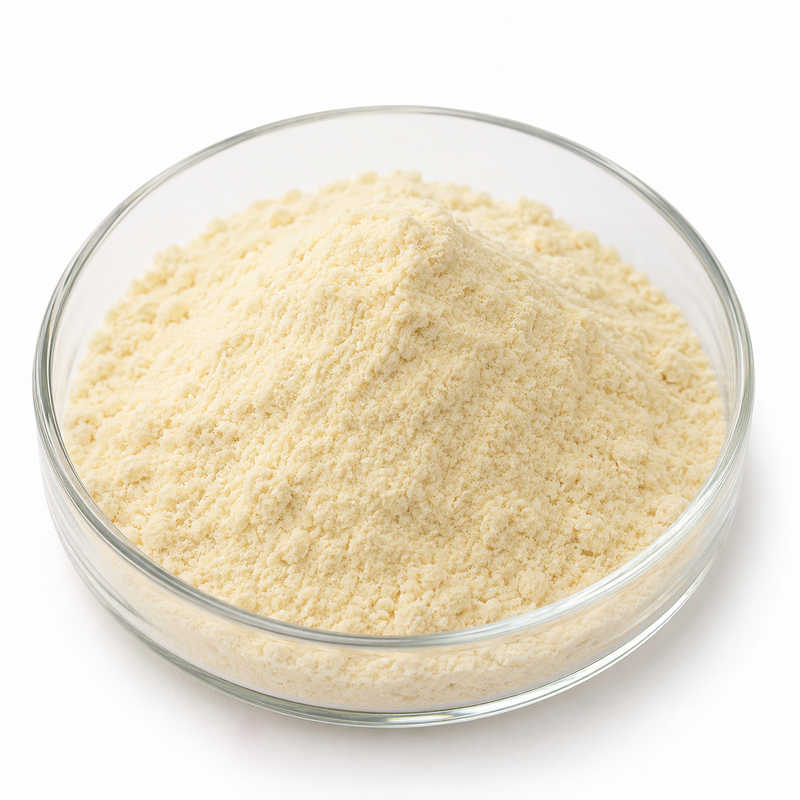
Clean label decisions don't happen when the mixing bowl comes out. They are locked in during sourcing, crop selection, and supplier conversations. By the time a stabilizer, starch, or fat reaches the bench, its story already includes the farming method, the extraction process, the solvents used, and how many intervening steps separated the original plant from the powder in the bag. Formulators who ignore that prehistory end up chasing a short ingredient list instead of a clean one.
Some of the most useful work happens before a single trial batch is mixed. It might mean refusing a commodity oil that arrives pre-neutralized with unnamed processing aids, or choosing a pulse protein milled in a facility that does not share lines with synthetic additives. These choices are less visible than a simplified label, but they determine whether the label can be simple in a way that holds up under scrutiny.
A cleaner recipe is rarely created by deleting ingredients at the end. It is built by shortening the distance between the crop and the finished product, selecting co-manufacturers who document their rinses and allergen controls, and sometimes accepting a shorter shelf life or a less dramatic texture as the honest cost of leaving things out.
Replacing Additives With Familiar, Functional Alternatives
A handful of pantry staples can often do the work of a long chemical name. Cornstarch thickens a sauce just as reliably as modified starches, while a spoonful of mustard lends smoothness and helps keep a vinaigrette from separating. These swaps are not about compromise; they lean on ingredients people already use with confidence.
The shift rarely means sacrificing shelf life or texture. Fermented ingredients such as yogurt, whey, or sourdough discard bring acidity and natural preserving qualities, and they come with a story that feels familiar. In baked goods, applesauce, mashed banana, or soaked flaxseed can replace conditioners and emulsifiers without changing the expected crumb or mouthfeel.
This approach also simplifies what appears on the package. Instead of asking shoppers to trust an unpronounceable compound, a shorter list built around butter, citrus peel, roasted grains, or cultured dairy reads more like a recipe than a chemistry set.
Sourcing Choices That Make Short Labels Possible
Short labels start long before design approval. The real constraint is rarely the label itself; it is the material under it. A tightly woven cotton ribbon can carry tiny text only when the yarn count and finishing allow clean edges without fraying. That pushes sourcing toward high-density polyester tapes or micro-woven substrates, which keep letterforms crisp at smaller point sizes without bleeding after repeated washing.
Stitch choice matters just as much as substrate. A narrow margin demands a lighter needle and a shorter stitch length, otherwise the label puckers or the print gets distorted. Some suppliers offer laser-cut edges instead of folded hems, which removes bulk and lets the label sit flatter against a neckline or side seam. These are not premium extras; they are the practical difference between a readable short label and a wrinkled strip that irritates the skin.
Production volume also shapes what is possible. Short label runs with multiple size variants often rely on thermal transfer or digital printing rather than traditional woven methods. That removes the long setup times and allows faster changes between care symbols, fiber content, and origin details. When sourcing teams treat the label as part of the garment's hand feel, they tend to choose softer, thinner stocks and quieter placements, which makes brevity feel intentional rather than forced.
Keeping Taste and Texture Without the Trade-Offs
Most reformulation efforts fail at the same point: removing sugar, fat, or gluten also strips away the chew, crispness, or creaminess people expect. The trick is not to replace one ingredient with a single substitute but to rebuild the structure from the ground up. Small amounts of vegetable fibers, root starches, and proteins can be layered to mimic the way fat coats the tongue or how sugar holds moisture in a crumb. Adjusting cook times and moisture levels often does more than adding a novel ingredient ever could.
Texture also depends on sequence. Adding a stabilizer too early can lock in a gummy bite, while introducing it after proteins hydrate keeps the structure open and tender. In snacks and baked goods, a short blast of high heat can create a crisp shell without drying the center, preserving both snap and softness. The goal is not perfection on paper but the way a product breaks, stretches, or melts in the mouth. When those details are right, the absence of a traditional ingredient stops being noticeable.
A Label People Can Read Without a Dictionary
Most labels fail the moment someone has to squint at a word like “moisturizing,” “proprietary,” or “fortified” and wonder what it actually means. A label that works reads more like a short note from a friend than a spec sheet. If the phrase “sodium hyaluronate crosspolymer” only makes sense to a chemist, it has no business sitting on the front of a jar. Plain words build trust faster because the reader doesn’t feel tricked or talked down to.
That doesn’t mean stripping every detail out. It means choosing the everyday version first: “extra moisture” instead of “intensive hydration therapy,” or “no added dyes” instead of “formulated without synthetic colorants.” The test is simple—read the label once, at a glance, while the kettle is boiling. If you can say what the product is and does without rereading, the wording is clear enough.
There’s also a quiet confidence in plain language. A label that avoids jargon doesn’t sound cheaper; it sounds considered. It respects the reader’s time and assumes nothing about their education. When people can understand a product in a few seconds, they’re more likely to pick it up, keep it, and come back to it.
FAQ
It means using ingredients that meet strict safety standards while still being recognizable to shoppers—no cryptic additives or production aids that sound like lab chemicals.
Often the trick is replacing a multi-component stabilizer system with a single functional ingredient that does the same job, so the back label gets shorter but the texture and shelf life stay intact.
Not at all. Any brand that wants fewer consumer questions at the shelf can use them. Clean label spans conventional, premium, and value lines because shoppers everywhere read labels more closely now.
Short is helpful, but trust comes from using ingredients people can picture in their own kitchen or find with a quick search, and from avoiding vague terms like "natural flavors" where possible.
Not necessarily. Modern food-grade clean label options are designed around stability and process tolerance, so they can hold up in large-scale production without a big cost jump.
Yes, the better ones are developed for exactly those stress points. You can find options that remain stable in acidic dressings, baked goods, frozen desserts, and high-heat processing.
Look for someone who offers application support, not just an ingredient catalog—someone who can run trials in your specific base, help name the ingredient in plain English, and provide documentation for safety and traceability.
Because a short, familiar list feels transparent. It removes the work of decoding labels and gives the impression the brand has nothing to hide, which drives repeat purchases.
Conclusion
A shorter ingredient list rarely happens by accident. It starts long before the first batch is mixed, at the sourcing table where formulators choose raw materials that do more than one job. Instead of reaching for a stabilizer, a flavor masker, and a preservative, they look for a single familiar ingredient that can hold texture, protect freshness, and carry flavor. Citrus fiber, rice starch, vinegar, and rosemary extract are doing work that synthetic-sounding additives used to handle. The result is a label that reads less like a chemistry set and more like a pantry.
That shift also changes how products behave. Clean label replacements are not always drop-in swaps; they require adjusting process temperatures, mixing times, and order of addition so that mouthfeel, shelf life, and appearance stay intact. When sourcing is deliberate, shorter labels become possible without forcing consumers to accept a drier cake, a blander sauce, or a shorter expiration window. The payoff is trust. A person scanning the back of a package should recognize every line without needing a dictionary, and that recognition is what turns a cautious shopper into a repeat buyer.
Contact Us
Contact Person: TANG JUN
Email: [email protected]
Tel/WhatsApp: +86-523-87608619
Website: https://www.zipinbiotech.com