

Double Eccentric Butterfly Valve Supplier Guide: Key Factors for Reliable Performance
2026-08-03
Selecting a double eccentric butterfly valve is more than a check-the-box task—it’s about ensuring years of leak-free operation under demanding conditions. Unlike concentric designs, the double offset geometry reduces seat wear and extends service life, but only when the valve is engineered and tested to meet real-world demands. That’s where supplier choice becomes critical. At THT, we’ve seen how the right combination of disc profile, sealing materials, and shaft support separates a reliable performer from a costly failure. In this guide, we cut through the marketing claims to focus on the key factors that truly dictate valve reliability, from fugitive emissions compliance to torque stability over thousands of cycles. Whether you’re spec’ing for high-cycle isolation or critical shutoff, understanding these distinctions will help you avoid common pitfalls and specify with confidence.
What Makes Double Eccentric Design a Game-Changer in Flow Control
In flow control, precision and durability often feel like opposing goals—until you encounter the double eccentric design. Unlike traditional butterfly valves that rely on a centered disc, the double eccentric offsets the shaft in two distinct ways: first from the disc’s centerline, and then from the pipe’s centerline. This clever geometry means the disc lifts off the seat almost immediately upon rotation, drastically reducing the friction that normally shortens a valve’s life. It’s not just a minor tweak; it’s a fundamental rethinking that allows the valve to handle higher pressures and temperatures without the typical wear-and-tear. The result is a smoother operation that feels almost frictionless in comparison to conventional designs.
The real game-changer, though, is how this design transforms maintenance and sealing. With less surface rubbing during opening and closing, the sealing ring avoids the scuffing and distortion that plague standard valves after a few thousand cycles. This means bubble-tight shutoff remains reliable far longer, even in demanding applications like steam, hot gases, or abrasive slurries. The double eccentric geometry also enables a “cam-action” that increases sealing force as pressure rises, making it inherently fail-safe in critical shutoffs. Instead of adding complicated external actuators or frequent manual adjustments, the valve’s own mechanics do the heavy lifting. For engineers who have wrestled with leaking isolation valves or costly unplanned downtime, this built-in reliability is a revelation.
Beyond the technical perks, the double eccentric design quietly reshapes the economics of flow systems. Its ability to function with smaller, lighter actuators reduces installation footprint and material costs, while the extended service intervals slash operational expenses. The design also permits a wider choice of seat materials—from resilient polymers to fully metal seats—without sacrificing performance, broadening its use from chemical plants to power generation. In an industry where a single failure can halt production, adopting a valve that simply outlasts its predecessors becomes a strategic advantage, not just a specification detail. That’s why it’s not merely an incremental improvement; it’s a shift in how we think about flow control longevity and efficiency.
Material Choices That Withstand Harsh Media and Temperature Swings
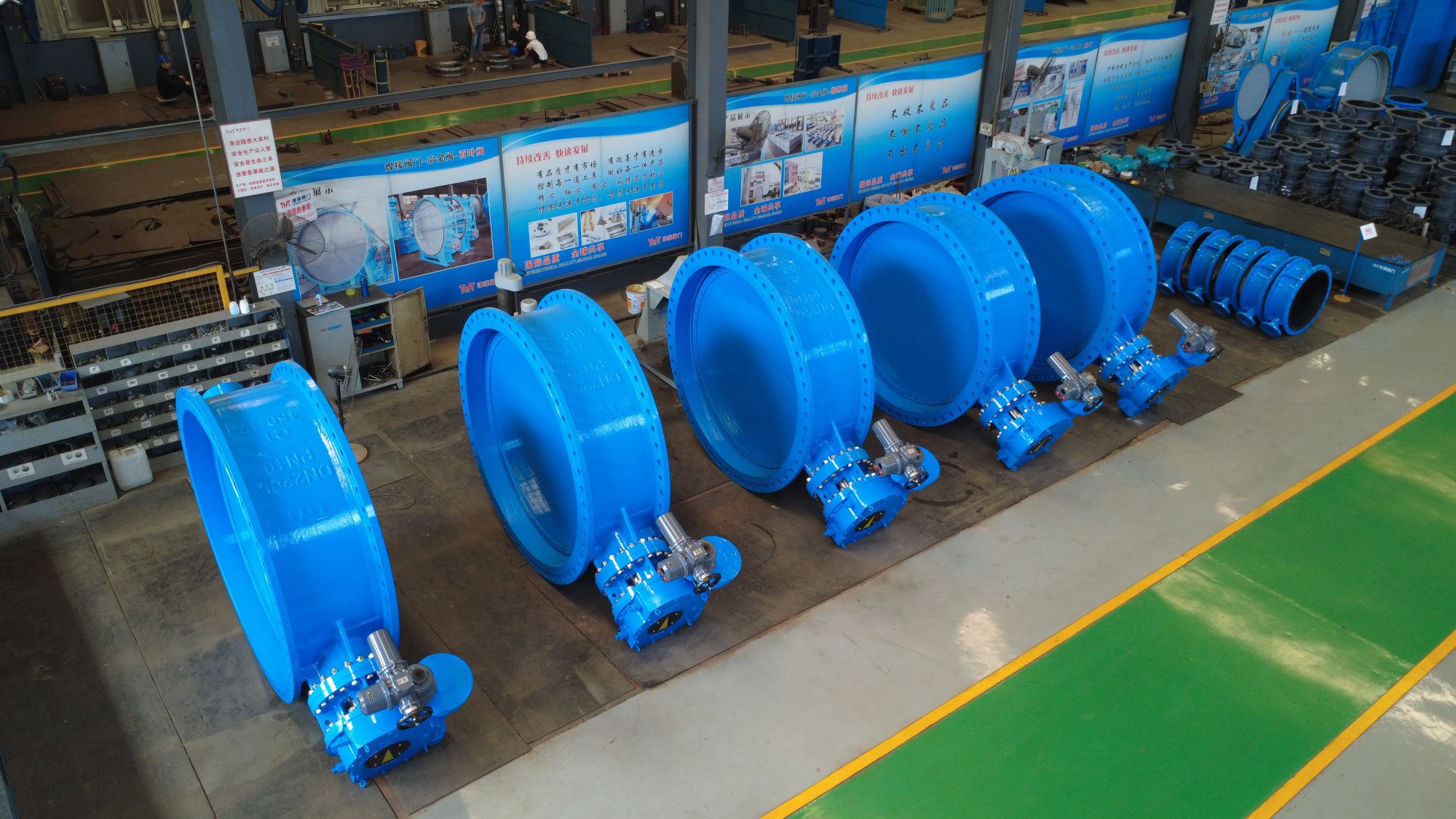
Selecting materials that can handle aggressive chemicals and wild temperature shifts isn't just about picking the toughest alloy on the shelf—it's a dance between corrosion resistance, thermal stability, and mechanical integrity. In environments where a single misstep could mean catastrophic failure, engineers often lean toward high‑nickel alloys like Hastelloy or Inconel, which form tenacious oxide layers that shrug off acidic attacks even when temperatures swing from cryogenic lows to furnace‑like highs. But the real art lies in understanding that no single property tells the whole story; a material might laugh at sulfuric acid at room temperature yet crumble when that same acid gets hot, so matching the specific media and thermal cycle is everything.
Beyond the usual suspects, advanced ceramics and fluoropolymers enter the picture when metals simply can’t cope. Silicon carbide, for instance, handles brutal abrasion alongside corrosive slurries at temperatures that would melt stainless steel, while PTFE linings provide a slick, almost universally inert barrier inside piping and vessels. Even composites get a seat at the table—carbon‑fiber reinforced PEEK combines lightweight strength with resistance to a broad swath of chemicals, though its upper temperature limit reminds you that every choice is a compromise. The trick is to weigh the operating window of each candidate against the actual process conditions, not just the extremes on a datasheet.
Often overlooked are the subtle interactions that happen when media and temperature conspire together—like chloride stress corrosion cracking that ambushes austenitic stainless steels under tension in hot, salty environments. That’s where duplex stainless steels or titanium can pull ahead, their microstructures tailored to sidestep the brittleness that comes with temperature‑driven phase changes. In the end, the best material choice emerges from a blend of hard data, field history, and a healthy respect for the unexpected, because out there in the real world, harsh media and temperature swings don’t read the manual.
How Seat and Seal Innovations Minimize Leakage and Extend Service Life
Traditional valves often suffer from gradual wear at the seating surfaces and seal interfaces, which leads to creeping leaks and unplanned downtime. Modern seat and seal designs tackle this root cause by integrating advanced materials like reinforced PTFE and metal-to-metal contact zones that resist deformation under cyclic pressures. By carefully engineering the contact geometry, these innovations create a more uniform stress distribution, preventing localized erosion and maintaining a tight shutoff even after thousands of cycles.
Beyond material upgrades, the seal’s ability to self-adjust plays a crucial role in long-term reliability. Live-loaded packing systems and spring-energized lip seals continuously compensate for thermal expansion and minor wear, ensuring that the sealing force remains consistent without manual retightening. This dynamic adaptation not only blocks leak paths but also reduces friction, so the actuator doesn’t have to work harder over time—saving energy and protecting downstream equipment from fugitive emissions.
Finally, the synergy between seat profiling and protective coatings extends service life by shielding critical surfaces from abrasive particles and corrosive fluids. For instance, a slightly offset seat design can wipe the sealing face clean during each operation, preventing buildup that would otherwise score the metal. Combined with hard-facing treatments like tungsten carbide overlays, these innovations drastically cut maintenance intervals and keep valves performing in demanding applications where leakage simply isn’t an option.
Evaluating Supplier Engineering Support Beyond the Catalog
A supplier's catalog might showcase an impressive array of products, but true engineering support is revealed only when you push past the glossy pages. It starts with how quickly and thoroughly their technical team responds to a complex inquiry. Do they simply recite datasheet values, or do they ask probing questions about your specific application, environmental conditions, and long-term performance goals? Genuine support means a willingness to dive into nuances that no standard document covers, offering tailored guidance that can save weeks of trial and error.
Another telling sign is the depth of collaboration available during the design phase. Can you schedule a call with a real engineer—not just a salesperson—to discuss uncommon integration challenges? Some suppliers will even run custom simulations or share empirical data from similar deployments, providing insights that transform a good design into a robust one. This level of engagement often uncovers potential bottlenecks early, helping you avoid costly redesigns and ensuring the final product operates reliably under real-world stresses.
Finally, evaluate how support evolves after the initial purchase. Engineering assistance that vanishes once the invoice is settled is hardly a partnership. Look for suppliers who offer ongoing firmware updates, proactive obsolescence management, and a genuine interest in field feedback. Those who treat your success as their own will regularly check in, share improvement opportunities, and stand behind their components when unexpected issues arise. That kind of commitment builds a foundation far more valuable than any line item in a catalog.
Real-World Performance Metrics That Matter for Critical Applications
When milliseconds can mean the difference between a sale lost and a customer retained, server response time quickly becomes the most brutal metric your application will ever face. We learned this the hard way monitoring a payment gateway during flash sales. The raw average told us everything was fine, but a closer look at the 99th percentile latency revealed that 1 in 100 users waited over four seconds—right when they were about to confirm payment. Those users didn’t just wait; they abandoned carts. For critical applications, the aggregate hides the outliers that actually hurt your business. So we stopped caring about averages and started optimizing for the worst real-world experiences. If your dashboard only shows mean response times, you’re flying blind.
Throughput and error rate are the twin pillars nobody talks about until the system collapses under a traffic spike. I recall a medical records platform that handled a steady 800 requests per second without breaking a sweat, yet crumbled at 1,200 during a regional health crisis. The culprit wasn’t the code—it was a database connection pool configured for a “typical” day. Real-world traffic doesn’t follow tidy curves; it slams your infrastructure with jagged, unpredictable demand. We shifted monitoring from requests-per-second to sustained throughput under load, and coupled it with a strict error budget: anything above 0.1% failure rate triggered an automatic fallback. When human lives or financial trust hang in the balance, your capacity metric has to mirror what users actually endure, not what your staging environment pretends is enough.
Then there’s the metric no one wants to name: user-perceived availability. It’s not the same as uptime. A cloud dashboard may glow green while a scattered subset of customers in a specific region, on a certain mobile carrier, face infinite spinners because a CDN node hiccuped. We ran synthetic checks from real user endpoints—not just data centers—and discovered our “99.99% available” service was actually breaking for 3% of users during peak hours. That gap is where reputations die. Tracking Real User Monitoring (RUM) data gave us a front-row seat to actual page-load times, JavaScript errors, and broken API calls as they happened. It forced us to redefine reliability from the outside in, optimizing for the messy, diverse, unforgiving reality of end-user networks. That shift in perspective cut our time-to-detection for regional outages from hours to under two minutes, and more importantly, kept users from feeling abandoned.
Installation and Maintenance Insights to Avoid Common Pitfalls
Many installation headaches trace back to skipping the pre-work that quietly determines long-term success. Dimensional checks need to go beyond the blueprint—thermal expansion, vibration tolerance, and even the type of foundation bolts can shift over time. A common oversight is treating the mounting surface as perfectly rigid; in high-cycle environments, micro-movements compound until alignment is lost. Spend the extra hour verifying material compatibility, especially when dissimilar metals meet in humid or corrosive settings. If instructions assume ideal conditions, pause and ask what happens when reality deviates—because it will.
Once operational, maintenance routines that hinge solely on calendar intervals create their own risks. A pump that runs intermittently may need far more attention than one that runs constantly, yet fixed schedules treat them identically. Smart operators track actual wear indicators: oil viscosity trends, thermal imaging patterns, or the subtle shift in noise frequencies. Training staff to spot early warnings rather than just follow checklists turns maintenance from a cost into a defense against cascading failures. The most expensive mistake often isn't the part that breaks—it's assuming the old failure mode will be the next one.
FAQ
Beyond just the price tag, pay close attention to the disc machining tolerances and how the offset geometry is engineered. A trustworthy supplier will openly discuss their leakage rate guarantees and have case studies showing performance under your specific media and cycling frequency.
The first offset shifts the stem slightly behind the disc face, while the second moves it to one side, creating a cam-like motion that lifts the seal away from the seat almost immediately upon opening. This minimizes friction and prevents the kind of scuffing that plagues concentric valves in high-cycle applications.
For corrosive or high-temperature services, the synergy between the seat material and coating is everything. A PTFE or reinforced PTFE seat paired with a nickel-plated or duplex stainless disc often outperforms generic rubber-lined setups. Always ask for compatibility charts, not just a simple “chemical resistance” claim.
Some suppliers only test the shell, skipping a true seat leakage test at low and high differentials. Requesting a documented hydrostatic and pneumatic test report per API 598 or EN 12266 ensures the valve will hold a tight bubble-tight seal in both directions, not just on a bench.
Vague specifications around bearing materials, lack of anti-blowout stem details, and unwillingness to provide torque values for your specific conditions. If they can’t explain how the disc alignment is maintained after years of use, it’s a sign their design priorities are short-term.
The best suppliers treat custom orders as a collaboration, not a one-off transaction. They’ll ask detailed questions about your piping layout, flow profiles, and operational duty cycles. Look for a track record of producing valves with non-standard face-to-face dimensions, special actuators, or exotic material combinations without hesitation.
The quality of the post-order engineering support. Even the best valve can fail if installed incorrectly. A supplier that offers comprehensive torque calculation, on-site commissioning assistance, and a clear warranty that doesn’t void due to common field adjustments is far more valuable than one that disappears after invoicing.
Conclusion
The shift to double eccentric butterfly valves has redefined what reliability means in flow control. By offsetting the disc from the stem and the stem from the seat center, these valves drastically cut friction during operation, leading to smoother torque profiles and reduced wear. This design becomes truly powerful when combined with material selections tailored for aggressive media and wild temperature swings—stainless steels, high-nickel alloys, and specialized elastomers allow the valve to shrug off corrosion and thermal cycling that would cripple lesser products. Equally critical are the seat and seal innovations: live-loaded, self-adjusting seals and fire-safe constructions not only minimize fugitive emissions but also extend service intervals well beyond traditional expectations.
Yet even the best-designed valve can underperform without solid supplier expertise. Look beyond glossy catalogs and evaluate how vendors handle engineering support—can they provide computational fluid dynamics models for your specific conditions, or quick-turn modifications when standard trims fall short? In critical applications, real-world performance metrics like cycle-life data under your actual pressures and temperatures matter far more than lab-spec reports. Finally, don’t overlook the practical side: proper installation techniques that center the disc without binding, and a maintenance program focused on periodic torque checks and seal inspections, ward off the most common field failures. A supplier who willingly shares these installation nuances and offers long-term service guidance becomes a genuine partner in keeping your process flowing safely.
Contact Us
Contact Person: Su Zhang
Email: [email protected]
Tel/WhatsApp: +86-25219206
Website: https://www.tht-valve.com/