

Distribution Box Suppliers in China: Who to Contact for Reliable Products
2026-11-18
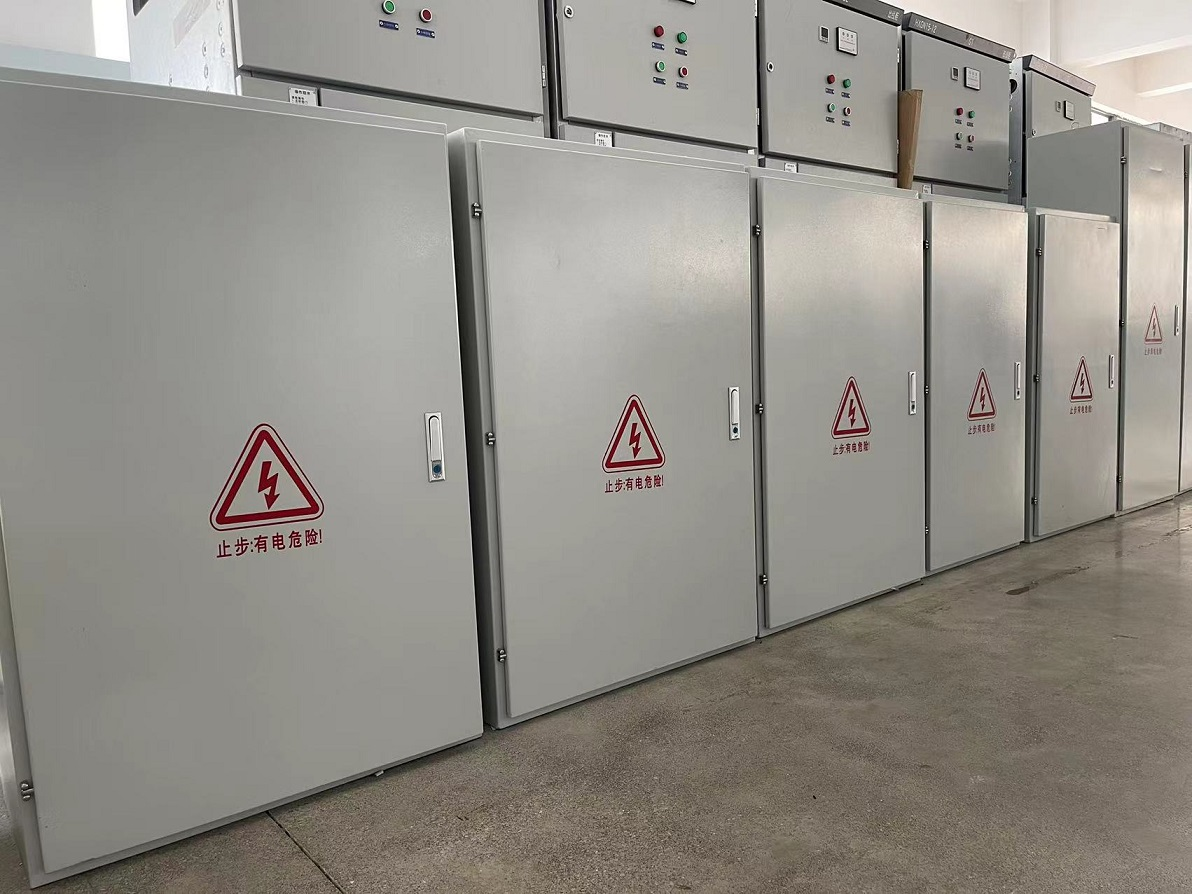
Sourcing distribution boxes from China shouldn’t feel like a blind test, yet too many buyers end up comparing photos instead of actual build quality. That’s exactly why this guide exists. We’ve cut through the supplier noise to highlight contacts worth your time, red flags to avoid, and the practical checks that reveal whether a factory can deliver consistently. One name that surfaced repeatedly for the right reasons is CNKEEYA, especially for buyers who need clear communication and enclosures that match the spec sheet. Keep reading for the full shortlist and the questions to ask before you place an order.
Inside the Industrial Clusters That Produce Most Distribution Boxes
Walk through the streets of Yueqing’s Liushi area and the first thing you notice is the rhythm of small workshops running in parallel: one shop feeds steel blanks into a punch press, another stacks finished enclosures by a loading dock, and a third is already wrapping pallets for export. The scale is not concentrated in a single mega-factory but spread across hundreds of family-run and mid-sized plants that have learned to swap parts, labor, and overflow work without formal contracts. That informal coordination keeps lead times short and lets buyers source a fully assembled distribution box without ever leaving a five-kilometer radius.
The same pattern shows up wherever distribution boxes dominate local output. Tooling makers, powder coating lines, hinge suppliers, and terminal block assemblers cluster close enough that design changes can be handled in days rather than weeks. A plant that wins a large order rarely builds everything in-house; it pulls together enclosures from one neighbor, doors from another, and small hardware from a shop that only makes screws and latches. This web of specialization looks fragile from the outside, but it absorbs demand swings better than a single vertically integrated factory because any link can be replaced quickly.
Quality varies across these clusters more by habit than by equipment. Some shops still rely on hand-finished welds and manual taping for paint masking, while others run automated bending cells and track batch numbers on every panel. Buyers who spend time on the ground learn to read the subtle signals: how clean the tooling area is, whether inventory is labeled or just piled by the wall, and how a workshop handles a short-notice sample request. Those details reveal far more than a certificate hanging in an office.
How to Spot a Factory That Won’t Disappear Mid-Order
Ask for paperwork that ties the sales conversation to a real address: a business license, a lease or utility bill, and a landline number that rings to an actual desk. If the address leads to a virtual office or a residential flat, treat that as your first concrete warning. A quick live video call often tells you more than a polished website. Ask them to walk into the production area and show you the floor, raw materials, and packing tables without a script. Pre-recorded clips, dim lighting, or a camera that stays pointed at a wall usually mean there is no production floor at all.
Payment terms expose a lot. A factory on the edge of disappearing will push for a large deposit and may offer an unusually low price or a delivery date that no one else can match. Insist on a smaller deposit, a clear inspection window, and the balance after goods are checked. Ask for a couple of recent shipment records and client references that you can actually contact. Stable factories are rarely desperate; they will tell you their current production schedule, name the machine types on the floor, and explain why a certain material is delayed. If every answer is “no problem,” you are likely talking to a middleman who cannot deliver.
Before you send money, spend a little on an independent inspection. Even a basic audit will confirm whether the business has the workers, equipment, and documents to back up its story. Look for consistency: the company name on the bank account should match the license and the contract, and the person who signs off should know the factory floor. Well-run factories often have small rough edges, like worn floor markings or older machines still in use, while a front operation tends to look oddly perfect and empty. If the story changes between the sales team, the factory staff, and the paperwork, stop the order before the deposit leaves your account.
The Certificates You Should Actually Verify Before Paying a Deposit
A deposit is often handed over long before you get the keys, and by then it is usually too late to discover that a property has no valid safety record. The paperwork you should ask to see is rarely about how the place looks; it is about whether the wiring, gas lines, and tenancy arrangements are actually lawful and current.
Start with the gas safety certificate, sometimes called a CP12, which a landlord must renew every year and have issued by a registered engineer. Next, check the electrical installation condition report, which should be no older than five years and will flag serious faults that are easy to hide behind fresh paint. A current energy performance certificate is worth a quick look too, not just for efficiency ratings but because its absence can signal a landlord who skips routine obligations.
Finally, confirm that your deposit will be protected in one of the official tenancy deposit schemes before you transfer any money. Ask for a copy of the certificate or registration details and check the dates on every document rather than accepting a verbal assurance. If any certificate is missing, expired, or dated after your request, treat that as a reason to pause instead of a minor paperwork delay.
Pricing, Lead Times, and the Fine Print Nobody Reads
Most quotes you get back look straightforward — until you realize the unit price was for a quantity you'd never order, and the actual lead time starts only after a deposit clears. We list our base rates honestly, but if your project involves custom tooling or unusual materials, expect a few days of back-and-forth before a real number lands in your inbox.
Lead times shift for reasons that rarely show up on a calendar. A supplier's “two weeks” might mean two weeks after the blank is cut, not after you approve the drawing. We try to give you a window that includes queue position, not just machine time. If you need something sooner, ask about splitting the run or paying a rush fee — both are cheaper than redoing a late delivery.
The fine print is where cancellations, tolerances, and packaging get quietly redefined. One clause about “industry standard variance” can turn a ±0.1mm part into ±0.3mm. Before you sign, check whether the price includes deburring, inspection reports, or export crating. We'd rather you flag three awkward questions now than discover a surprise invoice after the pallet arrives.
From Prototype to Container: Keeping Quality Consistent
The shift from a local prototype to a container rarely fails in the obvious places. It fails in the quiet assumptions: a file path that used to be writable, a port binding that relied on a specific host, or a base image that drifted between builds. Treating the container as a first-class artifact means locking those details down early. Pin the runtime, keep dependencies explicit, and never rely on a developer's machine to fill in missing config.
Quality stays consistent when validation happens against what actually ships. Unit tests are useful, but they don't catch a container that starts with the wrong entrypoint or can't reach its database after network policies tighten. Running a short smoke test against the packaged image, then promoting that same image through each environment, removes most of the last-mile surprises. The goal is a predictable handoff: the prototype may be rough, but the container should behave like a known quantity.
Long-Term Partners vs. One-Off Deals: What Changes
A one-off deal tends to live inside a tight frame: a price, a deadline, a definition of done. Long-term work quietly breaks that frame. Conversations drift toward material-cost swings, feedback loops that stretch past delivery, and the question of whether scope can bend without turning into a dispute. The contract no longer acts as a shield; it becomes a working document that both sides actually revisit.
Pricing changes shape as well. In a transactional relationship, every quote feels like a contest and the buyer assumes the margin is inflated. Once the relationship has a longer memory, that posture tends to soften. A partner may expose real cost drivers, recommend a cheaper option that lowers their own revenue, or absorb early engineering effort without an invoice—because the next twelve months outweigh the next payment date.
What rarely gets mentioned is how problems move. A vendor usually hears about a defect through a formal claim. A partner gets a rough photo from the line, a quick message before the issue hardens into a crisis. That informal channel is not sloppy boundaries; it signals that escalation has become cheap. With that shift comes a different accountability—less about warranty clauses, more about shared exposure.
FAQ
Confirm that the factory actually builds enclosures and internal busbar layouts rather than only assembling imported parts. Ask whether they have in-house punching, bending, and powder coating. Also request the IP rating test report and a list of breakers or busbars they have used in recent export orders.
Ask for a live video walk through the production floor and request to see the raw sheet metal area, not just the finished goods shelf. A manufacturer can usually show tooling, stamping dies, bending machines, and a quality control station. Trading companies tend to send brochures and sample photos but hesitate to show ongoing production for a specific order.
Zhejiang and Guangdong are the two main clusters. Wenzhou and Yueqing in Zhejiang are strong for standardized enclosures, modular boxes, and small circuit breaker panels. Guangdong, especially around Foshan and Dongguan, is often better for customized sheet metal work, faster export handling, and easier access to component suppliers.
For North America, look for UL 50 or UL 508A where applicable, and make sure the factory understands the difference between listed and recognized components. For Europe, CE marking with a Declaration of Conformity, EN 61439 compliance, and sometimes a CB test report matter more than a generic certificate. Ask for the certificate number and verify it on the issuing body's website.
Many mid-sized factories accept 50 to 200 units for a first custom order, though heavily modified enclosures may start higher. Standard boxes can ship within 10 to 20 days. Custom designs with new tooling, special powder coating, or pre-fitted busbars often take 25 to 40 days. Be suspicious of suppliers who promise complex custom work in under a week.
Request a pre-shipment inspection from a third party such as SGS, TUV, or a local sourcing agent. Ask the factory to send a sample with the actual breaker brands and busbar layout you specified, not a similar-looking alternative. A short video showing continuity testing, torque checks, and packaging for your exact order is often more useful than a polished company introduction video.
Specify the enclosure material and thickness, IP rating, dimensions, mounting type, incoming and outgoing breaker sizes, busbar rating, cable entry positions, and the target market standards. If you only ask for a distribution box without these details, suppliers will either price the cheapest possible version or quote a wide range that is hard to compare.
The biggest issues are unclear IP ratings, undersized busbars, and mixed breaker brands that look similar but perform differently. Some suppliers also switch steel thickness after approval. Always fix the exact busbar cross-section, breaker part numbers, and paint specification in the purchase order, and keep a signed sample as the reference for inspection.
Conclusion
Sourcing distribution boxes from China often starts in the industrial belts around Wenzhou, Yueqing, and the Pearl River Delta, where metal fabrication, molding, and component supply sit side by side. The density sounds reassuring, but it also means factories can look identical on a trade platform. What matters more is whether the supplier owns its tooling and keeps an in-house assembly line rather than outsourcing enclosures and busbars at the last minute. Visits or live video walkthroughs reveal whether production is real, but a factory that assigns a single point of contact for QC updates and shares batch photos without being chased tends to be less likely to vanish when an order runs into trouble.
Before sending a deposit, verify the certificates that matter for the destination market: CE, UL, or IEC compliance should match the exact product range, not just a similar model number. Pricing that looks unusually low usually shifts cost into thinner steel, weaker powder coating, or looser tolerances. Ask for a written breakdown of lead time, payment terms, and penalty clauses for late shipment; most disputes start in the fine print. Once production begins, insist on pre-production samples, in-process inspection, and a final loading check. A long-term partner will usually offer better consistency and priority during material shortages, while one-off deals demand tighter inspection at every stage.
Contact Us
Contact Person: Queenie
Email: [email protected]
Tel/WhatsApp: +86 15558806611
Website: https://www.cnkeeya.com