
Custom River Channel Dredging Manufacturer: Tailored Solutions for Efficient Waterway Maintenance
2026-05-06
Every waterway tells a different story—shifting sediments, tricky bends, or tight urban spaces. Standard dredgers often struggle to keep up. That’s where YaKai Dredger steps in. Instead of forcing your project into a one-size-fits-all mold, we design custom river channel dredging solutions that tackle your exact challenges. The result? Smoother operations, less downtime, and a waterway that stays navigable longer. Let’s explore what tailored dredging can do for you.
Crafting Dredgers Around Your Waterway's Unique Profile
Every waterway tells its own story—sediment composition, current strength, width variations, depth fluctuations, and even seasonal changes all write a unique narrative that standard dredging equipment often fails to read. When you start with a thorough hydrographic survey and geotechnical analysis of your site, the numbers begin to reveal patterns: perhaps your canal accumulates fine silt that compacts differently than the coarse sand in a neighboring river, or your tidal inlet shifts its bed load during monsoon months. Ignoring these quirks leads to inefficiency, excessive wear, or incomplete clearing, so the first step in crafting a dredger is acknowledging that no two profiles are alike and that your machinery must be molded around the waterway, not the other way around.
From hull shape to pump specifications, customization touches every component. A narrow, winding channel might demand a compact, highly maneuverable cutter suction dredger with a low draft to avoid grounding, while a wide, deep port basin could benefit from a trailing suction hopper dredger with long sweep arms and a large hopper capacity to minimize cycle times. The material itself dictates cutter head design and pump impeller wear resistance—abrasive gravel calls for hardened alloys and replaceable wear plates, whereas sticky clay might require water injection jets to fluidize the bed. Even automation gets tailored: a dredger working in fast currents needs dynamic positioning that constantly recalibrates, but one in a stagnant lake might prioritize precise depth control with minimal operator intervention.
Beyond the metal and hydraulics, the operational rhythm of the dredger must align with the ecosystem and the economic tempo of the waterway. In a sensitive mangrove creek, the dredging schedule might pulse gently during low tide to protect fish spawning, while a busy shipping lane demands round-the-clock capability with noise-dampened engines and zero-spill transfer systems. The outcome is a machine that doesn't just work—it adapts, becoming almost invisible in its efficiency because it was purpose-built for the swirls, silts, and surges of that one specific stretch of water. This level of tailoring transforms a capital expense into a long-term partner for the waterway's health and utility.
Advanced Engineering That Cuts Through Silt and Delays
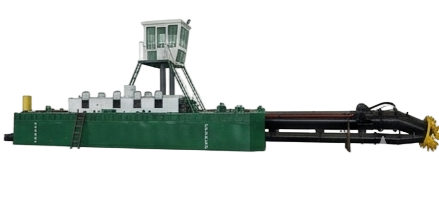
When projects grind to a halt due to thick silt or unexpected ground conditions, conventional tools often fall short. This advanced engineering approach tackles such challenges head-on, using a specialized cutting head geometry that parts through fine-grained sediment without clogging. By maintaining continuous spoil removal even in sticky, low-cohesion materials, downtime is kept to a minimum—no more endless cleaning cycles or stalled drives.
Beyond the physical cutting action, real adaptability comes from fine-tuned thrust and torque control. The system automatically adjusts to varying densities, preventing overload while sustaining penetration rates that would punish lesser machinery. Whether the silt layer is compacted from years of consolidation or freshly deposited and soupy, the equipment finds its rhythm and holds it. Operators see a noticeable drop in the frustration of on-the-fly recalibrations, which means predicted timelines stop slipping.
What truly sets the design apart is how it handles the domino effect of delays. By integrating wear-resistant alloys at friction points and sealing critical joints from abrasive infiltration, maintenance windows stretch further apart. This isn’t about brute force—it’s about smart, sustained progress that keeps the whole project team from staring down a schedule that’s slid months past its original deadline. In the end, the silt doesn’t get a vote, and the delays become a distant memory.
Greener Dredging Methods Without Sacrificing Performance
Traditional dredging often leaves a sizable environmental footprint, stirring up sediment plumes that smother aquatic habitats and release buried contaminants. A quieter revolution is underway, however, as contractors blend advanced monitoring with redesigned equipment. Real-time turbidity sensors now let operators adjust suction intensity and cutter head rotation on the fly, keeping suspended solids tightly in check. Paired with closed-loop silt curtains that adapt to current shifts, these systems sharply reduce off-site impacts without slowing production. Early adopters report that sites once deemed too sensitive for conventional work are now accessible, all while staying within permit thresholds that would have been unthinkable a decade ago.
Vessel engineering is also pivoting toward electrification and biofuels, cutting both emissions and noise. Hybrid dredgers running on battery power for fine positioning and low-load trimming eliminate the constant drone of diesel engines, a stealth advantage that minimizes disturbance to marine mammals during critical migration windows. Meanwhile, water-injection and eco-friendly cutter heads churn less, relying on precise fluid dynamics to dislodge sediments rather than brute force. These innovations don't just tick a sustainability box—they actually extend equipment life by reducing wear and fuel burn, a rare case where stewardship and the balance sheet pull in the same direction.
The real leap, though, comes from treating dredged material as a resource rather than waste. In-water separation units now extract clean sand and gravel on-site, directly offloading them for shoreline restoration or construction. Fine sediments, once destined for offshore disposal, are being repurposed into engineered topsoil or wetland nourishment after passive dewatering. This circular mindset not only slashes transport miles and disposal fees but also rebuilds coastal resilience. Projects that embrace such full-loop planning often find themselves with an unexpected marketing edge—stakeholders increasingly reward operations that leave the ecosystem measurably better than they found it.
From Design to Deployment: Support That Never Stops
The journey from a rough sketch to a fully functional product is rarely linear, but having a team that sticks with you through every twist makes all the difference. We don't just hand off a project and vanish — we stay involved from those early brainstorming sessions, when ideas are still half-formed, all the way to the moment your users start clicking around. Our support is woven into each phase, so you're never left wondering who to call when a design decision needs rethinking or a deployment hits a snag.
What sets this apart is the absence of hard handoffs. There's no awkward silence between the design approval and the first line of code; our designers and engineers work side by side, ensuring the vision doesn't get lost in translation. And when launch day arrives, we're right there monitoring server loads, tweaking UI elements based on real-time feedback, and fixing the tiny glitches that only show up at scale. The support doesn't taper off when the confetti settles — it grows into a partnership, long after the initial deployment.
Too often, projects are treated like one-off transactions, with support tagged as an afterthought. That's not how we operate. We've found that the most successful outcomes happen when the people building your product genuinely care about its longevity. Whether it's a sudden pivot in strategy or a quiet request for design tweaks six months in, you'll find the same urgency and creativity that sparked the early work. That continuity — the sense that someone truly has your back — turns a service into a relationship, and a product into something that endures.
Tackling Tricky Currents and Tight Spaces with Ease
Navigating through unpredictable waters often demands quick reflexes and smart adjustments. When currents shift unexpectedly, the key is to maintain a steady core while letting your equipment do the heavy lifting. A slight tilt of the fins or a subtle weight shift can mean the difference between fighting the water and moving with it. Practicing in controlled environments builds the muscle memory needed to react without overthinking, turning chaotic moments into smooth transitions.
In confined spaces, economy of motion becomes essential. Rather than broad, sweeping strokes, compact movements allow you to maneuver without stirring up silt or bumping into obstacles. It’s about choosing the right tool for the task—sometimes a gentle fingertip push off a wall is more effective than a full kick. Staying relaxed and aware of your surroundings transforms tight squeezes from intimidating to manageable, even enjoyable.
Keeping Your Channels Clear for Less Over Time
Maintaining crystal-clear reception doesn’t have to drain your wallet. By focusing on strategic, low-cost upgrades and a little routine care, you can keep your channels sharp without recurring expenses. Simple habits like repositioning your antenna to account for seasonal signal changes or using quality coaxial cable can prevent gradual degradation. It’s about working smarter, not spending more, so your viewing remains interruption-free as the months roll on.
Think of it as a long-term investment in stability. Instead of chasing premium packages or extra hardware, you can rely on a setup that’s built to withstand interference. Regularly scanning for new channels and clearing out digital clutter helps your tuner lock onto the strongest signals. Over time, these small acts add up, ensuring you’re not battling pixilation or dropouts during your favorite shows.
FAQ
They design and build specialized dredging machines to match the exact needs of a waterway, handling everything from sediment removal to vegetation management, so channels stay open and safe.
Off-the-shelf dredgers often waste time and fuel in non-standard rivers. Custom designs account for the channel's width, bottom material, and even access restrictions, which means less mess and more done per shift.
By adapting the cutter head, pump power, and discharge method to the site, maintenance becomes predictable. You aren't fighting the machine—it's built for the conditions, cutting downtime and repeated passes.
You can get a modified cutter suction rig for rocky bottoms, a small-footprint amphibious unit for narrow creeks, or a hopper dredger with silt curtains for environmentally sensitive stretches—pretty much whatever the project demands.
You're not just buying hardware. They typically offer engineering surveys, crew training, and follow-up adjustments until the dredger operates like a natural extension of the waterway maintenance plan.
Yes, that's the point of customizing. One design might use a surface-drive propulsion for skinny water, while another digs below 20 feet. Often, a single hull can be set up with interchangeable tooling to cover both extremes.
It depends on complexity, but most dedicated manufacturers deliver a fully proven vessel in 10 to 14 months. A straightforward workboat-based conversion might take half that.
Definitely. With features like closed-circuit sediment handling and low-turbidity cutters, they can clear contaminants or reshape habitat without turning the river into a mud slick.
Conclusion
Every waterway brings its own set of challenges—shifting currents, stubborn silt deposits, and environmental sensitivities that off-the-shelf equipment simply can't address. That's why our approach starts with a deep dive into your river's specific profile: we study flow patterns, sediment composition, and seasonal variations to design dredgers that fit like a glove. Advanced engineering ensures these machines cut through dense silt without getting bogged down, so your maintenance schedule stays on track even when conditions get tough. We've also committed to greener methods, integrating fuel-efficient systems and reduced-emission technologies that keep performance high while respecting the ecosystem around you.
The real difference lies in how we support your project from the first sketch to the final deployment—and beyond. Our engineers work closely with your team, tackling everything from tight bends to strong currents, ensuring the dredger navigates tricky spots with ease. Maintenance doesn't end at delivery; we provide ongoing technical assistance that helps you learn the quirks of your equipment, so you can keep channels clear and efficient for the long haul. Over time, the tailored design and durable components translate into fewer operational headaches and lower lifetime costs. It's not just about moving sediment—it's about building a reliable, cost-effective solution that keeps your waterway open, season after season.
Contact Us
Contact Person: Nancy
Email: [email protected]
Tel/WhatsApp: (+86) 13869631558
Website: https://www.yakaidredger.com/