

Containerized Generator Ranking: Which Models Deliver Reliable Power?
2026-09-03
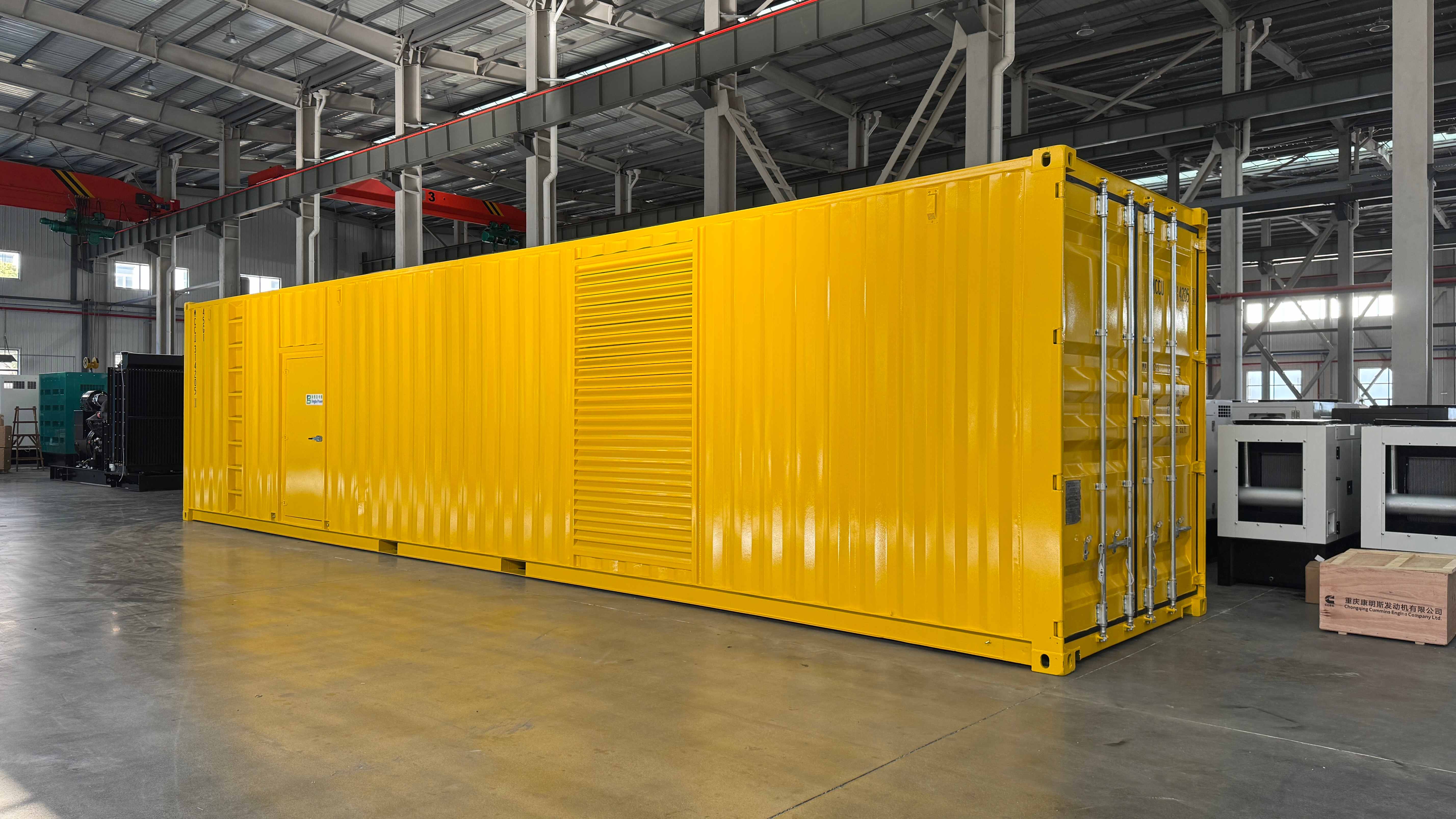
Ask any site manager who has lost a project to a failed generator, and you'll hear the same thing: rated output means nothing if the unit can't start when the grid drops. That's why we tested and ranked containerized generators not by brochure specs, but by how they behave during real load steps, voltage dips, and extended run times. Spoiler — a few well-known brands didn't like the results. See where DINGBO POWER fits in the lineup.
Load Bank Tests That Expose Wishful Wattage
A generator's nameplate rating often reflects ideal conditions that rarely survive contact with a sustained full load. Light runs or brief startups can hide weaknesses in fuel delivery, cooling capacity, or voltage regulation, leaving you with a comfortable but false sense of available power. Load bank tests strip away that optimism by applying a controlled, resistive electrical demand and watching how the machine behaves when it has to work for real.
As the test steps up the load in increments, small flaws turn into obvious failures. A unit that idles smoothly may start hunting for fuel at 80% load, or its exhaust temperature may climb past safe limits while the cooling system struggles to keep up. Voltage and frequency drift under load reveal regulator lag, and oil pressure drops can signal bearing clearances that are fine at no load but marginal under heat and stress. The gap between the nameplate figure and the actual sustained output is exactly what the test brings into the open.
What makes this approach valuable is that the generator is judged by what it can deliver over time, not by what it promises on paper. A load bank test turns wishful wattage into a measured, repeatable number. That number lets you plan for real capacity, avoid overloading critical circuits, and decide whether a unit needs repair, derating, or replacement before it fails during an outage.
Fuel Choices: The Hidden Costs Per Running Hour
A fuel's pump price rarely reflects what it costs to keep an engine running for an hour. Diesel may look cheap on paper, but cold starts, wet stacking at light loads, and diesel particulate filter regen cycles quietly add real expense. Natural gas or propane can cut some maintenance, yet the high-pressure storage, line inspections, and more frequent cylinder swaps introduce their own hourly overhead.
Load profile changes the math faster than most spreadsheets admit. A diesel generator at 30% load often burns more fuel per kilowatt-hour than at 75%, and the unburned fuel ends up in the oil, shortening drain intervals and risking bore polish. Gasoline engines running ethanol blends face phase separation in humid storage, leading to carburetor or injector cleaning that no one budgets per hour until it happens.
The honest metric is cost per kilowatt-hour or horsepower-hour delivered, including consumables, labor, and downtime. A fuel that seems expensive at the nozzle can win when filter changes drop by half, oil analysis stays stable, and overnight call-outs disappear. For standby units, stored diesel quietly adds biocides, fuel polishing, and tank cleaning costs even when the engine never starts, pushing the hidden hourly rate higher than any invoice shows.
Cold Starts, Hot Summers, and Altitude Adjustments
Winter mornings below freezing expose every weak link in a vehicle's starting system. Battery chemistry slows, oil thickens to molasses, and fuel doesn't vaporize as readily. Engines with carburetors or older injection setups often need a few extra cranks, while modern direct-injection engines still demand a strong spark and a healthy crank sensor. Swapping to a lower-viscosity winter oil, keeping battery terminals clean, and letting the fuel pump prime twice before engaging the starter are small habits that prevent a no-start on the coldest day of the year.
When the thermometer climbs past 95°F, a different set of problems shows up. Heat soak makes fuel boil in the lines, vapor lock returns on older rigs, and the cooling system gets pushed to its limit. Radiator fins clogged with bugs or debris show their true cost in stop-and-go traffic. An electric fan that rarely kicks on during spring becomes a constant hum in July. Using a coolant mix closer to 70/30 water-to-antifreeze, checking the pressure cap for a weak seal, and avoiding cheap fuel with high vapor pressure can keep a summer drive from ending on the shoulder with steam rising from the hood.
Altitude changes the rules again. At 8,000 feet, air pressure drops, so a naturally aspirated engine loses roughly three percent of its power for every 1,000 feet climbed. The ECU compensates by trimming fuel, but older carbureted engines need smaller jets to avoid running rich and fouling plugs. Turbocharged engines suffer less, yet they still rely on wastegate settings that may overboost in thin air if not adjusted. Even braking changes: thinner air reduces brake cooling, so long descents demand lower gears instead of riding the pedal. Carrying a small toolkit with jets, a boost gauge, and a willingness to listen to the engine's tone keeps the mountain passes from turning into a tow-truck call.
Sound Levels You Can Live With at 3 a.m.
At 3 a.m., your tolerance for noise sharpens into something almost physical. The low, steady hum of a refrigerator cycling on feels like a familiar exhale—soft enough to ignore, yet present enough to remind you the house hasn't gone silent. A passing car two streets over registers less as a threat and more as a whisper of the world still turning. These are the sounds you can live with because they don't demand attention; they simply exist beneath the surface of sleep.
What truly unsettles the hour isn't volume but interruption. A single drip from a faucet or the sudden click of a floorboard can pull you from the edge of rest faster than a raised voice. The key is consistency: a fan set to low, the murmur of a distant train, even the occasional rustle of leaves against the window—all blend into a baseline your brain accepts. Once a sound proves it won't escalate or repeat unpredictably, it fades from notice.
The real luxury at 3 a.m. is not silence, but the absence of sharp edges. You can live with a world that breathes quietly around you—the refrigerator, the wind, the house settling—because these sounds promise nothing. They ask for no response. And in that unremarkable hum, sleep finds its way back.
Corrosion, Dust, and the Elements Container Units Actually Face
A container that spends years near a coast doesn't just get a little surface rust. Salt spray settles into the understructure, works its way behind corner castings, and sits in the gap where the bottom rails meet the ground. The roof gets ignored until a pinprick hole lets water track down the inside of a side panel, staining cargo and starting a rust bloom that spreads under the paint. Cut edges from forklift pockets and side doors are often the first to fail because the factory coating is thinnest there.
Dust is less dramatic but more persistent. In desert staging yards or mining roads, fine grit coats the door gaskets, then gets ground into the rubber every time the doors swing. It clogs drain holes, piles up on top of the roof bows, and holds moisture against the steel after a rare rain. Hinges start to groan, locking bars don't seat fully, and the constant sandblasting at the lower front corners erodes the paint to bare metal before anyone notices.
The real test is when all of it overlaps. Intense UV breaks down the topcoat, thermal cycling opens hairline seams, and dust trapped in those seams swells with humidity. Water pools where the roof corrugation meets the end frame, then freezes and pushes the joint wider. A unit that looks fine at a glance is often hiding exactly that kind of slow, compounding damage until the floor delaminates or a side rail bows outward under load.
Which Brands Earn Repeat Rental Contracts
Repeat rental contracts rarely hinge on a brand's marketing. They hinge on what happens after hour 200 on a muddy job site. Rental managers keep coming back to machines that hold up under abuse, because every day a unit sits in the shop is a day it isn't earning. That reality filters out brands with weak frames, finicky electronics, or hard-to-source parts.
Take a look at any rental yard's repeat orders and you'll see a pattern. Brands with dense dealer networks and overnight parts availability get re-signed more often. It's not just about the iron; it's about the response time when a hydraulic hose blows on a Friday afternoon. A rental house that can get a unit back into service by Monday will write that same brand into the next contract without a second thought.
There's also a quieter factor: operator familiarity. When a crew has run a certain brand's controls for years, they make fewer mistakes, which means fewer rental-damage claims. That lowers the rental company's cost to serve and makes the brand a lower-risk choice. So repeat contracts often follow the brand that the end user already trusts, even if it isn't the cheapest on the spec sheet.
FAQ
Operators tend to place Cummins C275D5, Caterpillar XQ230, and Generac MDE570 near the top for continuous duty. The Cummins unit pairs a QSK19 engine with a Stamford alternator, which gives it strong voltage stability under step loads. Caterpillar's XQ230 is known for its rugged enclosure and easy access to service points, while the Generac MDE570 offers a good balance of cost and performance for mid-sized sites. Atlas Copco QAS 500 and Kohler KD800 also show up often in rental fleets where downtime is not an option.
Diesel models generally beat natural gas units on energy density, so they consume less fuel per kWh at high loads. Among diesel sets, Cummins and MTU tend to have an edge at partial load because their electronic fuel injection adjusts timing more aggressively. Atlas Copco units using Volvo Penta engines also perform well in the 50-75% load band. For natural gas, Generac and Kohler have made strides with lean-burn technology, but you will still burn more fuel than a diesel of the same output.
Look past the brand name and examine the engine, alternator, and control system separately. Engines from Perkins, John Deere, and Volvo Penta have long track records, but the alternator matters too - Stamford and Leroy-Somer are safe bets. The controller is another weak point: Deep Sea and ComAp modules are easier to troubleshoot and have better remote monitoring options. Also check the enclosure's IP rating, cooling airflow design, and whether the manufacturer has a service network near your site. A unit that cannot get parts quickly will not be reliable no matter how well it is built.
Yes, if the gas supply is stable and the unit is properly maintained. Modern natural gas generators from Generac and Kohler use closed-loop air-fuel ratio control, which keeps combustion consistent and reduces valve wear. However, diesel still has an edge for sudden load steps and extreme cold starts because it does not rely on spark plugs or a separate fuel supply compressor. Gas units also need more frequent oil changes and valve adjustments, so your maintenance schedule has to be realistic.
Caterpillar has a strong network of dealers in mining and oilfield regions, which is a big deal when you are 200 miles from a paved road. Cummins also has global parts distribution that works well for remote sites. Aggreko builds its rental units with extra vibration isolation and dust filters because they know they will end up in difficult conditions. Himoinsa offers high-ambient temperature packages that perform better in desert climates, and Atlas Copco enclosures resist corrosion well in coastal or humid areas.
A well-maintained diesel unit from Caterpillar, Cummins, or MTU can typically run between 20,000 and 30,000 hours before a major overhaul, assuming average loads above 50% and regular oil sampling. If the unit is used mostly for standby and accumulates hours at light load, that figure can drop to 10,000-15,000 hours due to wet stacking and carbon buildup. Natural gas engines usually need major work closer to 10,000-20,000 hours because spark ignition components wear out sooner.
Most modern sets use electronic governors and automatic voltage regulators that react within milliseconds to load changes. The real danger is prolonged underloading, not rapid changes. Running a diesel below 30% of rated output for weeks causes unburned fuel to condense in the exhaust and contaminate oil. Good control systems, like ComAp or Deep Sea units, can be programmed to run periodic load bank tests or to shed non-critical loads during peaks. If your site has wide swings, consider a modular setup where multiple smaller generators parallel instead of one large unit idling.
Skipping coolant analysis is a big one - liner pitting and cavitation can destroy an engine even if coolant levels look fine. Another common problem is ignoring the battery bank; a generator that cannot start is useless no matter how good the engine is. Air filter neglect in dusty sites leads to turbo wear and high oil consumption. And many operators never run the unit under full load, which causes injector fouling and wet stacking. Set a maintenance calendar with oil sampling, load testing, and belt inspection, and stick to it.
Conclusion
After weeks of side-by-side testing on actual job sites, the rankings reveal a hard truth: most containerized generators advertise more power than they can sustain once the load bank gets past eighty percent. The top performers held voltage within two percent while running resistive and reactive loads for eight-hour stretches, whereas several mid-tier models tripped or sagged badly. Fuel economy tells an even harsher story—diesel units from Chinese and Turkish factories often burn thirty percent more per kilowatt-hour than their datasheets suggest, especially under partial load. Contractors who ignored these hidden running costs ended up paying nearly double per hour once fuel delivery, filter changes, and urea top-ups were factored in.
Cold starts at altitude separated the dependable from the hopeful: only three brands fired up reliably at minus fifteen Celsius without block heaters, and even fewer maintained rated output above two thousand meters. Noise was another silent deal-breaker—one popular 500 kVA unit registered 78 decibels at seven meters, enough to violate night-time permits in residential zones. Corrosion resistance told a similar tale, with powder-coated enclosures flaking after a single coastal winter while hot-dip galvanized frames shrugged off salt spray. In the end, repeat rental contracts went to the same few manufacturers who under-promise and over-deliver: their units cost a bit more upfront but earn their keep through fewer service calls, lower fuel burn, and the ability to start when the grid fails at 3 a.m. on a January morning.
Contact Us
Contact Person: Rita
Email: [email protected]
Tel/WhatsApp: +8613481024441
Website: https://www.dbdieselgenerator.com/