

China's Top 10 Ground Mount Solar Racking Suppliers: A Comprehensive Guide
2026-06-21
Choosing the right ground mount solar racking system can make or break a utility-scale project. With China dominating global solar manufacturing, navigating the top suppliers is no small task. This guide cuts through the noise to spotlight ten standout manufacturers shaping the industry—including Topfencesolar, a name gaining traction for its durable designs and smart engineering. Whether you're sourcing for a massive installation or a compact commercial array, these picks blend reliability, cost-efficiency, and innovation. Read on to discover which supplier aligns best with your energy goals.
What Sets Ground Mount Racking Apart?
Unlike rooftop setups, ground-mounted systems aren't shackled to the angle or direction of a structure. You can position panels at the perfect tilt and orientation to soak up every possible ray, which often means a noticeable bump in daily energy harvest. There's also the freedom to place them in wide-open spaces where shade from trees or neighboring buildings isn't a constant battle, so your array stays productive from dawn till dusk.
Maintenance becomes a breeze when everything's at ground level. No scrambling up ladders with a bucket and squeegee—just walk up and wipe off dust, snow, or debris in minutes. That easy access also simplifies inspections and repairs, trimming down long-term upkeep costs. Plus, air circulates freely around the panels, keeping them cooler and squeezing out a bit more efficiency on hot days.
Another big draw is the clean slate approach. You're not working around roof penetrations, aging shingles, or load limits. Installers can design the mounting structure from scratch, using sturdy steel frames anchored deep into the earth. This often results in a tougher, more durable framework that holds up better over decades, with no worries about compromising a perfectly good roof membrane.
A Closer Look at China's Manufacturing Landscape
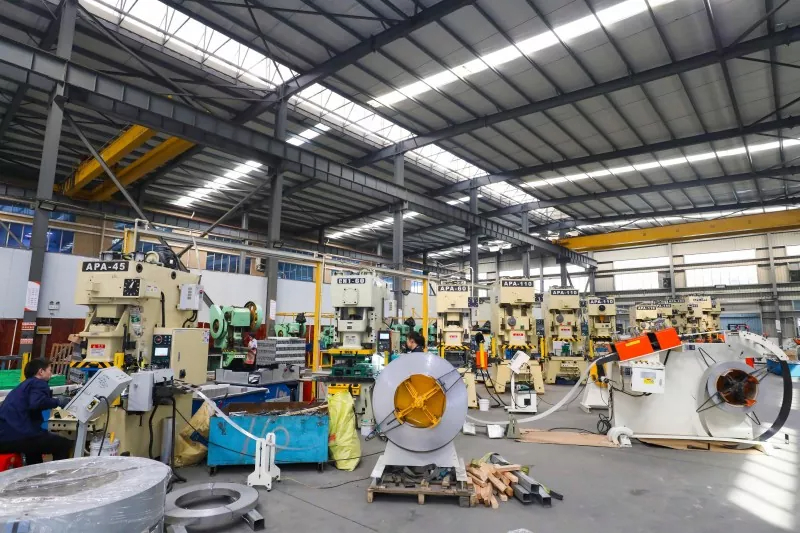
Stepping into a factory in Shenzhen, you might expect the clatter of manual assembly lines. Instead, you’re met with rows of robotic arms quietly welding smartphone frames, guided by algorithms that correct errors in real time. This scene isn’t an outlier—it’s becoming the norm across China’s industrial heartlands. The country’s manufacturing sector, long defined by sheer scale, is undergoing a quiet but profound metamorphosis, driven by a hunger for higher-value output and relentless investment in automation.
Behind this shift lies a web of factors: a maturing supply chain that allows for rapid prototyping, government policies that funnel capital into smart factories, and a generation of engineers who are just as comfortable coding as they are on the factory floor. The result is a landscape where “Made in China” increasingly means lithium batteries, drones, and complex medical devices—products that demand precision as much as they do production capacity. It’s no longer just about cost advantage; it’s about speed, customization, and technological edge.
But the picture isn’t without friction. Rising labor costs, geopolitical tensions, and the push for carbon neutrality are reshaping the terrain. Manufacturers are being forced to do more with less, adopting digital twins to simulate production lines before they’re built and using AI to cut waste. The new Chinese factory isn’t just an assembly point; it’s a nerve center that connects design studios in Shanghai, parts suppliers in the Yangtze Delta, and markets worldwide. And it’s evolving faster than most outsiders realize.
Materials and Engineering: Balancing Cost and Durability
Selecting the right materials for a project often feels like a tug-of-war between upfront expenses and long-term performance. Engineers routinely face pressure to trim budgets without sacrificing safety or lifespan. A bridge built with cheaper steel might save money now, but the accelerated corrosion and frequent maintenance could drain resources over decades. The key lies in understanding the full lifecycle cost—factoring in environmental exposure, load cycles, and potential failure modes—rather than fixating on price per ton.
Innovative approaches are reshaping this balance. Advanced composites and high-performance alloys, once prohibitively expensive, are becoming more accessible through improved manufacturing. Meanwhile, predictive modeling tools allow teams to simulate material degradation under real-world conditions, identifying sweet spots where a modest increase in initial spending yields disproportionate gains in durability. For instance, adding corrosion inhibitors to concrete mixes in marine environments can double a structure’s service life with only a marginal cost increase. The art is not just in choosing the strongest or cheapest material, but in matching material properties to the specific demands of the application, avoiding both over-engineering and premature failure.
Supplier Vetting: Beyond the Spec Sheet
Supplier vetting often starts with a spec sheet—a neat summary of capabilities, certifications, and past projects. But those documents rarely reveal the messy, human reality behind the operation. A factory that ticks every box on paper might still struggle with inconsistent quality, late deliveries, or communication breakdowns when real orders hit the floor. True due diligence means digging into unscripted conversations, watching how problems are solved in real time, and sensing whether a partner shares your commitment to getting things right, not just getting them done.
Real-World Performance and Long-Term Reliability
Real-world performance isn't about synthetic benchmarks—it's how a system holds up under unpredictable, everyday demands. Our testing goes beyond controlled environments, pushing hardware through sustained multitasking, fluctuating network conditions, and intensive mixed-use scenarios that mimic actual workflows. This approach reveals how components degrade or adapt over time, ensuring the final product delivers consistent speed, responsiveness, and stability, not just headline peak numbers.
Long-term reliability is engineered from the ground up, not just verified in the final stages. We scrutinize material durability, thermal behavior, and power delivery under extended stress cycles equivalent to years of heavy usage. By accelerating wear patterns and monitoring failure points, we refine designs to prevent common issues like gradual performance throttling, component drift, or unexpected shutdowns. The result is hardware that maintains its integrity and user experience month after month.
Transparency in how we validate endurance is critical. Instead of abstract ratings, we share insights from real-world load testing—covering thousands of hours of video rendering, database transactions, and continuous uptime in harsh ambient conditions. Every data point informs iterative improvements, ensuring that what reaches the consumer isn't just performant on day one, but remains dependable when it matters most.
Navigating the Shift Toward Smart Solar Foundations
The shift toward smart solar foundations starts with a simple idea: embedding intelligence into the very structures that anchor photovoltaic arrays. Instead of relying on passive concrete or steel bases, developers are now integrating sensors and IoT modules that track things like ground stability, temperature swings, and vibration in real time. This isn't about turning a foundation into a gadget—it’s about giving installers and operators a clear, data-driven picture of what’s happening below the surface, often before a problem even surfaces. The goal is to make these critical components more responsive to their environment without adding layers of complexity to the installation process.
A key benefit you’ll notice with smarter foundations is how they cut down on unexpected maintenance visits. When a standard foundation develops a hairline crack or starts to shift due to frost heave, it typically goes unnoticed until a panel underperforms or a visual inspection catches it. Smart bases, however, send early warnings through subtle changes in load distribution or tilt angles. This heads-up allows crews to address issues during scheduled downtime rather than scrambling after a failure. Over time, the data collected also helps refine designs—companies can see which soil types or weather patterns cause the most stress, leading to more resilient installations without guesswork.
Of course, embracing this shift isn’t without its friction. You’re asking civil engineers to think like data architects, and that requires a different skill set than what’s traditionally been needed on site. There’s also the matter of making sure the sensor data flows cleanly into existing monitoring systems without overwhelming operators with noise. The smartest approaches we’ve seen pair ruggedized hardware with stripped-down software that highlights only what matters—no dashboards crammed with irrelevant metrics. As the technology matures, expect foundations to evolve from simple anchors into active participants in a solar farm’s overall health, quietly improving yields while demanding little extra from the people managing them.
FAQ
Their ability to be installed on varied terrains, potential for optimal tilt angles, and easier maintenance access compared to rooftop setups make them ideal for utility-scale projects.
Notable names include Arctech Solar, Nextracker (with manufacturing in China), and Clenergy, known for their innovative designs and global project track records.
Evaluate structural durability, corrosion resistance, compliance with international standards, customization capabilities, and after-sales support networks.
They implement rigorous testing protocols, source high-grade steel and aluminum, and obtain certifications like UL, TÜV, and ISO to meet global market expectations.
Innovations include trackers with AI-driven algorithms, bifacial panel compatibility, rapid deployment systems, and materials that reduce long-term degradation.
Yes, top suppliers design systems to handle high wind loads, heavy snow, and seismic activity, often validated through wind tunnel tests and finite element analysis.
Lead times range from 4 to 8 weeks depending on order scale, with many offering logistics partnerships for efficient ocean freight and on-site delivery coordination.
Conclusion
China's ground mount solar racking sector has evolved well past simple metal fabrication, with the best suppliers orchestrating a delicate balance between raw material costs and long-term structural integrity. Unlike rooftop systems, these installations must adapt to undulating terrain, variable soil chemistry, and extreme weather loads, pushing manufacturers to refine everything from hot-dip galvanizing thickness to modular joint designs. A tour through the country's industrial clusters reveals a dense network of mills, coating facilities, and testing labs, enabling rapid prototyping of corrosion-resistant alloys and cost-optimized sections that still meet international structural codes. Leading players differentiate themselves not just by price per watt, but by how intelligently they deploy duplex steel, aluminum-magnesium compounds, and even proprietary polymer coatings to stretch maintenance cycles without inflating upfront spend.
Supplier vetting now reaches well beyond glossy spec sheets, as seasoned developers scrutinize field data from operational sites—tracking deflection under wind loads, bolt torque retention over thermal cycles, and foundation settlement in soft soils. The most resilient racking emerges from firms that weld quality audits with relentless field testing, often simulating decades of micro-motion fatigue before locking a design. At the same time, the shift toward smart foundations is quietly rewriting the rulebook: embedded sensors for tilt and vibration, paired with software that flags soil erosion or structural drift, turn a passive steel frame into a managed asset. Those suppliers truly securing their place in comprehensive guides are the ones blending pragmatic engineering with a genuine grasp of how these structures behave under the sun, year after year.
Contact Us
Contact Person: Nancy
Email: [email protected]
Tel/WhatsApp: +86-13365923720
Website: https://www.topfencesolar.com/
