

China Polyurethane Production Line Factory Powers Efficient Manufacturing Solutions
2026-10-19
Polyurethane production lines have a reputation for being stubborn—slow setups, uneven foam density, and changeovers that eat into margins. But a new generation of China polyurethane production line factory equipment is flipping that script. Leading the charge is YI ZHOU TECHNOLOGY, whose efficient manufacturing solutions are built around real floor-level problems, not brochure specs. In this post, we’ll explore what that looks like in practice and why it matters for your next capacity decision.
Inside the Polyurethane Line That Runs Two Shifts Without a Slowdown
The polyurethane line doesn't pause when the second shift clocks in. Mixing heads keep swirling, the conveyor keeps rolling, and the curing ovens hold their heat as if the shift change never happened. Temperature probes nudged into the foam read the same numbers they did at noon, while the raw material drums feed the metering pumps without a hiccup. Even the air smells the same—slightly sweet from the polyol, with a sharp edge of isocyanate that the ventilation pulls away just fast enough.
What keeps it moving without a slowdown isn't a single piece of equipment but a rhythm the crew has learned to trust. The automated dosing system adjusts on the fly, compensating for the slight viscosity drift that comes when the plant floor cools at night. Operators swap stations mid-stride, one tapping a gauge while the other checks the mix ratio on a handheld refractometer. Nobody calls a full stop for routine maintenance; instead, they bleed a little pressure off the filters during the run and watch the flow meters twitch back to steady.
The real trick is anticipating the small failures before they become big ones. A worn seal on the injection nozzle can change the spray pattern just enough to ruin a batch, so the lead operator runs a fingertip along the nozzle edge every hour, feeling for erosion that the gauges won't show. The curing tunnel's fans whine differently when a bearing starts to go, and the maintenance tech has learned to listen for it while walking the line. That way, when the next shift takes over, the polyurethane keeps flowing like the day never ended.
Why Chinese PU Factories Are Winning on Both Price and Precision
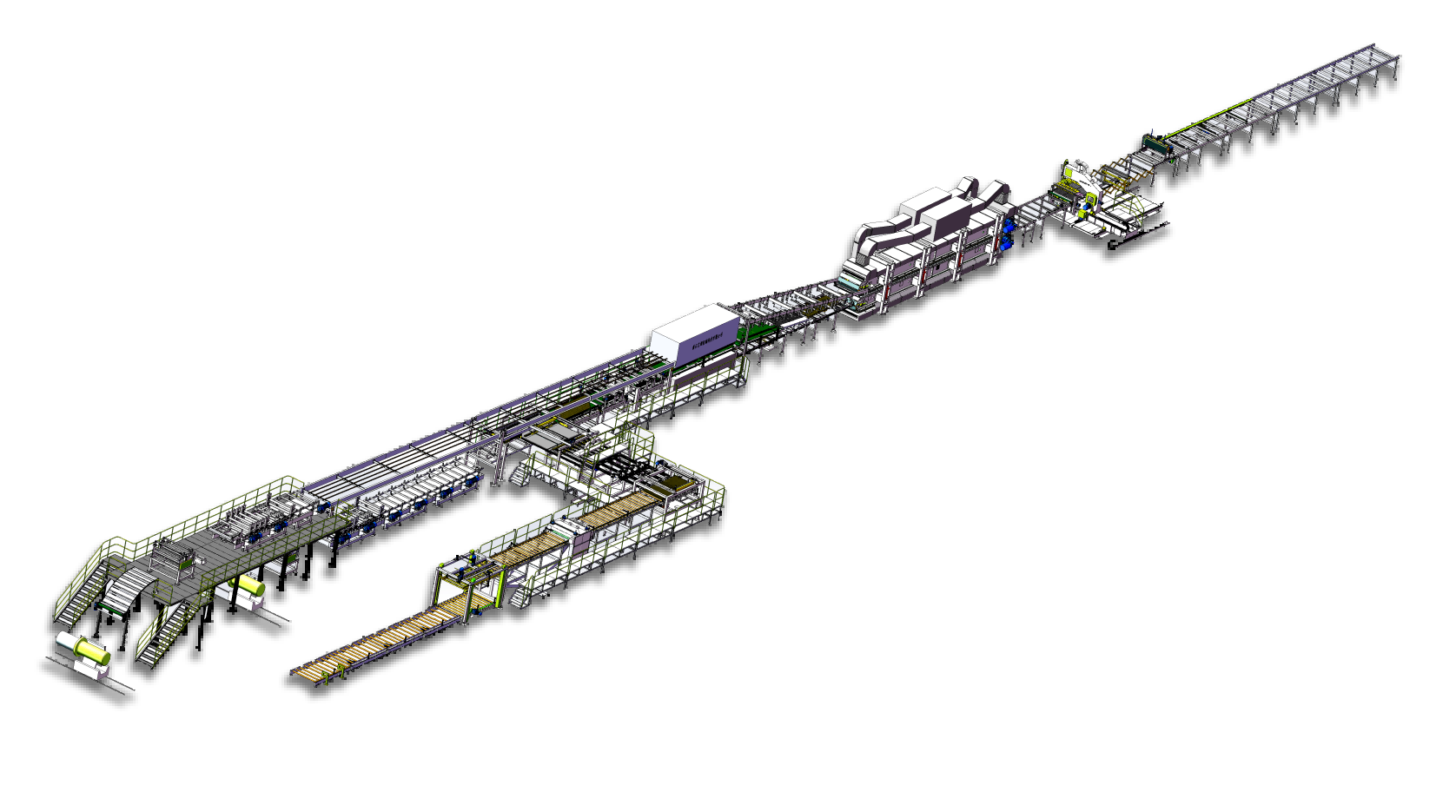
Walk into any trade show floor and you'll hear the same refrain: Chinese polyurethane manufacturers offer rock-bottom prices. But what outsiders often miss is the quiet revolution happening on the precision side of the equation. It's no longer a story of cheap and cheerful—it's a story of tight tolerances at a fraction of the cost. The factories that survived the last decade's consolidation didn't just buy newer injection molding machines; they rebuilt their entire approach to process control, from raw material batch testing to in-mold sensors that flag viscosity drift before a single bad part comes off the line.
The real advantage lies in how these factories treat labor and automation as complementary, not competing, forces. A mold maker in Ningbo might spend an extra two days hand-polishing a cavity to a mirror finish, while a technician in Guangdong runs a CNC mill that holds five microns across a 500-millimeter span. That combination—artisanal care where it matters, ruthless automation where it doesn't—lets them quote a part with ±0.02 mm tolerances at a price that would make a German or American shop wince. And they do it consistently, batch after batch, because the process is designed around the measurement, not the other way around.
What's often ignored is the feedback loop between price and precision. Cheap labor used to mean high scrap rates and hidden rework costs. Now, the survivors have flipped that model: by investing in inline vision systems and statistical process control software, they reduce waste to the point where the low price becomes a byproduct of precision, not a trade-off against it. A customer in Ohio doesn't have to choose between a $0.80 part that's sloppy and a $3.50 part that's perfect. They get a $0.95 part that holds the same spec as the expensive one—and that's why the order books keep filling up.
A Pouring Process Fine-Tuned to the Gram
The pour starts with a steady hand and a scale that reads to the tenth of a gram. Every second of the stream matters: the angle of the wrist, the height above the vessel, even the pause between pulses shifts the final weight by amounts too small to eyeball. In a lab or a competitive kitchen, this is not guesswork but a ritual of measurement, where a gram off can flatten the aroma or tighten the texture.
Calibration happens before any liquid moves. The container is tared, the nozzle wiped clean, and the target mass logged in a notebook with the date and room humidity. Then the pour begins in slow circles, not a straight line, because the liquid hits the surface unevenly otherwise. A practiced pourer reads the scale’s drift like a musician reads a metronome — 197.2, 197.8, 198.4 — killing the flow at exactly 200.0, then counting the last stray drops before the readout settles.
What separates the fine-tuned from the merely careful is the memory of failure. A batch ruined by a rushed final gram, a sauce that split because the pour rate dropped mid-way, a foam that collapsed overnight. These details stick. Over time, the process becomes less about the scale and more about feel, but the gram remains the silent referee. No recipe survives contact with a lazy wrist.
The Automation Layer That Removes Human Error From Foam Production
In traditional foam production, even the most experienced operators can slip on measurement tolerances, mix ratios, or timing windows. The automation layer steps in where human attention used to be the only safeguard, locking down every critical parameter from chemical dosing to curing temperature. Instead of relying on a checklist or a gut feeling, the system enforces exact values for each run, so a batch started on a Tuesday morning is indistinguishable from one started during a night shift.
What makes this layer different from simple machine control is its ability to react in real time. Sensors positioned throughout the mixing head and mold feed continuous data back to closed-loop algorithms that adjust pressure, flow, or agitation speed mid-cycle. If viscosity drifts or a valve opens slightly too late, the correction happens before the foam leaves the mixing chamber. Operators no longer need to recalibrate based on smell or texture; the layer keeps the process inside a narrow band that was previously reserved for laboratory conditions.
This shift also changes how production teams handle scale and training. Because the automation layer carries the institutional knowledge of correct settings, a new technician can oversee multiple lines without first spending years learning the subtle signs of a bad pour. Scrap rates drop not because people try harder, but because the system removes the opportunity for silent mistakes like a misread decimal or a skipped purge cycle. Over time, that consistency turns into a competitive edge, letting foam manufacturers push output volume without expanding their pool of highly skilled operators.
Custom Mix Ratios? No Problem for This Production Floor
Walk onto most production floors and you’ll hear the same old story: custom ratios are a headache, a bottleneck, a reason to push back on client requests. Here, the conversation runs differently. The team treats every non-standard blend not as a disruption but as a chance to show what the line can really do. There’s no binder full of rigid formulas collecting dust—instead, operators adjust on the fly, tweaking feed rates, dwell times, and additive percentages with the kind of confidence that only comes from doing it daily.
What makes it work isn’t some secret software or a high-priced consultant. It’s the physical layout. The floor is set up so that raw materials flow past each mixing station in a loop, letting a batch circle back for a second pass without blocking the next job. Scales are mounted at waist height, not tucked under a conveyor, so a quick recalibration takes seconds instead of minutes. And because the crew has been cross-trained on every piece of equipment, nobody has to wait for “the one guy who knows the blender” when a client sends over a 37/63 split with a half-percent tolerance.
The proof sits in the finished orders that roll out every afternoon—each one labeled with a mix ratio that would make a traditional batch plant wince. No retreads, no “close enough” adjustments, and no passed-along upcharges for the customer. When a new spec lands in the morning, the line doesn’t groan. It just starts moving a little differently, and by lunch the first pallet is already wrapped and waiting by the dock door.
How Efficient Manufacturing Turns Polyurethane Into a Competitive Edge
The real advantage in polyurethane production isn't just the material itself—it's how efficiently you can shape, cure, and deliver it. Shorter cycle times and tighter process control let manufacturers squeeze more output from the same footprint without sacrificing consistency. When every second of mold time and every gram of raw material is accounted for, the cost per part drops in ways that competitors relying on older methods simply can't match.
That efficiency also opens the door to more complex geometries and thinner wall sections that would otherwise be impractical. By fine-tuning mixing ratios, temperature curves, and demolding triggers, a line can switch between soft foam seating and rigid structural components with minimal downtime. This flexibility turns polyurethane from a commodity resin into a strategic asset—one that lets a single facility serve automotive, furniture, and industrial clients without retooling for days.
Over time, the cumulative effect is a quieter kind of dominance. Less scrap, lower energy use per unit, and fewer rejected batches mean the margin isn't just in the product price but in the operational rhythm itself. Buyers may not see the machinery, but they feel the result: faster lead times, more reliable tolerances, and a supplier who can absorb design changes without blowing the budget. That's what turns a chemical feedstock into a lasting competitive edge.
FAQ
The plant specializes in continuous and discontinuous lines for rigid foam, flexible foam, and elastomer systems, covering everything from high-pressure metering to fully automated cutting and stacking.
Instead of relying on standard hydraulic systems, many lines use variable-frequency drives and heat recovery on the curing ovens, cutting energy use by up to 20 percent compared with older designs.
Yes, the metering units and mixing heads are designed with corrosion-resistant seals and temperature-controlled tanks, so switching between isocyanates doesn't require a full hardware change.
The factory offers remote troubleshooting via secure VPN access to the PLC, and keeps a local service partner network in Southeast Asia, the Middle East, and South America for faster on-site repairs.
Every line includes integrated gas detection, emergency stop zones, and CE-certified electrical panels, and the company provides documentation for local compliance audits.
Clients can start with a single foaming station or mixing unit, then expand to a full line later; the control architecture is modular so adding conveyors or robots doesn't require replacing the core system.
The team runs a full production simulation using the client's actual raw material samples when available, measuring foam density, rise time, and dimensional stability against agreed benchmarks.
Conclusion
At a polyurethane production line in China, the machines don't pause when the afternoon crew takes over. The line runs two shifts back to back without a slowdown because every step, from raw material dosing to final foam rise, is governed by an automation layer that removes the small inconsistencies human operators often introduce. A pouring process fine-tuned to the gram means a panel for a refrigerator or a seat cushion gets the exact amount of mixed chemical every time. When a customer asks for a custom mix ratio—say, more isocyanate for a denser core—the floor doesn't need a lengthy recalibration; the system pulls the new recipe from a library and adjusts the metering pumps within minutes, and the line keeps its rhythm.
That speed and repeatability explain why Chinese PU factories are increasingly winning on both price and precision. The cost advantage isn't just cheaper labor; it comes from machines that rarely stop and waste less material. A factory that pours to the gram and automates foam production doesn't throw away off-spec batches, so the cost per part drops while the tolerance stays tight. This turns efficient manufacturing into a real competitive edge: buyers get foam components that fit their specs without paying for rework or delays. The result is a production floor where two shifts, custom formulas, and machine-level accuracy add up to one thing—reliable output at a price that's hard to match elsewhere.
Contact Us
Contact Person: Sophia Jiang
Email: [email protected]
Tel/WhatsApp: +86 17367381818
Website: https://yzwelding.com/
