

China Electric Telescopic Mast Applications and Selection Tips for Field Deployments
2026-11-20
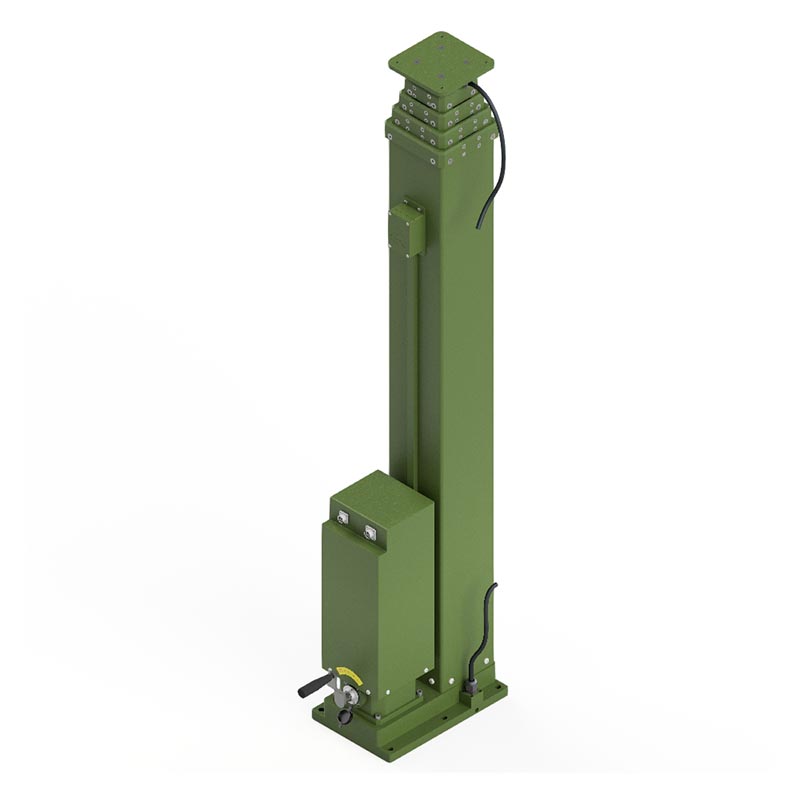
Field deployments rarely go as planned. Wind picks up, terrain shifts, and suddenly a mast that worked fine in the warehouse becomes the weakest link. Electric telescopic masts built for rapid setup and compact transport solve part of that puzzle, but only if the application and selection criteria match the actual operating environment. This guide breaks down what to look for before you commit—from payload, extended height, and duty cycle to mounting constraints—and why Chinese-made systems now deserve a closer look. Homall Industry Limited has become one of the names field teams turn to when comparing rugged, application-specific designs. Here are the factors worth prioritizing.
Where Electric Telescopic Masts Prove More Useful Than Pneumatic or Manual Rigs
Electric telescopic masts earn their keep on jobs where a compressor or a hand crank turns into the slowest part of setup. On a muddy construction site or a remote monitoring trailer, dragging out air lines and waiting for a pneumatic mast to creep upward rarely matches the pace of the rest of the crew. With an electric drive, the same operator can raise the mast from inside the vehicle, hold it at any intermediate height while aligning a camera or antenna, and lower it again without leaving the cab. That kind of control becomes especially valuable when the mast is used several times a day, or when weather shifts quickly and gear needs to come down in a hurry.
The difference also shows up in quieter, more position-sensitive tasks. Temporary perimeter cameras, acoustic sensors, and microwave links often sit near residential areas or wildlife, where the hiss of a pneumatic system or the physical effort of a manual rig draws unwanted attention. Electric masts can be adjusted in small increments without overshooting the target height, and they hold position without a constant air supply or a locking pin that someone has to reach. Maintenance is simpler on the operator side too: fewer seals, no crank handles to strip, and no need to keep a compressor serviced just to lift a sensor package forty feet.
Matching Lift Capacity to Real Payloads Instead of Peak Numbers
A forklift or telehandler that looks strong on a spec sheet often loses a surprising amount of usable capacity once the load center moves forward, a sideshifter or fork positioner goes on, and the mast has to reach full height. The peak rating is typically based on a compact cube held close to the mast, not the long, uneven, or offset loads that actually move through a facility. If that gap is ignored, the machine ends up working near its limits far more often than the purchase decision assumed.
A more reliable approach is to build the decision around the heaviest real payload plus the worst-case attachment and lift height the operation will use. Measure the actual load center of the largest item, subtract the weight of any attachment, and check the derated capacity at the required height. In many operations, that number is twenty to thirty percent below the headline rating, which changes which model actually fits the job.
Matching capacity this way does not mean buying a larger machine than necessary. It often reveals that a smaller, more maneuverable truck can handle the real loads safely, while avoiding the extra cost and floor space of a unit sized for a peak number that never occurs in daily work. The goal is a fleet that is sized for the loads it actually carries, not the best-case figure printed on the brochure.
Designing a Field Power Plan Around Silent Watch and Long Idle Times
Silent watch and long idle periods invert most field power assumptions. The critical load is not the radio actively transmitting or a vehicle moving; it is the slow, continuous drain from receivers left in standby, controllers waiting for input, and sensors that never fully sleep. Before adding battery capacity, audit every device that stays powered during silence and ask whether it can be switched off, put into a wake-on-signal mode, or moved to a separate low-power bus. On many platforms, receive-only radios consume far more than expected, and a simple power-down or scheduled wake-up can add more usable hours than another battery string.
Sizing should treat long idle as the baseline condition rather than a gap between high-demand events. Measure or estimate the worst-case idle current for the full watch package, then build the watt-hour budget around multi-day stretches at that near-constant draw. Reserve capacity only for scheduled check-ins, alarms, or brief awakenings. Battery chemistry matters here because prolonged shallow discharge and irregular partial charging punish some lead-acid banks more than lithium iron phosphate alternatives. If temperatures drop at night, derate the bank early; cold silently reduces available capacity at the very time the site is expected to hold quiet for longer.
The charging plan has to protect silence as much as the load plan does. Running a generator or vehicle engine on a fixed timer may restore charge but also gives away position and breaks the quiet the power architecture is meant to preserve. Solar, small wind, or pre-charged spares paired with automatic load shedding allow the position to remain dark and still for longer periods. Set a low-voltage disconnect high enough to defend the battery bank and low enough to keep essential watch gear alive through the final hours of an extended idle. That threshold forces an early decision about what stays on, what cycles off, and what only wakes when a real signal appears.
Wind, Soil, and Ground Anchoring Checks Before the Mast Goes Vertical
Wind rarely shows up as a steady number on the forecast. A handheld anemometer reading at ground level misses what happens 20 or 30 feet up, so walk the site, watch tree movement, and compare the last three hours of gusts against the lift plan. If the gust spread keeps brushing the crane or jacking limit, the only safe call is to wait; a mast section acts like a sail the moment it leaves the cradle, and a sudden cross-gust can turn a controlled raise into a swinging load.
Soil gets ignored because it looks solid until it isn't. Dig or probe alongside each outrigger pad, base plate, and laydown area, then check whether recent rain, frost heave, or a broken utility trench has left pockets of soft fill. If the probe sinks with less pressure than the geotech report assumed, or if water seeps into a footprint, cribbing and mats won't fix the problem by themselves—the bearing area has to be expanded or the lift rescheduled.
Ground anchors and tie-downs need more than a visual glance. Back off and re-torque anchor bolts to the specified value, look for hairline cracks around cast-in-place lugs, and mark the edge of each ground anchor or deadman before any load goes on it. After a partial pull or a stiff wind, re-check those marks; any movement in the soil around the anchor means the holding capacity is dropping, and that's the point to stop and re-evaluate before the mast leaves horizontal.
Controller and Manual Override Features That Matter When Connectivity Drops
When a controller loses its wireless link or the cloud service becomes unreachable, the difference between a mild inconvenience and a full production halt often comes down to how well the device handles its own inputs and modes. A thoughtfully designed manual override isn't a panic button; it's a set of clearly labeled controls that let operators maintain safe operation without needing a phone or laptop nearby. On some units, a physical rotary switch steps through local presets while a latching pushbutton holds the last known setpoint. These details sound small, but they prevent the controller from dropping into an undefined state when connectivity glitches.
The real test happens during intermittent connection loss. Rather than freezing entirely, a well-built controller keeps executing its last valid schedule for a grace period, then falls back to a locally stored safe profile if the outage continues. Manual overrides should drive outputs directly and visibly, with indicator lights that confirm the override is active. If the controller resumes network access while an override is engaged, the operator needs to know whether the local command or the remote command wins. The most practical systems treat local override as the higher priority until a person explicitly releases it.
Field experience shows that labeling matters as much as the underlying logic. Engraved symbols for open, close, hold, and auto modes reduce hesitation during a midnight alarm. Better yet, a dedicated manual override terminal block lets a technician hard-wire a simple selector switch directly to the controller, bypassing software menus altogether. That kind of redundancy keeps the process running even when the main processor or network stack is the thing that failed.
Transport Cases, Cable Routing, and Teardown Habits That Cut Field Setup Time
Most setup delays start long before the truck doors open. A transport case that forces you to unpack half the foam to reach a single wireless receiver is working against you. Cut custom slots for each bodypack, paddle, and adapter, then label the lid with a photo of the layout so a tired hand can spot a missing piece in seconds. If a case takes more than one motion to open and identify the contents, it needs another pass.
Cable routing gets treated as a cosmetic step, but it is really a timekeeping tool. Pre-build looms for repeat setups: tape or sleeve the audio, power, and network lines together, leave a short service loop at each end, and mark both connectors with matching colored bands. When every home run lands in the same order as the console input list, you stop chasing hums and swapped channels during soundcheck.
Teardown is where the next setup is won or lost. If you wrap cables by feel at 1 a.m. and toss them into any open lid, you are borrowing time from tomorrow. Coil by length and type, return each item to its labeled pocket, and spend the last five minutes scanning for strays. A clean load-out should feel boring; boring is fast.
FAQ
Temporary surveillance posts, border monitoring, emergency communications, environmental sensing, and disaster response teams all use them when they need a stable elevated platform without spending much time on setup. The electric drive makes it practical to raise and lower antennas, cameras, or gas detectors repeatedly at sites where a fixed tower would be too heavy or permanent.
Start from the required line-of-sight or sensor coverage rather than picking a number in isolation. Add a margin for terrain dips and obstacles, but keep in mind that extra height usually means a heavier mast, larger footprint, and stronger guying or base plate. For most portable field kits, 6 to 12 meters covers vehicle-mounted radios and cameras, while fixed perimeter monitoring may call for 15 meters or more if the ground is uneven.
Look at the combined weight and wind load of everything attached to the top plate, not just the camera or antenna alone. Check the mast's rated payload at the intended extension, and leave at least 20 to 30 percent headroom for cables, ice, or unexpected movement. Also confirm the top plate pattern and whether the mast can accept a pan-tilt unit, junction box, or multiple antennas without blocking each other.
It is one of the most important selection points, especially in exposed terrain. A mast that holds a payload indoors may deflect badly or collapse under gusts once it is fully extended outdoors. Match the mast's maximum wind survival rating to the worst realistic weather at the site, not just average conditions, and consider using guy lines or a heavier base when the deployment is unmonitored for long periods.
Yes, most Chinese electric masts run on 12V or 24V DC, which pairs well with vehicle batteries, solar-charged battery banks, or small generators. Check the current draw during both lifting and retraction, because cold weather can increase motor load. If the mast will be cycled often, size the supply for the locked-rotor or startup surge and use a charge controller that prevents deep discharge of the main battery.
Keep the mast slightly retracted before transport and avoid extending it on soft, unlevel ground unless the base is properly supported. Clean the sections after sandy or muddy use, and inspect seals, power connectors, and limit switches regularly. When lowering, stop before the sections slam home, and if the mast has a manual override, test it during setup so you are not stuck if the motor fails.
Electric masts trade some simplicity for repeatable, low-effort operation and better control in tight spaces. Pneumatic masts deploy quickly but need an air source and may be more sensitive to leaks, while manual masts are lighter but slower and less practical at heights above roughly 10 meters. For a field team that must raise and lower equipment several times a day, the electric option tends to be more reliable in day-to-day use despite the extra power requirement.
Conclusion
Field teams in China often find that electric telescopic masts solve problems pneumatic and manual rigs handle poorly, especially where noise discipline matters, repeat height adjustments are needed, or one operator must deploy gear quickly. Instead of chasing peak lift numbers on a datasheet, it helps to weigh the actual payload such as cameras, antennas, mesh radios, cables, and any ice or wind load so the mast is not running close to its limit. Power planning also changes once the mast is electric: a small battery and solar array can keep a mast in silent watch for hours, but long idle times require accounting for controller draw, battery self-discharge, and cold-weather voltage sag, not just the motor's lift current.
Before the mast goes vertical, ground conditions deserve more attention than the mast itself. Checking soil type, recent rain, slope, and wind exposure usually reveals whether factory stakes, screw anchors, or guy wires are necessary. When connectivity drops, a controller that stores last settings and supports manual crank or push-button override can prevent a stuck deployment. During transport and teardown, marking cable reels, using cases with clearly divided foam, and keeping a consistent pack order reduce setup time more than any single hardware upgrade. These habits tend to matter most in remote or border-area deployments where rework is costly and time on site is limited.
Contact Us
Contact Person: Ryan
Email: [email protected]
Tel/WhatsApp: +85259582726
Website: https://www.robomast.com/