

China Digital Printing Machine Innovations Reshaping Global Manufacturing
2026-05-28
A quiet revolution is reshaping global manufacturing, and it's coming from an unexpected corner: China's digital printing machine industry. At the forefront, innovators like Danmajet are turning conventional wisdom on its head—combining speed, precision, and adaptability in ways that are redrawing the boundaries of what's possible on the factory floor. In the pages ahead, we'll dive into how these breakthroughs are not just changing how we print, but how we think about making things altogether.
Revolutionizing Production Lines with Smart Inkjet Systems
Traditional inkjet technology on the factory floor was once little more than a simple date coder, but the latest smart systems have turned it into a dynamic production hub. These intelligent printers now incorporate real-time vision inspection, adaptive software, and cloud-based monitoring, allowing operators to spot errors the moment they occur and adjust print parameters without stopping the line. The result is a seamless blend of physical marking and digital oversight, where each carton or component becomes a data point in a larger manufacturing ecosystem.
One of the quiet revolutions within these systems is their self-correcting nature. Instead of waiting for a batch rejection, the printer analyzes every drop placement, comparing it against expected patterns and substrate variations—be it a curved bottle or a textured metal surface—and then fine-tunes ink viscosity, throw distance, and drying time on the fly. This shift from reactive quality checks to proactive control slashes waste and rework, making high-speed lines more resilient and less reliant on constant human supervision.
Beyond the hardware, the real game-changer is the data layer. Smart inkjet platforms now act as edge nodes, feeding live production metrics into broader factory management systems. A line manager can monitor OEE trends, trace individual products back to the exact second they were coded, or even combine print data with environmental sensors to preempt maintenance. This transforms the humble inkjet printer from a peripheral device into a central nervous system point, driving efficiency gains that echo from the packaging hall to the boardroom.
How Additive Manufacturing Redefines Speed and Precision
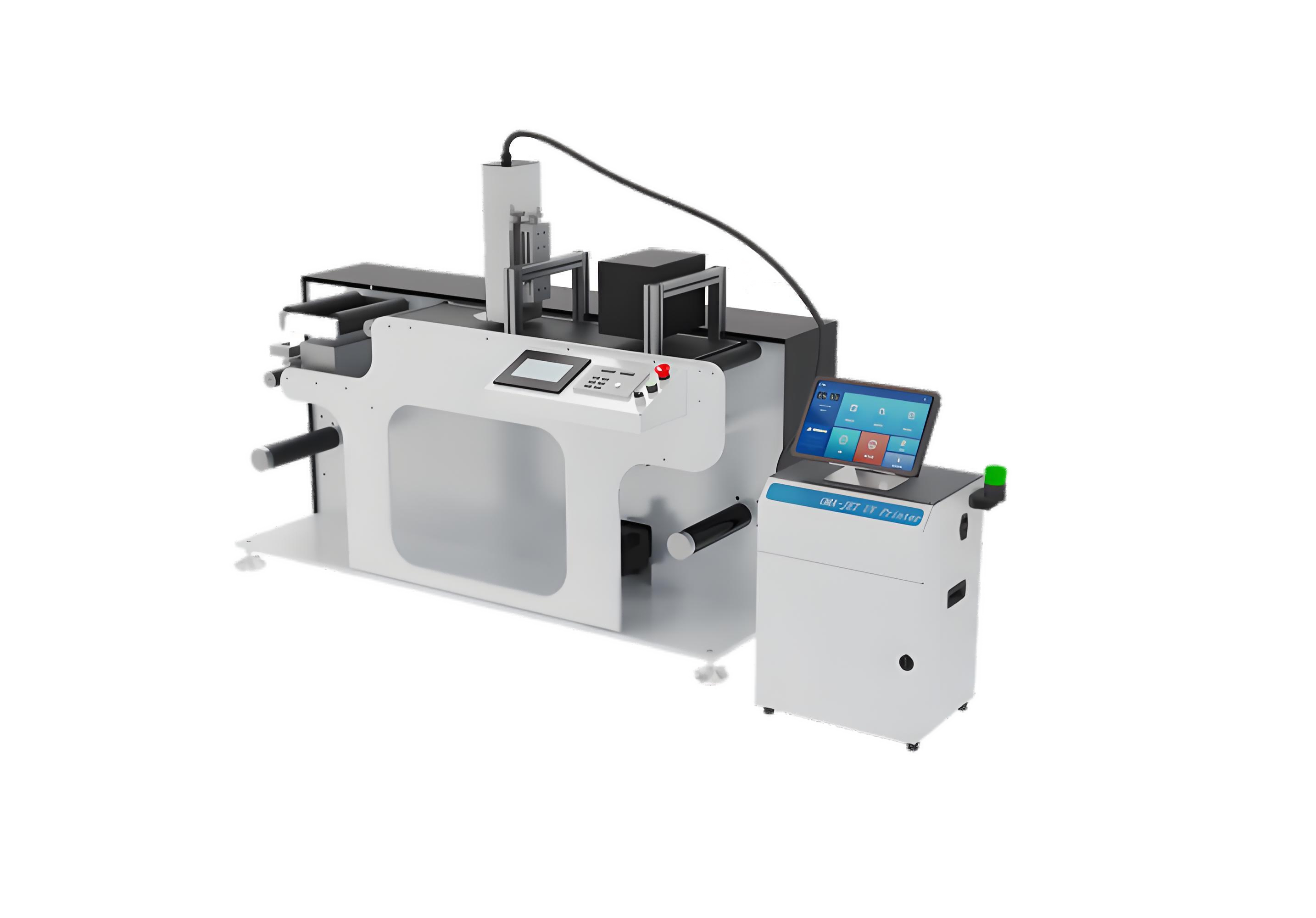
Traditional manufacturing often forces a trade-off: move fast and risk flawed parts, or chase micron-level accuracy while timelines stretch. Additive techniques upend that logic by fusing design iteration with production in a single workflow. A complex bracket that once took weeks to cast and machine can now be printed overnight, with internal lattices that actually make it stronger. That’s not just a speed boost—it’s a fundamental shift in how precision is defined, moving from subtractive limits to a world where geometry is no longer the enemy of time.
What makes the difference is the ability to pack multi-step assemblies into one seamless build. Instead of casting, welding, and bolting six separate pieces together, a printer lays down exactly the material needed, where it’s needed, often with tolerances that rival CNC finishes. Engineers now talk about “day one functional” prototypes because the same machine that proved the concept can produce the final part without retooling. When speed enables tighter iteration loops, precision stops being a static target and becomes an evolving conversation between design and output.
The Rise of Hybrid Digital Printers in Factory Settings
The factory floor is evolving, and hybrid digital printers are at the center of that transformation. Traditionally, manufacturers relied on analog labeling and marking systems that demanded constant upkeep and manual changeovers. Today's hybrid models merge the precision of digital controls with the durability of industrial hardware, enabling real-time customization without sacrificing speed. This shift isn't just about upgrading equipment—it's about rethinking how production lines adapt to variable data, tighter regulations, and on-the-fly design changes.
What makes these printers stand out is their ability to print directly onto diverse substrates—from corrugated cartons to plastic film—while maintaining crisp, scannable output. Older systems often struggled with consistency when switching between materials, but hybrid technology uses advanced ink formulations and adaptive print heads that self-adjust. As a result, factories can run mixed batches without pausing to recalibrate, cutting downtime and waste significantly.
Beyond efficiency, the rise of hybrid printers reflects a larger trend toward connected manufacturing. With built-in sensors and cloud-based interfaces, these machines offer predictive maintenance and seamless integration into existing ERP systems. Plant managers now track print performance remotely and apply updates without sending a technician to the line. It's a quiet revolution, but one that's reshaping factory workflows and setting a new standard for operational agility.
Material Breakthroughs Fueling Next-Gen Print Applications
The shift toward functional printing has sparked a quiet revolution in materials science, with conductive inks now seamlessly blending silver nanowires and graphene to print circuits on flexible substrates. These aren't your standard graphic inks—they maintain conductivity even when stretched or folded, opening doors to smart packaging that monitors freshness and wearables that conform to the body. Manufacturers are moving beyond rigid boards, embedding electronics directly into fabrics and plastics during the printing process itself.
Bio-derived resins are reshaping stereolithography, replacing petroleum-based feedstocks with plant-sourced alternatives that cure faster and exhibit less warping. Some formulations incorporate nanocellulose, lending unexpected strength to lightweight prototypes. The real leap, however, is happening in multi-material jetting where dissolvable support structures and temperature-responsive polymers allow complex assemblies to be printed in one go, eliminating post-processing steps entirely.
Perhaps the most disruptive advance lies in self-healing materials tailored for 4D applications. These can recover from scratches or even re-assemble when exposed to moisture or heat over time. Combined with advancements in liquid metal deposition, printers are now producing objects that aren't just static parts but systems capable of morphing their shape or functionality long after they leave the build platform. Such capabilities are moving beyond labs, with automotive and aerospace sectors actively integrating these printed smart components into production lines.
Customization at Scale: China’s Market-Driven Innovations
A quiet shift has taken hold in China’s factories and online marketplaces, where the boundaries between batch production and made-to-order blur daily. Rather than relying on top‑down R&D, brands watch live streams, scan social comments, and track real‑time sales patterns to spot micro-trends before they peak. Within days—sometimes hours—a viral color preference or a new sleeve style gets translated into a small test run, refined by instant buyer signals, and scaled across a supplier network that treats short lead times as routine. Speed here is not just a metric; it is the underlying logic of a system that turns consumer whim into inventory with minimal waste.
What makes this model sticky is the infrastructure behind it: cloud‑based collaboration tools link far‑flung workshops, while modular design libraries let a basic sneaker or phone case be altered endlessly without retooling an entire line. The result is a surprisingly human form of mass personalization—a student in Chengdu can have a notebook printed with her own watercolor artwork for almost the same price as an off‑the‑shelf one, and a boutique fitness brand can order yoga mats in 50 color‑patch combinations without overstock. These examples pile up, feeding a cycle where each small, customer‑driven tweak sharpens the machinery of scale, making the next round of customization even cheaper and faster.
Sustainable Practices Through Energy-Efficient Printing Technologies
Modern printing operations are rethinking energy consumption from the ground up, moving beyond simple equipment upgrades to holistic process redesign. By adopting printers with advanced sleep modes and instant-on fusing technologies, businesses can slash idle power draw without compromising productivity. These machines intelligently manage warm-up cycles and power down between jobs, trimming the constant energy drain typical of always-ready devices. Paired with thoughtful workflow scheduling that batches print runs during off-peak hours, such measures turn potential waste into genuine savings.
The shift toward energy-efficient printing also leans heavily on smarter material choices and maintenance routines. Cold-cure inks and toner formulations that fuse at lower temperatures reduce the heating load required for each page. Regular upkeep, from cleaning components to replacing worn parts, keeps printers running at peak efficiency and prevents the mechanical drag that silently drives up electricity use. Digital document routing and soft-proofing further cut unnecessary prints, ensuring that energy is only spent on the output that truly matters.
Data-driven optimization ties these efforts together, allowing organizations to track power usage per device and discover hidden inefficiencies. Simple analytics can reveal whether older units are consuming disproportionate energy or if team habits lead to avoidable printing. With clear metrics, it becomes easier to phase out energy hogs in favor of modern, certified models—Extreme Low Energy (ELE) printers, for instance—that deliver the same output with a fraction of the electrical demand. Step by step, these practices fuse environmental responsibility with operational cost control.
FAQ
They're enabling faster, more flexible production lines that can switch between designs without stopping, which helps manufacturers respond quickly to market trends and reduce waste. This agility is particularly valuable in industries like textiles and packaging, where customization is key.
Recent advances include high-speed single-pass inkjet systems that dramatically increase output while maintaining print quality. Chinese companies have also developed proprietary printheads and eco-friendly inks that lower operating costs and reduce environmental impact, making digital printing viable for mass production.
Sure. A European fashion brand can now send designs directly to a factory in Vietnam equipped with Chinese digital printers, and have finished garments ready in days instead of weeks. This cuts down on overproduction and inventory costs, and shortens the distance between design and consumer.
Absolutely. The affordability and compact size of many Chinese digital printers have opened doors for small and medium enterprises. A small textile workshop can now offer customized products without investing in traditional screen printing setups, leveling the playing field in niche markets.
Modern Chinese digital printers rival or even surpass traditional methods in color accuracy and detail, and the prints are designed to withstand repeated washing or outdoor exposure. In many cases, the on-demand nature also means less deterioration from long storage, so the end product is often fresher.
By printing only what is needed, digital technology slashes water usage, ink waste, and energy consumption compared to conventional methods. Chinese innovations in water-based and biodegradable inks further reduce the ecological footprint, aligning with global sustainability goals.
Conclusion
China's digital printing machine sector is radically transforming global manufacturing, driven by a wave of innovations that merge smart inkjet systems, additive manufacturing, and hybrid printers. Smart inkjet technologies are infusing production lines with unmatched adaptability, enabling real-time adjustments and multi-material deposition that slash lead times. Meanwhile, additive manufacturing is redefining speed and precision, allowing intricate parts to be produced in one go without the waste of traditional subtractive methods. The integration of hybrid digital printers further blurs the line between 2D and 3D fabrication, empowering factories to switch between printing functional components and surface decorations on the fly.
Underpinning these advances are material breakthroughs—novel composites, conductive inks, and bio-based polymers—that open doors to applications in electronics, aerospace, and healthcare. Crucially, China's market-driven approach prioritizes customization at scale, where digital printing's flexibility meets consumer demand for personalized products. This is complemented by a strong push toward sustainability, with energy-efficient printing technologies reducing carbon footprints and material waste. Collectively, these innovations position China not just as a manufacturing hub but as a powerhouse reshaping how the world makes things, setting new benchmarks in efficiency, customization, and eco-conscious production.
Contact Us
Contact Person: Jacky
Email: [email protected]
Tel/WhatsApp: 086 15000607053
Website: https://www.danmajet.com