
China Backlight Panel Breakthroughs Elevating Display Quality and Efficiency
2026-11-26
China’s backlight panel breakthroughs are starting to show up where it counts: brighter highlights, deeper blacks, and lower power draw in the same panel budget. That combination used to be a compromise, not a feature. The latest optical films, mini-LED arrays, and local dimming algorithms are changing the math for display makers—and the ripple effects are already spreading across TVs, monitors, automotive displays, and mobile screens. Meld Display has been following this shift closely, and the next few months look pivotal.
Mini-LED Dimming Zones Finally Outnumber Visible Halo Artifacts
The old complaint about Mini-LED was straightforward. Bright objects bled into dark backgrounds. Early panels had only a few hundred zones, so one lit zone covered a much larger patch of screen than the bright detail itself. That mismatch showed up as halos around subtitles, UI elements, or stars in space scenes.
That ratio has now shifted. Zone counts in the thousands have become normal in flagship sets and high-end monitors, while each zone has shrunk in size. When a bright element is smaller than the zone behind it, the backlight can confine the extra luminance to an area the eye no longer separates from the object itself, so the halo effectively disappears.
There are still moments where the panel can be tricked, usually with very small highlights on near-black scenes or aggressively dimmed edge content. But those instances now read as faint lift rather than obvious bloom. For most content, visible artifacts have dropped below the zone count, which marks a practical turning point rather than just a spec-sheet milestone.
Quantum Dot Films Shift From Lab Promise to Factory-Floor Consistency
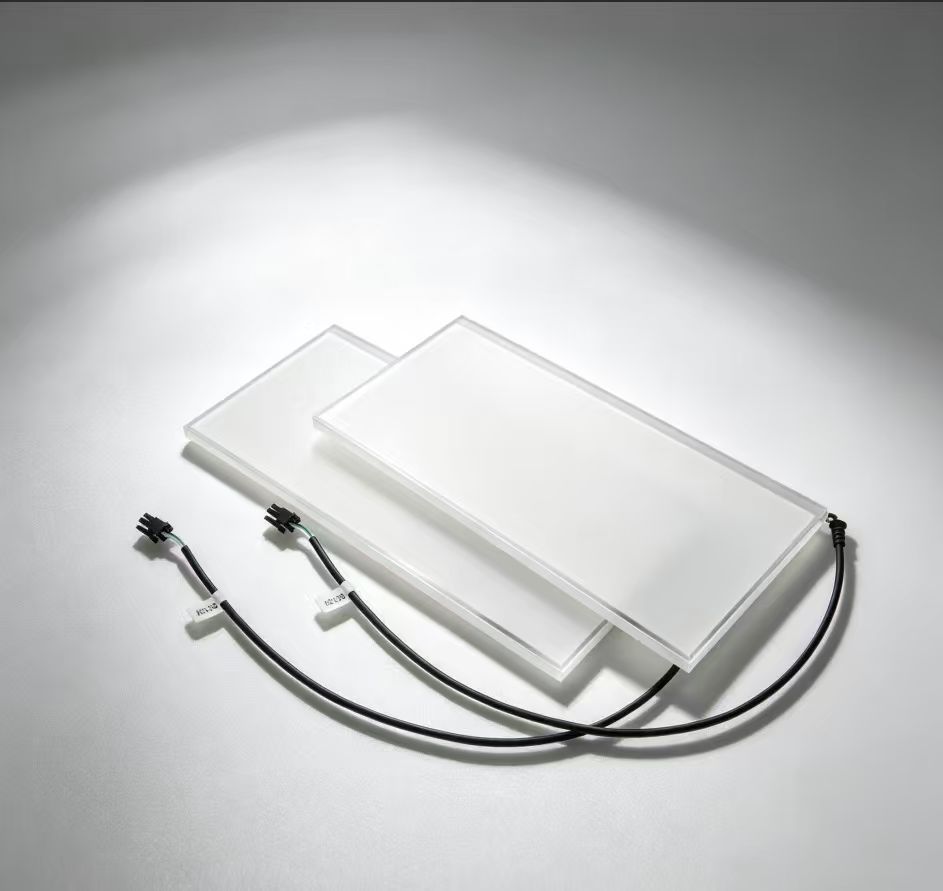
Early quantum dot films impressed in small-scale demonstrations, yet moving those results onto a coating line exposed a familiar gap. Emission drift, uneven thickness, and sensitivity to oxygen and moisture turned simple lab recipes into production headaches. The current shift is not about chasing a brighter spec sheet; it is about making the hundredth roll behave like the first.
Much of that repeatability comes from tighter control over the entire wet-chemistry and coating sequence. Suppliers now tune ligand exchange, resin formulation, and curing profiles with closed-loop feedback, while in-line photoluminescence checks catch drift before a full roll is wound. Some lines have merged quantum dot synthesis directly with film casting, reducing the time the particles spend exposed to air.
The result is a material that display makers can treat as a predictable input rather than a special project. Color coordinates and brightness windows hold across batches, which lets panel manufacturers reduce calibration steps and line downtime. That quiet consistency, more than any single efficiency gain, is what moves quantum dot film from a promising lab result to a workable factory material.
Local Dimming Learns to Read the Scene Before Adjusting
Most local dimming implementations react to an average brightness level across a zone, which often leaves bright objects bleeding into darker surroundings. The smarter approach reads the frame more like a camera meter would: it identifies where the actual highlights sit, how large they are, and which edges need to stay crisp before any backlight zones are adjusted.
This scene-aware processing changes the order of operations. Instead of dimming first and hoping the picture survives, the system builds a quick luminance map and uses it to spread power toward areas that carry detail, while letting darker regions fall away without crushing shadow texture. The result is less of the gray haze that usually appears around subtitles or small specular highlights.
The difference is most obvious in mixed scenes where a bright window or lamp sits against a dark wall. Rather than treating the whole region as one brightness value, the backlight can be pulled tighter around the light source and relaxed elsewhere, so contrast stays high without the distracting glow that gives away the zone grid.
Thin Glass Light Guides Bring HDR Punch to Slimmer Laptops
Slim laptops have long been forced into a compromise between lid thickness and backlight quality. Conventional light guides tend to leak and scatter unevenly when they get too thin, so peak brightness and edge uniformity suffer. Thin glass sidesteps that trade-off because it holds a much flatter optical profile and channels light more predictably from the LEDs, allowing a slimmer stack to deliver the kind of luminance HDR content actually needs.
That rigidity matters most in high-contrast scenes. Instead of blooming around bright objects or washing out shadow detail, the glass guide keeps light tightly controlled across the panel. As a result, specular highlights carry real punch while darker regions stay close to black, which is exactly what makes HDR feel more like looking at a scene than at a screen.
The design benefit is just as tangible. A thinner display module gives laptop makers more room for cooling, battery, or a stiffer chassis without pushing the whole machine into thicker territory, and the glass itself adds a layer of dimensional stability that plastic guides rarely match.
Backlight Drivers Save Power Without Dimming the Experience
Modern backlight drivers quietly rewrite the rules of efficiency by adjusting luminance with surgical precision. Instead of simply lowering brightness across the board, they modulate current in rapid, imperceptible steps that preserve contrast and color accuracy. The result is a display that sips power while still delivering deep blacks and vivid highlights, making aggressive brightness cuts feel like an outdated compromise.
What makes these components particularly clever is their ability to read both ambient light and the content on screen. A sunny outdoor scene gets the full energy it needs, while darker menus or static text trigger a subtle rollback that most viewers never notice. Because the transition happens over milliseconds and targets specific backlight zones, there is no harsh flicker or washed-out gray where pure black should be.
For portable devices this approach extends battery life without asking users to squint or accept a flat, lifeless image. Designers can push panels brighter at peak moments, knowing the driver will reclaim power during less demanding frames. It turns power saving into a background behavior rather than a visible trade-off, letting the visual experience remain rich while the efficiency gains stack up silently.
China's Coating Lines Make Reference-Grade Color a Mass-Market Reality
Not long ago, the colors you saw on a mass-produced phone case or budget kitchen appliance were picked from a limited palette. Precise, reference-grade shades stayed with premium brands that could absorb slow color-matching cycles and expensive pigment batches. Chinese coating lines have quietly removed that divide. Inline spectrophotometers and automated viscosity control now hold color drift to a fraction of a Delta E unit at speeds once considered incompatible with such tight tolerances.
The shift is most obvious on the factory floor. In Foshan and Ningbo, quick-change spray systems flush a line and move from a deep automotive blue to a soft matte beige in minutes, not hours. The old trade-off between color accuracy and throughput has largely disappeared. Small and mid-sized brands can now order short production runs in unusual finishes without paying a punishing markup, and the shade stays stable from the first unit to the last.
That stability has changed what buyers expect. A shelf of inexpensive earbuds, water bottles, or desk lamps now carries hues that used to require a designer's custom sample book. Color no longer works as a reliable signal of price tier, and manufacturers elsewhere are being pushed to match a standard that Chinese coating lines have made ordinary.
FAQ
Several domestic suppliers have pushed Mini LED zone counts higher while using thinner optical films and local dimming algorithms to cut blooming. The result is better contrast and highlight control without the steep cost of OLED panels.
Manufacturing yields for precision light guides and chip placement have improved enough that high-dimming-zone backlights no longer stay limited to flagship models. That shift lets mid-range TVs, monitors, and laptops carry features once reserved for premium tiers.
Lower power draw per nit means devices run cooler, need less aggressive thermal management, and can sustain brightness longer. For portable displays this extends battery life, while for televisions it reduces long-term energy costs and panel stress.
BOE, TCL CSOT, HKC, and Refond are among the names repeatedly tied to dense Mini LED arrays, dual-cell backlight modules, and quantum dot color conversion films. Their competition has compressed development cycles and brought new panel designs to market faster.
Edge-lit panels rely on a thin row of LEDs that struggles to confine light to small bright objects. Mini LED arrays spread thousands of tiny emitters behind the panel, enabling far more local dimming zones, stronger peak luminance, and less visible halo around bright subjects.
Yes. Heat density rises as emitters shrink and zone counts climb, optical films must be aligned with tighter tolerances, and driver chips add cost. Suppliers are tackling these through better substrate materials, passive cooling layers, and simplified circuit layouts.
China's expanded backlight component supply has lowered the cost of high-performance local dimming hardware. That pressure pushes international brands to offer brighter, higher-contrast products at more aggressive price points, particularly in the 55-inch to 85-inch TV range.
Automotive dashboards, medical monitors, gaming laptops, and outdoor signage all benefit from better contrast in variable light. As modules get thinner and more power efficient, designers can adopt them in curved or oddly shaped displays without sacrificing uniformity.
Conclusion
China's backlight panel segment is no longer just scaling up what already works; it is reworking the basic relationship between light control, color, and power. Mini-LED arrays have reached a point where the number of local dimming zones finally outnumbers the visible halo artifacts that once made bright objects glow against dark scenes. That hardware progress is paired with quantum dot films that have shifted from lab promise to factory-floor consistency, meaning color volume and peak brightness survive real manufacturing conditions instead of fading after a demo run. Just as important, local dimming has become scene-aware: rather than reacting to average picture level, it reads bright and dark regions before adjusting, which keeps small highlights energetic without lifting the whole backlight.
These improvements are now filtering into thinner, everyday devices. Thin glass light guides allow slimmer laptops to carry genuine HDR punch, while backlight drivers cut energy use without forcing the picture into a dim, flat compromise. China's coating lines have also turned reference-grade color into a mass-market reality, so panels aimed at mainstream buyers can hold tighter color accuracy and luminance stability. The result is a display pipeline where quality and efficiency rise together: fewer wasted photons, less heat, better contrast, and more consistent color across price tiers. That combination is giving China's backlight suppliers more influence over premium display specifications than ever before.
Contact Us
Contact Person: Sky Wang
Email: [email protected]
Tel/WhatsApp: 8613430620125
Website: https://www.meldled.com/