

China 808nm Laser: Unlocking Precision and Efficiency in Modern Industry
2026-07-21
Precision in modern manufacturing often hinges on invisible wavelengths. The 808nm laser, a cornerstone of diode laser technology, is quietly revolutionizing industries—from delicate medical procedures to robust material processing. But not all sources are created equal. When consistency and efficiency matter, GUANG TAI’s advanced 808nm solutions deliver the kind of reliable, high-performance output that transforms complex tasks into repeatable triumphs. Discover how this powerful yet precise tool is redefining benchmarks across global markets.
The Technical Edge of 808nm Lasers in Modern Production
The 808nm wavelength sits in a sweet spot for many manufacturing processes, offering a unique combination of high absorption in certain materials and compatibility with fiber delivery. Unlike longer infrared wavelengths, 808nm light is readily absorbed by many metals, glasses, and polymers, enabling faster processing speeds with less energy waste. This has made it a go-to choice for precision soldering, plastic welding, and even advanced medical device assembly, where controlling heat input is critical.
One overlooked advantage is how 808nm laser diodes can be stacked and coupled into multi-kilowatt systems without sacrificing beam quality. This scalability comes from their efficient electrical-to-optical conversion, often exceeding 50%, which directly reduces cooling requirements and operational costs. In high-volume production lines—think battery pack manufacturing or solar panel edge deletion—these lasers keep throughput high while maintaining consistent weld depths and minimal thermal distortion, outperforming older lamp-pumped systems that waste energy as unwanted heat.
Beyond raw power, the real differentiator is the level of process control these lasers enable. With pulse shaping and real-time monitoring, operators can tune energy deposition down to the microsecond, creating strong, void-free bonds in dissimilar materials or temperature-sensitive components. That kind of fine-tuning wasn't practical with previous laser generations, making 808nm technology a quiet but essential enabler of the miniaturization and reliability demands in today's electronics and automotive industries.
China's Role in Advancing Diode Laser Technology
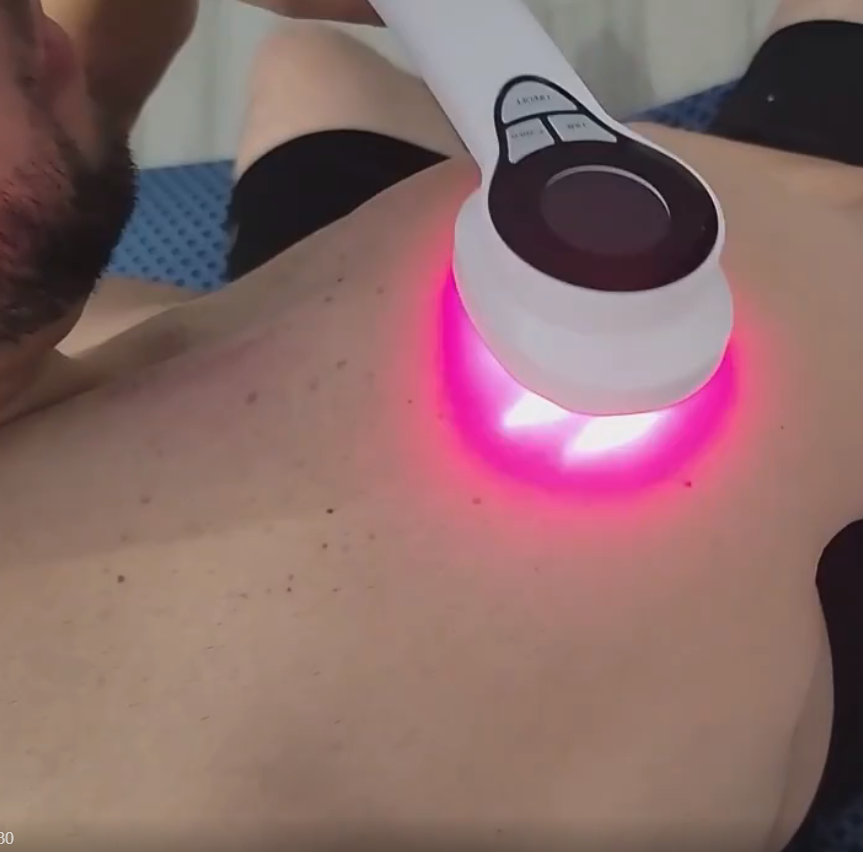
China's swift ascent in diode laser technology is no accident—it reflects a deliberate and well-funded national strategy. Through initiatives like the "Made in China 2025" plan, the country has channeled significant resources into photonics research, with diode lasers as a cornerstone. This has enabled breakthroughs in high-power, high-efficiency devices that rival those from traditional leaders. A key example is the development of gallium nitride (GaN)-based blue and green lasers, where Chinese labs have closed the performance gap while simultaneously driving down costs through scalable manufacturing.
Beyond the lab, China's vertically integrated supply chain gives it a distinctive edge. From raw material processing to chip fabrication and system integration, domestic companies control every link. This integration not only shortens development cycles but also fosters rapid iteration—a critical advantage in industries like consumer electronics and electric vehicles, where diode lasers are increasingly vital. For instance, Chinese lidar manufacturers have leveraged local laser diode production to slash sensor costs, accelerating autonomous driving deployment at a scale unmatched elsewhere.
The country's influence is also reshaping global markets through sheer volume. With massive factories dedicated to laser diode packaging and testing, China has become the world's production hub, supplying components for everything from fiber-optic networks to industrial cutting tools. This manufacturing might is paired with an expanding patent landscape, signaling a shift from follower to innovator. As diode lasers become more embedded in everyday technology, China's role will likely steer both technical directions and pricing trends worldwide.
Precision Material Processing with 808nm Wavelength
Harnessing an 808nm wavelength source opens up unique pathways for micromachining and surface treatment across a broad range of materials. The near-infrared emission couples efficiently with various substrates, enabling clean ablation, selective heating, and precision welding without excessive thermal diffusion. This wavelength strikes an optimal balance between absorption characteristics and practical power delivery, making it suitable for both metals and polymers alike. Fine feature creation becomes repeatable and reliable, with minimal heat-affected zones preserving the integrity of surrounding structures.
In medical device manufacturing and electronics assembly, the 808nm wavelength demonstrates exceptional control for structuring sensitive components. Its consistent beam quality ensures sub-millimeter accuracy when scribing ceramics or trimming thin films, while the gentle photon energy reduces the risk of microcracking. Process engineers value the stability of 808nm diode lasers, which maintain tight tolerances over long production runs, directly translating to higher yields in automated workflows. The ability to modulate power rapidly also supports dynamic processing of heterogeneous materials within a single pass.
Beyond industrial fabrication, 808nm wavelengths excel in advanced surface functionalization techniques like laser-induced periodic surface structures (LIPSS) and coloration of metals. By precisely controlling fluence and scanning patterns, nanoscale ripples or oxide layers can be generated to tailor wettability, friction, or aesthetic appearance without chemical etching. This non-contact approach reduces environmental impact and eliminates consumables, aligning with modern lean manufacturing principles while delivering a distinct competitive edge through customized material properties.
Streamlining Manufacturing Workflows with Laser Efficiency
Laser technology has quietly reshaped how production lines handle cutting, engraving, and marking. Unlike older mechanical methods that wear down tools and demand frequent stops for adjustments, laser systems maintain consistent precision across thousands of cycles. This consistency removes a major source of downtime—unplanned maintenance—and lets teams reallocate hours once spent on manual finishing to tasks where human judgment truly matters. The speed itself isn’t the headline; it’s the way lasers collapse multiple process steps into fewer, cleaner actions that ripple through entire schedules.
Another layer of efficiency comes from how seamlessly modern laser equipment integrates with digital job files. Operators can switch from one design to the next without touching hardware, which drastically shrinks changeover times. In many shops, that flexibility turns small-batch orders from a scheduling headache into a profitable niche. Rather than rigidly batching similar parts, the line adapts on the fly—keeping flow steady regardless of part variety. The result feels less like a choppy series of isolated jobs and more like a continuous, quiet hum of activity.
Beyond the machinery itself, laser-focused workflows encourage clearer data loops. Real-time power monitoring and beam diagnostics feed back into process control, making it possible to spot a drifting parameter before it becomes a defect. This shift from post-inspection catch-up to in-process awareness cuts scrap rates and rework loops that quietly bleed capacity. When you strip away the guesswork around tool wear and alignment, planning becomes more honest, lead times more reliable, and the whole operation gains a reputation for doing what it promises.
From Prototyping to Mass Production: 808nm in Action
Transitioning an 808nm laser system from a benchtop prototype to high-volume manufacturing demands more than simple scaling. Early designs often lean on lab-grade components and loose tolerances, but rethinking thermal management, beam quality control, and power stability becomes non-negotiable once production lines spin up. The shift exposes hidden dependencies—crystal coatings that behave differently under continuous duty, alignment shifts from thermal cycling, and the need for automated test stations that catch sub-nanometer wavelength drift before modules ship.
In practice, the wavelength finds its place in pumping solid-state lasers and in medical or industrial applications where deep tissue penetration or material absorption matters. Real-world feedback loops between production floor data and engineering tweaks are what ultimately tighten yield curves. Iterations on soldering profiles, fiber coupling jigs, and burn-in protocols turn the prototype’s fragile performance into a repeatable, robust output that holds up across thousands of units—without losing the 808nm edge that prompted the design in the first place.
The Future of Industrial Lasers: Trends from Chinese Innovators
The landscape of industrial lasers is being reshaped by a wave of Chinese innovation that prioritizes agility and application-driven design. Rather than chasing incremental performance gains, many Chinese firms are rethinking laser systems from the ground up to serve emerging sectors like electric vehicle battery manufacturing and advanced consumer electronics. This has led to ultra-compact, energy-efficient fiber lasers that can be seamlessly integrated into robotic production lines, dramatically reducing footprint and operational complexity for manufacturers worldwide.
Another quiet but profound shift is the move toward intelligent, self-optimizing laser systems. Leveraging advances in machine vision and real-time processing, Chinese engineers are embedding adaptive control directly into laser heads and power supplies. These systems automatically detect material variations—such as surface contaminants, thickness changes, or joint geometry—and instantly adjust parameters like pulse duration and power density. The result is unprecedented consistency in welding and cutting, even in high-mix, low-volume production environments where traditional setups would struggle.
Looking ahead, the convergence of green manufacturing mandates and laser technology is accelerating. Chinese innovators are pioneering techniques that minimize energy consumption and eliminate harmful consumables, such as dry laser cleaning for surface preparation and high-brightness direct diode lasers that operate with fewer optical components. These approaches not only lower the carbon footprint of heavy industries but also unlock new use cases in shipbuilding, aerospace, and renewable energy infrastructure. As these trends mature, the industrial laser will evolve from a precision tool into a versatile, intelligent, and sustainable manufacturing partner, with Chinese R&D playing a pivotal role in its global adoption.
FAQ
The 808nm laser is widely used for precision cutting, welding, and engraving of materials like metals and plastics. In China, it's a go-to choice for electronics assembly, battery tab welding, and medical device manufacturing, where clean and controlled energy delivery is essential.
Its wavelength is efficiently absorbed by a range of materials, particularly those used in electronics and automotive components, allowing for deeper penetration with less surface damage. This results in stronger welds and sharper cuts without excessive heat spread, which is crucial for miniaturized parts.
Compared to traditional lamp-pumped lasers, diode-pumped 808nm systems offer higher electrical efficiency, longer maintenance intervals, and a more compact footprint. Chinese factories appreciate the lower electricity consumption and reduced downtime, which align with cost-savings and lean production goals.
Absolutely. It's a key light source for pumping Nd:YAG lasers in 3D printing, while directly serving as a cutting or ablation tool in micromachining. This dual role makes it a versatile asset in modern workshops that blend different production techniques under one roof.
Since 808nm radiation is near-infrared and invisible to the naked eye, proper laser safety goggles with OD4+ rating at this wavelength are mandatory. Enclosed beam paths, interlock systems on machine doors, and regular training on beam hazards also form the core of a robust safety protocol.
Beam quality determines focusability; a high-quality, TEM00 beam can be focused to a tiny spot, enabling consistent weld seams or cut widths across thousands of parts. Even minor degradation can lead to unacceptable variations, so regular beam profiling is a standard practice in high-volume lines.
It's largely about cleanliness and cooling. Ensuring the diode stacks and optics are free of dust, monitoring coolant temperature and flow, and periodically checking for any gradual power decline using a calibrated power meter will catch most issues before they cause unscheduled stoppages.
It excels at joining delicate, dissimilar materials like stainless steel and platinum-iridium alloys in minimally invasive surgical tools. The pinpoint accuracy and minimal thermal input prevent warping and leave smooth, burr-free surfaces, which are critical for patient safety and device longevity.
Conclusion
China's 808nm laser technology is reshaping industrial landscapes by delivering an unmatched blend of precision and efficiency. The wavelength's optimal absorption characteristics enable exceptionally clean cuts, welds, and marks on a diverse range of materials, from delicate electronics to robust metals. This technical edge stems from China's concentrated investment in diode laser R&D, which has driven down costs while boosting beam quality and reliability. As a result, manufacturers are integrating these lasers into workflows that once relied on slower, less accurate methods, achieving micron-level tolerances and dramatically reduced post-processing. The shift is not merely incremental; it represents a fundamental upgrade in how modern production lines operate, with Chinese innovators pushing the envelope in compact, energy-efficient designs that fit seamlessly into automated environments.
Beyond the factory floor, the versatility of 808nm lasers bridges the gap between rapid prototyping and high-volume manufacturing. Engineers can iterate designs swiftly, using the same laser system to validate concepts and then scale to mass production without swapping tools. This continuity slashes time-to-market and ensures consistency from first sample to final product. Looking ahead, trends from Chinese developers point toward smarter, adaptive laser systems integrated with real-time monitoring and AI-driven optimization. These advances promise to further streamline manufacturing workflows, minimize waste, and open new possibilities in microfabrication and additive processes. In essence, China's 808nm laser ecosystem is not just supplying hardware; it is enabling a new era of agile, high-precision industry where innovation and practicality converge.
Contact Us
Contact Person: Leon Yi
Email: [email protected]
Tel/WhatsApp: +86 17363316873
Website: https://zzgt.en.alibaba.com/