

Bulk Spring Energized PTFE Seals How to Choose the Right Option for Harsh Environments
2026-11-18
Seals fail quietly at first—then all at once. In aggressive media, high pressures, or temperatures that swing past material limits, a standard spring energized PTFE seal can turn from a minor leak into unplanned downtime. This guide cuts through the usual catalog talk and looks at what actually matters when selecting bulk spring energized PTFE seals for harsh environments. Along the way, you’ll see how TAIFNO approaches the same challenges, with options designed to hold their shape when the conditions do their worst. If you’ve ever wondered why two seals with similar specs behave completely differently in the field, the next few sections will give you a clearer way to choose—and a better reason to stop guessing.
Where Spring Energized PTFE Seals Earn Their Place in Harsh Duty
Spring energized PTFE seals earn their keep when ordinary seals quit. They combine the chemical resistance of PTFE with the mechanical force of a metallic spring, letting the lip stay tight against the shaft or bore even as temperatures swing, pressure fluctuates, or the PTFE begins to cold-flow. That resilience matters most in valves, pumps, mixers, and rotating equipment where a seal failure means downtime, contamination, or a safety risk.
Harsh duty covers a wide range: cryogenic temperatures that make elastomers brittle, aggressive acids that eat standard O-rings, food-grade processes that demand purity, and slow rotating shafts where frictional heat is minimal. In each case, the spring supplies a controlled load that compensates for PTFE’s lack of memory. Without that, a lip seal would relax and start leaking within hours. With it, the seal maintains a low-friction, self-lubricating interface that works dry, wet, or in media that would destroy most sealing materials.
The key is matching the spring type and cavity design to the actual operating window. Cantilever springs suit low-load, high-speed applications; helical springs offer a wider deflection range; canted coil springs deliver a nearly constant force over a long stroke. Sizing the interference, jacket geometry, and energizer force together keeps the contact stress high enough to seal but low enough to avoid excessive wear. That balance is what separates a reliable spring energized PTFE seal from a generic substitute when the duty truly gets harsh.
Breaking Down Jacket, Spring, and Hardware Fit for Aggressive Media
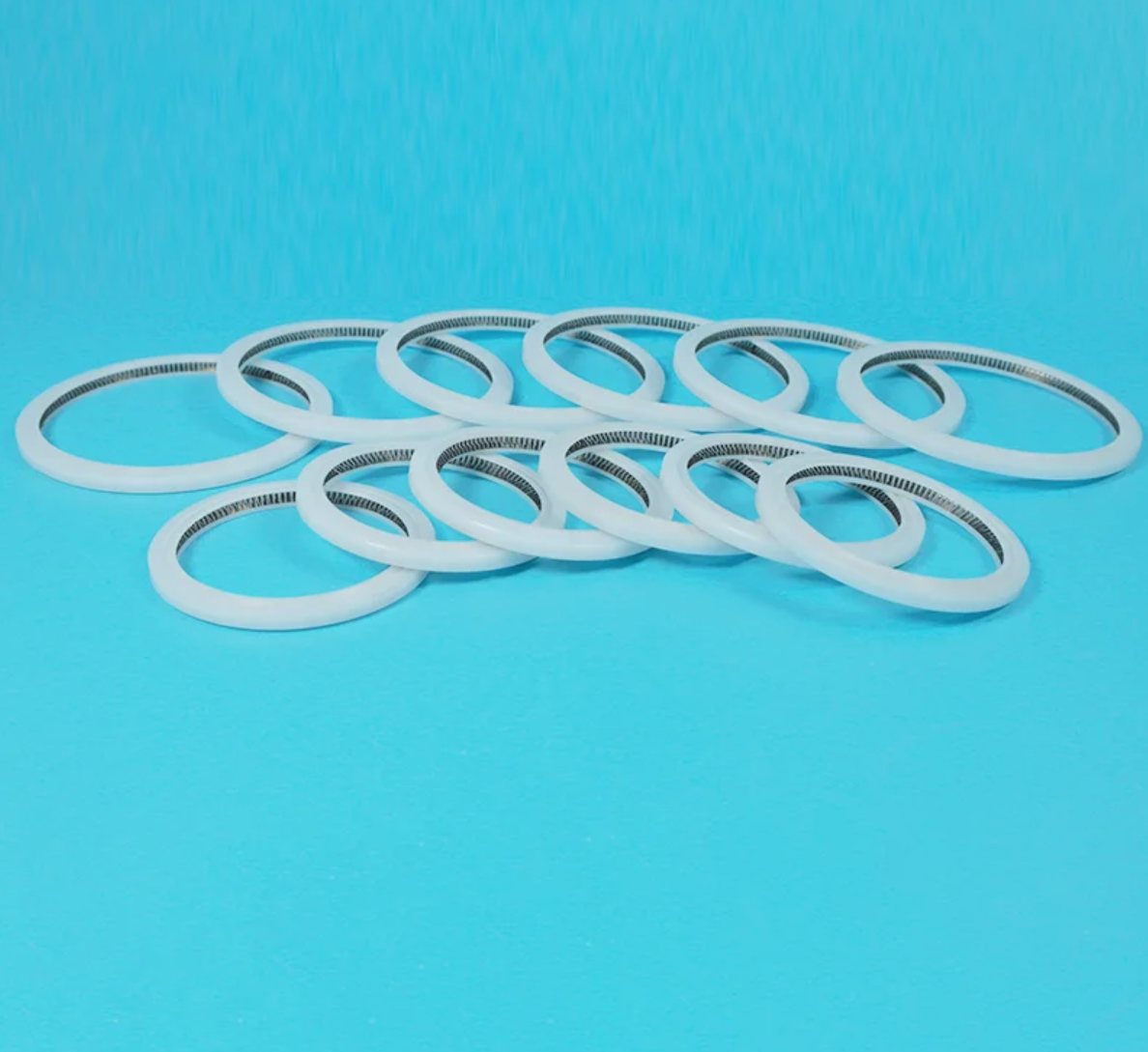
In aggressive media, the relationship between the jacket, spring, and surrounding hardware often fails long before the base material does. Corrosion rarely attacks a single component in isolation; it follows the small gaps, trapped volumes, and mismatched surfaces where the jacket meets the spring cavity. A spring that looks chemically compatible on paper can still lose preload when the jacket clearance allows solids to pack in, turning a flexible area into a rigid plug. The result is not always a dramatic rupture. More often, the assembly drifts out of its working range and stops compensating for thermal or pressure swings.
Hardware selection has to account for more than chemical resistance. Bolts, locating pins, and retaining rings sitting near the jacket can create galvanic couples if their electrochemical potential is too far apart, especially in acidic or high-chloride service. Coated fasteners may help in the short term, but once the coating is scratched during assembly, the exposed base metal becomes a focal point for localized attack. Even the fit between the spring and its guide matters: a tight fit can hold aggressive fluid in a crevice, while an overly loose fit allows vibration and cyclic wear to remove protective oxide layers.
A more useful approach is to treat the jacket, spring, and hardware as one tolerance stack, not as separate items on a bill of materials. That means matching thermal expansion rates, controlling surface finish inside the spring cavity, and specifying seal points that keep aggressive media from migrating into places where evaporation can concentrate corrosive species. When the stack is designed as a system, the spring keeps its travel, the jacket keeps its alignment, and the hardware stays predictable over time.
Pressure, Temperature, and Speed Limits That Rewrite the Shortlist
Put a bearing under enough heat and the usual candidates fall away before the first prototype spins up. Alloy steels that look strong on a room-temperature data sheet can soften into irrelevance when surface temperatures climb past 250°C, while a hot-hardness curve tells the real story. The shortlist starts shifting once you stop asking what survives and start asking what keeps its dimensions, clearance, and fatigue life when thermal expansion is working against you.
Pressure does something similar, but it punishes differently. A polymer seal may hold at 20 bar and extrude through a clearance gap at 40. High contact stress pushes designers away from coated aluminum and toward case-hardened steels or ceramics, not because they are universally better, but because they fail later under repeated peak loads. The shortlist becomes less about material class and more about how the part reacts when the load arrives fast and leaves slowly.
Speed limits are rarely about rotation alone. They are about what happens to lubrication, balance, and resonance when surface velocities climb. A shaft material that performs quietly at 3,000 rpm can become a liability at 12,000 if its critical speed sits too close to the operating window. That is when the list gets rewritten: materials with higher stiffness-to-weight ratios move up, heavier choices drop out, and the final pick often has less to do with strength than with vibration behavior.
Bulk Sourcing Without Losing Lot-to-Lot Consistency
Scaling order volumes usually introduces a quiet risk: materials from different production runs start drifting apart in viscosity, particle size, shade, or reactivity. The problem rarely shows up in a certificate of analysis. It appears later, on the line, when one batch flows a little faster than the last or when color shifts just enough to trigger a customer complaint. Keeping lot-to-lot consistency under bulk sourcing means treating supplier process data as seriously as the final spec sheet, and refusing to accept that "within range" automatically equals "same."
One practical approach is to lock the upstream variables that actually drive variation, not just the finished values. Ask for retained samples from the previous three lots before committing to a larger contract. Compare particle size distribution curves instead of average sizes, or review drying time spreads rather than single-point moisture readings. Suppliers that can share this level of process detail tend to have tighter control loops and fewer hidden changes when demand pushes them to run extra shifts.
Bulk orders also benefit from a pre-shipment approval step that is small enough to be fast but meaningful enough to catch drift. A few hundred grams or liters, pulled from the exact lot under consideration, can be tested against your reference standard before the full shipment moves. This is not about distrust; it is about building a clear, shared definition of consistency that survives volume increases, personnel changes, and tighter lead times.
Installation and Surface Finish Details That Decide Seal Life
A surprising number of seal failures are blamed on compound choice or temperature limits when the real cause sits further upstream: the way the part was put in. A lip that gets folded backward during pressing, a shaft keyway left unburred, or a housing bore with a sharp entry edge can slice a new seal before the equipment ever reaches working pressure. Once that small nick or micro-tear exists, it tends to open up under repeated shaft movement, allowing fluid to escape even though the seal material itself was perfectly adequate.
Surface finish on the mating shaft is just as decisive, but the common focus on a single roughness number misses the bigger picture. A dynamic lip typically works best against a finish that is smooth enough not to abrade the lip but rough enough to hold a thin lubricating film. Equally important is the lay of the machining marks. A spiral lead from grinding can act like a tiny pump, pulling oil out along the shaft in one direction, while a polished surface that is too glassy may starve the lip of lubrication and cause it to run hot.
What finally separates a long seal life from a premature teardown is the interaction between those two factors. A well-finished shaft cannot compensate for a lip that was forced over a sharp shoulder without protection, and careful installation cannot fix a surface covered in chatter marks or corrosion pits. Checking the counterbore chamfer, using a proper driver instead of a hammer, wiping the bore clean, and inspecting the shaft by touch before assembly are often more valuable than chasing a premium seal material. These are the details that leak, rather than the seal itself.
Qualifying a Supplier Before the First Full-Scale Order
A supplier can look flawless in a sales meeting and still fall apart the moment they have to handle real volume. Before committing to a first full-scale order, it is worth moving beyond the basics of certifications and pricing. Ask for a trial run that mirrors the actual conditions you expect: the same materials, the same tolerances, the same timeline pressure, and the same communication channels. A short production sample under these conditions reveals far more than a glossy capabilities deck ever will.
Pay attention to how the supplier handles problems, not just how they handle easy wins. Deliberately introduce a small change or an unexpected request during the evaluation period. Some suppliers will push back thoughtfully with alternatives, while others will quietly agree and then deliver something different. That difference is often the clearest signal of what the relationship will look like when the stakes are higher.
It also helps to speak with a reference who is not on the supplier's preferred list. Ask about late shipments, quality drift, and how disputes were resolved. A first full-scale order is rarely ruined by one big failure; it is usually damaged by repeated small compromises that were never corrected early. Qualifying a supplier is less about finding a perfect partner and more about finding one whose habits you can live with under real production conditions.
FAQ
Start with the actual pressure and temperature range, not just the line's nominal rating. PTFE jackets handle the chemical exposure, but the spring inside sets the contact force. For high pressure, a heavier spring prevents extrusion and maintains lip contact. If the chemical is aggressive, the jacket grade may need to be modified PTFE rather than virgin PTFE to resist permeation.
Match the spring to the media that could reach it if the jacket wears or gets damaged. Stainless steel works for many clean services, but chloride-rich or acidic environments often demand Hastelloy or another corrosion-resistant alloy. The spring is not normally wetted, but planning for seal failure avoids a small leak turning into a corroded spring and hard particle generation.
No. Virgin PTFE can wear quickly if the media contains fine solids or the shaft surface is rough. Filled compounds such as carbon-filled or glass-filled PTFE reduce wear but can be slightly less conformable. In abrasive service, pick a filled jacket only after checking shaft hardness and surface finish; otherwise the seal may polish the shaft or embed particles.
The main advantage is consistency across equipment and shorter lead times for replacements. If you qualify one design and order a large lot, every unit comes from the same material and production run, which reduces variation in spring load and lip geometry. It also lets you keep a critical spare inventory without re-qualifying each time.
Sometimes, but only if the hardware shares the same groove dimensions and motion type. A seal designed for a rotary shaft may not handle a reciprocating rod well even if the diameter is similar. Standardizing on one profile can simplify inventory, but confirm the gland depth, width, and surface finish before doing it.
Watch for rising friction, visible PTFE wear particles, or a gradual drop in sealing pressure that shows up as weepage after temperature cycles. If the spring loses force or the jacket develops cracks at the heel, the environment is likely beyond the material combination. Hardening of the PTFE, discoloration, or extrusion into the clearance gap are also signs to revisit the design.
Run a controlled trial in the worst-case unit first, including thermal cycling and any cleaning or sterilization steps. Measure leakage and friction over a realistic interval, then inspect the seal for cracking, wear, or spring relaxation. If the trial data looks good, lock the part number and material callouts before ordering the full bulk quantity.
Conclusion
Spring energized PTFE seals hold up where conventional elastomers either swell, harden, or lose resilience: aggressive chemicals, cryogenic temperatures, high-pressure gas, and dry-running conditions. Choosing the right bulk option starts with separating the jacket, spring, and hardware. The PTFE jacket handles chemical compatibility and friction, but it is the spring behind the lip that maintains contact as wear develops and thermal cycles shift the hardware. For aggressive media, filled PTFE grades such as carbon, glass, or mineral-filled compounds change creep resistance and wear behavior, while spring materials like stainless steel, Elgiloy, or Hastelloy must match the process fluid. Pressure, temperature, and sliding speed then narrow the list quickly: high pressures require stronger spring loads and backup rings; high temperatures push the jacket into creep territory and call for a more temperature-stable filler; high speeds demand lower friction compounds and careful heat dissipation.
Bulk orders introduce another test: lot-to-lot consistency. Small variations in PTFE resin, sintering time, spring force, or machining tolerances can produce seals that fit the drawing but not the application. A practical approach is to request batch-level data for spring load at working height, jacket lip geometry, and material certificates, rather than relying on a single type-test report. Installation details are equally decisive. Surface finish on shafts and bores, lead-in chamfers, and cleanliness during assembly often determine whether the seal survives start-up or shaves its lip in the first strokes. Before placing a full-scale order, qualify the supplier with a limited pre-production run that includes dimensional Cpk data, traceability of raw materials, and cleanliness controls. That sequence—matching materials and spring to the duty, setting realistic pressure-temperature-speed limits, locking down batch consistency, and proving the supplier on a smaller run—gives bulk spring energized PTFE seals a much better chance of performing without hidden field failures.
Contact Us
Contact Person: Tommy Xiao
Email: [email protected]
Tel/WhatsApp: 8615651509888
Website: https://www.ptfe-factory.com