

Best Electric Wheelchairs for the Elderly Recommended by Mobility Experts
2026-11-28
Finding the right electric wheelchair for an older adult often feels like navigating a maze of specs, safety claims, and conflicting advice. Mobility experts keep returning to a few models that genuinely balance stability, comfort, and ease of use—and one name, Freedomchair, has become a quiet favorite for its practical design and everyday reliability. In this guide, we break down the top expert-recommended electric wheelchairs, what makes each stand out, and how to match the right fit to your loved one's daily needs.
What Mobility Experts Notice First When Testing a Power Chair
Most evaluators start with the seat and footrest, not the motor. They ask the user to transfer in with the controller off, then check if the hips can slide back without the knees banging into the shroud. If the seat pan flexes under weight or the armrests sit too far forward, the rest of the test rarely changes their mind.
Next comes low-speed maneuvering around doorframes and a tight U-turn. A good chair holds its line on smooth floor and doesn’t overcorrect when the joystick is released. The motors should spool down gently, not grab. Many testers also ride over a threshold at an angle; that small twist exposes whether the front casters flutter or the rear wheels lift.
Battery placement and cable routing get a visual check early, too. If the batteries sit high behind the seat or cables droop near moving parts, the chair may feel tippy during daily use or wear through wires after a few months. Clean routing and a low, centered weight distribution tell an expert the frame was designed around the user, not just assembled around a parts list.
Seat Comfort and Positioning Mistakes That Show Up After Thirty Minutes
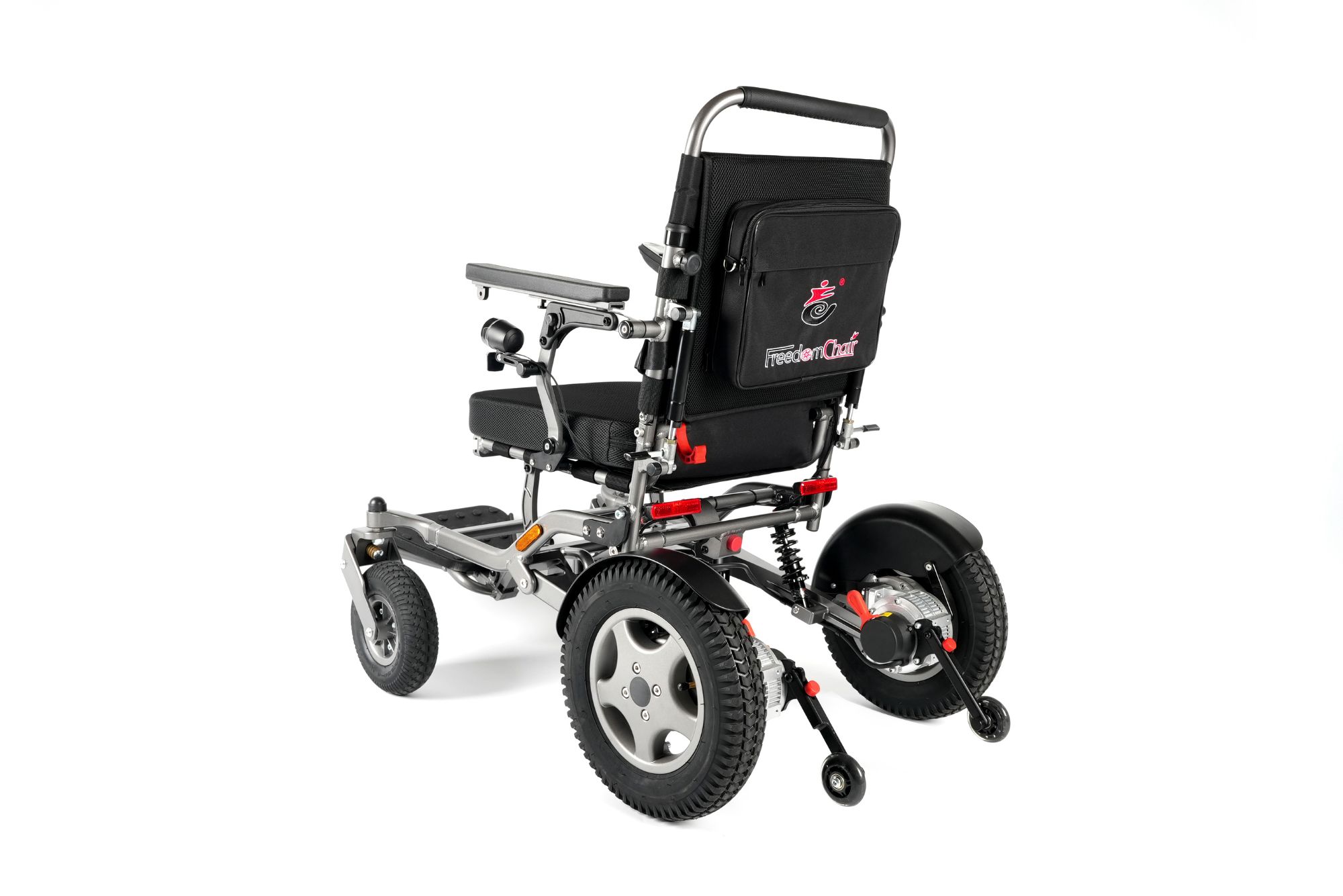
Most seats feel fine for the first ten minutes. It is only after the half-hour mark that a slight forward tilt of the pelvis, a seat base that is too long, or a lumbar pad sitting just a little too low starts to register as a dull ache across the hip or lower back. The problem is rarely the cushion itself. It is the way the body slowly slides into a posture it can hold for a while but not recover from.
One common mistake is treating seat comfort as a static setting. People adjust the recline once, drive or work for thirty minutes, and then blame the seat when the real issue is a lack of small position changes. Thigh support that cuts into the underside of the leg only becomes obvious after sustained pressure, and a headrest angled too far forward may go unnoticed until neck stiffness begins to build. By the time the discomfort appears, the original position has already been held long enough to cause fatigue.
The fixes are usually small, but they are easiest to test after the thirty-minute warning sign shows up. Moving the seat height so the knees are slightly below the hips, shortening the reach to the wheel or desk, and tilting the cushion so the front edge does not dig into the legs can change how the body settles over time. Rather than chasing a perfectly plush feel, it helps to check what has gone numb, stiff, or tight after half an hour and adjust from there.
Battery Range on Paper Versus a Full Day of Errands and Appointments
The official range number on a spec sheet rarely survives contact with a real calendar. A vehicle rated for 280 miles might look reassuring, but a Tuesday packed with school drop-offs, a vet appointment, a grocery run, and a stop at the post office tells a different story. Short trips with long pauses let the cabin cool or heat repeatedly, and every restart draws extra energy just to get the systems back up to temperature. By the time you pull into the driveway, the estimate can dip noticeably even though you never left town.
Stop-and-go traffic, which some assume is easy on an EV, also chips away at range in surprising ways. Climate control idling while you wait for a child outside a practice room, frequent acceleration from lights, and the occasional detour all add load that a steady highway cruise would not. Cold mornings make it worse, as the battery spends more of its stored energy warming itself and the cabin before the wheels even turn. The result is a practical range that feels closer to two-thirds of the printed figure, not the full number.
What matters is not the best-case number but the buffer you have at the end of an ordinary day. A car that returns home with 12 percent left after a list of errands is more honest than one that advertises 300 miles and leaves you anxious about the next charger. For anyone juggling appointments across several neighborhoods, a quick top-up at lunch or an overnight charge becomes part of the routine—not because the battery is weak, but because real-world use is messier than a laboratory range test.
Doorway Clearance, Turning Radius, and the Rooms Most Homes Overlook
Most floor plans look fine on paper until a chair or a mattress has to make the trip from the front door to the back bedroom. Doorway clearance gets treated as a finish detail, but a 28-inch door in a hallway that bends sharply can undo months of planning. The clear opening rarely matches the slab width once hinges, trim, and door thickness take their share.
Turning radius matters just as much as the opening itself. A compact bathroom or laundry pass-through may check the box for a 30-inch door but still fail the moment someone has to pivot into the room from a narrow corridor. People tend to measure straight lines, but the actual move happens in arcs, and those arcs need floor space free of vanities, steps, and door swings.
The rooms that get overlooked are usually the ones that see the hardest daily use: the mudroom, the pantry, the powder room, and the utility closet. These spaces are squeezed after the kitchen and living areas are finalized, so they inherit the leftover width. Giving them a proper door clearance and a small turning square isn't just about resale or accessibility; it changes whether the house feels easy to live in or quietly fights you every time you carry a laundry basket through.
Transporting a Power Chair Without Straining a Caregiver’s Back
Most back strain during power chair transport starts long before the lift itself. Strip the chair down first: remove the battery pack, leg rests, headrest, and any side cushions. A power chair can weigh over 150 pounds fully assembled, and shedding even 30 pounds changes the leverage completely. Fold the backrest down if the frame allows it, and set the heaviest pieces on a rolling cart instead of carrying them across the driveway.
When it is time to move the base, let the wheels do the work whenever possible. Use a portable folding ramp with a non-slip surface and keep the slope as low as you can manage, even if that means moving the vehicle closer to level ground. If the chair still has power, engage the lowest speed setting and drive it up the ramp while you guide from the side rather than pushing from behind. For a dead battery or a steep incline, a small electric winch or pull strap anchored to the vehicle floor gives you mechanical advantage without twisting your spine.
If lifting is unavoidable, think in short, staged moves instead of one big heave. Stand with your feet staggered, tighten your core, and grip the frame near your hips, not out at arm’s length. Lift only enough to clear the threshold, then rest the chair on the edge and reposition. A second person should handle the far side even if they are only stabilizing, because a sudden tilt is what catches a back off guard. Never rotate your torso while holding the load; step or pivot with your feet to change direction.
Controller Options for Arthritic Hands, Tremors, and Limited Dexterity
Finding a comfortable controller often starts with rethinking what a standard layout needs to be. For many players, traditional shoulder buttons and tight thumbsticks demand too much force or precision. Options like low-resistance sticks, oversized buttons, and soft-touch pads can reduce strain, while modular setups let you position inputs where your hands naturally rest instead of forcing your fingers toward fixed spots.
Software-level adjustments matter just as much as hardware. Remapping every button, turning rapid presses into toggle commands, and widening dead zones can make an off-the-shelf pad far friendlier. Some platforms now include system-wide accessibility settings, so a shaky input does not translate into an accidental jump or menu exit. If a particular motion causes pain, assign that action to a grip button, a foot pedal, or even a keyboard key that sits within comfortable reach.
Dedicated adaptive controllers take that idea further by breaking the control surface into separate switches, large domes, and sip-and-puff sensors. The Xbox Adaptive Controller, PlayStation Access controller, and Hori Flex all approach this differently, but they share a common strength: every input can be spread out and replaced with something that works for your specific range of motion. Pairing one of these with adjustable stands or Velcro-mounted switches can turn a frustrating session into something that feels natural.
FAQ
Seat comfort, simple controls, battery range, turning radius, and whether the chair fits through doorways at home. A model that is easy to charge and does not demand much strength to operate tends to get used more often.
Many are. Look for reinforced frames and solid tires if the chair will be used daily. Portable models sometimes trade some suspension for lighter weight, so check the weight capacity and whether the seat cushion offers enough support for longer sitting.
Joystick sensitivity adjustment, large buttons, and controls that can be placed on either armrest help a lot. Some chairs also allow a caregiver to take over with an attendant control, which is useful on difficult days.
Most mid-range models cover 10 to 15 miles, but that depends on user weight, terrain, and temperature. If the person likes to go shopping or visit neighbors, aim for at least 12 miles of real-world range rather than the manufacturer's best-case figure.
It can be, provided the caregiver or user can lift the folded frame. Look for one that separates into lighter pieces or folds compactly enough to fit in a trunk without removing the battery. Airline-approved batteries matter if flying is part of the plan.
Anti-tip wheels, electromagnetic brakes that engage when the joystick is released, and a stable base on slopes are essential. Also check how the chair performs on ramps and uneven sidewalks, not just indoors on smooth floors.
Coverage varies. Medicare may help if a doctor documents that the chair is medically necessary for use inside the home. Private insurance often follows similar rules but may have different prior authorization steps, so it is worth calling the plan before choosing a model.
Basic travel models start around $1,200 to $2,500. Mid-range chairs with better seats, longer batteries, and more durable frames run $2,500 to $5,000. Complex rehab chairs can go higher, but most seniors do well in the middle range if the fit is right.
Conclusion
When mobility experts evaluate an electric wheelchair for an older adult, they rarely start with the sales sheet. The first thing they notice is how stable the chair feels during low-speed turns and whether the base responds predictably on tile, carpet, and slight outdoor lips. After that, they watch how the user sits. A seat that feels fine in a five-minute trial often reveals its flaws at the thirty-minute mark: the front edge biting into the backs of the thighs, lumbar support hitting too low, or armrests forcing the shoulders upward. Those positioning issues matter more than motor wattage because they determine whether the chair gets used daily or left in a corner.
Battery figures on paper also deserve a second look. A range estimate measured on flat ground rarely matches a full day of errands and appointments that involves ramps, uneven sidewalks, waiting room stops, and repeated starts. In real conditions, many users plan for roughly two-thirds of the advertised range to avoid getting stranded. Clearance is another quiet dealbreaker: the doorway into an older bathroom, the turn from a hallway into a bedroom, or a narrow laundry room can expose turning radius limits that a showroom floor never does. If the chair will travel by car, look for a model that breaks down or folds in a way that lets a caregiver slide it onto a lift or into a trunk without a deep forward bend. Finally, the controller should match the hands that will use it. Oversized joysticks, adjustable speed ramping, left- or right-hand mounting, and buttons that do not require a firm pinch are far more practical than a sleek touchscreen for someone with arthritis, tremors, or reduced dexterity.
Contact Us
Contact Person: Calvin Fan
Email: [email protected]
Tel/WhatsApp: 8618913265607
Website: www.freedom-chair.com