

Best Electric Heating Reactor: A Complete Buyer's Guide
2026-06-26
Selecting the perfect electric heating reactor isn't just a purchase—it's a decision that shapes your lab's efficiency and output quality. Whether you're scaling up or refining a process, the wrong choice leads to costly downtime and inconsistent results. This guide cuts through the confusion, walking you through essential factors and expert tips. For those who prioritize durability and precision, Shenzhou Chemical Industry offers reactors that consistently meet rigorous demands. Here's everything you need to make an informed decision.
Inside the Electric Heating Reactor: How It Really Works
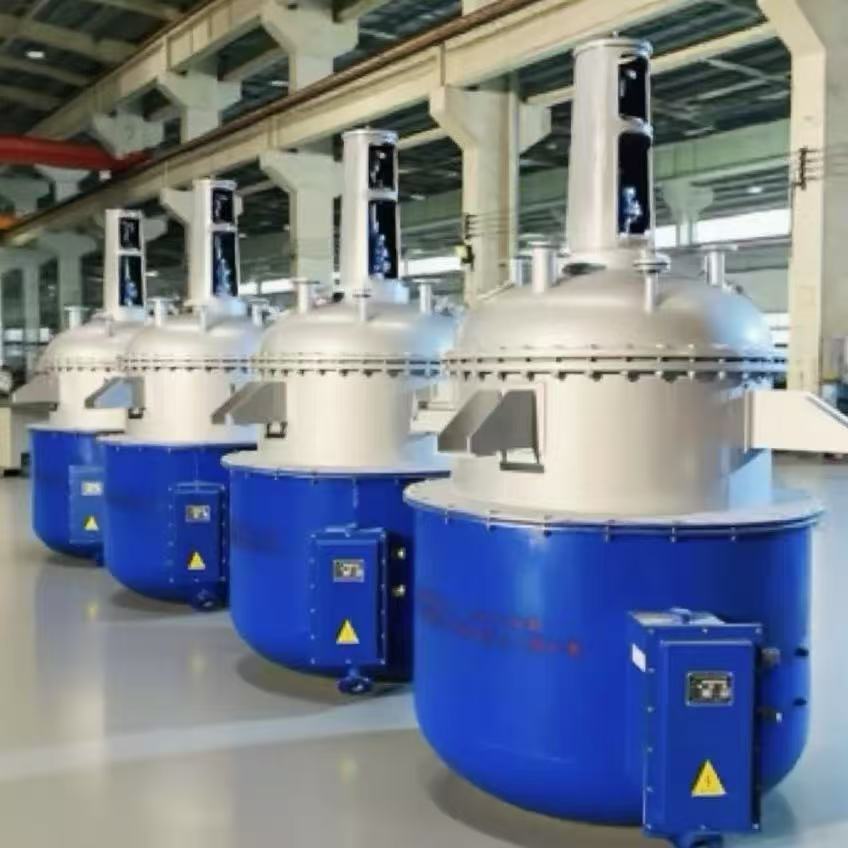
At first glance, an electric heating reactor might look like a simple steel vessel with a few wires attached, but peel back the insulation and you’ll find a tightly choreographed thermal system. The core of it usually relies on either direct immersion heaters—where tubular elements sit right in the process fluid—or external jacketed designs that wrap the vessel in resistive coils or cartridge heaters. Each approach has its quirks: immersion heaters deliver rapid, localized heat but risk coking or fouling on the element surface, while jacketed setups spread energy more evenly but demand meticulous thermal contact to avoid dead zones where heat transfer chokes and reaction rates plummet.
What really makes the difference is how the reactor handles the heat once it’s generated. A dense layer of mineral wool or ceramic fiber cladding traps energy, but that’s just the start. Embedded thermocouples feed real-time data into a PID controller that doesn’t just toggle power on and off; it constantly modulates the output—sometimes at a sub-second cadence—to iron out oscillations before they skew the reaction profile. In agitated systems, the impeller design becomes part of the thermal equation too, as even a slight mismatch between mixing speed and heat input can create stubborn thermal gradients that no amount of insulation can fix.
On the electrical side, things get interesting fast. Solid-state relays or silicon-controlled rectifiers chop high-voltage AC into precisely metered pulses, letting the system ramp from a gentle simmer to full power without the jolt of a mechanical contactor. This matters because sudden inrush currents don’t just stress the grid—they can induce micro-arcing at connection points that degrades heaters slowly over hundreds of cycles. Safety logic is baked right into the power flow: if a high-limit sensor detects an excursion, it kills the firing circuit independently of the main controller, often through a redundant thermal cutoff hardwired to the contactor coil. That’s the unglamorous side, but it’s what keeps the reactor from turning into a runaway pressure bomb when a thermocouple fails mid-batch.
What You're Missing When Picking the Right Model
It’s easy to get tunnel vision when comparing model benchmarks—accuracy, speed, or parameter count often dominate the conversation. But real-world performance has little to do with these isolated numbers. What’s frequently overlooked is how a model behaves under the specific conditions of your data, your latency requirements, and the subtle ways your users actually phrase their queries. A model that shines on public datasets may stumble when faced with the messy, contradictory, or domain-specific language that shows up in your logs. The gap between the leaderboard and your production environment is where most selection processes fail.
Another blind spot is the cost of integration and maintenance, which extends far beyond inference pricing. How much engineering effort will it take to keep the model aligned with evolving expectations or to debug its edge cases? Does the model’s output style demand extensive post-processing just to fit your UI? Teams often neglect the human overhead—monitoring, fallback logic, and the quiet burden of explaining model decisions to stakeholders. These factors compound over time and can turn an initially cheap model into a resource drain.
Finally, there’s the question of adaptability. A model might perform adequately today, but will it keep up as your product shifts? The pace of iteration on your side matters as much as the model’s static capabilities. Picking the right model means weighing not just where you are, but where you’re heading—and whether the model’s roadmap, licensing, and community support will travel with you. Ignoring that horizon is a recipe for costly retooling down the line.
Design Variants: Matching the Reactor to Your Process
When scaling up from lab to production, the physical configuration of your reactor can make or break the process. A simple change in aspect ratio, baffle design, or impeller type can transform mixing efficiency, heat transfer, and even reaction selectivity. For highly exothermic reactions, a jacketed glass-lined vessel with a retreat curve impeller might be your safe bet, but for viscous non-Newtonian fluids, an anchor agitator hugging the wall ensures continuous turnover without dead zones. The key is to map the fluid dynamics and heat dissipation needs directly onto the vessel geometry—there is no universal best design, only the one that aligns with your specific mass and energy balances.
Continuous stirred-tank reactors (CSTRs) and plug flow reactors (PFRs) represent two fundamentally different philosophies. A CSTR thrives when you need uniform composition and temperature throughout the vessel, making it ideal for steady-state operations with stable catalysts or delicate suspensions. In contrast, a PFR’s tubular design gives you a spatial gradient of concentration and temperature, which can be harnessed to suppress side reactions by precisely controlling residence time. The choice often comes down to kinetics: if your reaction is zero order, a CSTR might be overengineered; if it’s highly positive order, a PFR can dramatically shrink reactor volume while boosting yield.
Don’t overlook the role of internals and auxiliary components. Coils, spargers, and draft tubes aren’t just add-ons—they redefine how energy and materials move through the system. In gas–liquid reactions, a stirred autoclave with a hollow shaft and Rushton turbines can create such intense interfacial area that the reaction flips from mass-transfer-limited to kinetically controlled. Similarly, photochemical reactors need transparent walls and carefully positioned light sources, while electrochemical cells demand electrode spacing and current distribution simulation. Matching the reactor to your process is a multidisciplinary problem that blends chemical kinetics, transport phenomena, and mechanical engineering; get it right, and you unlock efficiency gains that fundamentals textbooks can only hint at.
Cutting Through the Hype: True Efficiency Indicators
When organizations chase efficiency, they often fixate on speed and output volume. But that's like judging a car solely by its top speed without considering fuel consumption or reliability. True efficiency lives in the ratio of meaningful outcomes to resources consumed, not in how fast a task gets checked off. A team that delivers 10 rushed, error-ridden tasks might look productive, while the one delivering two polished solutions that actually move the needle is the real efficiency champion. It's about impact density, not just activity.
Another overlooked indicator is the friction a process generates over time. A workflow might seem efficient in a controlled demo but crumble when exceptions arise. Watch how much coordination overhead, back-and-forth communication, or workaround-building happens behind the scenes. High-efficiency environments minimize these hidden taxes, allowing people to stay in flow. If a so-called streamlined process demands constant vigilance to keep from derailing, it's not efficient—it's fragile.
Finally, consider adaptability as an efficiency metric. A rigid system that optimizes for yesterday's conditions will become a bottleneck tomorrow. True efficiency includes the capacity to absorb change without heavy rework. Whether it's onboarding new team members, shifting priorities, or integrating a new tool, if the response is slow and painful, the initial efficiency was an illusion built on brittle shortcuts. The quiet mark of a well-tuned operation is how gracefully it handles the unexpected.
Care Routines That Keep Your Reactor Running for Years
A steady hand with daily checks makes all the difference. Flickering gauges, odd hums, or pressure dips rarely announce themselves loudly, but catching them early saves you from midnight scrambles. I’ve learned to listen to the coolant pump’s rhythm like a heartbeat—any skip, and I know to trace the line before it escalates.
Cleanliness isn’t just cosmetic. Dust-choked vents and grimy sensor ports breed false readings that can nudge you toward unnecessary shutdowns. A soft brush and a microfiber cloth, used weekly on exposed fittings, keep the data honest. And never underestimate the power of a well-lubed gasket: a dry seal flexes, cracks, and invites leaks that slowly erode efficiency.
Longevity hides in the logbook. Writing down every fluid top-up, temperature swing, and filter swap turns random anomalies into patterns. Six months of notes once revealed a seasonal humidity issue I’d never have spotted otherwise. Pair that with a deep-dive inspection every quarter—pulling covers, testing backups, and recalibrating—and your reactor doesn’t just run; it settles into a reliable, almost boring reliability that’s worth its weight in uptime.
Surprising Settings Where These Reactors Prove Essential
While most people picture reactors inside massive power plants, these compact energy sources have found their way into some truly unexpected corners of our world. From the bottom of the ocean to the cold expanse of outer space, reactors provide dependable electricity in places where traditional fuels simply can't compete.
One surprising application is in remote arctic research stations, where diesel generators would require constant and costly fuel deliveries over treacherous terrain. Here, small nuclear reactors operate autonomously for years, offering both heat and electricity without a single refueling stop. Similarly, deep-sea exploration vessels rely on these quiet, long-lasting powerhouses to sustain life support and instrumentation far beneath the waves, where sunlight never reaches.
FAQ
An electric heating reactor is a vessel that uses electrical heating elements to maintain precise temperatures for chemical reactions. Instead of relying on external boilers or hot oil systems, it integrates heating directly into the jacket or internal coils, allowing for rapid and uniform heat transfer. This design is common in labs and pilot plants where tight temperature control is critical.
Start with the material of construction – stainless steel is popular, but if you're dealing with corrosive substances, you might need glass-lined or Hastelloy options. Also look at the temperature range, pressure rating, and the type of control system. A good PID controller with data logging can save you a lot of headaches down the line.
Sizing isn't just about the total volume; you need to think about the working volume – typically 70-80% of the nominal capacity – to allow for stirring and expansion. Consider your current batch sizes and any future scale-up plans. It's better to go a bit larger than to run at absolute maximum capacity all the time.
Over-temperature protection is non-negotiable – it should automatically cut power if things get too hot. A pressure relief valve or rupture disc is also vital, especially if your reaction could generate gas. Look for grounded designs and, for flammable environments, explosion-proof certifications like ATEX or UL ratings.
Regular maintenance can double the lifespan of your reactor. Heating elements can degrade over time, especially if they're not kept clean. Check seals and gaskets often, and always flush the system after running aggressive chemicals. A simple yearly inspection by the manufacturer or a qualified technician catches small issues before they become big problems.
Many buyers fixate on the lowest price and overlook material compatibility – a cheap stainless steel reactor might corrode quickly with acidic media. Another frequent error is underestimating the power requirement, leading to sluggish heating and poor temperature uniformity. Also, don't forget to verify that the electrical supply in your facility matches the reactor's voltage and phase.
Electric heating gives you much finer control, often within ±0.5°C, which is hard to achieve with steam. Installation is simpler because you don't need boilers, piping, or thermal fluid handling equipment. They also tend to be more energy-efficient for small to medium volumes since you're only heating the reactor itself, not an entire secondary loop.
Conclusion
Selecting the ideal electric heating reactor goes beyond simply matching a wattage to a vessel size; it’s about understanding the core mechanics that drive efficient, uniform heating. Inside these systems, the real magic lies in how thermal energy is transferred—often through immersion heaters, jacket designs, or direct-contact elements that minimize lag and cold spots. A unit’s true value emerges when you look past the spec sheet and evaluate construction materials, heating element longevity, and how well the temperature control algorithm adapts to your specific media viscosity. Too often, buyers fixate on initial cost and overlook these details, missing out on a reactor that could dramatically improve reaction consistency and reduce energy waste. Knowing what happens under the hood empowers you to spot a poorly matched model before it compromises your process.
The breadth of design variants on the market means you can tailor your purchase precisely—whether you need a compact benchtop unit for R&D or a high-capacity system with rapid heat-up for production. But the real differentiator is how you evaluate efficiency: it’s not just about kW ratings, but about heat transfer coefficients, insulation quality, and the ability to hold a setpoint under fluctuating load. Long-term reliability hinges on care routines—simple habits like regular inspection of gaskets, monitoring for scale buildup on heating elements, and verifying calibration can prevent costly downtime. Meanwhile, the most surprising applications, from pharmaceutical crystallization under exact thermal profiles to sustainable polymer synthesis, prove that a well-chosen reactor becomes indispensable. Ultimately, the best buying decision marries a clear-eyed assessment of your process needs with a no-nonsense look at durability and real-world performance, not marketing hype.
Contact Us
Contact Person: Mr. Wang
Email: [email protected]
Tel/WhatsApp: 8613705299955
Website: https://vip.e-baixing.com/szhgyw
