

Best Curved Treadmill: Transform Your Running Experience Today
2026-05-11
Ready to take your running to the next level? A curved treadmill could be the missing piece in your fitness journey. With Yingruis, you’re not just buying equipment—you’re investing in a completely transformed running experience that feels natural and powerful.
Why Curved Treadmills Feel More Like Real Road Running
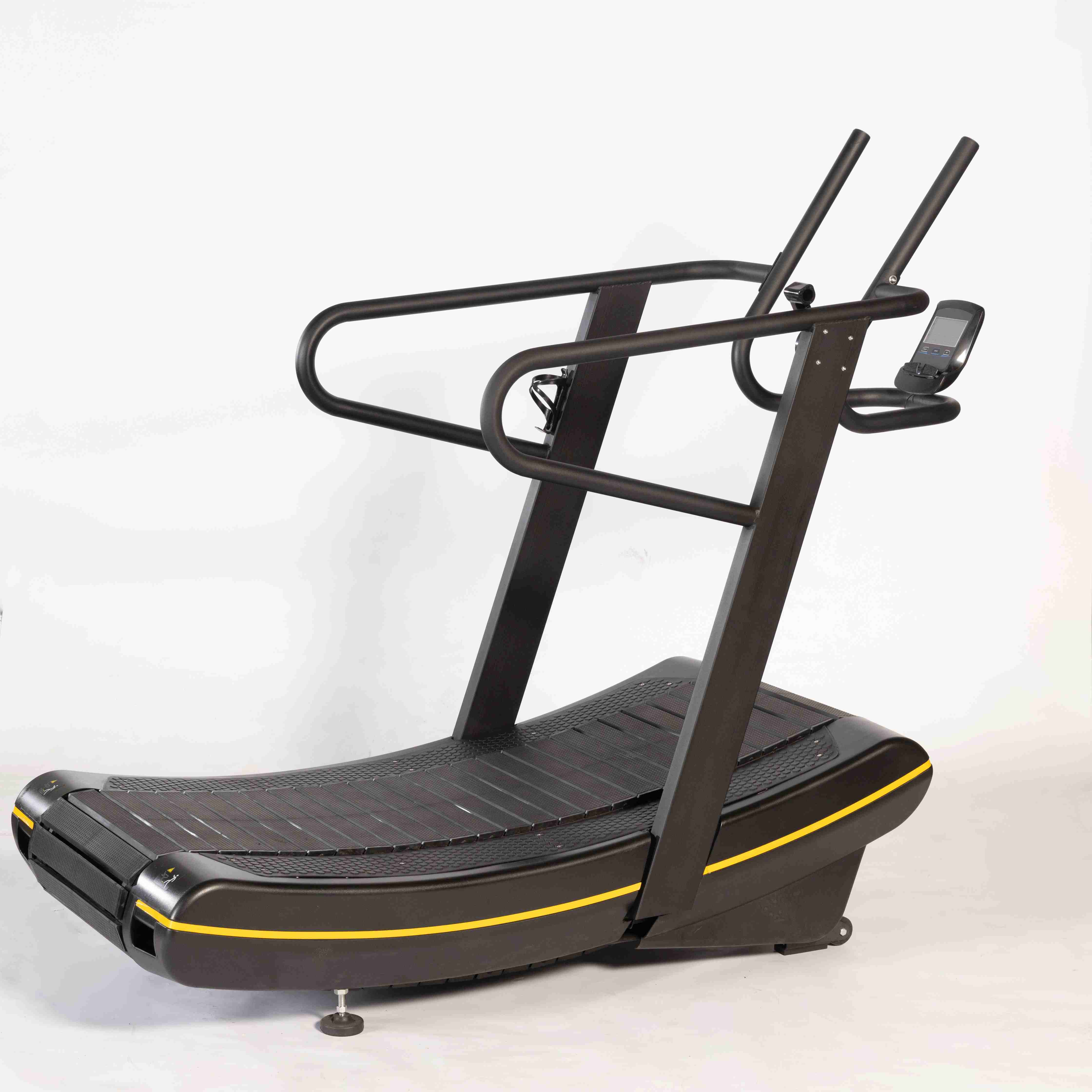
Most motorized treadmills carry you along, which subtly alters your natural stride. You’re essentially keeping up with the belt rather than propelling yourself forward. On a curved treadmill, the belt only moves when you push it with your feet—just like the ground pushes back when you run outside. This self-powered design forces you to engage the same muscles you use on pavement, from your glutes and hamstrings to your core, in a way that a flat motorized deck never quite replicates.
The curved shape also changes where your foot lands relative to your body. Because the highest point of the curve is in the middle, you’re encouraged to strike closer to your center of mass—exactly the efficient, upright posture you need for road running. Every step feels deliberate, with your foot pulling the belt backward behind you, not sliding awkwardly forward. You’ll notice a natural forward lean and a slight bounce, which closely echoes the varying terrain and micro-adjustments of outdoor surfaces.
Recovery and energy expenditure play a role, too. A curved treadmill doesn’t let you coast; if you slow down, the belt slows down instantly. This constant demand for effort—no matter the pace—mimics the relentless yet rhythmic push of running on roads, hills, or trails. It’s why many runners report that transferring their curved treadmill workouts to the street feels seamless, with less shock and more carryover in their race-day confidence.
The Hidden Calorie Burn You Didn't Expect
You might think of calorie burn only in terms of structured exercise, but your body is constantly using energy in ways you barely notice. Every little movement, from tapping your foot under the desk to shifting positions while standing, adds up over the day. Scientists call this non-exercise activity thermogenesis, or NEAT, and it can be a surprising contributor to your daily energy balance.
Even tiny habits carry weight. Choosing to take the stairs instead of the elevator, parking farther from the store entrance, or simply standing while on a phone call can quietly increase your metabolic output. Household chores like vacuuming, gardening, or playing with your pet aren't just chores—they're opportunities to burn extra calories without ever setting foot in a gym. These activities can make the difference between a sluggish metabolism and one that stays active throughout the day.
What's remarkable is how these invisible movements often go overlooked in standard fitness tracking, yet they can rival the effects of a short workout when accumulated. Embracing more daily motion doesn't require a radical lifestyle shift; it's about weaving more natural activity into the seams of your routine. The hidden calorie burn is already there, waiting for you to tap into it.
Elite Runners Are Switching — Here's Their Secret
You’ve probably noticed it at the starting line. More and more elite runners are trading their thick-soled trainers for something that barely feels like a shoe. The shift isn’t about chasing trends — it’s a quiet rebellion against the heavy, over-cushioned designs that dominated for years. These athletes are opting for stripped-down footwear that lets their feet move the way they naturally want to. It’s a return to basics, but with a modern twist that’s hard to ignore.
The real secret isn’t the shoe itself, but what happens when you take away the artificial support. Without all that foam, the foot’s tiny muscles wake up, balance improves, and stride efficiency climbs. Elite runners are discovering that less material means more feedback from the ground, which sharpens their proprioception — that inner sense of position and movement. It’s like turning off the GPS and learning to navigate on your own. The result? Injuries from repetitive stress start to fade because the body absorbs impact more intelligently.
The payoff shows up in times that keep dropping. When form gets cleaner, speed follows. Runners aren’t just surviving workouts; they’re hitting splits that used to feel out of reach. But it’s not an overnight fix. This switch demands patience and attention to how you train, not just what you wear. Still, for those willing to embrace the adjustment, the reward is a more resilient stride — and a career that might just last longer than the hype cycle of the next big shoe launch.
Silent Strides: No Motor, No Noise, Just You
There's a rare kind of freedom in moving without the hum of machinery chasing your every step. When the motor goes silent, you're left with nothing but the rhythmic whisper of your own breath and the soft thud of footfalls against the earth.
It's in that quiet that you start to notice the subtle things—the way your body finds its own cadence, the gentle resistance of the ground, and the simple satisfaction of self-powered motion. No artificial whir, just the honest sound of you in motion.
This is movement stripped back to its essence. No settings to tweak, no noise to drown out your thoughts. Each stride becomes a conversation between you and the path, a reminder that the most powerful engine you'll ever need is the one you were born with.
Run Your Way: The Freedom of Self-Powered Speed Control
Discovering your own rhythm on the run isn't about following a rigid training plan or chasing someone else's pace. It's about tapping into the innate ability to self-regulate, to feel exactly when to push and when to ease back, using nothing more than your body's cues. This self-powered speed control transforms every run into a dialogue between mind and muscle, where you learn to trust your breath, your stride, and the subtle shifts in energy that a GPS watch could never capture.
When you let go of external parameters and tune in, running becomes a fluid, instinctive practice. You might start off slow, letting your legs find their cadence, and then gradually build momentum as the path opens up. Or you might sprint up a hill, not because a timer tells you to, but because you feel the surge and want to meet the challenge head-on. The beauty is in the spontaneity—there are no wrong speeds, only the ones that match the moment.
Over time, this freedom builds a deeper confidence. You become the master of your effort, not a slave to splits or heart rate zones. Adapting to terrain, weather, or how you feel on any given day becomes second nature. You run not to hit a number, but to feel alive in motion, in complete control yet utterly unbound.
Built to Last: A Smarter Investment for Your Body and Wallet
You know that feeling when a cheap pair of shoes falls apart after a few months, and your knees start aching because the cushioning gave out? It’s not just annoying—it’s a sign that short-term savings can cost you more in the long run. When you choose items designed to last, you’re really choosing a partner for your body. Solid construction and quality materials mean consistent support, better alignment, and fewer nagging injuries over time. Your daily comfort quietly improves, and you stop thinking about replacements.
Think about what actually drains your wallet: it’s rarely the big, thoughtful purchase you use for years. It’s the repeat buys, the “good enough” stuff that wears out way too fast. A well-made product, whether it’s a chair you sit in all day or the coat you reach for every winter, rewrites that cycle. It doesn’t just survive; it keeps performing. You end up spending less per use, even if the upfront price made you pause. That’s the kind of math that adds up to freedom—extra cash for experiences, not emergency replacements.
There’s a quiet satisfaction in owning something that ages gracefully instead of falling apart. Scuffs tell a story, but flimsy materials just look tired. When a product is built to last, it grows with you, adapting to your life instead of demanding another trip to the store. This mindset turns buying into an act of self-respect: you’re investing in your physical wellbeing and your financial peace. The best part? You’ll never have that moment of regret, staring at a broken zipper or a sagging seat, wondering why you didn’t aim higher from the start.
FAQ
A curved treadmill forces you to propel the belt with your own effort, engaging more muscles and burning extra calories. There's no motor, so you control the pace naturally—speed up by moving closer to the front, slow down by drifting back. This self-powered design often leads to a smoother, more intuitive stride that feels closer to real outdoor running.
Because the belt only moves when you drive it, you naturally land with a midfoot or forefoot strike instead of a heavy heel impact. This encourages a shorter, quicker stride and better posture, reducing stress on your knees and hips. Over time, you'll notice more efficiency even on regular runs.
Absolutely. Beginners often find it easier to learn proper technique since the curved deck rewards good form and immediately punishes overstriding. Start with short, easy sessions and focus on smooth, consistent effort—the learning curve steepens your progress faster than a flat motorized treadmill.
They're ideal for HIIT. You can sprint all out without waiting for a motor to catch up, and the instant pace changes feel safer. Just step to the sides of the belt when you're done and let it coast down. Many athletes prefer this raw, direct response for explosive workouts.
Prioritize a solid, low-maintenance belt with a consistent curve radius, good bearings, and a sturdy frame that doesn't wobble. Check weight capacity, the smoothness of the belt's glide, and if the resistance feels right for your training goals. A simple monitor that tracks time, distance, and calories is often enough—skip overcomplicated consoles.
Upkeep is refreshingly simple. Wipe down the belt after sweaty sessions, inspect the bearings every few months, and occasionally tighten bolts. Unlike motorized models, there's no need for lubrication or motor servicing. Keep the area free of dust, and the machine should last years with minimal fuss.
If you value a low-impact, high-engagement workout that mimics outdoor running without weather worries, yes. The durability and near-zero energy costs add up over time. It's a premium machine, but for dedicated runners who want mechanical simplicity and a more athletic feel, it's often a smarter buy than a traditional treadmill.
It transforms the session into a fully driver-controlled workout. There's no belt lag or unnatural push from underneath. Every step feels deliberate—you're always in charge. This silent, self-paced environment also makes it easier to focus on breathing and rhythm, which many find oddly meditative once they adjust.
Conclusion
Ever felt like traditional treadmills steal the natural rhythm of your stride? Curved treadmills change that entirely. Without a motor dictating your pace, every step becomes a conversation between your foot and the belt. The concave design mimics outdoor road running so closely that you stop thinking about the machine and start losing yourself in the movement. It’s just you, your breath, and that satisfying gliding sensation. The self-powered mechanism also means silence—no whirring electronics, just the soft thud of your footsteps. You set the pace by how you run, not by punching buttons. Speed up, slow down, stride by stride, and the machine follows instantly. It’s an oddly liberating experience that reconnects you with the pure joy of running, making indoor sessions feel far more engaging.
Beyond the feeling, there's a physiological edge. Because you're actively driving the belt, your body engages more muscle fibers—your hamstrings, glutes, and core all work harder than on a motorized deck, pulling the belt back beneath you. That translates into a noticeably higher calorie burn, often surprising runners who thought they were just doing an easy session. Meanwhile, elite athletes have been quietly adopting these treadmills to build stronger running mechanics without pounding their joints. And durability? With no motor, belt deck, or complex electronics to fail, these machines are built to last for years, requiring minimal maintenance. They represent a long-term investment in your fitness, rewarding you with every stride while being gentler on your wallet over time compared to conventional models. Put simply, a curved treadmill doesn't just change how you run—it changes how you feel about running indoors.
Contact Us
Contact Person: Owen Wu
Email: [email protected]
Tel/WhatsApp: 86-15376736259
Website: https://www.yingruisfit.com/
