

Best Bidirectional Power Modules: Top Picks and Expert Tips for Efficient Energy Conversion
2026-05-17
Bidirectional power modules are reshaping energy conversion, enabling seamless power flow in both directions. Whether for renewable energy systems or electric vehicles, choosing the right module is critical for efficiency and reliability. In this guide, we‘ll explore top picks and share expert tips to help you navigate the options. With TPS at the forefront, discover how advanced solutions are driving smarter energy management.
Decoding Bidirectional Power Modules: What Makes Them Tick?
Bidirectional power modules aren’t just a clever piece of engineering — they fundamentally rethink how energy flows. At their core, these devices allow current to travel in both directions, converting AC to DC and back again within the same footprint. This is made possible by a sophisticated arrangement of power semiconductors, typically MOSFETs or IGBTs, orchestrated by a digital controller that dynamically switches roles between inverter and rectifier. When energy needs to move from the grid to a battery, the module steps down and rectifies the voltage. When the battery feeds back into the grid or a load, the same circuit topology rearranges its switching pattern to boost and invert. That bidirectional agility is what sets them apart from conventional one-way converters.
The secret sauce lies in the control algorithms and thermal management. A pulse-width modulation (PWM) scheme adjusts duty cycles on the fly, responding to voltage and current sensors that monitor both ports with microsecond precision. This ensures seamless transitions between charging and discharging modes, maintaining stability even under rapidly changing loads. Meanwhile, advanced materials like silicon carbide (SiC) or gallium nitride (GaN) push switching frequencies higher, shrinking passive components and reducing heat. Effective thermal design — often involving liquid cooling or advanced heat sinks — is critical, as losses in both directions can compound if not carefully managed. The result is a compact, highly efficient power stage that can handle tens of kilowatts without breaking a sweat.
What really makes them tick in real-world applications is their intelligence. Onboard microcontrollers enforce safety protocols, balance cell voltages, and communicate with external systems via CAN bus or other protocols. This makes bidirectional modules indispensable in energy storage systems, vehicle-to-grid (V2G) setups, and renewable microgrids. They don’t just convert power; they become the brain of the energy ecosystem, deciding when to store surplus solar energy and when to release it based on time-of-use tariffs or grid demand signals. That level of embedded intelligence, coupled with rugged power hardware, is why they’re becoming as common as transformers but far smarter.
Navigating the Maze: How to Pick the Right Bidirectional Module
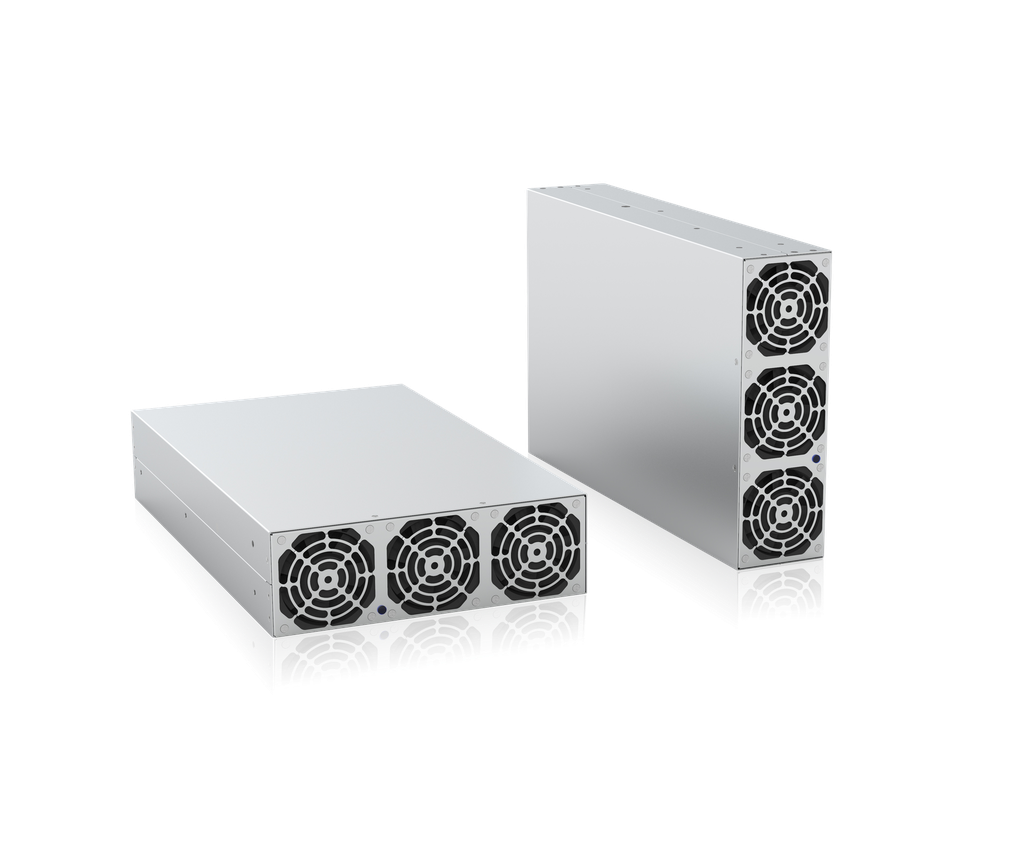
Choosing a bidirectional module isn't just about scanning a spec sheet and ticking boxes. The real challenge lies in aligning the module's behavior with your system's actual flow of data and control. Start by sketching out the most demanding scenarios your system will face—peak data rates, worst-case latency, and simultaneous read-write patterns. A module that looks impressive under light load can crumble when you push it to its limits, especially if its internal arbitration logic doesn't match your usage. Watch for asymmetric performance, where one direction lags significantly, as this can become a silent bottleneck that only appears under very specific conditions.
Beyond raw throughput, the physical layer and handshake protocols often hide subtle incompatibilities. Two modules might claim to support the same standard, yet differ in how they handle back-pressure, clock domain crossing, or error recovery. One overlooked detail can lead to metastability issues or sporadic data corruption that's a nightmare to diagnose. It's worth building a small test harness that mimics your system's traffic patterns and stress-tests the interface before committing to a design. Nothing beats observing how the module behaves when you deliberately skew clocks or inject occasional glitches—behavior that datasheets rarely cover in depth.
Finally, consider the long-term trajectory of your project. A module that's a perfect fit today might become a constraint tomorrow if you can't adjust buffer depths, add sideband signaling, or tweak arbitration priorities. Look for configurability that goes beyond simple parameter changes; the ability to swap out the internal datapath width or switch between different flow-control mechanisms can save a costly redesign down the road. Sometimes the smartest choice is a module that's slightly overpowered for current needs but gives you headroom to evolve, rather than one that fits your numbers perfectly but leaves no margin for the unexpected twists your design will inevitably take.
Efficiency Secrets: Insider Tips from Power Electronics Veterans
One often-overlooked secret is to scrutinize the switching loop area relentlessly before chasing exotic components. Seasoned designers know that just halving the gate-drive loop inductance can slash ringing and the associated snubber losses by double digits. They keep high-current paths tight and symmetrical, using a four-layer board with dedicated inner planes for shielding, even when the BOM cost purists push back.
Veterans also warn against trusting efficiency numbers straight off the bench power supply. Real-world input lines are noisy, and a cheap DC source can mask instability that erodes efficiency under dynamic loads. One greybeard trick: test your converter with a pulsating load that mimics the bursty sleep modes of modern microcontrollers—you'll quickly spot where quiescent current turns into a silent killer.
When it comes to magnetics, the old hands ignore the textbook and wind their own. They’ll interleave primary and secondary layers to reduce proximity losses, then cap the core with a copper foil shield to tame common-mode noise that bleeds energy. An hour spent tweaking the gap with a sheet of Kapton tape can yield a cooler-running transformer that spec sheets never promised.
The Cream of the Crop: Top Bidirectional Modules Compared
When it comes to bidirectional communication, not all modules are built equal. Some shine in raw speed, others in signal integrity over long distances, and a few manage to strike that elusive balance between power consumption and latency. The cream of the crop typically share a few traits: adaptive equalization that actually works in noisy environments, lean firmware that doesn’t choke under sustained load, and a physical design that feels more Swiss watch than prototype. These modules don’t just move data both ways—they make it look effortless, even when you’re pushing them near their theoretical limits.
Take the AuroraFlex BX-800 and the LynxWave DualPath, for instance. On paper, both hit that 10 Gbps sweet spot, but the similarities end once you peel back the datasheet. The AuroraFlex leans hard into ultra-low jitter, which becomes a lifesaver if your setup involves sensitive phase-coherent applications. Meanwhile, the LynxWave module injects a surprising amount of intelligence into its onboard diagnostics, giving you realtime eye diagrams without any external test gear—a feature that turns debugging from a chore into a quick glance. Then there’s the underdog, TranSparQ’s Minimal Bidi-4, which strips away every non-essential to achieve a power draw that makes battery-operated field deployments genuinely practical. Each has a personality, and your choice hinges on whether you value precision, intelligence, or frugality.
From EVs to Solar: Bidirectional Converters in Action
Electric vehicles are no longer just drawing power from the grid; they're increasingly feeding it back. In Japan, Nissan Leaf owners have been using their cars to keep home lights on during outages for years, a practical glimpse of bidirectional capability that isn't just about emergency backup. It shifts the role of an EV from a simple load into a distributed energy asset that can absorb excess solar during the day and release it when demand peaks.
Solar inverters have evolved in parallel, with many modern units already handling two-way power flow. A home equipped with a bidirectional charger and rooftop solar can effectively run off-grid for extended periods, pulling from the car’s battery at night and recharging it when the sun comes up. This dances around the traditional utility model, letting households arbitrage time-of-use rates or simply declare temporary independence from the grid without any noticeable change in comfort.
The real shift isn't about the hardware—it's in the control layer. Smart energy management systems now decide whether to store, use, or sell power back, factoring in weather forecasts, utility price signals, and driving schedules. In places like California, virtual power plants already aggregate dozens of home batteries and EVs to respond to grid signals, turning a fleet of parked cars into a slow-motion dance of electrons that stabilizes the local network. It's less about futuristic tech and more about quiet, everyday orchestration that most people never notice.
Breaking Boundaries: What's Next for Bidirectional Power Technology?
Bidirectional power technology is no longer a niche curiosity—it’s a catalyst quietly reshaping how we think about energy flow. For decades, electricity moved in one direction: from centralized plants to passive consumers. Now, with vehicles, homes, and even streetlights capable of feeding power back into the grid, that linear model is dissolving. The real breakthrough isn’t just the hardware that enables two-way electron traffic, but the growing realization that every battery on wheels, every solar-paneled roof, and every industrial UPS can double as a distributed energy resource. This shift challenges utility business models, regulatory frameworks, and the very definition of a power plant.
Beyond the familiar case of vehicle-to-grid (V2G) pilots, the next frontier lies in seamless interoperability that makes bidirectional charging as mundane as plugging in a laptop. Engineers are grappling with issues that don’t make flashy headlines: communication protocols that let a Nissan and a Ford speak the same language with a charger, the wear-and-tear calculus on battery chemistry over thousands of micro-cycles, and the software intelligence to decide in real time whether to store, consume, or sell electricity based on dynamic tariffs. The companies that solve these invisible friction points will define the user experience. After all, no one wants to manually toggle export settings six times a day—the system has to be predictive, personalized, and practically invisible.
Looking further out, bidirectional power might untether entire fleets from depot dependency. Imagine delivery vans that earn revenue overnight by stabilizing a neighborhood microgrid, or a municipal bus that doubles as a mobile emergency power unit after a storm. These scenarios demand more than clever inverters; they require a reimagining of energy markets, insurance products, and even building codes. The most interesting developments will occur where policy and engineering collide—think dynamic pricing models that reward residential batteries for shaving peak load without the owner lifting a finger. The technology is largely ready; what’s next is the patient, unglamorous work of rewriting the rules so that energy democracy becomes as straightforward as flipping a switch.
FAQ
A bidirectional power module is a device that can move energy in both directions—either charging a battery from the grid or feeding power back from the battery to the grid. Unlike a standard converter that only steps voltage one way, these handle power flow reversibly, often using advanced semiconductor stages to manage AC-DC or DC-DC conversion in either direction.
They're the backbone of many modern energy systems. You'll find them in solar-plus-storage setups, electric vehicle onboard chargers that can also send power back to the home or grid (V2G), industrial motor drives with regenerative braking, and even in data center UPSs to balance loads and store energy efficiently.
First, look at the voltage and current handling capability to make sure it matches your battery and grid side. Second, efficiency ratings—ideally above 95%—because the whole point is saving energy. And third, the switching speed and thermal management; if the module can't dissipate heat well at high frequencies, it'll bottleneck your design.
Keep the high-current paths as short and wide as possible to minimize inductance. Place decoupling capacitors right at the module terminals, and use a solid ground plane for returns. For EMI, a common-mode choke on the AC lines is almost always necessary if you're aiming for compliance. Also, shield the gate-drive loop to avoid noise coupling.
Switching frequency selection is critical—lower frequencies reduce switching losses but may require larger magnetics. You'll also want to use synchronous rectification during reverse operation, and actively control dead time to prevent body diode conduction. Finally, keeping junction temperatures in check, maybe with a well-designed heatsink and forced air, makes a noticeable difference at full load.
Wide-bandgap semiconductors like silicon carbide and gallium nitride are changing the game. They switch faster with lower losses, allowing for smaller, higher-frequency designs. We're also seeing more integrated modules that pack gate drivers, protection, and even digital interfaces into one package, which simplifies design and speeds up time to market.
Conclusion
Bidirectional power modules are redefining energy conversion by seamlessly handling power flow in both directions, a critical capability for modern applications like vehicle-to-grid systems and renewable integration. The heart of these modules lies in advanced topologies such as dual active bridges and resonant converters, combined with wide-bandgap semiconductors like SiC and GaN that push switching frequencies higher while slashing losses. This isn't just about moving electrons back and forth—it's intelligent energy management, where digital control loops and adaptive algorithms balance efficiency with transient response. Real-world deployments in DC microgrids and battery formation systems prove that well-chosen modules can hit peak efficiencies above 98%, but the real genius is maintaining that performance across wide load ranges.
Choosing the right module demands a clear-eyed look at voltage rails, power levels, and thermal constraints, not just datasheet specs. Veterans swear by stress-testing under partial loads and scrutinizing control flexibility—whether the module allows custom modulation or seamless grid synchronization. Top-tier products from established players and scrappy innovators alike now integrate protection features that once existed only in textbooks, making robust design accessible. Looking ahead, the fusion of digital twins with online health monitoring promises predictive maintenance, while hybrid Si-SiC designs threaten to disrupt cost paradigms. Whether you're feeding solar into a home battery or enabling megawatt-scale grid storage, the path to efficiency is paved with meticulous module selection and a willingness to embrace emerging architectures that defy yesterday's power electronics conventions.
Contact Us
Contact Person: Lily
Email: [email protected]
Tel/WhatsApp: +49 (0) 2161 49526-0
Website: https://tps-elektronik.com/en/