

Bespoke Gear Motor Design for Custom Precision Applications
2026-11-22
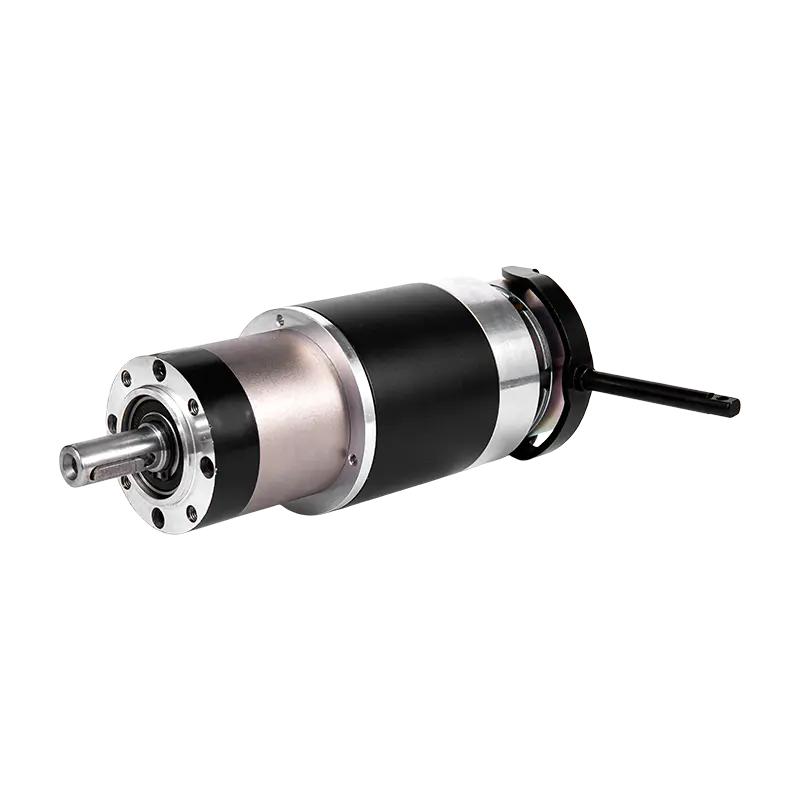
Off-the-shelf gear motors have a quiet way of forcing design compromises you didn’t plan for. In custom precision applications, those compromises rarely stay quiet for long. Here’s how Retek turns bespoke gear motor design into a controlled variable—not a limiting one.
When Off-the-Shelf Motors Hit Their Limits
Most catalog motors are rated for clean, steady loads, but real machines rarely cooperate. Once a spindle ramps past its continuous torque band or a conveyor starts cycling every few seconds, the nameplate numbers become optimistic. The first sign is usually heat: windings soak past their insulation class, bearings run hot, and the frame becomes a thermal bottleneck that no amount of external airflow can fix quickly enough.
There is also a quieter failure mode in the magnetics. Off-the-shelf rotors and stators are designed around a fixed balance of copper, iron, and air gap. Push one parameter too far, such as higher bus voltage, deeper field weakening, or aggressive acceleration, and you start trading torque linearity for saturation, cogging, or current that climbs without producing useful shaft work. The motor still spins, but the control loop is fighting physics instead of the load.
At that point, the sensible move is not a bigger fan or a more aggressive drive. It is to stop treating the motor as a fixed commodity and start specifying around the actual duty cycle: different stack lengths, custom windings, higher-temperature insulation, or a rotor with less inertia. The change often costs less than the downtime, scrap, or derating that comes from pretending the standard part was enough.
Material Choices That Quietly Shape Performance
Most riders never notice a few grams shaved from a lever blade, but they do feel the difference when a pedal spindle flexes just enough to keep a foot planted over washboard. The choice between 6061 and 7075 aluminum, for example, rarely shows up on a spec sheet in any meaningful way, yet the latter’s higher yield strength allows thinner walls, a slightly duller ring on impact, and a different fatigue life once scratches start to bite.
Then there’s the quiet work of polymers and elastomers. A derailleur cage that uses a glass-filled nylon instead of a metal stamping can change shift feel not by being lighter, but by absorbing the tiny vibrations that make a drivetrain feel brittle. In suspension linkages, bearing seats molded from engineered resin often outlast their aluminum counterparts because they distribute load more evenly and resist brinelling when a rock garden gets rowdy.
Even the humble bolt matters. Stainless steel, titanium, and chromoly all have distinct stiffness and corrosion personalities. Titanium saves weight and shrugs off sweat, but it can gall in threaded holes if a mechanic skips anti-seize. Chromoly, heavier and less glamorous, often delivers a more consistent clamp load over years of wet rides. These are not headline specs, but they are the choices that accumulate into a component’s character long after the marketing sheet is forgotten.
Gear Geometry Tuned to a Single Operating Point
When a gearset is expected to spend most of its life near one torque and speed, the tooth flanks can be shaped for that exact condition instead of a broad compromise. Profile and lead modifications are chosen so the loaded contact pattern stays centered, and transmission error remains low at the design point. This often means deliberate bias in crowning or slope that would look unusual in a general-purpose gear, but works because the operating envelope is narrow.
The payoff shows up in noise and durability. By aligning the contact patch under the dominant load, edge loading fades and the oil film builds more consistently across the face width. A slight lead correction can compensate for housing deflections that occur at a known input torque. The result is quieter meshing and fewer wear patterns linked to partial contact.
The trade-off is rigidity outside that point. If the application later shifts to a different speed or load, the same geometry may push the contact toward the toe or heel, raising stress and noise. That is why this approach fits racing gearboxes, dedicated compressor stages, or motor-generator units with a fixed operating map better than a wide-range industrial drive.
Thermal Behavior in Tight, Unforgiving Envelopes
Buildings with minimal floor area and dense mechanical cores don't forgive lazy thermal assumptions. A compact plan can trap heat near occupied zones while exterior corners bleed warmth faster than anyone expects. The real challenge isn't just hitting a target U-value on paper—it's recognizing that in a tight envelope, temperature swings become sharper and occupant comfort hinges on how well the assembly handles thermal mass, not just insulation thickness.
In spaces where every square foot is contested, the interplay between glazing ratios, internal gains, and air tightness creates feedback loops that generic energy models often miss. A modestly sized south-facing window might overheat a single room by mid-morning, while a poorly placed supply diffuser turns an entry vestibule into a cold draft zone. Working inside these constraints means treating the building as a set of thermal rooms rather than one averaged box.
Small envelopes also amplify material choices. A concrete shear wall that would barely register in a larger footprint can pull heat out of a bedroom all night. Lightweight stud cavities with interrupted insulation give thermal bridging a starring role. Successful detailing here comes down to mapping heat flows at the scale of individual assemblies—sill plates, corner studs, slab edges—because when the envelope is unforgiving, the difference between a comfortable night and a chilly one often lives in a two-inch strip of metal flashing.
Noise Signatures and the Art of Acoustic Fit
Noise signatures aren't just about how loud the outside world gets; they're about texture. A loose silicone tip can leave a thin, hissing upper range while a deep foam seal often turns traffic into a low, rolling pressure. Even a few millimetres of insertion depth shift where the ear's own resonance starts to colour the sound, so two people wearing the same earphone rarely hear the same noise floor.
Acoustic fit is closer to tuning a drumhead than tightening a screw. The ear canal bends, expands, and changes shape when you speak or chew, which means a seal that measures perfectly at rest might leak at the jaw hinge an hour later. Small adjustments, like rotating the housing or changing to an oval tip, often do more than adding extra isolation material because they align the device with the ear's natural curve instead of fighting it.
In practice it helps to test with broadband noise rather than music. A busy street recording or pink noise reveals whether the low rumble and high hiss feel connected or disjointed. If the rumble dominates, the seal is probably too deep; if voices stay crisp and needle-like, there's a leak near the top of the canal. The goal is a fit where outside sound recedes as one continuous texture, not as isolated bands poking through.
From Prototype Oddity to Production Rhythm
Most prototypes earn their oddities honestly. A hard-coded path that only worked on one developer's machine, a script that had to be run twice for no obvious reason, or a database table named after an inside joke. In the earliest weeks these quirks are harmless, even endearing. But once a prototype starts carrying real customers or real revenue, every oddity turns into a question that someone will eventually have to answer at 2 a.m.
Moving into a production rhythm rarely means stripping all character out of the codebase. It means deciding which strange choices can survive as useful quirks and which ones have to be rebuilt before they harden into risk. The practical shift is often smaller than teams expect: externalizing configuration, writing down the manual steps, giving deployments a repeatable shape. What used to depend on one person's memory begins to depend on process, and that is usually the point where the work stops feeling like a series of rescues.
Once the rhythm settles in, releases stop being dramatic events and start resembling a pulse. Changes move from branch to production with enough regularity that people no longer hold their breath. Rollbacks become boring, which is exactly what they should be. Somewhere in the commit history or an architecture note, the old prototype oddity still gets mentioned, not as a badge of shame but as a reminder that the system grew from something improvised into something that can be maintained without heroics.
FAQ
The main difference lies in how closely the output stage matches the load. A catalog unit forces the application to accept fixed ratios, standard shaft geometry, and generic bearing arrangements. A purpose-built design can reduce parts count, integrate the pinion directly with the actuator, and tune inertia or stiffness around a specific motion profile. In precision work that often means fewer couplings, less compliance, and better repeatability.
Tight angular accuracy under reversing loads, unusual speed-torque curves, restricted envelope dimensions, low backlash thresholds, or the need for special feedback mounting can all push a project toward a custom build. The clearest signal is when compromise on ratio, lash, or shaft alignment would force costly corrections elsewhere in the machine.
Backlash control starts with gear geometry and tolerance stack-up, not just adding preload. Depending on the stage, split gears, adjusted center distances, or different tooth profiles can keep lost motion low while avoiding excessive friction. The practical target is usually a repeatable lash value that stays stable over temperature and life rather than a zero-lash claim that disappears after wear.
Materials affect noise, wear, thermal expansion, and corrosion resistance. Housings may be stainless, aluminum, or engineering polymer depending on temperature range and mounting loads. Gears can shift from hardened steel to bronze, plastic, or coated alloys when noise or lubrication is a concern. Matching thermal expansion between gear and housing helps preserve backlash and bearing preload across the operating range.
A blank sheet only makes sense when a proven platform would force real compromises. Quite often the faster path is to start with a known motor frame or gear geometry and then change the output stage, bearing preload, sealing, or feedback interface. That keeps development time down while still addressing the specific precision requirement.
Useful inputs include the full speed-torque duty cycle, peak and continuous currents, mounting envelope, allowable noise, backlash target, environmental exposure, and any preferred feedback signal. Details about shock loads, start-stop frequency, and lubrication restrictions tend to change the design more than a simple list of rated torque and speed.
The first build usually focuses on proving gear geometry, bearing setup, and thermal behavior under representative loads. Backlash, efficiency, and noise are measured before and after run-in. For low-volume work, 3D-printed or soft-tooled housings can validate form and fit, while production-intent gears and bearings are used for life and repeatability data.
Yes, when the design is built around scalable processes rather than exotic one-off techniques. If the custom elements are limited to the output shaft, gear ratio, lead wires, or mounting interface, quantities in the hundreds or low thousands can still be viable. The key is avoiding unnecessary special tooling and qualifying suppliers that can hold critical tolerances consistently.
Conclusion
When a catalog motor reaches its limit, the conversation shifts from picking parts to managing a stack of interacting compromises. Material selection often changes the acoustic and wear character before gear geometry is finalized: a glass-filled nylon gear can absorb mesh energy and reduce a sharp whine, while a hardened steel pinion may survive repeated reversals but push high-frequency vibration into the housing. Gear geometry itself is rarely borrowed from a standard data sheet in this kind of work. It is cut or molded around a single operating point, with contact ratio, backlash, and lead corrections tuned so the mechanism sits quietly where it actually runs. In a micro-positioning stage or a handheld surgical driver, that narrow tuning can remove the small hunting motions and lost travel that an off-the-shelf ratio tolerates.
Thermal behavior is another reason bespoke designs earn their place. Inside a sealed, compact envelope there is not enough air movement or surface area for conventional cooling, so the winding temperature, gear grease, and housing material have to work as one heat path. A custom motor may use a steel front plate to draw heat out of a plastic geartrain, or specify a lubricant that will not migrate when the case gets hot. Noise is treated as a mechanical fit issue rather than a final inspection checkbox: rib placements, bearing preload, and tooth microgeometry are adjusted until the sound signature suits the product. Moving from prototype oddity to production rhythm requires those adjustments to be captured as tolerances and fixture checks early. A bespoke gear motor can look costly at the quote stage, yet it often becomes the economical path once field returns, thermal derating, and acoustic rejects are included in the real cost.
Contact Us
Contact Person: Sean
Email: [email protected]
Tel/WhatsApp: +86-13338694967
Website: https://www.retekmotion.com